June 29, 2026
The Ceasefire That Was Already Broken Before Trump Spoke
Interim ceasefire agreements in active conflict zones have a well-documented structural flaw: they create the illusion of stability without eliminating the underlying incentives for military action. Both parties retain operational capacity, both interpret ambiguous clauses to their own advantage, and both use violations as justification for the next strike. The 60-day Islamabad Memorandum of Understanding governing the US-Iran conflict was no exception. By the time President Donald Trump threatened to annihilate Iran after new exchange of attacks was posted on his Truth Social platform, the agreement had already been unravelling for days through a sequence of escalating military exchanges that each side blamed on the other.
Understanding why the US-Iran ceasefire has reached this critical juncture requires looking past the immediate headlines and examining the structural, economic, and strategic forces that were always working against it. Furthermore, the geopolitical risk landscape surrounding this conflict extends well beyond the Gulf region itself.
When big ASX news breaks, our subscribers know first
Inside the Islamabad Memorandum: What the 60-Day Framework Actually Covers
The interim agreement at the centre of this crisis is not a peace treaty. It is a provisional ceasefire framework covering two central issues: freedom of navigation in the Persian Gulf, and discussions about the future of Iran's nuclear programme. The agreement also contains mutual non-aggression provisions and relies on third-party mediators to help manage disputes.
Why Is This Framework So Vulnerable?
What makes this kind of framework particularly vulnerable is the gap between its written provisions and the operational reality on the ground. Each clause requires good-faith interpretation, and when trust erodes, both sides begin reading the same text as permission for contradictory actions. Iran's IRGC has explicitly cited Clause 1 of the Islamabad MOU in its warnings to Washington, framing continued US strikes as treaty violations that would justify halting all diplomatic processes entirely.
The role of third-party mediators, including Pakistan, has also diminished as the pace of violations accelerated. Pakistan publicly reaffirmed its support for dialogue as the truce came under strain, but regional actors have limited leverage when both principals are engaged in active military exchanges. Saudi Arabia condemned Iran's drone attack on Bahrain, but condemnation without coercive power does little to interrupt a tit-for-tat escalation cycle.
How Four Days of Attacks Reshaped the Crisis
The sequence of events that produced Trump's annihilation warning did not emerge from a single incident. It was the product of a compressing escalation arc in which each retaliatory cycle shortened the window available for diplomatic recovery.
The trigger sequence unfolded as follows:
- Iranian forces attacked the merchant vessel Ever Lovely, prompting a US retaliatory strike on Iranian targets.
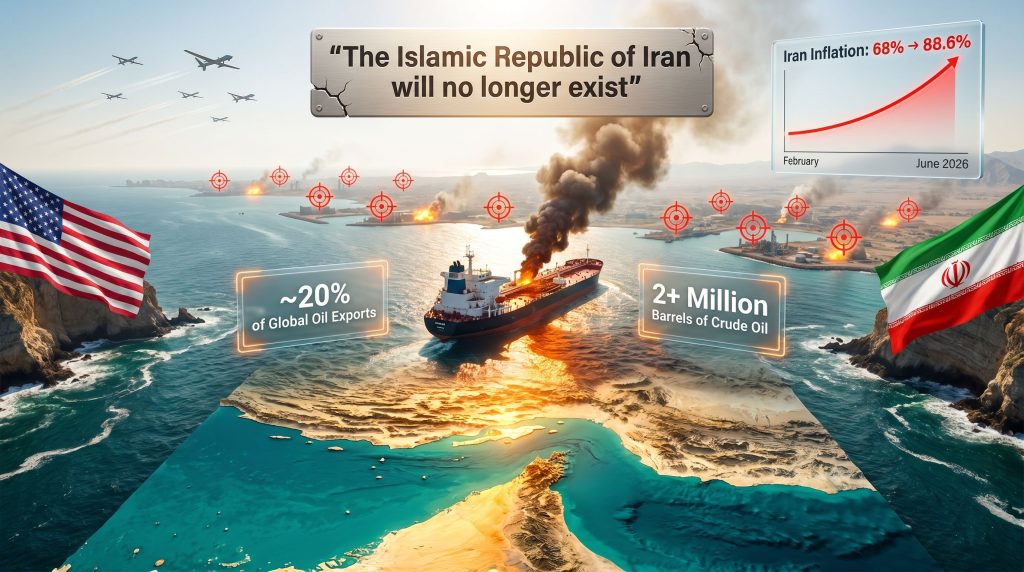
- Iranian forces then attacked the Panama-flagged oil tanker Kiku using a one-way drone. The Kiku was carrying more than 2 million barrels of crude oil and transiting the Strait of Hormuz.
- US Central Command responded by striking 10 Iranian military targets in and near the Strait of Hormuz, including missile and drone storage facilities, coastal radar installations, air defence sites, surveillance infrastructure, communication systems, and minelayer capabilities.
- Iran's IRGC launched a coordinated missile and drone operation targeting US military installations in both Kuwait and Bahrain in response.
- Trump threatens to annihilate Iran in a post on Truth Social, stating that the Islamic Republic would cease to exist if the United States was forced to resume full-scale military operations.
Each step in this sequence represents a ratchet effect: once a retaliatory strike occurs, the responding party faces domestic and institutional pressure to match or exceed it. Stepping back at any point is read as weakness, not restraint.
What Trump's Warning Actually Means: Rhetoric, Deterrence, and the Line Between Them
Presidential ultimatums in Gulf crises have a complicated history. They function simultaneously as coercive instruments, domestic political signals, and genuine statements of strategic intent. Disentangling these functions is critical to understanding what Trump's statement actually implies for military planning.
Parsing the Truth Social Warning
Trump's Truth Social post asserted that US aircraft had struck Iranian missile and drone storage locations and coastal radar sites for violating the ceasefire agreement. He warned that if the United States were forced to resume full-scale operations, the Islamic Republic would no longer exist. Vice President JD Vance reinforced the message by stating publicly that violence would be met with violence, while also urging Iran to use diplomatic channels if it had disagreements with the ceasefire terms.
The deliberate targeting of Iran's coastal surveillance and minelaying infrastructure is analytically significant. These are not regime-change targets. They are specifically the assets Iran uses to interdict and threaten commercial shipping in the Strait of Hormuz. This targeting pattern suggests that current US operations remain oriented around protecting maritime commerce rather than pursuing the broader strategic objective implied by Trump's rhetorical escalation.
The distinction between declaratory policy and operational military planning matters enormously in this context. Maximalist language has historically served as a pressure mechanism in Gulf diplomacy without necessarily predicting the next military action.
That said, the warning cannot be entirely dismissed. The phrase referencing the completion of a job that was successfully started implies a pre-existing operational plan with defined objectives, and the conditional framing leaves the decision to escalate contingent on Iranian behaviour rather than US initiative alone.
Iran's Retaliation: The IRGC's Strategic Calculation
Iran's response to the US strikes was swift and geographically expansive. The IRGC's joint naval and aerospace operation targeted US military installations in both Kuwait and Bahrain, representing a deliberate escalation in the geographic scope of Iranian military action.
Kuwait's military confirmed its air defence systems were engaged against hostile missile and drone attacks. In Bahrain, which hosts a major US naval installation, the interior ministry activated emergency protocols and air-raid sirens were sounded. This followed a separate Iranian drone attack on Bahrain that had occurred the previous Friday, which the Bahraini Foreign Ministry described as a serious threat to the security of citizens and residents.
Iran's foreign ministry characterised the US strikes on southern Iran, including reported explosions in the Sirik and Qeshm areas, as clear violations of the interim agreement. Tehran's domestic framing positions the United States as the party breaking commitments, a narrative designed as much for internal political consumption as for international audiences.
This matters strategically because Iran's IRGC operates with significant institutional independence. Its public statements linking US military restraint directly to diplomatic progress effectively remove the separation between battlefield action and negotiating leverage. When the IRGC explicitly states that further violations will halt all diplomatic processes, it is signalling that Iran's military command has made itself the gatekeeper of the negotiating table.
The Strait of Hormuz: A 33-Kilometre Chokepoint Holding the Global Economy Hostage
No analysis of this conflict is complete without understanding why the Strait of Hormuz commands such disproportionate geopolitical attention. Approximately one-fifth of the world's oil and liquefied natural gas exports pass through this narrow waterway during peacetime. At its narrowest point, the strait is approximately 33 kilometres wide, with two navigable shipping channels each only about 3 kilometres across.
| Metric | Data Point |
|---|---|
| Share of global oil exports transiting Hormuz | ~20% during peacetime |
| Share of global LNG exports transiting Hormuz | ~20% during peacetime |
| Cargo volume aboard tanker Kiku | 2+ million barrels of crude oil |
| Iranian annual inflation rate (June 2026) | 88.6% |
| Iranian annual inflation rate (February 2026) | 68% |
| Inflation increase over four months | +20.6 percentage points |
| Iranian military targets struck by US CENTCOM | 10 confirmed |
Iran has issued warnings to vessels against entering or leaving the Gulf without its authorisation and threatened to impose unilateral transit fees on commercial shipping. These claims have no basis in international maritime law, which designates the Strait of Hormuz as an international strait subject to transit passage rights under the United Nations Convention on the Law of the Sea.
In practice, vessels have increasingly rerouted through Omani waters near the Musandam Peninsula to avoid Iranian interdiction. The US Navy's Joint Maritime Information Centre has expanded an alternative shipping corridor near Oman's coast to accommodate both inbound and outbound traffic. A British maritime security agency reported an additional tanker attack in the strait during this period with no immediate claim of responsibility, and the centre warned that the threat to shipping remained substantial.
The next major ASX story will hit our subscribers first
Oil Markets: Why Prices Are Falling During an Active War
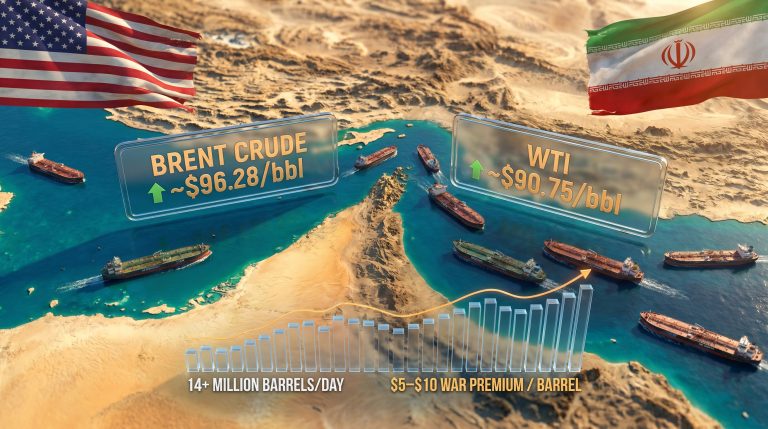
One of the most counterintuitive dimensions of this crisis is the behaviour of oil markets. Despite active military exchanges involving the world's most strategically important shipping lane, oil prices have fallen sharply in recent days. The explanation lies in market expectations rather than current physical flows. In addition, the broader trade war oil impact has contributed to downward pricing pressure that compounds this dynamic.
Analysts have broadly concluded that Iran is pursuing a strategy of calibrated, limited military actions designed to maintain leverage over international shipping without triggering a response that would invite the kind of overwhelming US military force Trump has threatened. If this assessment is correct, markets are pricing in a scenario where Hormuz access gradually recovers rather than collapses. Consequently, the recent oil price rally seen in earlier months has largely reversed amid these competing pressures.
The gap between current market pricing and the underlying geopolitical risk premium is a structural feature of conflict-adjacent commodity markets. Traders discount low-probability catastrophic outcomes until those outcomes become impossible to ignore.
The caveat is significant: a single high-casualty event, a direct strike on a major US naval asset, or an Iranian decision to physically mine the strait's navigable channels could reverse this pricing dynamic rapidly. The market is essentially betting on Iranian restraint continuing, and that bet has a finite tolerance for being wrong. Furthermore, global market recession risks loom in the background should a full-scale closure materialise.
Iran's Economic Deterioration: The Variable Washington Is Watching
Iran's annual inflation rate reached 88.6 percent in June 2026, compared to 68 percent in February, representing a deterioration of more than 20 percentage points in just four months. This level of inflation reflects not only the direct economic cost of the conflict but also the compounding effect of sustained international sanctions on an economy that was already under severe structural stress.
Hyperinflationary conditions of this magnitude carry a well-documented political cost. When citizens experience rapid erosion of purchasing power, domestic pressure on leadership intensifies. However, this dynamic does not operate in a simple linear fashion. Governments facing severe economic distress sometimes respond by doubling down on nationalist military posturing rather than seeking negotiated exits, using external conflict to redirect domestic discontent.
Iran's economic deterioration is therefore both a potential off-ramp and a potential accelerant. Whether Tehran reads its economic position as an argument for compromise or as a reason to escalate before its position weakens further is the central strategic uncertainty facing US planners. The Venezuela oil policy shift has, furthermore, provided Washington with additional leverage in global energy diplomacy during this period.
Three Scenarios: How This Ends
The trajectory of the US-Iran conflict from this point is genuinely uncertain. Three distinct scenarios capture the plausible range of outcomes:
Scenario 1: Managed Escalation With Diplomatic Re-engagement
Both sides continue limited military exchanges while back-channel negotiations persist. The 60-day interim framework survives in degraded form, eventually producing a revised agreement under third-party mediation. This scenario is supported by Iran's economic pressure, US domestic political constraints, and Gulf state diplomatic activity, but requires both sides to exercise restraint that has been notably absent in recent days.
Scenario 2: Ceasefire Collapse and Expanded Military Operations
A significant strike on a major US asset or a high-casualty event triggers the decision to militarily complete the job referenced in Trump's warning. Gulf states face forced alignment choices. A Hormuz closure becomes a realistic near-term possibility, triggering a global energy supply shock that the current oil market pricing has not remotely priced in.
Scenario 3: The Nuclear Dimension Surfaces
Collapse of nuclear programme negotiations within the 60-day framework accelerates Iranian enrichment activity. Military planners in Washington and Tel Aviv activate contingency packages targeting nuclear infrastructure. The conflict transforms from a maritime and conventional military contest into a full strategic confrontation with consequences that extend well beyond the Gulf region.
What a Durable Agreement Would Actually Require
If the 60-day framework is to produce a lasting resolution rather than a temporary pause before the next escalation cycle, any final agreement would need to address several structural requirements simultaneously:
- Verified freedom of navigation guarantees for commercial shipping through the Strait of Hormuz, with enforceable consequences for interdiction attempts
- A credible nuclear limitation framework with genuine international verification mechanisms, not just declaratory commitments
- Tiered de-escalation triggers that create automatic diplomatic consultations before individual military incidents can collapse broader negotiations
- Economic provisions that give Tehran a material incentive to comply over time, recognising that agreements that impose only costs without offering any relief are structurally unstable
- Third-party enforcement mechanisms with enough institutional authority to constrain both sides during the transition period
The stakes of getting this right extend beyond the immediate parties. The outcome of this conflict will shape the credibility of American military deterrence across the broader Middle East, establish precedent for how major powers manage asymmetric maritime conflicts, and determine the long-term security architecture of Gulf states that host US military installations now directly in the line of fire.
Frequently Asked Questions: The US-Iran Conflict and Strait of Hormuz Crisis
What triggered Trump's threat to annihilate Iran?
US forces struck 10 Iranian military targets near the Strait of Hormuz in retaliation for an Iranian drone attack on the Panama-flagged oil tanker Kiku, which was carrying more than 2 million barrels of crude oil. Trump threatens to annihilate Iran after new exchange of attacks was the statement that followed this exchange, occurring within the context of a broader ceasefire framework that has been under severe strain.
What is the Islamabad Memorandum of Understanding?
It is an interim 60-day ceasefire framework governing the US-Iran conflict, covering freedom of navigation in the Gulf and the future of Iran's nuclear programme. Iran's IRGC explicitly cited Clause 1 of this agreement when warning that further US strikes would terminate all diplomatic engagement.
Why does the Strait of Hormuz matter so much?
Approximately one-fifth of the world's oil and liquefied natural gas exports transit through this narrow waterway during peacetime. Any sustained closure would produce immediate and severe consequences for global energy prices and supply chains across multiple continents.
Has Iran attacked US allies in the region?
Yes. Iran's IRGC launched coordinated missile and drone strikes against US military installations in both Kuwait and Bahrain. Bahrain had also been targeted separately by Iranian drones on the preceding Friday, an attack that Saudi Arabia publicly condemned.
What is Iran's current economic situation?
Iran's annual inflation rate reached 88.6 percent in June 2026, up from 68 percent in February, reflecting both the direct costs of the conflict and the sustained weight of international sanctions on an already stressed economy.
Why are oil prices falling despite active military exchanges?
Markets are currently pricing in expectations that Hormuz access will gradually recover rather than be permanently disrupted, based on an analyst consensus that Iran is pursuing calibrated rather than maximalist military pressure. This pricing assumption carries significant downside risk if the conflict escalates materially.
This article contains forward-looking analysis and scenario projections that involve inherent uncertainty. Nothing in this article constitutes financial advice. Readers should conduct independent research before making any decisions based on geopolitical risk assessments.
Want to Track the Commodity and Mining Stocks Most Exposed to Middle East Geopolitical Risk?
Discovery Alert's proprietary Discovery IQ model scans ASX announcements in real time, instantly identifying significant mineral discoveries and actionable opportunities across more than 30 commodities — including those most sensitive to energy price volatility and supply chain disruption — so subscribers can act decisively before the broader market catches up. Explore how historic mineral discoveries have generated extraordinary returns and begin a 14-day free trial to secure a market-leading edge.