July 14, 2026
Trump sends Interior Secretary to Venezuela to push oil and mining represents a strategic pivot in US energy diplomacy, marking a shift from sanctions-based containment toward resource-focused engagement. The convergence of geopolitical tensions, infrastructure vulnerabilities, and strategic resource positioning has created conditions where dormant energy assets suddenly emerge as critical alternatives to established production centres. This shift extends beyond immediate supply considerations to encompass long-term strategic mineral security and hemispheric energy independence.
What Does Trump's Venezuela Energy Initiative Mean for Global Markets?
The Trump administration's deployment of Interior Secretary Doug Burgum to Venezuela in March 2026 represents a strategic pivot toward resource diplomacy rather than sanctions-based containment. This high-level engagement follows Energy Secretary Chris Wright's February visit, creating sustained diplomatic momentum focused on energy sector rehabilitation.
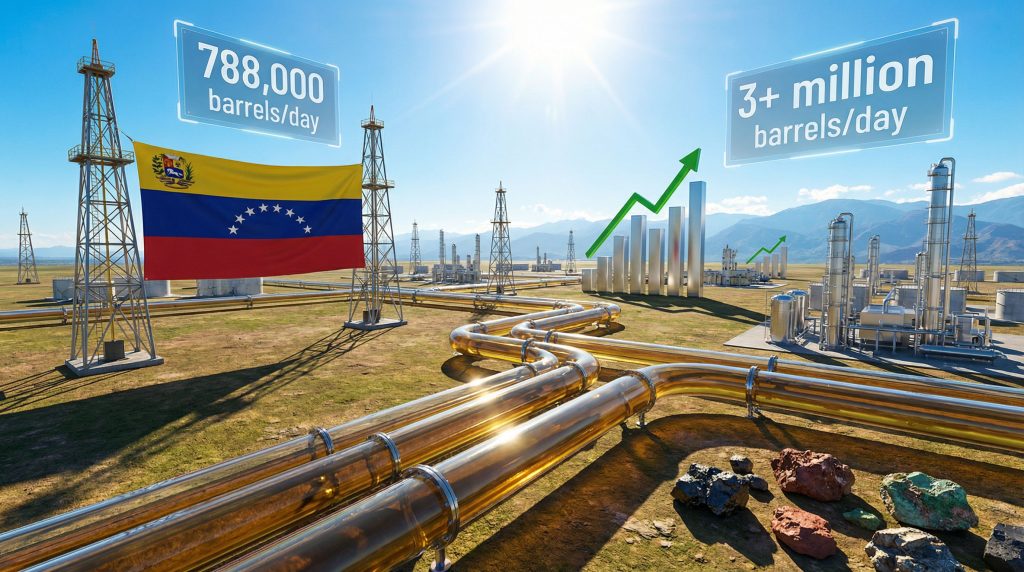
Venezuela's February 2026 crude exports reached 788,000 barrels per day, representing approximately double the prior month's output. This production surge coincided with US Treasury Department licensing that authorised American companies to resume Venezuelan operations under federal oversight mechanisms.
The timing proves particularly strategic given global market volatility. Oil futures have surged 16% since the beginning of US and Israeli attacks on Iran, highlighting supply chain vulnerabilities in traditional production zones. Venezuela's positioning as a Western Hemisphere alternative addresses both immediate supply disruptions and long-term energy security architecture.
Furthermore, this development aligns with the broader critical minerals order initiatives aimed at securing domestic supply chains. The strategic importance becomes even more apparent when considering the OPEC production impact on global energy markets, where Venezuelan capacity offers a crucial counterbalance to traditional supply sources.
Strategic Resource Diplomacy in the Post-Sanctions Era
The administration's approach operates through sectoral licensing rather than comprehensive sanctions relief. Treasury licenses create carve-outs for specific energy activities while maintaining broader economic restrictions. This framework allows controlled re-engagement without wholesale policy reversal.
The proposed $100 billion private sector investment commitment spans infrastructure rehabilitation, production capacity expansion, and technology modernisation across Venezuela's energy sector. However, this figure represents aggregate potential rather than committed capital, contingent on regulatory framework development and security guarantees.
Geopolitical Implications for Western Hemisphere Energy Security
Venezuela's crude reserves rank among the world's largest, positioning the country as a potential counterweight to Middle Eastern supply dominance. The strategic significance extends beyond oil to encompass critical mineral resources essential for advanced manufacturing and defence applications.
Regional energy security benefits include:
- Supply chain diversification reducing dependence on Middle Eastern sources
- Transportation advantages through Caribbean shipping routes avoiding contested straits
- Strategic reserve replenishment capabilities for North American markets
- Technology transfer opportunities modernising hemispheric energy infrastructure
Timeline and Scope of US-Venezuela Energy Cooperation
The diplomatic engagement timeline demonstrates sustained commitment across multiple cabinet-level officials. Energy Secretary Wright's February focus on the Orinoco oil belt established technical parameters, while Interior Secretary Burgum's March visit addresses broader mining sector authorisation.
Burgum confirmed that the government is preparing separate mining permits order distinct from existing oil sector authorisations, indicating comprehensive resource development strategy rather than petroleum-focused engagement.
When big ASX news breaks, our subscribers know first
How Will Venezuela's Oil Production Recovery Impact Global Energy Markets?
Current Venezuelan production represents approximately 26% of historical peak capacity, indicating substantial room for recovery-driven market impact. The country previously sustained production exceeding 3 million barrels per day during the 1990s, demonstrating infrastructure capability under appropriate management and investment conditions.
Current Production Capacity vs. Historical Output Benchmarks
| Production Metric | Value | Timeline |
|---|---|---|
| Historical Peak | 3+ million barrels/day | 1990s |
| February 2026 Output | 788,000 barrels/day | Current |
| Month-over-Month Growth | ~100% increase | January to February 2026 |
| Capacity Utilisation | ~26% of peak | Current vs. historical |
The February production surge demonstrates that existing infrastructure can respond rapidly to proper management and oversight. However, sustained market impact requires scaling beyond emergency-response levels toward the 2-3 million barrel range necessary for material global price influence.
Regional Supply Chain Disruption Mitigation
Venezuelan production offers strategic advantages in current global supply contexts. Unlike Middle Eastern crude requiring transit through potentially contested waterways, Venezuelan exports utilise Caribbean shipping routes with reduced geopolitical risk exposure.
The recent supply disruptions following Iranian infrastructure attacks have created immediate market tightness. Venezuelan capacity, when properly deployed, can provide diversified sourcing for North American refineries while supporting strategic petroleum reserve replenishment efforts.
In addition, this initiative supports broader energy transition security goals by providing reliable access to both traditional energy sources and critical minerals necessary for renewable energy infrastructure.
Pricing Dynamics and Strategic Reserve Implications
Market analytics indicate that Venezuelan production recovery could materially impact global oil pricing, particularly if sustained above 2 million barrels per day. However, pricing effects depend on broader geopolitical stability and infrastructure investment success.
The administration's strategic reserve strategy incorporates Venezuelan crude as a hedge against Middle Eastern supply disruptions. This positioning creates both immediate tactical advantages and long-term strategic supply security for domestic markets.
Which Critical Minerals Could Drive Venezuela's Mining Renaissance?
Venezuela possesses substantial critical mineral resources beyond petroleum, including materials essential for electronics manufacturing, aerospace applications, and advanced defence systems. The country's mineral portfolio spans both conventional commodities and strategic materials crucial for technological independence.
Strategic Mineral Inventory Assessment
Venezuela's Critical Mineral Portfolio:
| Mineral | Strategic Applications | Market Significance |
|---|---|---|
| Coltan (Tantalum/Niobium) | Electronics, aerospace components | High-value, specialised refining required |
| Bauxite | Aluminium production feedstock | Conventional, high-volume commodity |
| Gold | Western Hemisphere's largest deposits | Existing illegal mining complicates access |
| Copper | Electrical conductivity, construction | Critical for infrastructure development |
| Iron Ore | Steel manufacturing feedstock | Industrial development opportunities |
| Diamonds | Industrial/gemstone applications | Limited commercial extraction currently |
| Thermal Coal | Energy production (declining demand) | Historical production ~8 million tons annually |
Coltan extraction represents particularly high strategic value due to its essential role in semiconductor manufacturing and aerospace applications. The refined tantalum and niobium extracted from coltan ore command premium pricing and offer geographic diversification from African sourcing dependencies.
Venezuela's gold deposits rank among the largest in the Western Hemisphere, though current extraction occurs primarily through illegal mining operations controlled by criminal organisations. Legitimate mining development requires addressing security challenges and environmental degradation from unauthorised activities.
Infrastructure Rehabilitation Requirements
Mining sector revival faces substantial infrastructure challenges beyond security concerns. Years of underinvestment have degraded transportation networks, processing facilities, and port infrastructure essential for commercial-scale extraction operations.
Key Infrastructure Needs:
- Transportation networks connecting remote mining areas to processing facilities
- Processing and refining capacity for value-added mineral production
- Port and shipping infrastructure enabling efficient export operations
- Electrical grid reliability supporting energy-intensive mining operations
Security Challenges in Southern Mining Regions
Human rights organisations have documented extensive criminal group control over mining operations in southern Venezuela, creating security risks that deter legitimate investment. These illegal operations pose environmental, labour safety, and revenue diversion challenges requiring government intervention.
Successful mining sector development necessitates displacing criminal control through coordinated security operations, environmental remediation, and establishment of legitimate regulatory frameworks protecting both workers and communities.
What Are the Investment Risks and Opportunities for Energy Companies?
Private sector re-engagement with Venezuelan energy and mining sectors involves substantial risk-reward calculations shaped by historical precedent, political stability concerns, and asset protection mechanisms. Companies must weigh Venezuela's exceptional resource endowment against nationalisation risks and operational security challenges.
Historical Asset Nationalisation Lessons
Peabody Energy Case Study Analysis:
Peabody Energy previously operated as part-owner of the Paso Diablo coal mine in northwest Venezuela near the Colombian border. In 2013, Venezuela declined to renew Peabody's mining licence, resulting in asset loss without adequate compensation mechanisms.
This precedent has created industry-wide scepticism regarding long-term licence security and asset protection, particularly for capital-intensive projects requiring multiyear investment horizons. Companies evaluate Venezuelan opportunities through the lens of potential policy reversal and asset seizure risk.
Historical Context:
- Peak coal production: Approximately 8 million tons annually around 2000
- Sector collapse: Significant decline from 2000 onward
- Current demand trajectory: International Energy Agency projects flat coal usage in 2025 with subsequent slow decline
Financial Security Guarantees and Investment Protection
Energy executives have communicated requirements for explicit guarantees addressing both physical and financial security dimensions. These protection mechanisms include:
Physical Security Requirements:
- Operational site protection against criminal or political interference
- Infrastructure security for transportation and processing facilities
- Personnel safety guarantees for international staff and contractors
Financial Security Mechanisms:
- Compensation frameworks protecting against future asset seizure
- Escrow arrangements for dispute resolution
- Investment insurance or guarantee structures
Regulatory Framework Modernisation Requirements
US officials have pressed for petroleum law overhaul as essential for Western company re-entry. Similar regulatory modernisation requirements apply to mining sector development, including:
- Licensing transparency with clear renewal criteria and dispute procedures
- Environmental standards matching international best practices
- Revenue sharing frameworks ensuring legitimate government participation
- Labour protection standards addressing worker safety and community impact
Market analysts express significant caution regarding private sector mining re-entry, noting substantial hesitation about Venezuelan investment despite the country's considerable mineral wealth. This hesitation reflects rational risk calculation given the political economy uncertainties of post-Maduro governance and capital-intensive project exposure to policy reversal.
How Do US Treasury Licenses Enable Venezuelan Resource Development?
The Treasury Department's licensing framework operates as a sophisticated carve-out from broader Venezuela sanctions architecture, allowing selective authorisation of specific economic sectors under controlled oversight mechanisms. This approach represents a departure from binary sanctions frameworks toward sectoral differentiation based on strategic priorities.
Licensing Structure for Oil and Mining Operations
Treasury has already issued licences authorising US company oil development operations within Venezuela under federal government oversight. The licensing success is demonstrated by Venezuela's rapid production increase to 788,000 barrels per day in February 2026, representing approximately double the previous month's output.
The mining sector will operate under separate licensing framework currently under preparation. Interior Secretary Burgum confirmed that mining licences will address distinct regulatory requirements and oversight mechanisms compared to oil sector authorisations.
Consequently, this framework complements the broader mineral production executive order designed to enhance national security through domestic and allied resource development.
Compliance Requirements and Oversight Mechanisms
Licensed operations function under US government oversight designed to ensure compliance with strategic objectives while preventing sanctions circumvention. The oversight structure includes:
- Authorised company designation with specific operational parameters
- Government monitoring authority for operational compliance verification
- Reporting requirements ensuring transparency and strategic alignment
- Modification provisions allowing licence adjustment based on performance or policy changes
Revenue Distribution and Escrow Arrangements
While specific escrow or revenue management details are not publicly disclosed, the licensing framework incorporates mechanisms designed to ensure legitimate revenue distribution and prevent sanctions evasion. These arrangements likely include oversight of financial flows and beneficiary designation to align with US strategic objectives.
What Role Does Energy Secretary Wright Play in Resource Diplomacy?
Energy Secretary Chris Wright's February 2026 visit to Venezuela established technical and diplomatic parameters for oil sector cooperation, particularly focusing on the Orinoco Belt, Venezuela's most productive petroleum region. His role positions him as the primary technical negotiator for energy sector revival under US oversight.
Orinoco Belt Development Strategy
Wright's tour of the Orinoco oil belt during his February visit indicates site-specific, infrastructure-focused negotiations rather than broad-based policy dialogue. The Orinoco Belt represents Venezuela's primary heavy crude production zone, requiring specialised extraction and refining technologies.
The heavy crude characteristics necessitate specific refinery configurations and transportation infrastructure, making technical expertise essential for production optimisation. Wright's energy sector background positions him to evaluate infrastructure requirements and technology transfer opportunities.
Technology Transfer and Infrastructure Modernisation
Successful Venezuelan oil production revival requires substantial technology transfer and infrastructure modernisation beyond simple production resumption. Key technical challenges include:
- Heavy crude extraction optimisation requiring specialised drilling and recovery techniques
- Refining capacity alignment matching crude characteristics to processing capabilities
- Transportation infrastructure supporting increased production volumes
- Environmental standards implementation meeting international best practices
Bilateral Energy Partnership Framework
Wright's meeting with acting President Delcy Rodríguez addressed compensation frameworks for companies that previously lost assets through nationalisation. This diplomatic engagement indicates comprehensive partnership development rather than limited commercial arrangements.
The compensation framework discussions encompass both historical asset recognition and future investment protection mechanisms, creating foundation for sustained private sector engagement in Venezuelan energy development.
The next major ASX story will hit our subscribers first
How Will Venezuela's Resource Revival Affect Regional Competitors?
Venezuelan resource development success would materially impact competitive dynamics across both global oil markets and Latin American mining sectors. The scale of potential production increases could shift market share distributions and influence pricing power among traditional suppliers.
Impact on Middle Eastern Oil Market Share
Venezuelan production recovery toward historical levels of 2-3 million barrels per day would represent significant new supply competing with Middle Eastern exports, particularly in Western Hemisphere markets where transportation advantages favour Venezuelan crude.
The recent 16% surge in oil futures following Iranian supply disruptions demonstrates market sensitivity to Middle Eastern production stability. Venezuelan capacity offers strategic alternative reducing dependence on geopolitically volatile regions.
Competitive Advantages:
- Geographic proximity to major North American refining centres
- Transportation security avoiding contested shipping lanes
- Political alignment with US strategic objectives
- Infrastructure compatibility with existing hemispheric energy networks
Latin American Mining Sector Competitive Dynamics
Venezuela's mineral wealth spans commodities where other Latin American countries currently dominate regional production. Successful Venezuelan mining development could challenge market positions in:
- Gold production competing with Peru, Brazil, and Mexico
- Copper extraction challenging Chile's regional dominance
- Bauxite/aluminium competing with Jamaica and Brazil
- Iron ore challenging Brazilian market leadership
Supply Chain Diversification Benefits for US Allies
Venezuelan resource development offers strategic supply chain diversification for US allies currently dependent on potentially unreliable suppliers. Critical mineral access from a Western Hemisphere source aligned with US strategic objectives reduces dependence on Chinese or Russian supply chains.
This diversification proves particularly valuable for defence-related materials and advanced manufacturing inputs where supply security carries national security implications beyond commercial considerations.
What Are the Environmental and Social Governance Considerations?
Venezuelan resource development must address substantial environmental degradation and social disruption resulting from years of illegal mining operations and infrastructure neglect. Legitimate development requires comprehensive remediation and protection standards matching international best practices.
Illegal Mining Operations and Criminal Group Control
Many mining operations in southern Venezuela currently operate under criminal group control, creating environmental devastation and worker exploitation that legitimate development must address. Human rights and conservation organisations have documented extensive damage from illegal extraction activities.
Environmental Challenges:
- Mercury contamination from artisanal gold mining operations
- Deforestation and habitat destruction from unregulated extraction
- Water pollution affecting local communities and ecosystems
- Soil degradation from improper waste management
Environmental Protection Standards Implementation
Successful resource development requires environmental standards implementation addressing both historical damage and future protection. This encompasses:
- Remediation of existing contamination from illegal mining activities
- Habitat restoration in damaged ecosystems
- Water treatment systems preventing future contamination
- Waste management protocols meeting international standards
- Biodiversity protection measures preserving critical ecosystems
Community Impact and Worker Safety Protocols
Legitimate resource development must prioritise community impact mitigation and worker safety standards addressing historical neglect under criminal control. Protection frameworks include:
Community Protections:
- Consultation processes ensuring local community input in development decisions
- Revenue sharing mechanisms providing direct community benefits
- Cultural preservation respecting indigenous rights and traditional practices
- Economic opportunity creation providing legitimate employment alternatives
Worker Safety Standards:
- Health and safety protocols meeting international mining safety standards
- Equipment and training provision ensuring proper operational procedures
- Medical care access addressing occupational health risks
- Labour rights protection preventing exploitation and ensuring fair compensation
Which Companies Are Positioned to Benefit from Venezuelan Market Re-entry?
Several major energy companies have already received Treasury Department licensing authorisation for Venezuelan operations, while others await mining sector licence availability. Company positioning varies based on operational experience, risk tolerance, and strategic priorities.
Major Oil Company Licensing and Partnerships
Authorised Energy Companies:
| Company | Authorisation Status | Operational Focus |
|---|---|---|
| Chevron | Existing Orinoco operations | Continued heavy crude production |
| BP | New licensing received | Exploration and development |
| Eni | New licensing received | Integrated oil operations |
| Shell | New licensing received | Technology and infrastructure |
| Repsol | New licensing received | Regional market development |
Chevron maintains the most established Venezuelan presence with existing Orinoco Belt operations, providing operational continuity and infrastructure familiarity. New licensees bring technological capabilities and investment capital essential for production scaling.
Mining Sector Investment Opportunities
Mining sector opportunities await separate Treasury licensing framework completion, though companies are positioning for potential authorisation across multiple commodity segments:
High-Priority Mineral Segments:
- Critical minerals (coltan, rare earth elements) for strategic supply chain security
- Precious metals (gold, platinum group metals) for investment and industrial applications
- Base metals (copper, iron ore) for infrastructure development
- Industrial minerals (bauxite, diamonds) for manufacturing supply chains
Service and Equipment Provider Market Access
Resource sector revival creates substantial opportunities for service and equipment providers supporting extraction operations, including:
- Drilling and extraction services for oil and mining operations
- Transportation and logistics connecting production sites to export infrastructure
- Processing and refining technology adding value to raw material production
- Environmental services addressing remediation and protection requirements
- Security services ensuring operational safety and asset protection
What Are the Long-term Strategic Implications for US Energy Policy?
Venezuelan resource development success would fundamentally alter hemispheric energy security architecture and strengthen US strategic positioning relative to global competitors. The implications extend beyond immediate supply considerations to encompass long-term economic and diplomatic influence.
Hemispheric Energy Security Architecture
Successful Venezuelan integration creates a Western Hemisphere energy bloc reducing dependence on potentially hostile suppliers. This energy security architecture encompasses:
- Supply diversification reducing Middle Eastern dependence
- Strategic reserve depth providing crisis response capacity
- Infrastructure integration connecting hemispheric energy networks
- Technology leadership establishing US technological dominance in key sectors
Critical Mineral Supply Chain Resilience
Venezuelan critical mineral access addresses national security vulnerabilities in defence and technology manufacturing supply chains currently dominated by Chinese or Russian suppliers. Supply chain resilience benefits include:
Strategic Advantages:
- Defence manufacturing security ensuring reliable material access for military applications
- Technology sector independence reducing dependence on potentially hostile suppliers
- Economic leverage through control of critical material supply chains
- Allied supply security providing reliable access for strategic partners
Economic Diplomacy and Regional Influence
Venezuelan resource development success demonstrates US capacity for economic transformation through strategic engagement rather than sanctions-based containment. This approach could influence broader Latin American relations and global diplomatic strategies.
Regional Influence Benefits:
- Demonstration effect showing benefits of US partnership versus alternatives
- Economic integration strengthening hemispheric trade relationships
- Political stability supporting democratic governance through economic development
- Strategic competition countering Chinese and Russian influence in the region
Frequently Asked Questions About Venezuela's Resource Development
How Much Investment Is Required for Full Sector Recovery?
The Trump administration targets approximately $100 billion in private sector investment across Venezuelan energy infrastructure over the subsequent decade. This figure encompasses:
- Oil infrastructure rehabilitation including drilling, refining, and transportation
- Mining sector development covering extraction, processing, and export facilities
- Technology modernisation implementing advanced extraction and environmental protection systems
- Security infrastructure ensuring operational safety and asset protection
However, this represents aggregate potential rather than committed capital, contingent on regulatory framework development and security guarantee establishment.
What Guarantees Exist Against Future Asset Seizures?
Energy Secretary Wright's February 2026 negotiations addressed compensation frameworks for companies that previously lost assets through nationalisation. While specific mechanisms remain under development, protection frameworks likely include:
- Investment insurance structures providing financial protection against policy reversal
- Escrow arrangements securing revenue streams and dispute resolution
- International arbitration procedures ensuring legal recourse for investment disputes
- Government-to-government agreements establishing diplomatic protection for authorised investments
However, market analysts note substantial investor hesitation reflecting rational risk calculation given historical precedent and political economy uncertainties.
When Will Production Reach Pre-Crisis Levels?
Venezuelan oil production historically exceeded 3 million barrels per day during the 1990s, compared to current output of 788,000 barrels per day in February 2026. Recovery timeline depends on multiple factors:
Production Recovery Variables:
- Infrastructure investment pace determining rehabilitation speed
- Technology transfer efficiency enabling production optimisation
- Political stability maintenance ensuring operational continuity
- Security establishment protecting operational sites and personnel
Market analysts suggest that sustained production above 2 million barrels per day requires substantial infrastructure investment and operational security that may take several years to establish effectively.
"The United States is committed to working with all partners to ensure stable and reliable global energy markets," according to recent Trump administration statements. Furthermore, analysts note that "Venezuela's resource potential could fundamentally reshape hemispheric energy dynamics if properly developed under international oversight," as reported by energy sector experts.
Investment Disclaimer: This analysis contains forward-looking statements and speculative projections regarding Venezuelan resource development that involve substantial political, economic, and operational risks. Historical performance does not guarantee future results, and investors should conduct independent due diligence before making investment decisions. The information provided is for educational purposes and should not be construed as investment advice.
Ready to Capitalise on Critical Resource Opportunities?
Discovery Alert's proprietary Discovery IQ model delivers real-time alerts on significant ASX mineral discoveries, instantly empowering subscribers to identify actionable opportunities ahead of the broader market. Begin your 14-day free trial today and secure your market-leading advantage at Discovery Alert.