
May 14, 2026
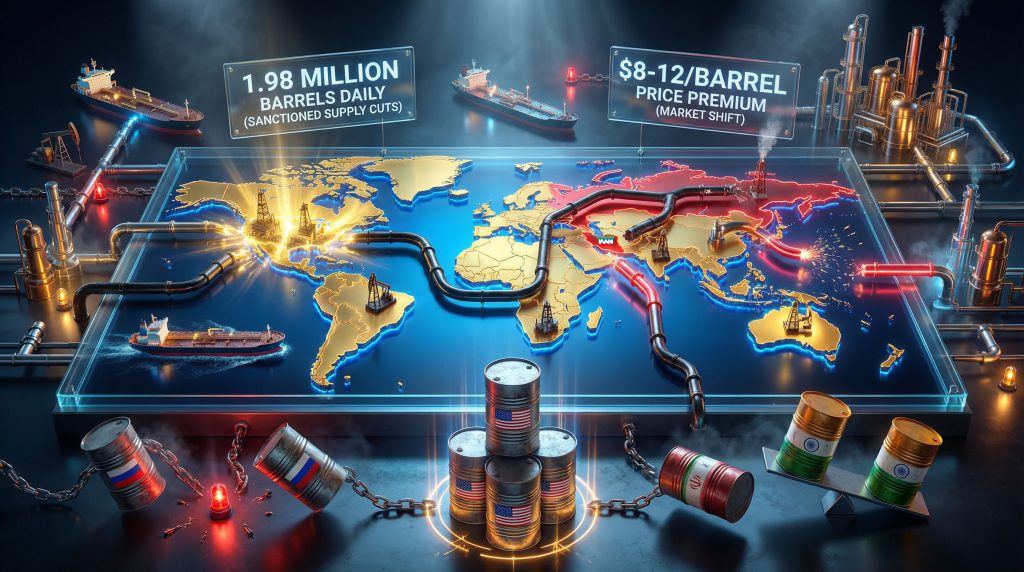
The global energy landscape faces unprecedented transformation as Trump's curbs on Russian and Iranian oil buying eliminate crucial market flexibility mechanisms that have provided temporary relief during geopolitical crises. Furthermore, the termination of sanctions waivers represents a calculated policy shift creating both immediate disruptions and long-term structural changes. In addition, energy market dynamics have fundamentally shifted as supply chain vulnerabilities intersect with geopolitical pressures in ways that challenge traditional risk assessment frameworks.
Understanding the New Sanctions Framework
The termination of sanctions waivers represents a calculated policy shift that eliminates temporary exemptions previously allowing nations to purchase crude already loaded onto tankers without facing American penalties. This framework distinguishes between oil already on vessels prior to March 11, 2026, and new purchases, creating operational complexity for refiners managing inventory transitions.
US Treasury Secretary Scott Bessent confirmed the permanent nature of this policy change, stating that both Russian and Iranian general licenses would not receive renewal. The Russian oil waiver expired on April 12, 2026, while Iranian authorization ended April 13, 2026, marking a definitive end to the temporary relief mechanisms that had provided market flexibility during the Persian Gulf crisis.
Key Policy Elements:
- Immediate cessation of Russian oil purchase licenses
- Termination of Iranian crude exemptions
- Elimination of grace periods for in-transit petroleum shipments
- No renewal of general licenses for sanctioned oil transactions
The sanctions framework specifically targets crude oil already loaded onto vessels, requiring administrative precision around exemption boundaries. This technical specification creates distinct market segments between pre-cutoff inventory and post-deadline purchases, forcing refiners to carefully track cargo origins and loading dates.
Specific vessel movements demonstrate the operational reality during final waiver days. The Jaya and The Felicity, both very-large crude carriers, discharged Iranian cargo at Indian ports, representing concrete examples of sanctioned petroleum movements within the closing exemption window.
When big ASX news breaks, our subscribers know first
What Economic Pressures Drive This Policy Reversal?
Multiple economic factors converged to influence the sanctions tightening decision, extending beyond traditional geopolitical considerations into domestic market dynamics and inflation control mechanisms. However, the oil price rally during early 2025 created additional pressure for policy intervention.
Russian crude accumulation reached unprecedented levels during 2025, peaking at approximately 155 million barrels in early January 2026 compared to 93.2 million barrels mid-2025. This inventory buildup occurred as India reduced purchases due to potential US tariff threats, creating significant market pressure that influenced subsequent policy decisions. Moreover, the US oil production decline contributed to supply concerns.
Following the March 2026 waiver issuance, Indian refiners rapidly acquired approximately 60 million barrels for delivery, with specific orders totaling around 30 million barrels during the exemption period. This purchasing surge demonstrates how temporary sanctions relief generates concentrated procurement activity rather than steady supply relationships.
Inventory Management Dynamics:
- Peak Russian crude storage: 155 million barrels (January 2026)
- Current floating inventory: 100 million barrels
- Post-waiver Indian purchases: 60 million barrels
- Specific refiner orders: 30 million barrels
The Trump administration balanced immediate price stabilisation against longer-term policy objectives during the Iranian-Israeli crisis period. The March 2026 waivers represented tactical accommodation rather than strategic policy reversal, addressing urgent supply security concerns while maintaining overall sanctions architecture. Consequently, the Trump tariffs impact on energy markets became increasingly apparent.
Previous US pressure tactics included punitive tariffs and sanctions against Moscow's major producers, demonstrating escalating economic pressure mechanisms that preceded the April 2026 waiver termination. These measures created the foundation for current policy enforcement through established precedent.
How Will Asian Economies Adapt to Supply Constraints?
Asian energy importers face immediate strategic recalibration as established procurement patterns must rapidly evolve to accommodate new sanctions realities. In addition, the broader trade war impact on regional markets complicates adaptation strategies.
India's energy dependency illustrates the adaptation challenge, with March 2026 Russian crude imports reaching 1.98 million barrels daily representing approximately 25% of total petroleum imports. This figure marked the highest level since June 2023, establishing the magnitude of supply disruption facing Indian refiners.
April 2026 imports declined to 1.57 million barrels daily, though this reduction reflected Nayara Energy's 400,000 barrel-per-day refinery maintenance rather than sanctions-driven supply constraints. This distinction highlights how operational factors can mask policy-driven market changes during transition periods.
India's Supply Diversification Challenge:
- Total crude dependency: 90% imports
- Russian crude peak: 1.98 million barrels/day (March 2026)
- Refinery-specific dependency: Nayara Energy's 400,000 barrel/day facility
- Alternative source requirements: Multiple million barrel daily capacity
Iranian oil emerged as an alternative supply source, with approximately 4 million barrels arriving in India during the waiver period, marking the first such imports in seven years. This demonstrates India's willingness to access previously unavailable supplies when sanctions exemptions permit such transactions.
Specific port infrastructure capabilities enabled Iranian crude discharge at Paradip (operated by Indian Oil Corp) and Sikka (utilised by Reliance Industries and Bharat Petroleum Corp), indicating functional receiving capacity for sanctioned-nation petroleum despite ongoing restrictions.
The adaptation sequence reveals dynamic supply chain reconfiguration within narrow policy windows. Indian refiners moved from avoiding Russian oil due to US pressure to aggressive procurement during March 2026 waivers, simultaneously securing Iranian supplies through available exemption mechanisms.
Regional coordination among Asian economies remains challenging as individual nations compete for alternative supplies while managing domestic price pressures. The Philippines, Thailand, and Vietnam face similar procurement constraints without the benefit of India's refinery scale or diplomatic leverage.
What Are the Geopolitical Leverage Implications?
The sanctions termination fundamentally alters strategic relationships between economic pressure applications and diplomatic flexibility mechanisms across multiple bilateral relationships. Furthermore, the OPEC production impact adds another layer of complexity to global energy dynamics.
Russia's current crude inventory position demonstrates resilience through alternative distribution networks. With 100 million barrels currently on water, potentially including cargoes with existing buyers, Moscow maintains significant floating storage capabilities despite US sanctions intensification.
India's transformation from minimal Russian crude purchaser to largest seaborne buyer following the 2022 Ukraine invasion created strategic dependencies that sanctions policy now directly targets. This evolution established India as Russia's primary remaining customer among major economies, concentrating relationship risks.
Strategic Dependency Metrics:
- India's crude import evolution: Fraction to largest buyer (2022-2026)
- Current floating Russian inventory: 100 million barrels
- Peak inventory accumulation: 155 million barrels (January 2026)
- Alternative buyer development: Limited non-Asian options
Iran's strategy evolution includes offering liquefied natural gas to Asian buyers at 40% discounts to spot prices despite lingering sanctions, indicating proactive alternative product marketing to circumvent crude oil restrictions. According to Economic Times analysis, "Russian oil waiver from Trump: India may get a crude hit from Trump's curbs on Russian, Iranian oil buying freedom."
The elimination of US-sanctioned buyers potentially forces Russia into deeper energy partnerships with China, creating more concentrated but politically aligned customer relationships. This consolidation may strengthen Sino-Russian economic integration while reducing Moscow's exposure to Western policy volatility.
Diplomatic leverage calculations shift as temporary waiver mechanisms disappear, removing tactical flexibility that previously allowed graduated pressure applications. The binary nature of current sanctions eliminates intermediate positions that facilitated case-by-case negotiations.
How Do Market Mechanisms Respond to Sanctions Tightening?
Energy markets demonstrate complex behavioural patterns when sanctions policies transition from temporary exemptions to permanent restrictions, creating distinct phases of price discovery and supply chain adaptation. However, US threatens Iran with financial equivalent of bombs, as reported by the Australian Financial Review, highlighting the intensity of current enforcement measures.
Immediate market responses typically include increased volatility as traders assess supply availability and alternative procurement costs. Current Russian crude inventory normalisation from 155 million barrel peaks to 100 million barrels on water suggests market mechanisms gradually absorb policy-driven disruptions through price adjustments and supply diversification.
Price Discovery Phases:
Immediate Effects (0-30 days):
- Increased crude price volatility
- Asian market premium expansion
- Transportation cost increases
Medium-term Adjustments (1-6 months):
- Alternative supply contract establishment
- Strategic reserve deployment considerations
- Refining margin adjustments
Financial market implications extend beyond energy sector equity valuations through multiple transmission channels. US energy companies may benefit from reduced competitive pressure, while Asian refiners face input cost inflation and margin compression from higher feedstock expenses.
Market participants demonstrate adaptive behaviours during sanctions transitions. Indian refiners' aggressive acquisition of 60 million barrels during the March 2026 waiver window exemplifies how policy uncertainty drives episodic purchasing patterns rather than steady supply relationships.
The distinction between oil-on-water prior to March 11, 2026, and subsequent purchases creates operational complexity requiring sophisticated inventory tracking systems. Refiners must differentiate between exempt and restricted crude sources while managing operational continuity during transition periods.
Alternative transportation networks become critical as traditional shipping routes face sanctions constraints. Longer shipping distances increase transportation costs while potentially creating capacity bottlenecks during peak demand periods.
What Strategic Scenarios Could Emerge?
Multiple potential outcomes exist depending on how key market participants respond to the new sanctions environment, each carrying distinct implications for global energy security and pricing mechanisms.
Scenario 1: Rapid Market Adaptation
Asian buyers successfully diversify supply sources within 90 days through expanded Middle Eastern and African procurement relationships. Global prices stabilise with sustained premiums above pre-sanctions levels while accelerating alternative energy investment due to supply security concerns.
Success indicators include establishment of new long-term supply contracts, strategic petroleum reserve optimisation, and enhanced regional cooperation among Asian importers. This scenario requires sufficient alternative production capacity and transportation infrastructure flexibility.
Scenario 2: Supply Crisis Escalation
Insufficient alternative capacity creates sustained price volatility above critical threshold levels, triggering coordinated strategic reserve releases and potential recession risks in energy-import dependent economies. Market disruption exceeds adaptive capacity of existing distribution networks.
Crisis indicators include sustained crude prices above $130 per barrel, supply shortfall measurements exceeding 2-3 million barrels daily, and emergency government interventions including rationing or alternative fuel mandates.
Scenario 3: Sanctions Circumvention Evolution
Sophisticated evasion networks develop through enhanced dark fleet operations, alternative payment mechanisms, and parallel market structures. Sanctions effectiveness diminishes while creating bifurcated global energy markets with different pricing and regulatory frameworks.
Circumvention indicators include persistent sanctioned oil flows through intermediary nations, development of alternative banking arrangements, and emergence of non-dollar denominated energy transactions that bypass traditional monitoring systems.
Each scenario requires distinct policy responses and market positioning strategies, with hybrid outcomes potentially combining elements from multiple scenarios across different regional markets and time horizons.
The next major ASX story will hit our subscribers first
How Should Investors Position for Energy Market Restructuring?
The sanctions policy creates distinct investment opportunities and risks across different energy sector segments, requiring nuanced analysis of structural changes versus temporary disruptions.
Beneficiary Sectors:
- US Shale Producers: Enhanced pricing power through reduced competition from discounted sanctioned crude
- Alternative Energy Infrastructure: Accelerated adoption driven by supply security concerns
- Tanker Fleet Operators: Increased demand for longer-route transportation services
- Strategic Storage Operators: Enhanced value from inventory management capabilities
Risk Exposure Areas:
- Asian Refining Complex: Margin pressure from higher feedstock acquisition costs
- Energy-Intensive Manufacturing: Input cost inflation in petrochemicals and metals processing
- Emerging Market Currencies: Balance of payments pressure from increased energy import expenses
Investment timing considerations depend on sanctions enforcement effectiveness and alternative supply development speed. Early positioning in beneficiary sectors may capture structural advantages before market recognition fully prices these benefits.
Portfolio diversification strategies should account for geographical exposure differences, with Asian-focused investments facing greater near-term challenges compared to North American or Middle Eastern energy assets. Regional market integration levels determine how quickly sanctions impacts transmit across global energy networks.
Risk Management Frameworks
Sophisticated investors require dynamic hedging strategies that account for policy volatility alongside traditional commodity price risks. Options markets may provide protection against extreme price movements during sanctions transition periods.
Currency exposure management becomes critical as energy trade patterns shift, potentially affecting traditional petrodollar recycling mechanisms and creating new foreign exchange volatility sources.
What Long-term Energy Security Implications Exist?
The sanctions tightening accelerates structural changes in global energy architecture that extend beyond immediate price impacts, reshaping strategic planning frameworks for energy-dependent economies.
Strategic petroleum reserve policies face reconsideration as nations seek enhanced buffer capacity against supply disruptions. Countries may expand storage capabilities and diversify storage locations, potentially absorbing 50-100 million barrels of additional crude demand globally through strategic stockpiling initiatives.
Energy independence acceleration receives renewed priority as import-dependent nations recognise vulnerability to sanctions-driven supply constraints. This trend may reduce long-term global oil demand growth through domestic production capability enhancement and renewable energy transition acceleration.
Structural Transformation Elements:
- Enhanced strategic reserve capacities across multiple nations
- Accelerated domestic production capability development
- Renewable energy transition timeline compression
- Alternative transportation fuel adoption
Supply chain resilience becomes a strategic priority requiring geographic diversification and redundant procurement relationships. The concentration of Russian crude sales to Asian buyers demonstrates risks associated with over-dependence on specific supply sources or customer relationships.
Technology development acceleration may emerge as nations seek sanctions-resistant energy supply mechanisms. This includes enhanced domestic production technologies, alternative fuel development, and energy efficiency improvements that reduce import dependencies.
Regional cooperation frameworks gain importance as individual nations recognise limitations of unilateral energy security strategies. Joint strategic reserves, coordinated procurement mechanisms, and shared infrastructure development may provide collective security benefits.
Investment in energy infrastructure resilience requires long-term commitment and international coordination, potentially creating new multilateral institutions focused on energy security cooperation outside traditional Western-dominated frameworks.
Navigating the New Energy Sanctions Landscape
Trump's curbs on Russian and Iranian oil buying represent a fundamental restructuring of global energy relationships that extends beyond tactical policy adjustment into strategic architecture transformation. The elimination of sanctions waivers signals definitive movement toward permanent restrictions rather than temporary accommodations.
Market adaptation mechanisms demonstrate both resilience and vulnerability as participants navigate policy-driven supply constraints. The rapid procurement of 60 million barrels by Indian refiners during March 2026 waivers illustrates how temporary exemptions create concentrated activity rather than stable relationships.
Success in this environment requires sophisticated understanding of evolving supply chains, alternative procurement strategies, and the intersection between energy security and economic competitiveness. The distinction between short-term market disruption and long-term structural change becomes critical for strategic planning.
Energy market fragmentation accelerates as Trump's curbs on Russian and Iranian oil buying eliminate traditional arbitrage opportunities and create distinct regional pricing mechanisms. This development may ultimately enhance energy diversification strategies while introducing new complexities in global trade coordination.
The policy shift reinforces incentives for energy import-dependent nations to accelerate domestic production capabilities and renewable energy transitions, potentially creating structural demand changes that reshape global energy markets beyond immediate sanctions impacts.
Future energy security frameworks must account for policy volatility alongside traditional supply and demand fundamentals, requiring enhanced risk management capabilities and strategic flexibility in procurement and investment decisions. Consequently, Trump's curbs on Russian and Iranian oil buying will continue influencing global energy architecture for years to come.
Ready to Capitalise on Energy Market Disruptions?
Discovery Alert's proprietary Discovery IQ model delivers real-time alerts on significant ASX mineral discoveries, enabling subscribers to identify actionable opportunities as global energy transitions create new investment landscapes. Begin your 14-day free trial today to position yourself ahead of the market with instant insights into discovery-rich announcements that could benefit from shifting energy dynamics.