Catalina Resources Ltd
Tungsten Discovery Adds a New Commodity Angle at Catalina Resources' Tallering Project
Catalina Resources Limited (ASX: CTN) has reported that a review of historical exploration data has identified high-grade tungsten mineralisation at the Santy Well Prospect within its Tallering Project in Western Australia's Murchison region. According to the ASX announcement, historical rock-chip sampling returned values of up to 60.1% W, equivalent to 75.8% WO₃, while historical reverse circulation drilling highlighted multiple tungsten-bearing intervals including 17m at 0.178% WO₃ from 79m in hole SRC006.
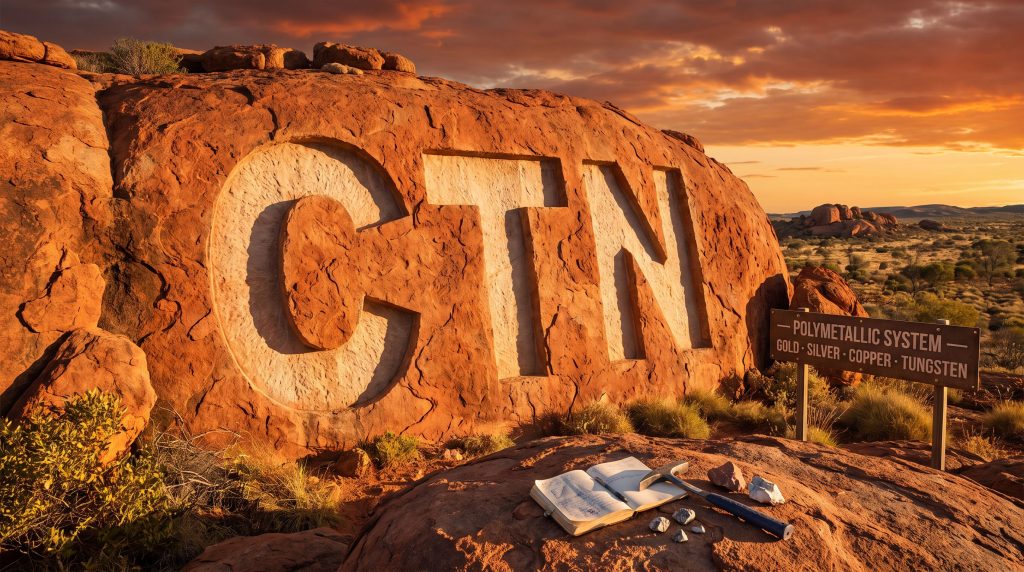
The update matters because it adds tungsten to a mineral system that Catalina had already reported as hosting gold, silver and copper. In the announcement, the company described Santy Well as a previously overlooked tungsten-bearing polymetallic system, with the new interpretation based on historical drilling, surface sampling and technical reports rather than a new drilling campaign.
When big ASX news breaks, our subscribers know first
A Tungsten System Identified Through Historical Review
At Santy Well, historical work had largely focused on gold and base metals. Catalina's review indicates tungsten was present in the same system but was not a major exploration focus at the time.
That distinction is important for investors. When a company finds additional value in an existing dataset, it can improve the prospectivity of a project without the immediate cost of a fresh drill programme. In this case, Catalina's geological team has used historical assays and recent field reconnaissance to reassess the broader mineral potential of Tallering.
"The identification of broad tungsten mineralisation, together with previously reported high-grade gold, silver and copper, significantly enhances the exploration potential of the Santy Well Prospect at our Tallering Project," said Ross Cotton, Executive Director of Catalina Resources.
"Historical exploration was primarily focused on gold and base metals, leaving the tungsten potential largely overlooked despite occurring within the same polymetallic system."
Furthermore, the announcement noted that Catalina recently completed a reconnaissance field visit, during which geological mapping was undertaken and 24 rock-chip samples were collected. Those assay results are expected within the current quarter and are intended to help validate historical results.
What the Historical Drilling Shows
The reported tungsten interpretation centres on three historical RC drill holes: SRC005, SRC006 and SRC007. These holes were drilled on an east-west line, with spacing of roughly 50 metres between adjacent collars, and each was drilled to 102 metres depth.
Catalina highlighted the following tungsten intersections from the historical dataset:
| Drill Hole | Reported Interval | From | Grade |
|---|---|---|---|
| SRC006 | 17m | 79m | 0.178% WO₃ |
| SRC006 | 4m | 79m | 0.367% WO₃ |
| SRC006 | 1m | 81m | 0.839% WO₃ |
| SRC006 | 1m | 82m | 0.531% WO₃ |
| SRC006 | 1m | 85m | 0.484% WO₃ |
| SRC006 | 6m | 6m | 0.200% WO₃ |
| SRC006 | 3m | 9m | 0.224% WO₃ |
| SRC007 | 3m | 99m | 0.154% WO₃ |
| SRC005 | 1m | 52m | 0.077% WO₃ |
According to the report, numerous additional intervals returned greater than 1,000 ppm W, suggesting a broader tungsten halo around the higher-grade zones. For general readers, 1,000 ppm is equal to 0.1%, which helps place those supporting intervals into context.
The spacing between the holes is also relevant. SRC006 carries the strongest reported interval, while SRC007, located about 100 metres west, returned tungsten mineralisation at the end of hole. SRC005, positioned between them, also returned a tungsten interval.
Catalina said this suggests mineralisation may be continuous across a 100-metre corridor, although the company also noted these are historical exploration results and further validation work is still required. It is also worth noting that all reported widths are downhole intercepts, and the true width of the mineralisation is not yet known.
Why Tungsten Grades Are Reported as WO₃
Tungsten results can be confusing for investors because grades are often reported as WO₃, or tungsten trioxide, rather than elemental tungsten.
What Is WO₃?
WO₃ is the oxide form commonly used in tungsten reporting and processing. In Catalina's announcement, elemental tungsten values were converted using the formula: WO₃ = W × 1.261. That means a rock-chip sample containing 60.1% W converts to about 75.8% WO₃, which is the figure reported by the company.
Why Does This Matter?
Using a standard reporting unit makes it easier to compare tungsten results across projects. Investors looking at tungsten exploration announcements should therefore check whether grades are being quoted as W or WO₃, because the numbers are not directly interchangeable without conversion.
What Counts as a Strong Tungsten Result?
Tungsten deposits vary widely in grade and style. In general terms, a single-metre interval of 0.839% WO₃, such as the peak result reported from SRC006, would be considered a high-grade drill intercept in many exploration settings. A broader interval such as 17m at 0.178% WO₃ can also be meaningful because width and continuity are critical when assessing whether a mineralised zone may justify follow-up work.
Tungsten is used in hard metals, industrial tools, electronics and defence-related applications. Its market relevance has increased in recent years because many jurisdictions classify it as a critical mineral due to supply concentration and industrial importance. However, Catalina's announcement did not state that Tallering has received any project-specific government support.
Santy Well Is Shaping Up as a Polymetallic System
The tungsten results do not stand alone. In the announcement, Catalina linked the tungsten mineralisation to previously reported gold, silver and copper at Santy Well. Historical results cited by the company include:
- Gold up to 101 g/t Au from surface rock-chip sampling
- Silver up to 710 g/t Ag from surface rock-chip sampling
- Silver up to 90.3 g/t Ag from drilling
- Copper up to 7.04% Cu from surface rock-chip sampling
- Copper up to 2.03% Cu from drilling
The company also referred to anomalous bismuth, molybdenum and zinc in multiple drill holes. In simple terms, "anomalous" means the levels are above normal background levels and may help geologists trace mineralised systems.
This matters because polymetallic systems can offer more than one exploration pathway. A project with tungsten, gold, silver and copper exposure may attract attention from investors interested in multiple commodity themes, particularly when the mineralisation appears to be related within the same structural setting.
Catalina said Santy Well sits within the Archaean Tallering Greenstone Belt on the western margin of the Murchison Domain in the Yilgarn Craton. For non-specialists, a greenstone belt is an ancient package of volcanic and sedimentary rocks that commonly hosts mineral deposits, especially gold and base metals.
What Happens Next at Tallering?
The ASX update outlined a clear next stage for the project review. Catalina said it plans to continue integrating historical drilling, geological mapping, surface geochemistry and new field sampling to better understand the controls on mineralisation.
The next steps listed in the announcement are summarised below:
| Upcoming Activity | Status or Timing |
|---|---|
| Detailed review of historical exploration data | Ongoing |
| Assay results from 24 rock-chip samples | Expected by end of quarter |
| Integration of drilling, mapping and geochemistry | Ongoing |
| Heritage consultation and approvals | To commence |
| Follow-up exploration programme design | Subject to review outcomes and approvals |
The company also stated that the project is located within Exploration Licence Application E59/3068, which is pending grant and remains subject to Native Title processes and statutory approvals. Catalina said it is not aware of material impediments to grant, but timing and outcome are not assured.
For investors, that means there are still procedural steps before any future on-ground exploration can be advanced. The immediate catalysts are therefore more likely to come from data interpretation and the rock-chip assay results rather than drilling in the near term.
Why Investors Are Paying Attention to This Update
This announcement stands out because the tungsten opportunity was identified from a historical data review rather than from costly new drilling. That lowers the discovery cost to date and gives Catalina a chance to refine targets before deciding whether further drilling is warranted.
Several features of the update are likely to be closely watched:
- High-grade surface indication with rock-chip sampling up to 60.1% W
- Meaningful downhole results including a peak interval of 0.839% WO₃
- Multiple mineralised holes across a reported 100-metre corridor
- Polymetallic setting that already includes gold, silver and copper
- Near-term assay catalyst from the recent 24-sample field programme
There is also a balanced point to keep in mind. The reported tungsten results are historical, and Catalina has stated in its JORC disclosures that the information has not yet been independently validated through twinning or resampling. That does not reduce the relevance of the historical data, but it does mean further work is needed before stronger conclusions can be drawn.
Even so, the review appears to have added a new layer to the Tallering investment case. Instead of a gold and base metals prospect alone, Santy Well is now being assessed as a broader polymetallic target with a tungsten component that had not previously been emphasised.
The next major ASX story will hit our subscribers first
What This Means for Catalina Resources
Catalina Resources is positioning Tallering as an early-stage project with several commodity angles. The company's recent announcements suggest the immediate strategy is to extract more value from legacy exploration work, validate historical results and then prioritise targets for follow-up.
That approach can be effective in underexplored or previously narrow-focused project areas. If the pending rock-chip assays support the historical tungsten results, and if the integrated review improves confidence in continuity and geological controls, Santy Well may move higher on Catalina's exploration priorities.
For the market, the key question is straightforward: can the historical tungsten results be confirmed and expanded into a target with sufficient scale and continuity to justify modern drill testing? According to the current ASX announcement, Catalina is still in the assessment stage. However, the combination of high-grade surface samples, multiple tungsten drill intersections and an established polymetallic setting gives the project clear near-term relevance.
Catalina's latest report therefore marks an important technical update at Tallering. The identification of tungsten at Santy Well does not yet define an economic deposit, but it does broaden the project's commodity exposure and creates a new line of investor interest ahead of the next round of assay results and geological interpretation.
Want to Be First to Know About the Next Significant ASX Mineral Discovery?
Discovery Alert's proprietary Discovery IQ model delivers real-time alerts the moment significant ASX mineral discoveries are announced — transforming complex multi-commodity data across more than 30 minerals into clear, actionable insights for both short-term traders and long-term investors. Explore how historic discoveries have generated substantial returns on Discovery Alert's dedicated discoveries page, and begin your 14-day free trial today to position yourself ahead of the broader market.