June 7, 2026
Geological Foundations and Market Dynamics in Global Tungsten Supply
The global minerals landscape operates through complex cycles of scarcity, abundance, and strategic positioning that determine where capital flows and extraction activities concentrate. In this environment, tungsten has emerged as a focal point for investors seeking exposure to supply-constrained commodities with defensive and technology applications. The interplay between geological endowment, processing infrastructure, and geopolitical considerations creates investment opportunities that extend beyond simple resource extraction to encompass strategic supply chain positioning.
Understanding tungsten mining in Brazil requires examining multiple interconnected factors that influence both exploration success and operational viability. These include deposit characteristics, regional infrastructure capabilities, market access considerations, and the broader context of global supply chain security. The Seridó Mineral Province exemplifies how geological advantages combine with established infrastructure to create compelling investment environments for international exploration and development companies.
When big ASX news breaks, our subscribers know first
What Makes Brazil a Critical Player in Global Tungsten Supply?
Geographic Concentration in the Seridó Mineral Province
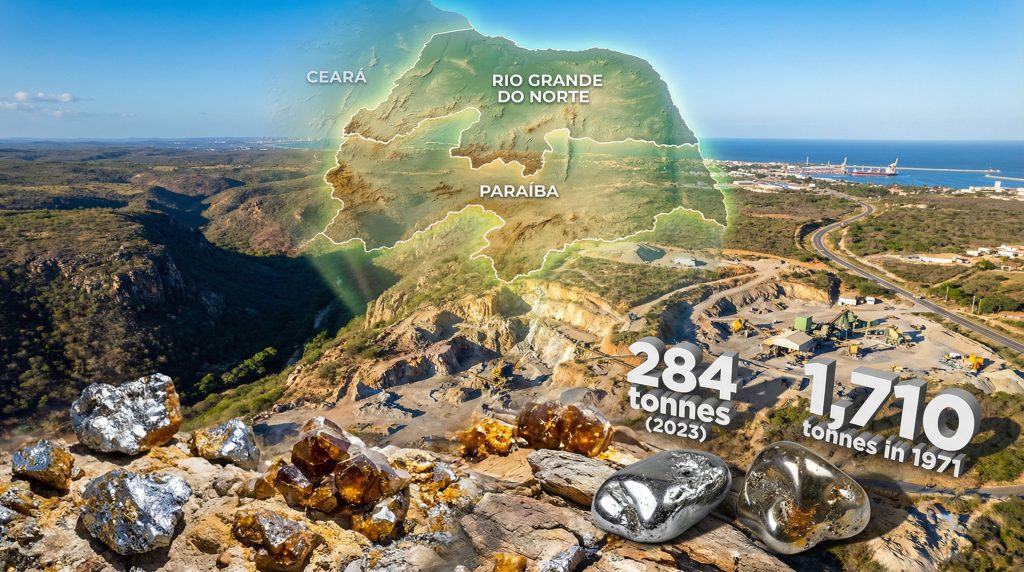
Brazil's tungsten mining activities center on the Seridó Mineral Province, a geological district spanning Rio Grande do Norte, Paraíba, and eastern Ceará states. This northeastern corridor contains approximately 250-300 mapped scheelite occurrences, representing one of South America's most concentrated tungsten mineralisation zones. The province's geological characteristics include tactite-hosted scheelite formations and marble-schist contact zones that provide systematic exploration targets for companies seeking to identify economic deposits.
The proximity to Atlantic shipping infrastructure through the Natal port creates logistical advantages for international export operations. Established road networks connect mining locations to port facilities, reducing transportation costs compared to remote inland deposits requiring substantial infrastructure development. This geographic positioning allows Brazilian producers to serve both Atlantic and Pacific markets efficiently, depending on shipping route optimisation and customer requirements.
Historical Production Context and Market Position
Brazil achieved its peak tungsten production of 1,710 tonnes in 1971, establishing the nation's historical credentials as a significant global supplier. This production maximum demonstrates the geological potential and operational capacity that existed during favourable market conditions and active mining operations throughout the region.
Current production levels reached 284 tonnes in 2023, representing substantial untapped potential relative to historical performance. The 85% historical export rate of scheelite concentrates indicates Brazil's role as a supplier to international markets rather than domestic tungsten consumption. This export orientation positions Brazilian producers to benefit directly from global market dynamics and price movements in international tungsten trading.
Furthermore, the production trajectory from peak historical levels to current output reflects various factors including mine lifecycle management, market conditions, and investment cycles that influence operational decisions across the mining sector. Understanding these historical patterns provides context for evaluating current exploration and development opportunities within established mining districts and helps inform our mineral deposit tiers guide.
How Do Brazil's Active Tungsten Operations Compare Globally?
Major Operating Mines and Production Metrics
Brazilian tungsten mining in Brazil encompasses several operations with varying characteristics and production capabilities. The operational landscape includes both primary mining activities and secondary recovery operations that extract tungsten values from historical mining waste.
| Operation | Location | Grade Range | Capacity | Operational Focus |
|---|---|---|---|---|
| Currais Novos | Rio Grande do Norte | 0.1% W | 4.31M tonnes reserves | Tailings recovery |
| Bodó Mineração | Rio Grande do Norte | 1-1.44% WO₃ | 150 tpd processing | High-grade production |
| Regional Processing | Rio Grande do Norte | >70% WO₃ concentrate | 5,000 tonnes/month | Concentration services |
The grade variations among operations reflect geological diversity within the Seridó Mineral Province. Bodó Mineração's grades of 1-1.44% WO₃ represent relatively high-grade characteristics compared to many global tungsten operations, while the Currais Novos operation focuses on 0.1% W grade material through tailings recovery methodologies.
Processing capacity demonstrates substantial installed infrastructure, with monthly production capabilities reaching 5,000 tonnes of concentrate at regional facilities. This processing scale indicates significant operational infrastructure that can support both current production and potential expansion activities through advanced geological modelling techniques.
Infrastructure and Logistics Advantages
The Seridó Mineral Province benefits from established industrial infrastructure developed through decades of mining activity. Processing facilities utilise flotation and gravity separation methods proven effective for producing concentrates grading 65-70% WO₃, meeting international trading specifications for scheelite concentrates.
Workforce expertise represents a critical competitive advantage, as the region maintains personnel with historical experience in tungsten mining and beneficiation processes. This expertise reduces training requirements and startup times for companies developing new operations or expanding existing facilities.
In addition, transportation infrastructure includes road networks connecting mining locations to the Natal port facility, providing direct access to international shipping. This logistics advantage reduces operational costs compared to remote mining districts requiring substantial transportation infrastructure investment.
Why Are International Companies Targeting Brazilian Tungsten Assets?
Strategic Market Drivers Behind Foreign Investment
Global supply chain diversification objectives drive international company interest in Brazilian tungsten assets. The concentration of tungsten production in China, combined with geopolitical tensions and trade policy volatility, has elevated supply security concerns among defence, aerospace, and technology manufacturers.
Limited high-grade tungsten deposits available for acquisition worldwide creates competitive pressure for exploration and development opportunities in proven mining districts. The Seridó Mineral Province's documented mineralisation and established infrastructure provide rare access to prospective ground within a functioning tungsten mining region.
Rising tungsten prices driven by defence and technology sector demand provide financial incentives for developing production capacity outside traditional Chinese supply sources. This price environment supports economic feasibility studies for both greenfield exploration and brownfield development projects, particularly in light of the critical minerals energy transition.
Perpetual Resources' Brazilian Market Entry Strategy
Australian exploration company Perpetual Resources has secured an 8,714-hectare exploration package in Paraíba state, positioning within the proven tungsten territory of the Seridó Mineral Province. The strategic positioning places their concessions 6 kilometres from the former Quixaba mine and 22 kilometres from the Ilha Grande mine, both historical tungsten producers.
This proximity to known mineralisation provides direct evidence of successful past mining operations and suggests analogous deposit characteristics may exist within the exploration package. The company pursues a dual exploration approach targeting both skarn-type deposits and basement rock mineralisation within the "Zona Raiz" formation.
However, the dual targeting strategy maximises exploration potential across multiple geological settings, increasing the probability of discovering economic mineralisation. Skarn-type deposits represent proven characteristics given historical production from similar settings, while basement rock targeting expands potential beyond traditional contact metamorphic environments.
What Are the Economic Fundamentals Driving Brazilian Tungsten Investment?
Production Trends and Market Dynamics
Brazilian tungsten production demonstrates volatility reflecting market conditions and operational factors affecting mining activities. Recent production data indicates 302 tonnes in 2022 followed by 284 tonnes in 2023, representing a 5.96% annual decline despite broader market recovery trends.
| Year | Production (tonnes) | Annual Change | Market Context |
|---|---|---|---|
| 1971 | 1,710 | Peak historical | Maximum capacity demonstration |
| 2022 | 302 | Recovery phase | Market improvement |
| 2023 | 284 | -5.96% decline | First reduction after growth |
The substantial gap between historical peak production of 1,710 tonnes and current levels of 284 tonnes indicates significant unutilised production potential within the region. This capacity differential suggests opportunities for both reactivating historical operations and developing new production sources as part of the broader mining industry evolution.
Critical Mineral Classification Impact
Tungsten's designation as a strategic material enhances investment appeal for companies seeking exposure to essential elements for defence, aerospace, and advanced technology applications. This classification reflects supply security concerns and demand growth projections that support long-term price stability expectations.
Furthermore, supply security considerations drive both private sector investment and potential policy support for domestic production development. Technology sector growth creates sustained demand fundamentals supporting exploration and development investment decisions across the global tungsten mining in Brazil sector.
How Do Geological Factors Influence Investment Potential?
Scheelite Deposit Characteristics and Extraction Methods
Tungsten mining in Brazil focuses primarily on scheelite mineralisation occurring within tactite-hosted formations and marble-schist contact zones. These geological settings provide systematic exploration targets that geological teams can evaluate using established exploration methodologies.
The "Zona Raiz" basement rock mineralisation expands the deposit model beyond traditional contact metamorphic settings to include intrusive-related mineralisation styles. This geological diversity increases the probability of discovering economic deposits across wider areas within exploration territories.
Consequently, scheelite extraction utilises flotation and gravity separation processes that have proven effective within the Seridó district. These established beneficiation methods reduce technical risk for companies developing new operations, as processing technology has demonstrated capability to produce concentrates exceeding 70% WO₃.
Processing Technology and Concentrate Quality
Regional processing facilities achieve concentrate grades of 65-70% WO₃, meeting international trading standards for scheelite products. This quality specification ensures market access for producers and supports premium pricing for high-grade concentrates.
The availability of established processing infrastructure reduces capital requirements for companies developing new mining operations. Rather than constructing greenfield beneficiation plants, developers can potentially utilise existing facilities or modify proven processing flowsheets for their specific ore characteristics.
The next major ASX story will hit our subscribers first
What Investment Risks and Opportunities Define the Sector?
Regulatory Environment and Permitting Landscape
Brazilian mining regulations provide established frameworks for exploration and production activities through the Agência Nacional de Mineração (ANM) licensing system. Clear regulatory processes reduce uncertainty for companies seeking to advance projects from exploration through development phases, with proper understanding of mining permitting essentials proving crucial for success.
Environmental compliance requirements emphasise sustainable mining practices and community consultation protocols. Companies must demonstrate social licence to operate through engagement with local communities and adherence to environmental protection standards.
In addition, the regulatory framework supports both domestic and international investment whilst maintaining oversight of mining activities. This balance provides operational certainty for companies whilst ensuring responsible resource development practices.
Market Volatility and Price Risk Management
Tungsten price sensitivity to geopolitical tensions and trade policies creates both opportunities and risks for production planning and investment decisions. Price volatility affects project economics and requires robust financial modelling to evaluate development scenarios.
Long-term contract opportunities with defence and aerospace manufacturers provide potential price stability for producers willing to commit production capacity. These supply agreements can support project financing by reducing market exposure risks.
However, hedging strategies enable production planning and capital investment decisions despite market volatility. Companies can utilise financial instruments to manage price risk whilst maintaining exposure to potential upside price movements.
How Does Brazil's Tungsten Sector Compare to Global Competitors?
Competitive Positioning Against Major Producers
Brazilian tungsten mining in Brazil offers cost advantages compared to European and North American operations due to lower labour costs, established infrastructure, and favourable geological conditions. These competitive factors support economic production at various tungsten price levels.
Quality premiums for high-grade scheelite concentrates provide additional revenue opportunities for producers achieving superior product specifications. The ability to consistently produce concentrates exceeding 70% WO₃ supports premium pricing in international markets.
For instance, strategic location advantages enable Brazilian producers to serve both Atlantic and Pacific markets efficiently. Shipping route flexibility provides operational advantages compared to landlocked or single-market-oriented competitors.
Technology and Innovation Opportunities
Advanced exploration techniques including geophysical surveys and geochemical sampling can identify new deposits within established mining districts. These technologies increase exploration success rates whilst reducing development timeframes.
Processing efficiency improvements through flotation optimisation and gravity separation enhancement can reduce operational costs and increase recovery rates. Technology upgrades support competitive positioning and margin improvement opportunities.
Moreover, sustainable mining practices meeting Environmental, Social, and Governance (ESG) investment criteria attract capital from institutions prioritising responsible investment approaches. ESG compliance supports access to lower-cost financing and broader investor participation.
What Future Scenarios Could Transform Brazilian Tungsten Mining?
Expansion Potential and Resource Development
Unexplored targets within established mining districts provide substantial exploration upside potential. The 250-300 mapped scheelite occurrences represent systematic exploration opportunities that could expand regional production capacity significantly.
Secondary recovery opportunities from historical tailings deposits offer potential low-cost production sources. These materials may contain recoverable tungsten values if processing costs remain economical relative to primary ore mining.
Furthermore, integration possibilities between adjacent operations could create operational synergies and cost efficiencies. Shared processing facilities, transportation infrastructure, and support services can reduce operational costs for multiple operators within the region.
Market Demand Projections and Strategic Planning
Defence sector growth driven by global security concerns and military modernisation supports long-term tungsten consumption projections. These applications require high-quality tungsten products that Brazilian producers can supply.
Technology applications expanding beyond traditional uses include electronics, renewable energy systems, and advanced manufacturing processes. These emerging applications create additional demand sources supporting market diversification.
Consequently, supply chain resilience requirements favour non-Chinese tungsten sources among manufacturers seeking geographic diversification. This preference supports premium pricing and long-term supply agreements for alternative producers.
Key Takeaways for Tungsten Mining Investment in Brazil
Investment Thesis Summary
Brazil's tungsten mining sector combines proven geological endowment with significant exploration upside within the established Seridó Mineral Province. The region's 250-300 mapped scheelite occurrences provide systematic exploration targets supported by historical production evidence and existing infrastructure.
Strategic positioning in diversified global supply chains addresses supply security concerns among international manufacturers seeking alternatives to Chinese tungsten sources. This market positioning supports premium pricing and long-term contract opportunities.
In addition, operational infrastructure including processing facilities, transportation networks, and workforce expertise reduces development risks and capital requirements for companies advancing tungsten projects. These advantages support competitive production costs and operational efficiency.
Risk-Adjusted Return Considerations
Political stability in Brazil supports long-term mining investments with established regulatory frameworks and property rights protections. This environment reduces sovereign risk compared to less stable mining jurisdictions.
Currency exposure management becomes critical for companies generating international revenue streams in USD whilst incurring operational costs in Brazilian reais. Exchange rate hedging strategies can mitigate this financial risk.
Environmental and social governance alignment with modern standards ensures sustainable development practices and community acceptance. ESG compliance supports access to institutional capital and reduces operational risks.
Disclaimer: This analysis is for informational purposes only and does not constitute investment advice. Tungsten mining investments involve significant risks including commodity price volatility, operational challenges, and regulatory changes. Readers should conduct their own due diligence and consult with qualified financial advisors before making investment decisions.
Ready to Identify the Next Major Tungsten Discovery?
Discovery Alert's proprietary Discovery IQ model delivers instant notifications on significant ASX mineral discoveries, including critical commodities like tungsten that are driving supply chain diversification strategies worldwide. Explore how historic mineral discoveries have generated substantial market returns by visiting Discovery Alert's dedicated discoveries page and begin your 14-day free trial today to position yourself ahead of the market.