August 14, 2026
When Collective Discipline Meets Sovereign Ambition: The Architecture of OPEC's Biggest Fracture in Decades
The history of oil producer alliances is punctuated by moments when individual national interest overwhelms collective market management. Quota frameworks, no matter how carefully constructed, carry an inherent structural flaw: they ask producing nations to voluntarily restrain profitable output for the benefit of group price stability. When a member's installed capacity outpaces its allocated quota by a meaningful margin, the economic cost of compliance grows until the political will to maintain it erodes entirely. That is precisely the dynamic that has defined Abu Dhabi's relationship with the wider OPEC+ structure, and it is the underlying force behind UAE to exit OPEC — one of the most consequential producer departures in the organisation's six-decade history.
When big ASX news breaks, our subscribers know first
What the UAE's Decision to Exit OPEC Actually Means
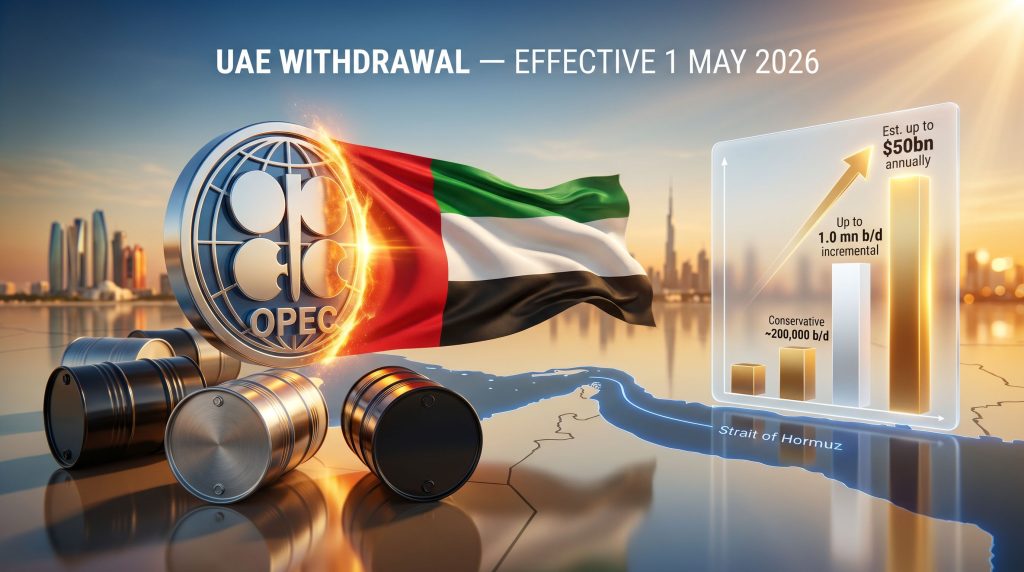
Confirmed on 28 April 2026 through the UAE's state news agency WAM, the decision to withdraw from both OPEC and the broader OPEC+ alliance took effect on 1 May 2026. The scope of the exit is total: Abu Dhabi is no longer bound by either the core OPEC collective quota framework or the extended OPEC+ production agreements that incorporate Russia, Kazakhstan, Oman, and several other non-OPEC producers.
To understand why this distinction matters, consider the structural difference between the two frameworks:
| Framework | Member Scope | Production Mechanism | UAE Status Post-Exit |
|---|---|---|---|
| OPEC | 13 core members | Consensus-based collective quota system | No longer bound |
| OPEC+ | OPEC + Russia, Kazakhstan, Oman, and others | Coordinated output management across broader coalition | No longer bound |
The practical consequence is that production decisions in Abu Dhabi will now be governed entirely by commercial signals, bilateral supply contracts, and physical infrastructure constraints rather than multilateral consensus requirements. Where previously any meaningful output increase required negotiation and approval within OPEC+ forums, the UAE now operates with full sovereign discretion over its crude volumes.
Furthermore, the UAE's official framing of the policy shift is telling. The announcement emphasised that output would be aligned more effectively with global market conditions, whilst reinforcing the country's standing as a stable and dependable supplier. The emphasis on gradual, demand-responsive growth signals a deliberate effort to avoid triggering a price war with remaining OPEC+ members.
Source: Argus Media, UAE to Exit OPEC, Pursue Independent Output Policy, 28 April 2026
The Long Road to Independence: How Quota Friction Built Over Years
Abu Dhabi joined OPEC in 1967, predating the UAE's establishment as a federal state by four years. The country continued as an OPEC member following the federation's formation in 1971, making the 2026 withdrawal the conclusion of approximately 59 years of membership. Understanding why that relationship fractured requires tracing a specific fault line that deepened progressively from 2018 onward.
How Did the Baseline Dispute Escalate?
The critical inflection point was the production baseline methodology embedded in the 2018 OPEC+ quota framework. Baselines were anchored to historical production levels, which placed the UAE's reference point at approximately 3.0 million barrels per day (b/d). The problem was that Abu Dhabi did not stop investing in upstream capacity after 2018. Systematic capital deployment into reservoir development, processing infrastructure, and export facilities expanded the UAE's productive potential well beyond that baseline.
By 2021, the divergence between installed capacity and permitted output had grown sufficiently that the UAE formally sought to raise its baseline to approximately 3.5 million b/d, representing a roughly 16.7% increase in the formal quota allocation. The OPEC+ framework, operating on consensus, could not accommodate the request without triggering similar demands from other capacity-expanding members.
The breakdown became public when UAE negotiators departed OPEC+ talks in 2021, a move that signalled Abu Dhabi's willingness to challenge the Saudi-led consensus architecture. That walkout was not resolved cleanly. Tensions over quota methodology, baseline calculations, and production governance continued to simmer across the following years, accumulating into the formal exit announced in April 2026.
The chronological deterioration follows a clear pattern:
- 2018: OPEC+ framework locks in a ~3.0 million b/d production baseline for the UAE
- 2018 to 2021: Abu Dhabi expands upstream capacity through capital investment programmes
- 2021: UAE requests a baseline increase to ~3.5 million b/d; formal walkout from OPEC+ talks follows
- 2021 to 2026: Quota methodology friction persists without structural resolution
- 28 April 2026: UAE announces full withdrawal from OPEC and OPEC+ effective 1 May 2026
Source: Argus Media, UAE to Exit OPEC, Pursue Independent Output Policy, 28 April 2026
The Hormuz Disruption Variable: Geopolitics Meets Production Strategy
The UAE's exit does not occur in a geopolitical vacuum. Shipping disruptions through the Strait of Hormuz, driven by conflict in the wider region, had already reshaped supply flows and injected acute volatility into crude markets before the announcement. The Hormuz strait is the world's most critical oil chokepoint, with approximately 20% of global petroleum liquids transiting through it annually according to the US Energy Information Administration.
However, for the UAE, the Hormuz disruption context is double-edged. On one side, it creates logistical complications for crude export routing. On the other, it amplifies Abu Dhabi's strategic value as a supplier with infrastructure designed to partially bypass the chokepoint. These geopolitical trade tensions have consequently accelerated Abu Dhabi's case for independent production governance.
The port of Fujairah on the UAE's eastern coastline sits outside the strait on the Gulf of Oman, connected to Abu Dhabi's production infrastructure via the Abu Dhabi Crude Oil Pipeline (ADCOP), which carries approximately 1.5 million b/d of capacity. This bypass capability positions the UAE as one of the few Persian Gulf producers capable of exporting meaningful crude volumes even during periods of Hormuz disruption.
Japan's response to the disruption illustrates the strategic premium placed on this kind of supply reliability. Japan's Ministry of Economy, Trade and Industry announced plans to release approximately 36 million barrels from national reserves beginning 1 May 2026, whilst Japanese refiners actively diversified procurement toward US crude and alternative routing options. A tanker carrying approximately 910,000 barrels of WTI crude was confirmed as the first US cargo to arrive in Japan following the commencement of the US-Iran war. Against this backdrop, a quota-free UAE with operational bypass infrastructure is an attractive proposition for Asian importers seeking stability.
Source: Argus Media, Japan to Release Second Batch of Oil Reserves From May, 24 April 2026; UAE to Exit OPEC, Pursue Independent Output Policy, 28 April 2026
Economic Consequences: What Production Freedom Is Actually Worth
The removal of formal output constraints creates a theoretical upside scenario that looks compelling in isolation. However, translating installed capacity into realised revenue requires navigating a set of constraints that pure capacity numbers obscure. For context, the broader crude oil market overview heading into 2026 was already shaped by competing supply and demand pressures that will influence how Abu Dhabi's additional barrels are absorbed.
Analysts have modelled the potential revenue implications across a range of output scenarios:
| Scenario | Estimated Additional Output | Revenue Context |
|---|---|---|
| Conservative near-term | ~200,000 b/d incremental | Modest uplift; constrained by demand absorption |
| Baseline gradual ramp-up | Phased increases aligned to demand signals | Dependent on global price environment |
| Optimistic full capacity deployment | Up to 1.0 million b/d incremental | Estimated up to $50 billion annually at mid-range pricing |
Economic modelling of the full-capacity scenario suggests a theoretical annual revenue uplift approaching $50 billion, but this figure assumes sustained demand absorption of approximately 1.0 million b/d of additional UAE crude at mid-range Brent pricing. In practice, demand elasticity is the binding constraint rather than physical production capacity.
The UAE's official position reinforces a measured approach. Statements from Abu Dhabi emphasised continued commitment to supply stability and cost competitiveness, alongside sustained investment across oil, gas, renewables, and lower-carbon technologies. This language signals a producer that intends to grow output commercially rather than aggressively, prioritising margin quality and market relationships over volume maximisation.
Abu Dhabi's geological advantages support a competitive cost position. The UAE's major onshore and offshore fields, including the giant Bu Hasa and Upper Zakum reservoirs, benefit from high reservoir productivity and relatively low lifting costs, placing Abu Dhabi toward the lower end of the global supply cost curve. This means incremental barrels can be brought to market without the premium cost structures that constrain higher-cost producers.
Source: Argus Media, UAE to Exit OPEC, Pursue Independent Output Policy, 28 April 2026
OPEC After the UAE: Residual Power and Precedent Risk
The structural weight of the UAE's exit is most clearly understood through comparison with previous OPEC departures. Qatar left the organisation in December 2019, framing its decision around LNG strategy rather than crude oil politics. Because Qatar's crude production was relatively modest, the market impact of that exit was limited. The UAE's departure, however, carries materially greater significance, as the oil price geopolitics surrounding a top-five producer's exit are of an entirely different order.
| Event | Country | Year | Primary Driver | Market Significance |
|---|---|---|---|---|
| Qatar OPEC exit | Qatar | 2019 | LNG strategy pivot | Limited crude market impact |
| Indonesia suspension | Indonesia | 2016 | Net importer status | Minimal |
| Ecuador exits and re-entries | Ecuador | Multiple | Quota disputes and fiscal pressure | Regional significance |
| UAE withdrawal | UAE | 2026 | Capacity expansion and quota friction | Significant: top-five producer and founding member |
With the UAE removed from the collective framework, OPEC retains governance over approximately 38% of global crude supply, but the composition of that bloc has been materially weakened at a critical moment. The more consequential risk is not the immediate output impact but the precedent effect on remaining members with similar grievances.
Could Other Members Follow?
Several OPEC members have periodically expressed frustration with baseline allocation methodologies, particularly those that have expanded upstream capacity since their reference baselines were set. OPEC's market influence was already being tested before this departure; however, if Abu Dhabi's exit demonstrates that sovereignty over production decisions is achievable without catastrophic market retaliation, it creates a template that quota-constrained producers may evaluate with increasing interest.
Members lacking Abu Dhabi's financial reserves, diversified economic base, and bypass infrastructure would face far greater risks in pursuing the same path, which limits the immediate contagion risk. Nevertheless, the psychological precedent is firmly set.
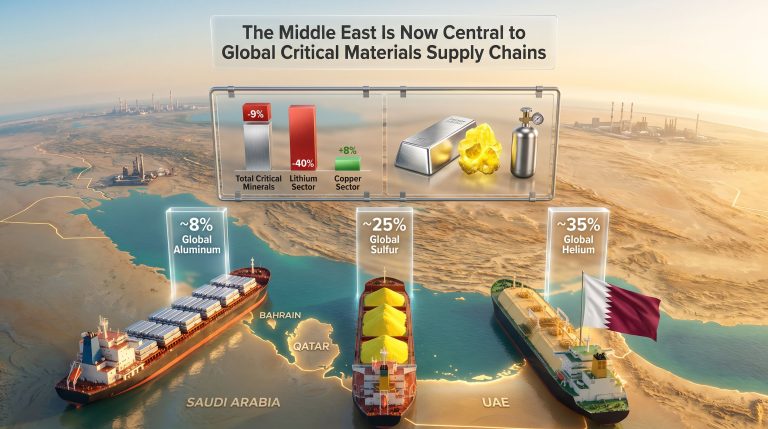
The Saudi-UAE relationship, historically a cornerstone of Gulf energy diplomacy, now shifts from strategic production partnership to potential competitive tension. Both countries are low-cost producers with large reserve bases, and both have incentives to capture market share from higher-cost producers during periods of energy transition-driven demand uncertainty. Furthermore, Saudi strategic ambitions across the broader energy and minerals landscape add another dimension to how Riyadh may respond to Abu Dhabi's independent pivot.
The next major ASX story will hit our subscribers first
How Asian Importers and Global Markets Will Adapt
For major crude-importing nations in Asia, a quota-free UAE represents a meaningful supply diversification opportunity. Japan, South Korea, India, and China collectively account for a substantial share of UAE crude offtake, and all four have strategic incentives to deepen bilateral supply relationships with a producer that can now commit to volume growth without reference to collective allocation constraints.
Japan's position is particularly instructive. Already managing reserves releases and emergency procurement from the US in response to Hormuz disruptions, Japanese refiners benefit structurally from a UAE that can export through Fujairah and offer contractual volume certainty. India and China, as the swing destinations most likely to absorb incremental UAE barrels at scale, will assess the pricing and contractual terms offered by an independent Abu Dhabi against competing supply from Russia, West Africa, and the US.
The Case For and Against: A Balanced Assessment
Arguments supporting the exit decision:
- Removal of quota ceilings that prevented monetisation of expanded upstream capacity
- Ability to respond to market signals without requiring multilateral consensus
- Strengthened bilateral energy relationships with major consuming nations across Asia and Europe
- Alignment with Abu Dhabi's long-term economic diversification agenda, spanning oil, gas, renewables, and lower-carbon technologies
- Fujairah bypass infrastructure reduces export vulnerability during Hormuz disruptions
Arguments highlighting embedded risks:
- Loss of formal influence within a bloc that still governs approximately 38% of global crude supply
- Potential for retaliatory quota relaxation from remaining members, compressing price realisations
- Fracture of strategic coordination with Saudi Arabia, which had historically provided collective pricing discipline
- Actual output gains are likely to be demand-constrained and gradual, limiting near-term revenue realisation
- The broader regional geopolitical environment introduces logistics and security risks that independent production policy cannot fully insulate against
Disclaimer: Production volume estimates, revenue projections, and market impact assessments discussed in this article represent analytical modelling based on publicly available information and should not be construed as investment advice. Actual outcomes will depend on a range of macroeconomic, geopolitical, and operational variables that carry significant uncertainty.
Frequently Asked Questions
Has the UAE officially left OPEC?
The UAE confirmed its withdrawal from both OPEC and the OPEC+ alliance on 28 April 2026 through the state news agency WAM, with the exit taking effect on 1 May 2026. Al Jazeera reported the departure as a significant blow to the broader producer cartel.
How long was the UAE a member of OPEC?
Abu Dhabi joined OPEC in 1967, and membership continued following the UAE's establishment as a federal state in 1971. The 2026 exit concludes approximately 59 years of membership, placing it among the most consequential departures in OPEC's history.
Will UAE oil production increase after leaving OPEC?
Output growth is expected to be phased and demand-aligned rather than immediate. Abu Dhabi has signalled a commitment to gradual increases that reflect market absorption capacity rather than unconstrained volume maximisation.
What does the UAE's OPEC exit mean for oil prices?
The near-term price impact hinges on the pace of any UAE output ramp-up, the trajectory of Hormuz-related supply disruptions, and how remaining OPEC+ members respond. A measured production increase may exert only limited downward price pressure, whilst more aggressive expansion in an already uncertain market could contribute to supply overhang.
Could other OPEC members follow the UAE's example?
The exit establishes a precedent, but most OPEC members lack the financial reserves, infrastructure advantages, and export bypass capability that make independent production policy viable for Abu Dhabi. Contagion risk exists in theory but is constrained in practice.
What is OPEC+ and how does it differ from OPEC?
OPEC is the core 13-member producer alliance, whilst OPEC+ is an extended coalition that incorporates non-OPEC producers including Russia, Kazakhstan, and Oman. The UAE to exit OPEC decision covers both frameworks, removing Abu Dhabi entirely from collective production governance.
For ongoing crude oil market analysis and supply intelligence, Argus Media provides comprehensive coverage of OPEC dynamics and global oil market developments at argusmedia.com.
Want to Stay Ahead of the Next Major Resource Market Shift?
When sovereign production decisions reshape global commodity flows at this scale, the ripple effects reach every corner of the resources sector — including ASX-listed mineral explorers and producers. Discovery Alert's proprietary Discovery IQ model delivers real-time alerts on significant ASX mineral discoveries the moment they are announced, turning complex market signals into actionable opportunities for investors at every level. Explore historic examples of exceptional discovery returns and begin your 14-day free trial today to ensure you are positioned ahead of the market.