
May 21, 2026
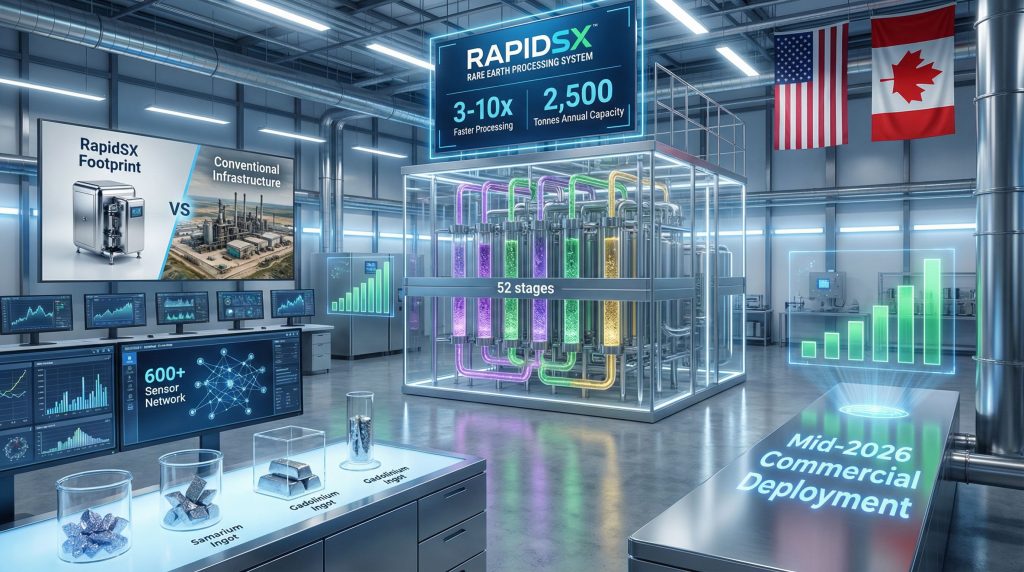
Modern rare earth element processing stands at a technological crossroads where decades-old separation methodologies meet contemporary engineering capabilities. The global dominance of traditional solvent extraction systems has created both operational precedents and strategic vulnerabilities that newer processing architectures aim to address through automation, spatial efficiency, and accelerated throughput rates. Furthermore, the Ucore RapidSX rare earth separation platform represents a fundamental shift from mixer-settler tank arrays toward column-based separation architecture that addresses critical minerals energy security challenges facing Western nations.
Understanding the Technical Architecture of Column-Based Separation
Core Engineering Principles Behind RapidSX Technology
The Ucore RapidSX rare earth separation platform represents a fundamental shift from mixer-settler tank arrays toward column-based separation architecture integrated with computerised process control systems. This technological transition modernises solvent extraction chemistry that has remained largely unchanged for over five decades in global rare earth processing facilities. Moreover, this advancement reflects broader trends in mining industry evolution towards automated processing systems.
Traditional separation systems rely on extensive arrays of mixing tanks and settling vessels that require substantial facility footprints and intensive manual oversight. The RapidSX design consolidates these operations into vertical column configurations that integrate automated feedback mechanisms throughout the separation process.
Key technical specifications demonstrate the operational advantages of this architectural approach:
• Automated Process Control: Modern computerised monitoring systems replace manual oversight requirements
• Column-Based Design: Vertical processing configuration reduces horizontal facility requirements
• Integrated Feedback Systems: Real-time process adjustment capabilities optimise separation efficiency
• Modular Configuration: Scalable design allows for processing volume adjustments
The engineering principles underlying this technology focus on maximising contact efficiency between rare earth-bearing solutions and extraction solvents while minimising the physical infrastructure required for separation operations. Additionally, the integration of automation in mining principles enables continuous optimisation of processing parameters.
Processing Speed and Efficiency Metrics
Performance testing of the RapidSX system has demonstrated significant operational advantages compared to conventional separation methodologies. Independent evaluation indicates processing speeds approaching ten times faster than traditional mixer-settler systems while requiring approximately one-third the facility footprint.
These efficiency gains result from several technological improvements:
Enhanced Contact Efficiency: Column design maximises solution-solvent interaction time
Reduced Material Handling: Automated systems minimise manual transfer operations between processing stages
Optimised Flow Rates: Computer-controlled solution management maintains optimal processing parameters
Continuous Operation: Automated monitoring enables extended operational periods with minimal intervention
The combination of accelerated processing rates and reduced spatial requirements creates opportunities for commercial-scale rare earth separation in regions where traditional facility construction would be economically or logistically challenging. Consequently, this technology supports the development of Australia's critical minerals strategic reserve initiatives.
When big ASX news breaks, our subscribers know first
How Does RapidSX Address Critical Rare Earth Supply Chain Bottlenecks?
The Separation Challenge in Strategic Elements
Contemporary rare earth supply chain vulnerabilities concentrate primarily in midstream processing capabilities rather than raw material availability. While rare earth-bearing ores exist across multiple global jurisdictions, the specialised separation infrastructure required to isolate individual elements remains geographically concentrated.
Samarium and gadolinium exemplify this processing bottleneck phenomenon. Both elements serve critical functions in advanced military technologies:
Samarium Applications:
• Heat-resistant permanent magnets for guidance systems
• Drone component manufacturing
• Radar system integration
• Fighter jet electronic components
Gadolinium Applications:
• High-strength jet engine alloy production
• Specialised radar magnet manufacturing
• Guidance system magnetic components
• Advanced materials for aerospace applications
China's dominance in global production of both elements creates strategic supply dependencies for Western military manufacturers. Beijing's implementation of strict export controls on these materials and components containing them has intensified efforts to develop alternative processing capacity in allied nations.
The February 2026 Pentagon request for proposals seeking domestic production capabilities for thirteen strategic minerals, including samarium and gadolinium, underscores the urgency surrounding Western processing infrastructure development. This initiative aligns with broader critical minerals strategy objectives across allied nations.
Modular Design for Multiple Feedstock Processing
The RapidSX platform incorporates feedstock flexibility that enables processing of diverse rare earth-bearing materials beyond traditional ore concentrates. This adaptability addresses supply chain resilience by reducing dependence on specific input sources.
Alternative Feedstock Capabilities:
-
Magnet Recycling: Recovery from end-of-life permanent magnet applications
-
Electronic Waste Processing: Extraction from consumer electronics and industrial equipment
-
Lighting Waste Streams: Recovery from fluorescent and specialised lighting products
-
Industrial Scrap: Processing of manufacturing waste containing rare earth elements
This feedstock diversity creates opportunities for distributed processing networks that can utilise multiple input streams within regional markets. The modular system design enables reconfiguration for different element combinations based on feedstock availability and market demand.
The scalable nature of the technology allows for deployment across various production volumes, from demonstration facilities processing hundreds of kilograms annually to commercial operations targeting thousands of tonnes of rare earth oxide production. Furthermore, Ucore's RapidSX technology offers significant advantages in processing efficiency and operational flexibility.
What Are the Commercial Deployment Timelines and Capacity Targets?
Louisiana Strategic Metals Complex Implementation
The transition from research and development operations to commercial-scale deployment represents a critical phase in RapidSX technology maturation. UCore's Louisiana Strategic Metals Complex serves as the primary vehicle for demonstrating industrial-scale separation capabilities using the refined processing architecture.
Commercial deployment planning indicates a mid-2026 timeline for initial operations, representing the culmination of extensive optimisation work conducted at the Kingston, Ontario research facility. This transition involves scaling column-based separation systems from laboratory and demonstration scales to industrial processing volumes.
Implementation Milestones:
• Phase 1: Equipment installation and commissioning (early 2026)
• Phase 2: Initial processing trials and system optimisation (mid-2026)
• Phase 3: Commercial production ramp-up (late 2026)
• Phase 4: Full-scale operational capacity achievement (2027)
The Louisiana facility represents the first commercial application of Ucore RapidSX rare earth separation technology in a production environment designed to serve North American manufacturers with domestically processed rare earth oxides.
Government Funding and Strategic Partnerships
International government support for RapidSX development reflects broader strategic priorities related to critical mineral supply security and allied supply chain resilience. Multiple funding sources have supported the technology's advancement from laboratory research to near-commercial readiness.
Canadian Government Investment:
| Funding Source | Amount | Purpose | Timeline |
|---|---|---|---|
| Natural Resources Canada | C$36.3M (~$25.9M USD) | Samarium/Gadolinium processing development | October 2025 |
| Federal Economic Development Agency | Included in above | Southern Ontario facility support | October 2025 |
The Canadian funding specifically targets development of processing circuits capable of recovering samarium and gadolinium from multiple feedstock sources. This investment aligns with Canada's positioning as a trusted supplier to allied nations for critical materials.
U.S. Department of Defense Support:
American military backing exceeding $22 million has advanced RapidSX technology toward commercial readiness. This support reflects Pentagon priorities for domestic rare earth processing capabilities, particularly for elements classified as mission-critical to defence applications.
The combination of Canadian and American government support creates a bilateral framework for rare earth processing development that serves both nations' strategic mineral security objectives. Moreover, Ucore's commercial planning initiatives demonstrate the technology's readiness for market deployment.
How Does RapidSX Compare to Traditional Chinese Methods?
Conventional Solvent Extraction Limitations
Traditional rare earth separation relies on solvent extraction methodology that has evolved incrementally over more than five decades of industrial application. Chinese facilities have refined these processes through extensive operational experience, creating global benchmarks for separation efficiency and cost-effectiveness.
Conventional systems employ mixer-settler configurations that utilise large arrays of tanks for solution mixing and phase separation. This architecture requires substantial facility footprints and intensive labour oversight throughout processing operations.
Traditional System Characteristics:
• Infrastructure Requirements: Extensive tank farm installations requiring significant land area
• Labour Intensity: Manual monitoring and adjustment of processing parameters
• Process Control: Limited automation and real-time optimisation capabilities
• Operational Complexity: Multiple discrete processing stages requiring coordinated management
While these systems have demonstrated reliable performance over decades of operation, they represent mature technology with limited opportunities for efficiency improvements without fundamental architectural changes.
| Performance Metric | RapidSX Technology | Traditional Chinese Methods |
|---|---|---|
| Processing Speed | ~10x faster processing rates | Established baseline standards |
| Facility Footprint | 1/3 spatial requirement | Full-scale infrastructure needs |
| Automation Level | Computer-controlled systems | Manual/semi-automated operations |
| Operational Heritage | Modern engineering design | 50+ years proven operation |
Quality and Purity Standards Achievement
The transition from traditional mixer-settler systems to column-based separation requires demonstration of equivalent or superior product quality standards. Rare earth oxide purity specifications for defence and high-technology applications demand consistent achievement of stringent chemical composition requirements.
Ucore RapidSX rare earth separation testing has focused on validating separation efficiency across the full spectrum of rare earth elements while maintaining the high purity standards established by conventional processing methods. Independent verification of product specifications ensures compatibility with existing supply chain quality requirements.
Quality Assurance Capabilities:
• Automated Monitoring: Real-time chemical composition analysis throughout processing
• Process Optimisation: Computer-controlled parameter adjustment for consistent output quality
• Product Specification Compliance: Achievement of industry-standard purity requirements
• Batch-to-Batch Consistency: Reduced variation through automated process control
The integration of modern analytical instrumentation with automated process control creates opportunities for quality improvements beyond traditional manual oversight capabilities.
What Strategic Elements Can RapidSX Process for Defence Applications?
Mission-Critical Rare Earth Processing Capabilities
Pentagon strategic mineral priorities identify samarium and gadolinium as elements where domestic processing capabilities directly impact national security preparedness. These elements serve irreplaceable functions in advanced military systems where alternative materials cannot provide equivalent performance characteristics.
Samarium Defence Applications:
The high-temperature stability of samarium-based permanent magnets makes them essential for guidance systems operating in extreme thermal environments. Fighter jet electronics, drone navigation systems, and radar installations require magnets that maintain magnetic properties under thermal stress conditions that would degrade conventional permanent magnet materials.
Gadolinium Defence Applications:
Gadolinium's unique metallurgical properties enable high-strength alloy production for jet engine components that must withstand extreme mechanical and thermal stresses. Additionally, gadolinium-based magnetic materials provide specialised performance characteristics required for advanced radar and guidance system applications.
The classification of both elements on Pentagon priority lists reflects their irreplaceable nature in weapons systems where performance degradation could compromise mission success or personnel safety.
Feedstock Flexibility and Supply Chain Resilience
Strategic mineral security requires processing systems capable of utilising diverse input sources to reduce dependence on specific supply chains or geographical regions. RapidSX feedstock flexibility addresses this requirement through adaptation to multiple rare earth-bearing materials.
Input Source Diversification:
-
Primary Ore Processing: Traditional rare earth concentrate separation
-
Recycled Content: Recovery from end-of-life military and civilian applications
-
Waste Stream Recovery: Processing of industrial and consumer waste materials
-
Strategic Reserve Materials: Processing of government stockpile materials
This feedstock diversity creates opportunities for supply chain resilience that reduces vulnerability to disruptions in specific input sources. The ability to process recycled materials also addresses sustainability considerations while contributing to strategic mineral independence.
The modular design enables rapid reconfiguration for different processing priorities based on strategic requirements or supply availability changes.
What Are the Economic and Operational Advantages of RapidSX Implementation?
Cost-Benefit Analysis of Modern Separation Technology
Economic evaluation of RapidSX implementation must consider both capital expenditure requirements and operational cost advantages compared to traditional separation infrastructure. The reduced facility footprint and automated operation create multiple cost advantage categories.
Capital Investment Considerations:
• Land Requirements: Reduced real estate costs due to compact facility design
• Construction Costs: Lower infrastructure investment for column-based systems
• Equipment Complexity: Modern process control systems require specialised instrumentation
• Installation Timeline: Faster deployment compared to traditional tank farm construction
Operational Cost Advantages:
• Labour Efficiency: Automated systems reduce personnel requirements
• Energy Optimisation: Improved processing efficiency reduces power consumption per unit output
• Maintenance Simplification: Modular design enables targeted component maintenance
• Quality Control: Automated monitoring reduces quality assurance costs
The combination of reduced capital requirements and operational efficiency gains creates favourable economic conditions for commercial deployment in markets where traditional separation infrastructure would be economically challenging.
Market Positioning and Competitive Advantages
North American rare earth separation capacity currently represents a small fraction of global processing capability, creating opportunities for strategic capacity development that serves both commercial and security objectives. RapidSX technology positioning addresses this capacity gap through deployment of modern processing architecture.
Strategic Market Position:
• Technology Leadership: Modern engineering design advantages over conventional systems
• Operational Efficiency: Superior processing metrics compared to traditional methods
• Supply Chain Security: Domestic processing reduces import dependencies
• Scalability: Modular design enables capacity expansion based on market demand
The competitive advantages of automated, high-efficiency processing create market opportunities in regions where traditional separation infrastructure development would require substantially larger capital investments and operational complexity.
The next major ASX story will hit our subscribers first
How Will RapidSX Technology Shape Future Rare Earth Processing?
Industry Transformation Potential
The successful commercialisation of column-based rare earth separation technology could catalyse broader industry adoption of automated processing systems. This technological transition represents a shift from labour-intensive operations toward capital-intensive automated facilities that achieve superior efficiency metrics.
Technology Adoption Pathways:
-
Demonstration Phase: Successful commercial operation validation
-
Early Adoption: Implementation by strategically motivated operators
-
Market Expansion: Broader industry adoption based on economic advantages
-
Technology Evolution: Continuous improvement and optimisation development
The modular nature of RapidSX technology enables deployment across various scales and applications, from specialised processing of specific elements to comprehensive rare earth separation facilities serving regional markets.
Integration opportunities with upstream mining operations and downstream manufacturing facilities create potential for vertically integrated supply chains that reduce transportation costs and supply chain complexity.
Long-term Strategic Implications
The development of Western rare earth processing capabilities using advanced separation technology addresses strategic vulnerabilities that have constrained defence manufacturing and high-technology production. Successful deployment could reshape global rare earth supply chain architecture.
Strategic Supply Chain Evolution:
• Geographic Diversification: Processing capacity development outside traditional production regions
• Allied Collaboration: International cooperation on critical mineral supply security
• Technology Transfer: Sharing of advanced processing capabilities among allied nations
• Supply Chain Resilience: Reduced dependence on concentrated processing infrastructure
The combination of government strategic priorities and commercial viability creates favourable conditions for sustained technology development and market expansion. Continued advancement of automated separation systems could establish new benchmarks for efficiency and cost-effectiveness in rare earth processing.
Long-term market rebalancing effects may include increased competition in rare earth processing services and expanded access to processed materials for manufacturers in regions previously dependent on imported rare earth oxides.
Investment Disclaimer: This analysis is provided for informational purposes only and should not be considered as investment advice. Rare earth processing technologies involve technical, regulatory, and market risks that may affect commercial outcomes. Potential investors should conduct independent due diligence and consult qualified professionals before making investment decisions.
Ready to capitalise on critical minerals processing innovations?
Discovery Alert's proprietary Discovery IQ model delivers real-time alerts on significant ASX mineral discoveries, instantly empowering subscribers to identify actionable opportunities in the critical minerals sector ahead of the broader market. Begin your 14-day free trial today at Discovery Alert and secure your market-leading advantage in this rapidly evolving space.