May 22, 2026
The strategic alliance between Ucore and Vulcan Elements represents a significant development in Ucore Vulcan rare earth magnet manufacturing, addressing critical gaps in domestic supply chain capabilities. This partnership combines advanced separation technologies with specialised manufacturing expertise to establish comprehensive production capabilities for high-performance permanent magnets. The collaboration emerges at a crucial time when supply chain security has become paramount for both defence applications and commercial markets requiring reliable access to critical materials.
Understanding Strategic Manufacturing Dependencies in Advanced Materials
Defense Systems and Specialised Magnet Requirements
Military applications demand exceptional performance characteristics from magnetic components, creating unique supply chain dependencies that extend beyond conventional commercial specifications. Defence contractors require consistent access to high-grade neodymium-iron-boron magnets that meet stringent performance criteria across diverse operational environments.
The strategic vulnerability in defence procurement stems from the concentration of rare earth oxide production capabilities. When military systems integrate permanent magnets for guidance systems, electric propulsion, and sensor arrays, the underlying supply chain must demonstrate both technical reliability and geopolitical security.
This creates a framework where domestic manufacturing capabilities become essential for maintaining operational independence. Supply chain disruptions in this sector carry implications that extend beyond cost considerations to encompass national security preparedness, as highlighted by the US Mineral Production Order.
The technical specifications required for defence applications often exceed commercial standards, necessitating specialised quality control protocols and performance validation procedures that traditional suppliers may not maintain.
Commercial Market Expansion and Industrial Integration
Electric vehicle manufacturing continues driving substantial demand for permanent magnet materials, with each vehicle requiring multiple magnetic assemblies across motor systems, charging infrastructure, and auxiliary components. The automotive sector's transition toward electrification creates consistent volume requirements that support large-scale manufacturing investments.
Wind energy installations represent another significant consumption category, where magnet performance directly influences generator efficiency and operational reliability. Modern wind turbines incorporate substantial quantities of rare earth permanent magnets, creating predictable demand patterns that enable manufacturing capacity planning.
Data centre operations and artificial intelligence infrastructure development generate additional market segments requiring specialised magnetic components. These applications demand consistent performance characteristics while maintaining operational efficiency across extended service lifecycles.
When big ASX news breaks, our subscribers know first
Technical Separation Processes and Commercial Scalability
RapidSX Platform Development and Processing Capabilities
The separation of mixed rare earth materials into individual oxide products represents a critical bottleneck in domestic supply chain development. Traditional separation methods often prove insufficient for achieving the purity levels required by advanced magnet manufacturing processes, creating opportunities for innovative extraction technologies.
RapidSX technology addresses these challenges through proprietary separation methodologies designed for commercial-scale operations. The system processes mixed rare earth feedstock to produce individual oxides meeting manufacturing specifications for downstream magnet production.
This approach enables vertical integration between raw material processing and finished component manufacturing. Furthermore, the demonstration facility in Kingston, Ontario, serves as a validation platform for scaling these separation processes to commercial volumes.
Operating parameters developed at demonstration scale provide the technical foundation for larger facilities designed to meet industrial demand requirements. Commercial-scale implementation in Alexandria, Louisiana, represents the transition from technology validation to operational manufacturing.
The $18.4 million development award supports infrastructure development and process optimisation necessary for achieving target production volumes.
Critical Oxide Specifications and Quality Control
Neodymium-praseodymium (NdPr) oxide production requires achieving specific purity levels that enable consistent magnet performance characteristics. The separation process must remove impurities while maintaining optimal ratios of constituent elements to support downstream alloy formation.
Dysprosium (Dy) oxide serves specialised functions in high-performance magnet applications, particularly where elevated temperature operation or enhanced coercivity becomes necessary. The separation and purification of dysprosium presents unique technical challenges due to its chemical similarities to other heavy rare earth elements.
Quality assurance protocols must verify both chemical composition and physical characteristics of separated oxides before transfer to magnet manufacturing operations. These specifications directly influence final magnet performance, making consistency in separation processes essential for maintaining product quality standards.
Magnet Manufacturing Integration and Production Optimisation
Material Processing and Alloy Development
The transition from separated rare earth oxides to finished permanent magnets involves multiple precision manufacturing stages, each requiring specific technical controls and environmental conditions. Vacuum melting processes combine rare earth oxides with iron and boron under controlled atmospheres to prevent oxidation and ensure homogeneous alloy formation.
Strip casting techniques enable the production of rapidly solidified alloy ribbons with optimised microstructures for subsequent powder processing. This approach provides better control over grain size and magnetic domain formation compared to conventional ingot casting methods.
Inert atmosphere maintenance throughout processing stages prevents degradation of magnetic properties while ensuring consistent material characteristics. Argon or nitrogen environments protect reactive rare earth elements from atmospheric contamination during critical manufacturing steps.
Powder Metallurgy and Magnetic Alignment
The manufacturing process continues through carefully controlled powder production stages that determine final magnet performance characteristics. Mining industry innovation has significantly enhanced these processes through advanced automation and precision control systems.
Particle size distribution directly influences final magnet properties, with optimisation occurring through controlled milling processes that balance magnetic performance against manufacturing efficiency. Field-assisted compaction aligns magnetic domains during pressing operations, establishing the foundation for high coercivity and energy product values.
Sintering operations consolidate pressed powder compacts into fully dense magnetic materials while maintaining optimal grain structures. Temperature and atmosphere control during sintering prevents grain growth that would degrade magnetic properties while achieving target density specifications.
Performance Validation and Manufacturing Quality
Quality assurance procedures verify magnetic properties against specification requirements through standardised testing protocols. These measurements confirm that manufacturing processes consistently produce magnets meeting performance criteria for intended applications.
Dimensional accuracy requirements for precision applications demand specialised machining capabilities using diamond tooling and advanced measurement systems. Final coating applications provide corrosion resistance necessary for operational environments while maintaining dimensional tolerances.
Manufacturing yield optimisation focuses on reducing material waste while maintaining quality standards across production volumes. Process monitoring systems track critical parameters to identify variations that might compromise final product performance.
Government Partnership Models and Infrastructure Development
Federal Funding Mechanisms and Strategic Objectives
The $18.4 million development award structure provides staged funding aligned with technical milestones and commercial viability demonstrations. This approach reduces financial risk while supporting the transition from demonstration-scale operations to full commercial production capabilities.
Infrastructure development requirements encompass specialised equipment procurement, facility construction, and workforce development necessary for operating complex separation and manufacturing processes. Government participation enables investments in infrastructure that might otherwise prove financially challenging for private entities.
Technology validation milestones ensure that funded developments achieve technical objectives while maintaining commercial viability. Performance-based funding releases tie government investment to demonstrated progress toward operational capability and supply chain security objectives.
Public-Private Collaboration Framework
The $1.4 billion government collaboration framework demonstrates the scale of investment required for establishing competitive domestic manufacturing capabilities in advanced materials sectors. This partnership model distributes financial risk while accelerating development timelines through coordinated public and private resources.
Risk-sharing arrangements enable large-scale manufacturing investments that individual companies might find difficult to justify independently. Government participation provides financial stability during development phases while private sector involvement ensures commercial viability and operational efficiency.
The collaboration includes participation from multiple federal agencies, reflecting the strategic importance of domestic rare earth magnet manufacturing capability. Coordinated agency involvement streamlines regulatory processes while providing comprehensive support for supply chain development.
Production Capacity Targets and Market Positioning
Manufacturing Scale and Output Projections
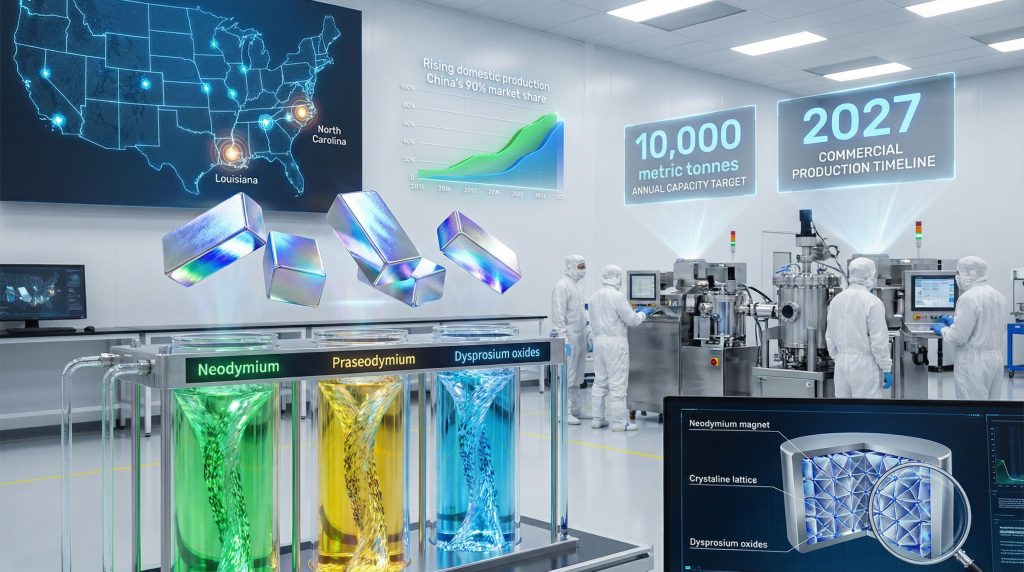
The target commercial production timeline beginning in 2027 establishes clear milestones for transitioning from development activities to operational manufacturing. This schedule allows for technology validation, workforce development, and supply chain establishment necessary for sustained production operations.
However, data-driven operations will be crucial for optimising production efficiency and maintaining quality standards across scaled operations.
The 10,000 metric tonnes annual production target positions the combined operations to serve significant portions of domestic demand across defence and commercial applications. This capacity level supports economies of scale necessary for competitive pricing while maintaining operational flexibility.
Current demonstration facility operations provide the technical foundation for scaling to commercial volumes. The progression from Kingston demonstration work through Louisiana commercial operations establishes operational experience necessary for achieving target production levels.
Supply Chain Coordination and Logistics Management
Vertical integration between oxide separation in Louisiana and magnet manufacturing in North Carolina creates operational efficiencies while reducing supply chain vulnerabilities. Direct coordination between facilities enables optimised inventory management and quality control consistency.
Transportation and logistics coordination between geographically separated facilities requires specialised handling procedures for both raw materials and intermediate products. These requirements encompass environmental controls, regulatory compliance, and security considerations specific to critical materials.
Inventory management strategies balance production efficiency against working capital requirements while maintaining supply security for downstream operations. Buffer stock management ensures continuous production capability despite potential supply chain disruptions.
Addressing Market Concentration and Competition
Global Market Structure Analysis
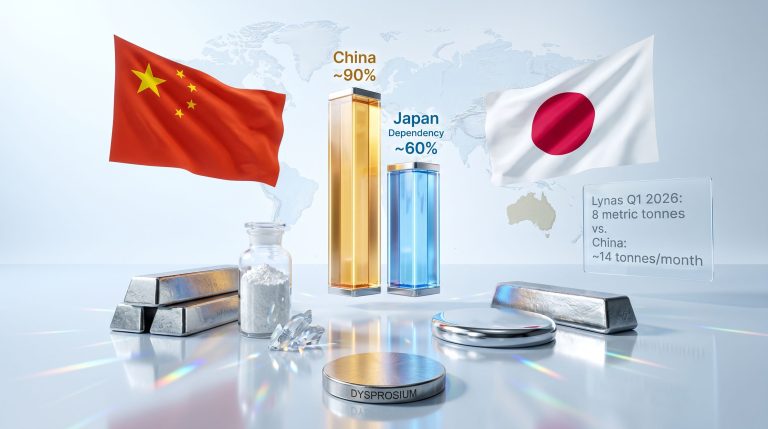
China currently maintains dominant positions across multiple stages of the rare earth magnet supply chain, from initial processing through finished magnet production. This concentration creates strategic vulnerabilities for nations dependent on these materials for defence and commercial applications.
The establishment of alternative supply sources requires substantial technical and financial investments to achieve competitive cost structures while maintaining quality standards. Market development occurs gradually as new facilities demonstrate operational capability and build customer relationships.
Downstream magnet production concentration presents particular challenges due to the specialised equipment, technical expertise, and quality control systems required for consistent manufacturing operations. These barriers to entry contribute to market concentration while creating opportunities for well-funded development initiatives.
Domestic Manufacturing Resilience and Strategic Independence
Supply source diversification reduces dependency risks while providing strategic flexibility in procurement decisions. Domestic manufacturing capabilities enable supply security during geopolitical tensions or trade disputes that might disrupt international supply chains.
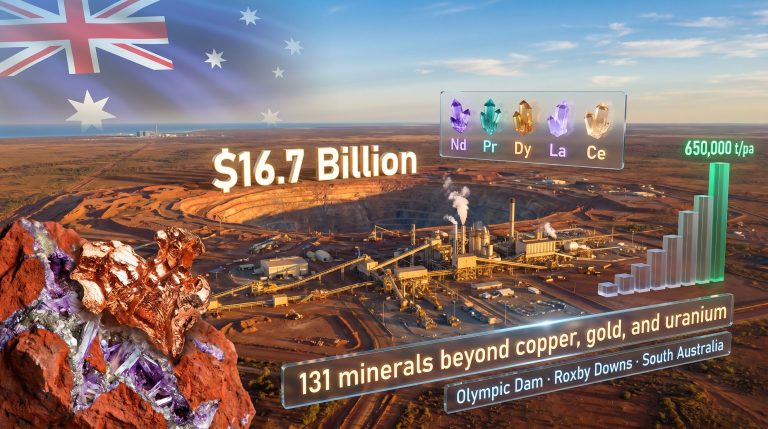
Furthermore, Australia critical minerals initiatives demonstrate how allied nations are working to establish independent supply capabilities. Technology development and intellectual property creation within domestic operations supports long-term competitive positioning while reducing reliance on foreign technical expertise.
Allied nation collaboration opportunities expand market potential for domestic producers while building broader supply chain resilience across friendly nations. Coordinated development efforts can share costs and technical risks while creating larger market opportunities for participating companies.
The next major ASX story will hit our subscribers first
Technical Implementation Challenges and Solutions
Production Parameter Optimisation and Quality Achievement
The technical collaboration between Ucore Vulcan rare earth magnet manufacturing operations requires extensive testing and validation to ensure oxide products meet downstream manufacturing requirements. According to a recent announcement, sample testing protocols establish compatibility between separation processes and magnet production specifications.
Purity target achievement for defence-grade applications demands consistent process control and quality assurance procedures. These requirements often exceed commercial specifications, necessitating enhanced separation efficiency and contamination prevention measures.
Acceptance criteria development establishes clear performance standards for commercial supply agreements while providing measurable objectives for process optimisation efforts. These criteria encompass chemical composition, physical properties, and manufacturing compatibility requirements.
Commercial Scale-Up and Operational Readiness
Scaling demonstration technology to commercial production volumes presents multiple engineering challenges related to equipment sizing, process optimisation, and quality control consistency. Each stage of scale-up requires validation to ensure performance characteristics transfer successfully to larger operations.
Process engineering challenges encompass heat transfer optimisation, materials handling efficiency, and environmental control maintenance across larger facility footprints. Solutions often require custom equipment development and specialised control systems.
Equipment procurement and installation timelines must coordinate with facility construction schedules while ensuring compatibility between separation and manufacturing operations. Long lead times for specialised equipment require careful project management and contingency planning.
Workforce development requirements include both technical training for equipment operation and quality control procedures specific to critical materials processing. Specialised skills development takes considerable time and requires experienced personnel for training programme development.
Industry Impact and Market Transformation
Competitive Dynamics and Pricing Evolution
The introduction of domestic manufacturing capacity will influence global rare earth oxide pricing through increased supply diversity and reduced market concentration. While initial production costs may exceed established suppliers, operational optimisation and scale economies should improve competitive positioning over time.
Moreover, the growing focus on critical minerals & energy security has created market premiums for secure supply sources. Competitive positioning against established manufacturers requires demonstrating both cost effectiveness and supply reliability advantages that justify customer transitions from existing suppliers.
Long-term supply contract implications extend beyond immediate pricing considerations to encompass supply security, quality consistency, and technical support capabilities. These factors often prove decisive in customer selection processes for critical applications.
Innovation Acceleration and Technology Development
Research and development acceleration occurs when domestic manufacturing capabilities provide platforms for testing new materials, processes, and applications. Local operations enable faster development cycles and closer collaboration between researchers and production teams.
Advanced manufacturing technique development benefits from operational experience with domestic facilities while reducing dependence on foreign technical expertise. This experience base supports continuous improvement initiatives and next-generation technology development.
Next-generation magnetic material exploration becomes more feasible when domestic separation and manufacturing capabilities provide the infrastructure necessary for experimental work and prototype development. These capabilities support innovation cycles that might prove difficult with foreign supply dependencies.
The partnership represents a significant step toward establishing comprehensive Ucore Vulcan rare earth magnet manufacturing capabilities that address both immediate supply security concerns and long-term strategic independence. Industry analysts at TipRanks highlight the strategic importance of such alliances in building resilient supply chains.
Consequently, this collaboration establishes a foundation for future expansion while demonstrating the viability of domestic rare earth magnet production at commercial scale.
This analysis is provided for informational purposes only and should not be considered as investment advice. Rare earth magnet manufacturing involves significant technical, financial, and market risks that potential investors should carefully evaluate. The success of manufacturing partnerships depends on numerous factors including technical achievement, market development, and competitive positioning that may not develop as projected.
Ready to Capitalise on Critical Materials Opportunities?
Discovery Alert's proprietary Discovery IQ model delivers real-time alerts on significant ASX mineral discoveries, including critical materials like rare earths that are reshaping global supply chains. With the growing strategic importance of materials security and domestic manufacturing capabilities, major mineral discoveries can generate substantial returns for investors positioned ahead of market movements.