
August 13, 2026
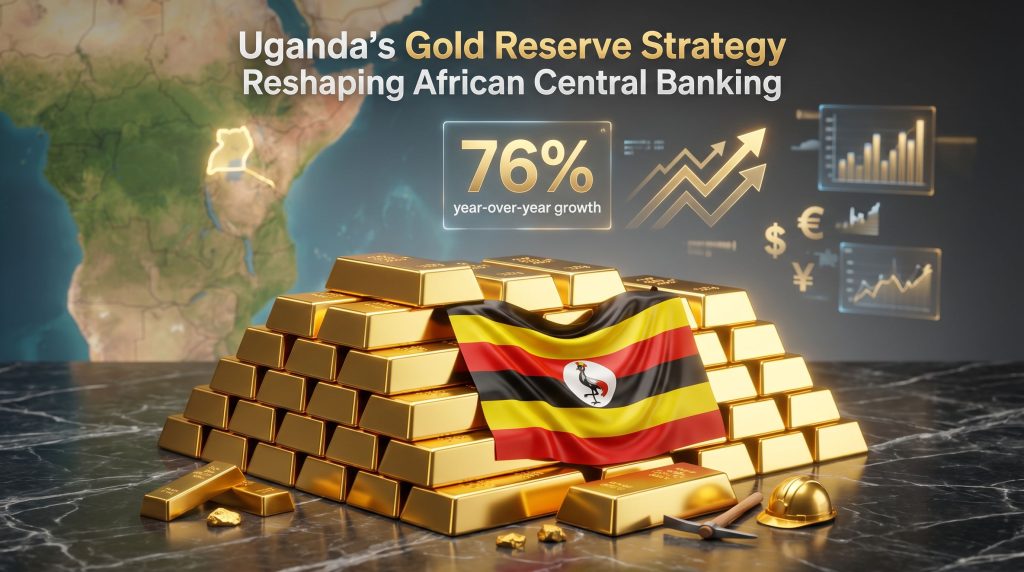
Uganda's central bank has launched an innovative Uganda domestic gold buying program that represents a significant shift in monetary policy for African nations. This three-year pilot initiative, launched in April 2026, establishes a framework for direct precious metals procurement from local mining operations while strengthening foreign exchange reserves through domestic resource utilization.
Furthermore, this strategic approach reflects broader trends among emerging market central banks seeking to diversify reserve portfolios beyond traditional currencies. The program addresses growing concerns about sanctions exposure and currency volatility while supporting local mining communities through guaranteed government purchases.
Why Are Central Banks Pursuing Alternative Reserve Strategies?
Modern central banking faces unprecedented challenges as global monetary systems experience heightened volatility and geopolitical tensions reshape international finance. Traditional reserve management approaches, primarily centered on major currencies and government bonds, encounter growing scrutiny from monetary authorities seeking enhanced portfolio resilience.
African financial institutions, in particular, demonstrate innovative approaches to diversifying their holdings while strengthening domestic economic linkages. The shift toward alternative reserve assets reflects broader concerns about currency stability and the need for financial sovereignty in emerging economies.
Moreover, central banks increasingly recognize precious metals as providing liquidity buffers that operate independently of counterparty relationships and geopolitical constraints. This recognition has driven interest in record-high gold prices and their implications for reserve management strategies.
When big ASX news breaks, our subscribers know first
African Central Banks Pioneer Domestic Resource Integration
Continental monetary authorities across Sub-Saharan Africa implement systematic programs to incorporate locally sourced precious metals into their reserve portfolios. These initiatives represent a departure from conventional international procurement channels, emphasizing direct relationships with domestic mining sectors.
Table: Regional Central Bank Gold Initiatives (2024-2026)
| Country | Program Framework | Implementation Year | Primary Objective |
|---|---|---|---|
| Uganda | Uganda domestic gold buying program | 2026 | Reserve diversification and mining sector support |
| Kenya | Local sourcing protocols | 2024 | Currency stability enhancement |
| Nigeria | Strategic accumulation framework | 2025 | Dollar dependency reduction |
| Democratic Republic of Congo | Mining integration model | 2024 | Resource monetisation optimisation |
Monetary Policy Architecture Supporting Precious Metal Reserves
Reserve adequacy calculations under international banking standards accommodate gold holdings as high-quality liquid assets. Basel III framework provisions recognise precious metals as meeting liquidity coverage ratio requirements, providing central banks with regulatory flexibility in portfolio composition.
International Monetary Fund guidelines establish parameters for foreign exchange reserve diversification, acknowledging gold safe haven dynamics in maintaining adequate reserve levels during external shocks. These standards enable emerging market central banks to pursue alternative asset strategies while maintaining compliance with international best practices.
Risk-weighted asset calculations favour physical gold holdings over derivative instruments, encouraging direct ownership rather than paper-based exposure. This regulatory environment supports central bank preferences for tangible assets that provide immediate liquidity access during crisis scenarios.
Regulatory Drivers Accelerating African Gold Accumulation
Financial sovereignty mandates within regional economic communities emphasise reduced dependence on external currency systems. The African Continental Free Trade Area framework encourages intra-regional trade settlement mechanisms that minimise reliance on traditional reserve currencies.
Continental trade agreements establish protocols for currency stability maintenance, requiring member states to maintain diversified reserve portfolios capable of supporting regional payment systems. These requirements drive systematic precious metals accumulation across participating economies.
In addition, external debt management protocols increasingly incorporate reserve diversification as risk mitigation strategy. Central banks recognise that concentrated dollar holdings create vulnerability to currency fluctuations that can amplify debt servicing costs during adverse market conditions.
Uganda's Pilot Program: Three-Year Implementation Framework
The Bank of Uganda framework establishes legal authority for direct purchases from local producers while maintaining quality assurance protocols. This Uganda domestic gold buying program marks the first systematic domestic precious metals procurement by an African monetary authority.
Compliance mechanisms integrate artisanal mining operations into formal financial channels, requiring standardised processing and documentation procedures. These protocols ensure purchased gold meets international purity standards while providing traceability throughout the supply chain.
However, price discovery methodologies employ fair market valuation techniques that protect both central bank interests and mining sector participants. The program utilises transparent pricing mechanisms that reflect international gold markets while accounting for local processing costs and transportation factors.
The Bank of Uganda's domestic purchasing initiative demonstrates how monetary authorities can leverage local resources to strengthen reserve positions while supporting community-level economic development.
Economic Multiplier Effects on Mining Communities
Central bank procurement generates significant multiplier effects within small-scale mining operations. Direct government purchases provide reliable revenue streams that enable miners to invest in improved extraction techniques and safety equipment.
Foreign exchange conservation occurs as domestic gold purchases reduce import requirements for reserve accumulation. This approach retains foreign currency for other essential imports while building reserves through local resource utilisation.
Value chain development encompasses processing facility expansion and technical skill acquisition within mining communities. Central bank quality requirements incentivise investments in refining capabilities that enhance overall sector competitiveness.
Consequently, employment generation extends beyond direct mining activities to include transportation, security, and administrative services supporting the procurement program. These downstream effects create sustainable income opportunities in rural areas where mining operations typically concentrate.
De-Dollarisation Strategy and Geopolitical Risk Management
Central bank gold accumulation forms part of broader de-dollarisation strategies designed to reduce exposure to sanctions risks and currency weaponisation. Recent geopolitical developments highlight vulnerabilities associated with concentrated reserve holdings in major currencies subject to policy-based restrictions.
International trade settlement alternatives gain prominence as countries seek mechanisms for conducting commerce without traditional banking channels. Gold provides universally accepted value storage that facilitates cross-border transactions independent of political relationships.
Furthermore, these developments align with gold price forecast insights that suggest continued upward pressure on precious metals prices amid global uncertainty.
Table: Global Central Bank Gold Purchases by Region (2023-2026)
| Region | Annual Purchases (Tonnes) | Primary Strategic Driver |
|---|---|---|
| Sub-Saharan Africa | 45-60 | Dollar risk mitigation |
| Asia-Pacific | 200-250 | Trade settlement diversification |
| Latin America | 25-35 | Inflation hedging |
| Middle East | 80-100 | Geopolitical insurance |
Reserve Currency Alternative Development
Sanctions risk mitigation strategies emphasise asset diversification across multiple jurisdictions and instruments. Central banks recognise that traditional reserve currencies carry political risks that can result in frozen assets or restricted access during international disputes.
Monetary sovereignty preservation requires maintaining reserves that operate independently of foreign policy considerations. Gold holdings provide this independence while maintaining liquidity characteristics essential for central bank operations.
For instance, financial system resilience improves when reserves include assets immune to counterparty risk or political interference. Physical gold storage within domestic facilities ensures continued access regardless of international relationship changes.
Strategic Reserve Composition Optimisation
Optimal allocation models for emerging market central banks incorporate gold holdings ranging from 10-20% of total reserves, depending on economic vulnerability assessments and external debt profiles. These models balance liquidity requirements with diversification benefits.
Liquidity management considerations address gold's role in providing emergency funding during currency crises. While less liquid than major currency holdings, gold offers stable value preservation that maintains purchasing power during extended market stress periods.
Market access requirements for reserve mobilisation favour physical holdings over derivative instruments. Central banks prioritise assets that can be accessed immediately without reliance on financial market intermediaries that may face operational constraints during crises.
Uganda's Mining Sector: From Processing Hub to Reserve Source
Uganda's emergence as a regional gold processing centre creates unique opportunities for central bank reserve building. The country exported $5.8 billion worth of gold in 2025, representing 76% year-over-year growth, primarily from processing activities rather than domestic extraction.
This processing capability enables the central bank to implement quality control measures ensuring purchased gold meets international standards. Existing refining infrastructure reduces costs associated with precious metals procurement while supporting local economic development.
Artisanal Mining Integration Challenges and Solutions
Formalisation processes for small-scale operations require comprehensive documentation systems that track gold from extraction to central bank acquisition. These systems establish chain of custody protocols essential for reserve asset verification.
Quality standardisation across diverse mining sites necessitates training programmes that educate local producers on refining techniques and purity requirements. The central bank provides technical assistance to ensure consistent gold quality meeting reserve standards.
Supply chain transparency requirements address concerns about conflict minerals and environmental compliance. Procurement protocols include verification procedures that confirm ethical sourcing practices throughout the supply network.
Environmental compliance standards ensure mining operations meet sustainability requirements that protect long-term resource availability. The programme incorporates environmental assessments that promote responsible extraction practices.
Revenue Transformation and Value Addition Strategies
The Uganda domestic gold buying program transforms gold export revenue patterns by capturing value before international sales. This approach retains premium pricing opportunities within domestic markets while building strategic reserves.
Processing hub development for regional gold refinement positions Uganda as a continental centre for precious metals value addition. This infrastructure supports both export activities and domestic reserve accumulation objectives.
Revenue capture mechanisms ensure domestic economic benefits from gold processing activities. Central bank purchases provide additional revenue streams that supplement export earnings while strengthening national reserves.
Key Programme Metrics:
- Uganda ranks 20th among African countries in mining sector size
- Small wildcat operations dominate domestic gold production
- $5.8 billion in gold exports during 2025
- 76% year-over-year export value increase
Risk Management Frameworks for Precious Metal Reserves
Counterparty risk mitigation strategies emphasise physical storage over paper instruments when building gold reserves. Central banks prioritise tangible assets that eliminate dependence on financial intermediaries or guarantee structures.
Physical storage arrangements require secure facilities with appropriate insurance coverage and audit protocols. These infrastructure investments ensure reserve assets remain accessible during various stress scenarios.
Market Volatility Management Approaches
Price averaging strategies for systematic accumulation help central banks manage gold price volatility while building target reserve levels. Regular purchase programmes reduce timing risks associated with large single transactions.
These strategies complement broader commodity hedging strategies that central banks employ to manage portfolio risk across different asset classes. However, many central banks prefer unhedged positions to maintain full upside participation during currency devaluation periods.
Liquidity buffers maintain operational flexibility by ensuring portion of reserves remain readily accessible for immediate deployment. These buffers balance portfolio optimisation with practical operational requirements.
Emergency mobilisation procedures establish clear protocols for reserve asset deployment during crisis situations. These procedures ensure rapid access to gold holdings when market conditions require immediate intervention.
Storage and Custodial Infrastructure Requirements
Custodial arrangements for sovereign gold holdings require domestic facilities that provide secure storage without foreign dependency. Many African central banks invest in vault infrastructure to maintain direct control over reserve assets.
Insurance protocols protect precious metal reserves against various risks including theft, natural disasters, and transportation incidents. Comprehensive coverage ensures reserve values remain protected throughout storage and handling processes.
Audit mechanisms verify reserve authenticity and proper custody procedures through regular third-party assessments. These audits maintain transparency while confirming reserve assets meet required specifications and quantities.
The next major ASX story will hit our subscribers first
Continental Trade Integration and Gold Reserve Coordination
The African Continental Free Trade Area creates opportunities for coordinated precious metals policies among member states. Regional integration frameworks support harmonised approaches to reserve management and gold accumulation strategies.
Intra-African trade settlement mechanisms using gold provide alternatives to traditional currency-based payment systems. These mechanisms reduce transaction costs while promoting regional economic integration independent of external currency systems.
Regional Payment System Development
Currency union preparations within regional economic communities require reserve harmonisation among participating central banks. Gold holdings provide common reserve assets that facilitate monetary integration while maintaining individual country flexibility.
Cross-border gold trading protocols establish standardised procedures for precious metals transactions between African countries. These protocols reduce transaction costs while ensuring quality standards across regional markets.
Information sharing agreements between central banks improve coordination of gold acquisition strategies and market intelligence. Regular communication enhances collective negotiating power with international suppliers and service providers.
Joint procurement initiatives enable smaller central banks to achieve economies of scale when purchasing gold or related services. Coordinated approaches reduce individual country costs while strengthening regional precious metals markets.
Long-Term Economic Transformation Through Strategic Accumulation
Structural economic diversification benefits emerge as gold reserve programmes stimulate financial sector development and precious metals market infrastructure. These programmes create domestic capabilities that support broader economic modernisation objectives.
Financial sector development through precious metals markets generates new investment opportunities and trading capabilities. Local gold markets provide platforms for investment diversification while supporting price discovery mechanisms.
Understanding the gold-stock market guide becomes increasingly important as these markets develop and create new relationships between traditional equity investments and precious metals sectors.
Industrial Applications and Technology Transfer
Technology transfer in mining and processing sectors occurs as central bank quality requirements drive investment in advanced extraction and refining equipment. These improvements benefit both reserve building and commercial mining operations.
Human capital development in specialised fields creates skilled workforce capable of supporting expanded precious metals sector activities. Training programmes generate employment opportunities while building technical capabilities.
Industrial applications of accumulated gold reserves provide alternative utilisation options beyond traditional reserve functions. Central banks maintain flexibility to deploy gold holdings for economic development projects when appropriate.
Future Policy Evolution and Expansion Scenarios
Expansion timelines beyond three-year pilot programmes depend on initial results and economic conditions. Successful implementation of Uganda's Uganda domestic gold buying program provides template for broader regional adoption.
Regional coordination of gold accumulation strategies enables collective negotiating power and shared infrastructure development. Coordinated approaches reduce individual country risks while maximising regional benefits.
International partnership development for technical assistance supports capacity building in areas such as refining technology, quality assurance, and market development. These partnerships accelerate programme implementation while reducing costs.
Market infrastructure establishment for domestic trading creates long-term foundations for precious metals commerce. Investment in trading platforms and regulatory frameworks supports sustainable sector development beyond central bank procurement activities.
Uganda's pioneering domestic gold procurement initiative establishes precedents for resource-rich African nations seeking to monetise local mineral wealth while building resilience against global economic uncertainties.
Strategic Implications for African Monetary Policy
Uganda's domestic gold procurement initiative demonstrates evolution in central banking approaches toward greater resource utilisation and monetary independence. This regulatory innovation provides framework for other African monetary authorities considering similar strategies.
The Reuters report on Uganda's central bank programme highlights the international significance of this initiative for emerging market central banking practices.
The three-year pilot program serves as critical test case for balancing traditional reserve management with innovative domestic sourcing approaches. Results will influence similar initiatives across the continent while providing operational insights for policy refinement.
According to the Monitor's coverage, the Bank of Uganda's programme represents a significant shift in how African central banks approach reserve diversification while supporting domestic economic development.
African central banks increasingly recognise opportunities to leverage local resources for strengthening monetary policy independence. These approaches combine reserve building objectives with domestic economic development goals, creating sustainable foundations for long-term financial stability.
Disclaimer: This analysis is for informational purposes only and should not be considered investment advice. Central bank policies and precious metals markets involve various risks that may affect outcomes differently than projected. Readers should conduct independent research and consult with qualified financial advisors before making investment decisions.
Ready to Capitalise on Africa's Gold Market Evolution?
Discovery Alert's proprietary Discovery IQ model delivers real-time alerts on significant gold and mineral discoveries across the ASX, helping investors identify actionable opportunities as African mining companies and resource sectors experience unprecedented growth. Explore how major mineral discoveries can generate substantial returns by visiting Discovery Alert's discoveries page, then begin your 14-day free trial to position yourself ahead of the market.