June 30, 2026
Weather risks support UK April gas price dynamics amid increasing volatility from temperature-driven consumption patterns that challenge traditional supply security frameworks. The intersection of declining domestic production, constrained storage infrastructure, and increasing reliance on global liquefied natural gas markets has fundamentally altered how regulatory bodies approach energy resilience planning.
This transformation reflects broader systemic vulnerabilities within liberalised energy markets, where traditional supply-demand balancing mechanisms face mounting pressure from extreme weather events. As meteorological forecasting becomes increasingly critical to market pricing, regulatory frameworks must evolve to address weather-induced volatility while maintaining competitive market structures.
Understanding UK Gas Market Weather Risk Framework
Temperature variability creates asymmetric risk profiles within energy systems, particularly where storage capacity fails to provide adequate demand buffering during extreme weather events. Modern energy markets increasingly rely on sophisticated meteorological modelling to predict consumption patterns, yet regulatory frameworks often lag behind the technical requirements of weather-responsive supply management.
Furthermore, understanding current natural gas trends becomes essential for comprehending how weather patterns influence pricing mechanisms across seasonal periods.
Regulatory Response to Seasonal Demand Fluctuations
Energy regulators have developed multi-layered response mechanisms to address weather-driven demand volatility, though implementation varies significantly across jurisdictions. These frameworks typically integrate meteorological forecasting with capacity allocation procedures, creating dynamic pricing structures that reflect temperature-induced scarcity premiums.
Degree heating day calculations form the foundation of regulatory demand modelling, measuring how far daily average temperatures fall below baseline thresholds (typically 15.5°C). Under normal weather conditions, UK gas consumption averages 152.2 million m³/d in April, yet extreme cold scenarios can drive consumption to 177.6 million m³/d, representing a 39.7% increase from baseline projections.
This volatility creates regulatory challenges around capacity planning and emergency response protocols. Energy authorities must balance market efficiency with supply security, particularly when weather forecasting accuracy directly impacts infrastructure utilisation and consumer pricing.
Weather Risk Assessment Methodologies in Energy Policy
Advanced weather risk modelling incorporates probabilistic analysis to assess extreme temperature scenarios and their supply-demand implications. Regulatory bodies utilise Monte Carlo simulations and historical temperature data to stress-test market mechanisms under various meteorological conditions.
The integration of climate data into energy planning requires sophisticated correlation analysis between temperature patterns and consumption behaviours. Statistical modelling reveals that temperature-demand relationships remain relatively stable across multi-year periods, enabling predictive frameworks that inform both short-term operational decisions and long-term infrastructure investment strategies.
Modern regulatory approaches must account for changing baseline weather patterns while maintaining operational flexibility during unexpected meteorological events. This requires continuous calibration of weather risk models against actual consumption data and ongoing refinement of emergency response protocols.
When big ASX news breaks, our subscribers know first
How Cold Weather Events Trigger Market Premium Mechanisms
Weather-driven pricing volatility reflects fundamental supply-demand imbalances during temperature extremes, creating market premiums that compensate for scarcity risk and incentivise flexible supply responses. These pricing mechanisms reveal the structural vulnerabilities within energy systems designed for average weather conditions rather than extreme events.
Additionally, examining LNG market implications helps illuminate how global supply constraints interact with domestic weather-driven demand spikes.
LNG Import Dependency During Weather Extremes
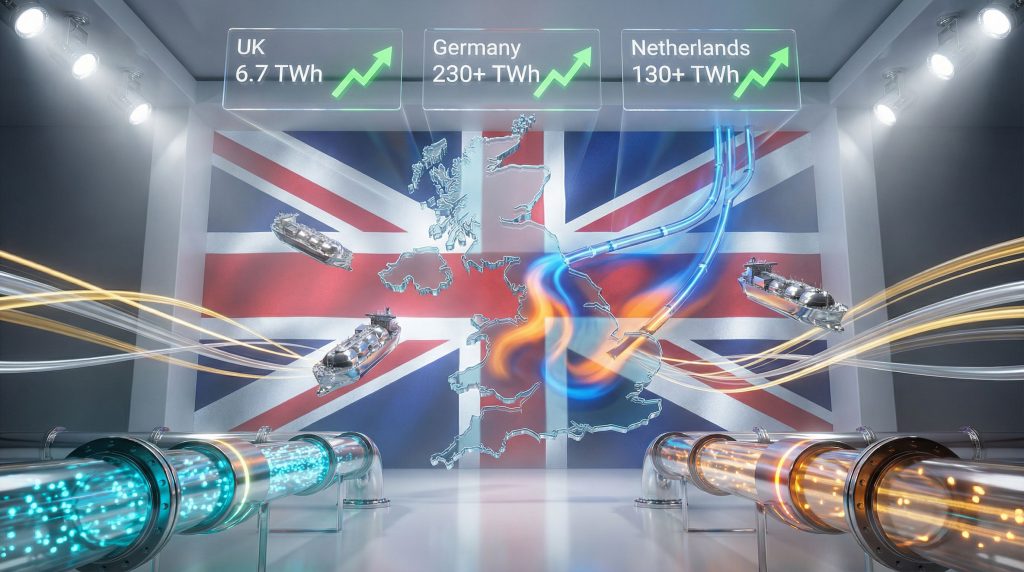
Limited storage infrastructure forces markets to rely heavily on just-in-time supply mechanisms during demand spikes, creating acute sensitivity to global supply chain disruptions. The UK's storage capacity of 6.7 TWh provides only 15-20 days of average demand coverage, compared to Germany's 230+ TWh capacity offering 80-90 days of security.
This infrastructure deficit becomes critical during cold weather events when domestic production and pipeline imports cannot meet elevated demand requirements. Analysis of April 2026 scenarios demonstrates this vulnerability:
| Supply Source | Normal Weather (million m³/d) | Cold Snap (million m³/d) |
|---|---|---|
| Domestic Production | 78.8 | 78.8 |
| Norwegian Imports | 88.6 | 88.6 |
| Total Supply | 167.4 | 167.4 |
| Demand | 152.2 | 177.6 |
| Balance | +15.2 | -10.2 |
The 10.2 million m³/d supply gap during cold weather scenarios must be covered through LNG imports or storage drawdown, highlighting the critical role of global LNG markets in weather risk mitigation.
Price Discovery Mechanisms Under Weather Stress
Market participants price weather risk through forward contracts that incorporate probabilistic demand scenarios and supply availability assessments. During March 2026, UK National Balancing Point (NBP) contracts demonstrated this dynamic, moving from historical discounts to significant premiums against continental European markets.
NBP premium formation reflected traders' assessment of weather-induced scarcity risk:
- NBP premium to Dutch TTF: 0.875 p/th
- NBP premium to French Peg: 2.15 p/th
- NBP premium to Belgian ZTP: 1.26 p/th
These premiums emerged despite adequate current supply conditions, indicating forward-looking risk pricing rather than immediate scarcity. Market participants recognised that global LNG supply constraints, triggered by Middle Eastern supply disruptions, would limit UK access to marginal supply during potential weather-driven demand spikes.
Consequently, understanding the broader US gas price forecast provides context for global pricing dynamics that affect UK import costs during weather emergencies.
Supply Security Frameworks for Weather-Driven Demand Scenarios
Regulatory frameworks for weather resilience require coordination across multiple infrastructure systems, including domestic production, international pipelines, LNG terminals, and storage facilities. The complexity of these interactions creates challenges for policy development and operational coordination.
Norwegian Pipeline Flow Optimisation During UK Weather Events
Pipeline capacity allocation during weather stress involves complex nomination procedures that balance competing European market demands. Norwegian offshore production feeds multiple European markets through interconnected pipeline networks, creating competition for incremental flows during widespread cold weather events.
Recent operational data reveals capacity constraints that limit weather-responsive supply flexibility. April 2026 Norwegian production capacity constraints reached 9.5 million m³/d, significantly higher than March levels of 6.2 million m³/d but well below the previous year's 26.6 million m³/d availability.
These maintenance-driven constraints compound weather risk by reducing supply flexibility precisely when demand volatility peaks. Coordination between Norwegian operators and European gas system operators becomes critical for optimising available capacity allocation during weather emergencies.
Domestic Production Constraints and Weather Vulnerability
Declining domestic production increases weather risk exposure by reducing the supply base available for demand balancing. North Sea Transition Authority projections indicate continued production decline, with April 2026 output expected at 78.8 million m³/d, down from 84.6 million m³/d in the previous year.
This 6.9% year-on-year decline reduces the UK's ability to self-supply during weather extremes, increasing dependence on import flexibility and LNG availability. Seasonal production patterns compound this challenge, as offshore maintenance typically coincides with shoulder months when weather volatility remains significant.
The interaction between production decline and weather risk creates compounding vulnerabilities that require sophisticated risk management approaches across both private market participants and regulatory oversight bodies.
Storage Infrastructure Limitations and Weather Risk Mitigation
Energy storage serves as the primary buffer against short-term supply-demand imbalances, yet UK storage capacity remains insufficient to address weather-driven demand volatility without supplementary supply flexibility. This infrastructure constraint fundamentally shapes market dynamics and regulatory policy approaches.
UK Storage Capacity Constraints in European Context
Comparative analysis reveals significant disparities in storage infrastructure across European markets, with implications for weather resilience and market integration. These differences reflect historical policy choices around energy security architecture and market liberalisation approaches.
| Market | Storage Capacity (TWh) | Days of Average Demand Coverage | Storage Mandate |
|---|---|---|---|
| UK | 6.7 | 15-20 days | None |
| Germany | 230+ | 80-90 days | Regulated minimum levels |
| Netherlands | 130+ | 120+ days | Strategic reserve requirements |
| France | 130+ | 100+ days | Public service obligations |
The UK's limited storage capacity creates fundamental weather vulnerability compared to continental European markets. While Germany maintains strategic reserves sufficient for extended supply disruptions, the UK operates on a just-in-time supply model that requires continuous import availability.
Strategic Reserve Mechanisms for Weather Emergencies
Emergency supply protocols provide last-resort mechanisms for addressing weather-driven supply shortfalls, though activation thresholds and operational procedures vary significantly across regulatory frameworks. These mechanisms typically involve demand curtailment procedures, strategic stock releases, and enhanced international cooperation protocols.
The effectiveness of emergency mechanisms depends heavily on advance warning systems and meteorological forecasting accuracy. Weather-driven emergencies often develop rapidly, limiting the effectiveness of traditional emergency response procedures designed for gradual supply disruptions.
However, these challenges also intersect with broader energy security challenges that require comprehensive policy responses across multiple sectors.
Policy Framework Insight: Weather risk management requires proactive rather than reactive regulatory approaches, with emphasis on probabilistic planning and flexible response mechanisms that can address rapid-onset demand spikes.
Market Structure Analysis: Weather Risk Distribution
Weather risk distribution across market participants creates asymmetric exposures that influence pricing dynamics, investment decisions, and regulatory policy development. Understanding these risk allocations reveals both market efficiency mechanisms and potential systemic vulnerabilities.
Interconnector Flow Dynamics During Weather Events
Cross-border gas flows provide critical flexibility during weather extremes, yet capacity constraints and competing national demands limit available transfer capability. Interconnector utilisation patterns during weather stress reveal both the benefits and limitations of market integration approaches.
Historical analysis shows that interconnector flows can reverse rapidly during weather events, with traditional exporting markets becoming importers when domestic demand spikes. This dynamic creates complex optimisation challenges for system operators and market participants attempting to manage weather risk across multiple jurisdictions.
Power-Gas Sector Coupling Under Weather Stress
Cold weather events often coincide with reduced renewable electricity generation, creating simultaneous pressure on gas supplies for both heating and power generation. This sector coupling amplifies weather risk by increasing total gas demand beyond heating requirements alone.
Dunkelflaute scenarios represent extreme cases where cold, cloudy, and still weather conditions simultaneously maximise heating demand and minimise renewable power output. During these events, gas-fired power generation surges to compensate for renewable shortfalls, potentially doubling the weather-driven increase in gas consumption.
Grid balancing costs escalate rapidly during these compound weather events, requiring sophisticated coordination between electricity and gas system operators to maintain supply security across both sectors. Furthermore, examining energy transition strategies reveals how renewable integration affects traditional gas demand patterns.
Regulatory Framework Evolution for Climate Resilience
Long-term regulatory adaptation must address changing weather patterns while maintaining competitive market structures and consumer affordability. This evolution requires integration of climate science, infrastructure planning, and market design innovation.
Long-term Weather Pattern Integration in Energy Security Policy
Climate adaptation strategies for energy infrastructure must account for changing baseline weather conditions and increasing frequency of extreme events. Historical weather data may provide insufficient guidance for future planning, requiring scenario-based approaches that incorporate climate projections.
Regulatory frameworks increasingly utilise probabilistic modelling to assess infrastructure adequacy under various climate scenarios. These approaches balance investment efficiency with resilience requirements, avoiding over-investment while ensuring adequate weather risk coverage.
Consumer Protection Mechanisms During Weather-Driven Price Volatility
Weather-induced price spikes create consumer affordability challenges that require regulatory intervention to maintain political sustainability of market-based approaches. Price volatility during extreme weather events can exceed consumer expectations and payment capabilities, necessitating protection mechanisms.
Regulatory tools for consumer protection include:
- Price cap mechanisms with weather adjustment factors
- Social tariff programmes with enhanced winter protections
- Emergency financial assistance during extreme events
- Demand response programmes that provide consumer participation incentives
- Market monitoring and intervention authority during price extremes
These mechanisms must balance consumer protection with market price signals that incentivise supply security investments and demand flexibility.
Forward-Looking Weather Risk Assessment Methodologies
Advanced risk assessment requires integration of meteorological science, market modelling, and infrastructure analysis to develop comprehensive weather risk frameworks. These methodologies inform both market participant decision-making and regulatory policy development.
Probabilistic Weather Modelling in Market Regulation
Sophisticated weather risk models utilise ensemble forecasting and historical analogs to assess potential demand scenarios across various probability thresholds. These models inform capacity planning, emergency preparedness, and market mechanism design.
Monte Carlo simulation approaches generate thousands of potential weather scenarios with associated probability weightings, enabling quantitative assessment of supply adequacy under extreme conditions. This probabilistic approach provides more robust planning frameworks than traditional deterministic methods.
Climate model integration extends planning horizons beyond traditional seasonal forecasting, incorporating long-term trends in temperature volatility and extreme event frequency into infrastructure investment decisions.
International Best Practices for Weather Risk Management
Comparative analysis of weather risk management approaches across different regulatory jurisdictions reveals diverse strategies for balancing market efficiency with supply security. These comparative insights inform regulatory evolution and policy innovation.
Storage mandate approaches vary significantly:
- Germany: Mandatory minimum storage levels with seasonal build requirements
- Netherlands: Strategic reserve obligations for supply security
- UK: Market-based approach with minimal regulatory intervention
- France: Mixed public-private model with service obligations
Weather derivative markets in some jurisdictions provide risk transfer mechanisms that allow market participants to hedge temperature-related exposures, reducing the need for regulatory intervention during weather extremes.
The next major ASX story will hit our subscribers first
FAQ: Weather Risk and UK Gas Market Dynamics
What makes UK gas markets more vulnerable to weather risks than European counterparts?
Limited storage capacity (6.7 TWh vs. 230+ TWh in Germany) and high LNG import dependency create acute sensitivity to weather-driven demand spikes, requiring just-in-time supply responses rather than inventory-based demand buffering.
How do weather forecasts influence gas market pricing mechanisms?
Temperature projections feed into demand modelling using degree heating day correlations, affecting forward curve pricing structures with cold weather forecasts triggering premium formations in prompt delivery periods as traders anticipate supply scarcity.
What regulatory tools exist to manage weather-driven supply security risks?
Multi-layered frameworks including emergency supply protocols, interconnector capacity optimisation, international cooperation agreements, and demand response mechanisms provide coordinated responses to weather-induced supply stress events.
Why do LNG supply disruptions particularly affect UK weather risk pricing?
The UK's structural dependence on LNG imports to meet weather-driven demand spikes means global LNG supply constraints directly impact the UK's ability to access marginal supply during temperature extremes, creating asymmetric pricing responses.
How do interconnector flows help manage weather risk across European markets?
Cross-border pipeline capacity provides supply flexibility during weather events, though competing national demands and capacity constraints limit available transfer capability, requiring sophisticated coordination between system operators.
The UK's weather risk exposure in gas markets reflects structural challenges requiring coordinated policy responses across supply diversification, storage capacity enhancement, and market mechanism optimisation. Future regulatory frameworks must integrate climate adaptation strategies with traditional supply security approaches to maintain market stability under increasing weather volatility.
Understanding how weather risks support UK April gas price formation reveals the complex interplay between meteorological forecasting, infrastructure constraints, and global supply chain vulnerabilities. In addition, recent developments in European energy security concerns highlight the broader regional context affecting UK market dynamics. As climate patterns continue evolving, regulatory adaptation must balance market efficiency with resilience requirements, ensuring energy security while maintaining competitive pricing structures that serve consumer interests.
Disclaimer: This analysis incorporates market data and forecasts that involve inherent uncertainties. Weather risk assessments and supply-demand projections should be considered alongside other market factors when making investment or operational decisions. Energy market conditions can change rapidly based on geopolitical developments, infrastructure disruptions, and regulatory policy changes.
Looking for Opportunities in Energy Transition Investments?
Discovery Alert's proprietary Discovery IQ model delivers real-time notifications on significant ASX mineral discoveries, including critical materials essential for renewable energy infrastructure and battery technologies that power the future energy transition. With weather volatility reshaping global energy markets and creating new demand patterns for critical minerals, subscribers gain immediate access to actionable investment opportunities in the companies discovering tomorrow's energy resources.