June 12, 2026
The growing demand for electric vehicles and renewable energy storage has placed unprecedented pressure on global supply chains, making UK lithium mining operations a critical component of national energy security strategy. As Western economies seek to reduce dependency on foreign mineral supplies, the emergence of domestic lithium extraction capabilities in Cornwall represents a fundamental shift toward resource independence and technological sovereignty.
Strategic Market Positioning of UK Lithium Operations
The emergence of UK lithium mining operations represents a calculated response to supply chain vulnerabilities exposed during recent geopolitical tensions. China's control over approximately 60% of global lithium processing capacity creates systematic risks that Western manufacturers can no longer ignore, particularly following 2025 incidents where Beijing weaponised rare earth export restrictions.
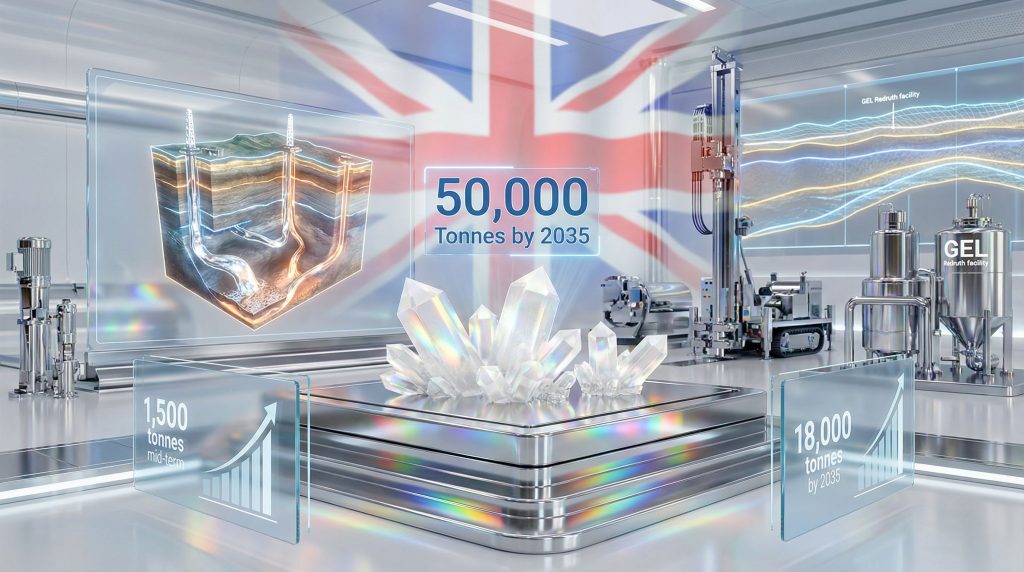
Geothermal Engineering Ltd's (GEL) Redruth facility establishes the foundational metrics for UK domestic production: 100 tonnes annually supporting approximately 2,000 electric vehicles. This baseline capacity, while modest against global production scales, provides critical proof-of-concept for integrated geothermal-lithium extraction methodologies that could transform extraction economics across multiple jurisdictions.
Furthermore, the global lithium landscape faces unprecedented strain as demand projections soar toward three million tonnes annually by 2030, according to World Economic Forum forecasts. Traditional supply chains, concentrated in Australia's hard rock mines and South America's lithium triangle, can no longer accommodate the exponential growth in electric vehicle production and grid-scale energy storage deployment.
Production Scaling Trajectories and Investment Requirements
The scaling pathway from GEL's current 100-tonne capacity to projected 18,000+ tonnes annually by the mid-2030s requires £640 million in capital investment. This trajectory represents approximately 180x capacity expansion over a decade, demanding systematic infrastructure development including:
• Advanced drilling equipment for subsurface brine access
• Lithium concentration and purification facilities
• Geothermal power plant expansion to support increased processing loads
• Transportation infrastructure for refined lithium carbonate distribution
Comparative analysis with established producers reveals cost structure advantages inherent to the integrated model. Australian hard rock operations typically require $15,000-25,000 per tonne production costs, while Chilean brine evaporation methods achieve $3,000-7,000 per tonne. GEL's geothermal integration potentially positions UK production within competitive ranges despite higher labour and regulatory costs.
Competitive Advantages Against International Suppliers
Transportation logistics provide quantifiable advantages for European battery manufacturers sourcing from UK operations. Shipping costs from Australia to European ports average $200-400 per tonne, while overland transport from Cornwall to German or Dutch battery plants costs approximately $50-100 per tonne. Supply chain complexity reduction eliminates multiple handling stages and reduces inventory carrying costs for automotive manufacturers.
Quality specifications emerging from UK geothermal-brine extraction demonstrate battery-grade purity levels comparable to premium Australian spodumene concentrates. The mineral-rich subsurface fluids contain fewer impurities than hard rock ores, potentially reducing processing costs at cathode active material (CAM) manufacturing facilities.
Moreover, exploring lithium brine insights from international markets reveals valuable benchmarks for UK operations to maintain competitive positioning globally.
When big ASX news breaks, our subscribers know first
Geothermal Integration Economics and Dual-Revenue Optimisation
The convergence of geothermal power generation with lithium extraction creates unprecedented operational synergies that fundamentally alter project economics. GEL's facility generates sufficient electricity to power 10,000 homes while simultaneously providing process energy for lithium concentration and purification systems.
Energy Cost Offset Analysis
Traditional lithium extraction operations consume 15-25 MWh per tonne of lithium carbonate produced, primarily for heating, concentration, and purification processes. UK grid electricity averaging £0.30 per kWh creates energy costs of £4,500-7,500 per tonne of refined lithium. Geothermal self-generation reduces this cost structure to approximately £1,000-2,000 per tonne, creating £3,500-5,500 per tonne cost advantage.
This energy cost differential enables UK operations to achieve competitive positioning despite higher labour and regulatory compliance expenses compared to Australian or South American operations. Additionally, the integration supports broader critical minerals energy transition objectives by reducing fossil fuel dependencies in processing operations.
Technical Innovation in Subsurface Extraction
The integrated extraction system utilises deep drilling to access mineral-rich geothermal brines containing dissolved lithium compounds. Unlike traditional evaporation pond methods requiring 12-18 months processing cycles, direct extraction from subsurface fluids enables continuous production cycles with significantly reduced water consumption.
Recovery efficiency from geothermal brines typically achieves 85-95% lithium extraction rates, comparable to or exceeding hard rock spodumene processing. The controlled subsurface environment eliminates weather-related production disruptions common to evaporation-based extraction methods.
Key technical advantages include:
• Continuous production cycles independent of seasonal weather patterns
• Reduced water consumption through closed-loop circulation systems
• Lower chemical processing requirements due to brine purity
• Minimal surface footprint compared to open-pit hard rock operations
UK's 50,000-Tonne Strategic Target and Supply Chain Implications
The UK government's commitment to achieving 50,000 tonnes of domestic lithium production by 2035 represents approximately 1.7% of projected global demand, but creates strategic supply security for critical industries. This target assumes coordinated development across multiple operators and regions, requiring unprecedented coordination between private companies and government policy frameworks.
Regional Production Distribution Scenarios
Current development pipelines suggest the following capacity allocation by 2035:
| Region | Lead Operator | Projected Capacity (tonnes/year) | Technology |
|---|---|---|---|
| Cornwall | GEL | 18,000-25,000 | Geothermal-brine extraction |
| Cornwall | Cornish Lithium | 8,000-12,000 | Dual hard rock/brine |
| Cornwall | Imerys British Lithium | 10,000-15,000 | Hard rock spodumene |
| Durham | Northern Lithium | 5,000-10,000 | Direct lithium extraction |
Government Policy Framework Assessment
Achievement of the 50,000-tonne target requires coordinated regulatory support including accelerated planning permissions, environmental assessment streamlining, and potential financial incentives. However, no direct government funding or strategic project designations have been confirmed for specific operators.
The target aligns with broader European Union critical minerals diversification strategies under the Critical Raw Materials Act, which aims to reduce dependency on single-source suppliers for strategic materials essential to energy transition and defence applications.
Supply chain independence metrics indicate progressive improvement in domestic capability:
• Raw material extraction: Progression from current 0% to projected 25% domestic sourcing by 2030
• Processing capacity: Development from minimal domestic refining to 40% capability
• Cathode active material manufacturing: Growth from 2% to targeted 15% domestic production
Consequently, understanding lithium industry innovations becomes essential for maintaining competitive advantages in this rapidly evolving sector.
Competitive Landscape Analysis of UK Lithium Developers
The UK lithium sector encompasses diverse technological approaches and development timelines, creating a competitive landscape where multiple operators pursue different market segments and extraction methodologies.
GEL – First-Mover Commercial Advantage
Geothermal Engineering Ltd maintains the strongest competitive position through operational first-mover status. Current production of 100 tonnes annually provides cash flow generation and customer relationship development while competitors remain in development phases.
GEL's scaling timeline targets 1,500 tonnes by the mid-2020s before achieving 18,000+ tonnes across the upcoming decade. This progression requires approximately £640 million investment but leverages existing operational infrastructure and proven extraction techniques.
The company's integrated geothermal power plant provides cost advantages that CEO Ryan Law characterises as enabling competitive positioning against Chinese operations, stating the facility can compete effectively with imported lithium pricing.
Cornish Lithium – Dual-Technology Approach
Cornish Lithium operates demonstration facilities producing battery-grade lithium hydroxide samples for customer testing since October 2025. The company targets commercial plant opening by 2029, contingent on successful fund raising for full-scale development.
Their dual extraction methodology combines:
• Hard rock spodumene mining from traditional ore deposits
• Geothermal brine extraction utilising subsurface mineral-rich fluids
This technological diversification reduces geological risk while potentially achieving higher production volumes than single-method operations. Furthermore, their approach aligns with emerging trends in junior mining investments seeking diversified resource portfolios.
Imerys British Lithium – Resource Scale Advantage
Imerys British Lithium controls one of the UK's largest confirmed lithium ore deposits with 161 million tonnes of mineralised rock. This resource base provides long-term production security and expansion potential exceeding other UK operations.
The company focuses on traditional hard rock spodumene extraction, leveraging Imerys' existing mining expertise and global mineral processing capabilities. Commercial production timelines remain undisclosed, but resource scale suggests potential for significant capacity contribution to the 50,000-tonne national target.
Green Lithium – Processing Infrastructure Development
Green Lithium's Teesside facility represents Europe's first merchant lithium refinery, targeting demonstration plant operations by 2026 and commercial production by 2029. Partnership with commodity trading giant Trafigura provides market access and supply chain integration capabilities.
The facility focuses on cathode active material (CAM) processing, converting raw lithium compounds into battery-ready materials. This downstream integration addresses European manufacturing bottlenecks where most CAM production remains concentrated in Asian supply chains.
Processing Infrastructure Bottlenecks and Integration Challenges
Cathode active material manufacturing represents the critical constraint limiting UK lithium mining operations' strategic impact. Current European CAM capacity remains insufficient to process projected domestic lithium production, creating dependency on Asian processing chains despite successful raw material extraction.
CAM Manufacturing Gap Analysis
European CAM production capacity serves less than 20% of regional battery manufacturing demand, with the remainder sourced from Chinese, Japanese, and South Korean facilities. This processing bottleneck means UK-extracted lithium may still require Asian processing before returning to European battery plants.
GEL's processing pathway illustrates this constraint: lithium carbonate from Redruth travels to LevertonHELM facilities in Basingstoke for initial battery-grade processing before requiring additional CAM manufacturing steps typically performed in Asian facilities.
In addition, developing battery-grade lithium processing capabilities requires substantial technical expertise and capital investment to achieve commercial viability.
Strategic Processing Development Requirements
Achieving genuine supply chain independence requires coordinated development of:
• Primary extraction capacity: 50,000 tonnes annual production target
• Secondary refining facilities: Conversion to battery-grade lithium compounds
• CAM manufacturing plants: Production of cathode materials for European battery producers
• Recycling infrastructure: Processing end-of-life batteries for material recovery
The absence of integrated processing infrastructure means UK operations may achieve extraction independence while remaining dependent on foreign processing capabilities.
Market Risk Assessment and Competitive Threats
Price volatility in global lithium markets creates systematic risks for UK operations where production costs exceed those of established suppliers. Lithium carbonate pricing fluctuated from $7,000 per tonne in early 2022 to over $80,000 per tonne in late 2022 before declining to $15,000-25,000 per tonne through 2024-2025.
Cost Competitiveness Challenges
UK operations face structural cost disadvantages including:
• Higher labour costs: UK mining wages exceed Australian or South American levels by 40-60%
• Regulatory compliance: Environmental and safety standards increase operational expenses
• Energy costs: Despite geothermal integration, baseline energy pricing remains elevated
• Capital intensity: Geological complexity requires advanced drilling and extraction equipment
Consumer willingness to pay premiums for domestically-sourced lithium remains unproven. Automotive manufacturers prioritise cost optimisation over supply chain geography, potentially limiting market acceptance of higher-priced UK materials.
China's Supply Chain Dominance Response
Beijing's control over 60% of global lithium processing capacity creates strategic leverage that extends beyond raw material extraction. Chinese companies may respond to Western supply diversification through:
• Pricing pressures: Temporary below-cost pricing to undermine emerging competitors
• Technology restrictions: Limiting access to advanced processing equipment and techniques
• Market access constraints: Preferential pricing for Chinese battery manufacturers
• Resource acquisition: Purchasing stakes in overseas lithium projects to maintain control
Historical precedent from rare earth elements demonstrates China's willingness to weaponise critical mineral exports during trade disputes, validating Western concerns about supply security.
The next major ASX story will hit our subscribers first
Integration with UK EV Transition and Energy Security
UK lithium mining operations align with broader electrification strategies targeting complete phase-out of internal combustion vehicles by 2030. Domestic lithium production supports energy security objectives while reducing carbon footprints through eliminated intercontinental transportation.
Battery Demand Projection Alignment
Global EV battery demand reached 950 GWh by 2024 and continues expanding toward projected 3 million tonnes annual lithium requirement by 2030. UK electric vehicle manufacturing facilities require secure lithium supply chains to meet production commitments for both domestic and export markets.
Three million tonnes annual global demand by 2030 suggests UK's 50,000-tonne production target addresses approximately 1.7% of total requirements, providing strategic buffer capacity rather than complete supply independence.
Renewable Energy Integration Benefits
The geothermal-lithium integration model demonstrates renewable energy synergies applicable across multiple industries. GEL's facility generates clean electricity while extracting battery materials, creating closed-loop sustainability that reduces both carbon emissions and operational costs.
Carbon footprint reduction through domestic sourcing eliminates emissions from:
• Intercontinental shipping from Australia or South America
• Multiple transportation and handling stages
• Foreign electricity grid dependency for processing
• Inventory storage and distribution networks
Investment Framework and Capital Requirements
UK lithium development requires aggregate investment exceeding £2-3 billion to achieve the 50,000-tonne national production target by 2035. GEL's £640 million requirement for 18,000-tonne capacity suggests proportional capital intensity of £35,000-40,000 per annual tonne of production capacity.
Funding Landscape Analysis
Current financing mechanisms include:
• Private equity investment: Risk capital for exploration and development phases
• Strategic partnerships: Collaboration with automotive manufacturers or battery producers
• Government support programs: Potential grants or loan guarantees (unconfirmed)
• Public market fundraising: IPO or secondary offerings for operational companies
European Development Fund provisions may provide partial funding support, though specific allocations to UK lithium projects remain unannounced. Government policy emphasises private sector leadership with regulatory facilitation rather than direct financial support.
Risk-Return Investment Profile
Geological resource certainty varies significantly across UK operators. GEL's operational status provides proven resource access, while exploration-stage companies face discovery and development risks typical of early-stage mining investments.
Key investment risks include:
• Commodity price volatility: Lithium pricing cycles affect project economics
• Technology risk: Unproven extraction methods may encounter operational challenges
• Regulatory approval delays: Planning permissions and environmental assessments extend development timelines
• Market competition: Chinese pricing pressure or alternative technology adoption
Market timing considerations favour early-stage developers as global supply constraints create pricing support, but long development cycles mean projects initiated today reach production during potentially different market conditions.
2035 Production Scaling Scenarios and Regional Development
Conservative scaling projections suggest UK domestic lithium production reaching 25,000 tonnes annually by 2035, representing 50% of the government target but providing significant strategic capability. This scenario assumes successful development of currently operational or advanced-development projects while accounting for typical mining industry development delays.
Regional Economic Transformation Potential
Cornwall emerges as the UK's primary lithium production hub, potentially generating:
• 2,000-3,000 direct employment positions across extraction and processing
• 5,000-8,000 indirect jobs in supporting services and equipment supply
• £200-400 million annual economic output from lithium operations
• Technology transfer opportunities applicable to other regions with similar geology
Northern England development through Durham-based operations provides geographic diversification and reduces concentration risk in Cornwall's operations.
Infrastructure Development Requirements
Achieving full-scale production requires coordinated infrastructure development including:
• Transportation networks: Rail and road capacity for raw material and product movement
• Electrical grid integration: Connection capacity for geothermal power plant output
• Water resource management: Sustainable extraction and recycling systems
• Waste processing facilities: Treatment of extraction byproducts and processing residues
Technology transfer potential extends beyond lithium extraction to broader geothermal energy development, creating multiplier effects across renewable energy sectors.
Future Strategic Positioning and Industry Evolution
The success of UK lithium mining operations depends on maintaining cost competitiveness while building integrated domestic supply chains that eliminate foreign processing dependencies. Current developments establish foundation capability, but long-term strategic value requires expansion beyond raw material extraction into comprehensive processing infrastructure.
Government policy coordination between extraction targets, processing facility development, and end-user demand creates the framework for genuine supply chain independence. Without this integration, UK operations risk becoming raw material exporters to foreign processors rather than achieving strategic resource security.
The convergence of geothermal energy and lithium extraction demonstrates technological innovation potential that could position the UK as a global leader in sustainable critical mineral development, provided adequate investment and policy support enable full-scale commercial development across multiple operators and regions.
This analysis is based on publicly available information and industry data. Investment decisions should consider comprehensive due diligence and professional financial advice. Lithium market projections involve inherent uncertainties and actual outcomes may differ significantly from forecasts.
Looking to Invest in the Next Major Lithium Discovery?
Discovery Alert's proprietary Discovery IQ model delivers instant notifications on significant ASX mineral discoveries, turning complex geological data into actionable investment insights for both short-term traders and long-term investors. With historic lithium discoveries demonstrating exceptional returns, explore why major mineral breakthroughs can generate substantial market gains by visiting Discovery Alert's dedicated discoveries page and begin your 14-day free trial today to position yourself ahead of the market.