
June 9, 2026
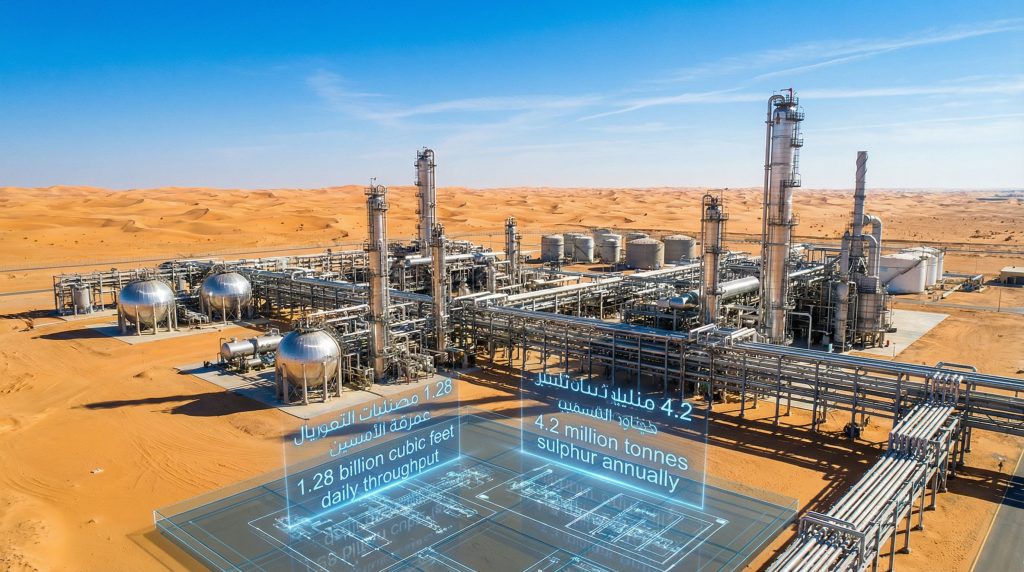
The persistent targeting of energy infrastructure during regional conflicts reveals critical vulnerabilities that extend far beyond immediate operational disruptions. The drone attack suspends UAE gas operations at the Shah field, exposing weaknesses in specialized processing facilities that handle the most technically demanding hydrocarbon resources. Furthermore, this incident illustrates how concentrated industrial capabilities become disproportionate leverage points during geopolitical escalations, affecting oil price movements and broader market stability.
What Makes Ultra-Sour Gas Processing a Prime Target for Regional Conflicts?
Ultra-sour gas processing represents one of the petroleum industry's most complex technical challenges, requiring specialized equipment designed to handle extreme concentrations of hydrogen sulfide and carbon dioxide. The Shah field, located approximately 180 kilometres southwest of Abu Dhabi, operates as the world's only single facility capable of processing over one billion cubic feet per day of these corrosive gas mixtures.
The joint venture between Abu Dhabi National Oil Company (ADNOC) and Occidental Petroleum Corporation processes 1.28 billion standard cubic feet daily while simultaneously producing 4.2 million tonnes of granulated sulfur annually. This dual-product capability creates cascading vulnerability across multiple supply chains when operations cease.
Critical Infrastructure Concentration Risks
The concentration of ultra-sour gas processing capabilities within a single facility creates systemic vulnerabilities that attackers can exploit with relatively modest resources. Unlike conventional gas fields where multiple processing sites can maintain partial production during incidents, the Shah field's unique technical requirements mean that operational suspension affects the entire regional ultra-sour gas supply chain.
Key vulnerability indicators include:
• Processing complexity requiring specialised corrosion-resistant equipment
• Limited alternative facilities capable of handling ultra-sour gas compositions
• Extended restart timelines due to safety verification requirements
• Downstream dependencies across multiple industrial sectors
The March 18, 2026 attack demonstrated how a contained fire, despite causing no casualties, could immediately suspend operations pending comprehensive structural and safety evaluations. This operational pause affects not only natural gas supply but also global sulfur markets that depend on the facility's byproduct streams.
Joint Venture Complexity During Crisis Management
Partnership structures between international operators and national oil companies create additional coordination challenges during security incidents. The ADNOC-Occidental joint venture must navigate both corporate crisis management protocols and national energy security considerations when responding to attacks.
This dual accountability framework can complicate rapid decision-making regarding restart procedures, security enhancements, and production allocation during recovery phases. The facility's integration with ADNOC's broader gas strategy means that operational decisions at Shah field ripple through the entire UAE energy distribution network.
When big ASX news breaks, our subscribers know first
How Do Specialised Processing Requirements Amplify Attack Impacts?
Ultra-sour gas processing facilities face unique operational challenges that magnify the impact of security incidents beyond conventional natural gas installations. The technical specifications required for handling hydrogen sulfide concentrations above industry-standard thresholds create specialised vulnerabilities that attackers can exploit to achieve disproportionate disruption effects.
The Shah field's designation as an ultra-sour gas processor indicates hydrogen sulfide and carbon dioxide concentrations that require specialised metallurgy, advanced gas treatment systems, and comprehensive safety protocols. When the drone attack suspends UAE gas operations at these systems, restart procedures become significantly more complex than conventional gas facilities.
Emergency Shutdown Protocols and Recovery Timelines
The March 2026 incident triggered immediate operational suspension following fire containment, with authorities conducting comprehensive damage assessments before considering restart procedures. The specialised nature of ultra-sour gas processing means that safety evaluations must verify the integrity of corrosion-resistant equipment and gas treatment systems.
Critical restart evaluation phases include:
• Structural integrity assessment of high-pressure vessels
• Corrosion-resistant equipment inspection protocols
• Safety system verification procedures
• Environmental compliance clearance processes
These evaluation requirements can extend shutdown periods significantly compared to conventional gas facilities, where restart procedures focus primarily on mechanical damage assessment rather than specialised chemical processing system integrity.
Fire Containment Challenges in Ultra-Sour Environments
The containment of the March 18, 2026 blaze without casualties demonstrates the effectiveness of specialised fire suppression systems designed for ultra-sour gas facilities. However, the presence of hydrogen sulfide creates additional hazards that complicate emergency response procedures and extend evaluation timelines.
Fire suppression in ultra-sour gas environments requires coordination between multiple safety systems, including gas detection networks, emergency shutdown valves, and specialised firefighting equipment. The successful containment suggests robust emergency protocols, but the extended shutdown indicates that even contained incidents create significant operational disruption.
What Are the Cascading Effects Across Global Sulfur Markets?
The Shah field's role as a primary global source of granulated sulfur creates market vulnerabilities that extend far beyond regional energy networks. The facility's annual production of 4.2 million tonnes represents a significant portion of global sulfur supply, making operational disruptions particularly impactful for downstream industries dependent on sulfur feedstocks.
Sulfur production represents a critical byproduct of ultra-sour gas processing, where hydrogen sulfide removal generates commercial-grade sulfur as a secondary revenue stream. When primary processing operations cease, sulfur production halts proportionally, creating immediate supply constraints across fertiliser, chemical, and pharmaceutical sectors.
Fertiliser Industry Supply Chain Dependencies
The agricultural sector's dependence on sulfur-based fertilisers creates vulnerability to processing disruptions at facilities like Shah field. Granulated sulfur serves as a key input for sulfuric acid production, which forms the foundation for phosphate fertilisers used globally in crop production.
Supply disruptions during critical agricultural seasons can amplify price volatility across food commodity markets, creating secondary economic effects that extend far beyond energy sector impacts. The timing of the March 2026 incident during spring planting seasons in key agricultural regions heightened these concerns.
Primary downstream impact sectors include:
• Phosphate fertiliser manufacturing
• Specialty chemical production
• Pharmaceutical intermediate compounds
• Metal processing applications
Global Sulfur Inventory Management
The concentration of sulfur production within a limited number of ultra-sour gas facilities creates inventory management challenges for downstream purchasers. Unlike crude oil markets, where strategic reserves provide buffer capacity, sulfur markets rely primarily on commercial inventory management by individual companies.
This limited buffer capacity means that production disruptions translate more directly into supply shortages and price volatility. Companies dependent on steady sulfur supplies must maintain higher inventory levels or develop alternative sourcing arrangements to manage processing facility vulnerabilities.
How Do Maritime Chokepoint Vulnerabilities Multiply Infrastructure Risks?
The partial closure of the Strait of Hormuz during the March 2026 incident created compounding pressure on UAE energy exports beyond the direct impact of the Shah field attack. This dual-vector disruption demonstrates how attackers can amplify the impact of individual facility strikes by simultaneously targeting critical transportation corridors.
The Strait of Hormuz serves as a critical chokepoint for global energy exports, handling approximately one-third of global seaborne petroleum liquids and substantial volumes of liquefied natural gas. When security threats reduce shipping capacity through this corridor, alternative routing options become constrained and more expensive.
Fujairah Port Strategic Significance
The targeting of vessels near Fujairah port, located approximately 23 nautical miles east of the main terminal, highlights the strategic importance of UAE's non-Hormuz export infrastructure. Fujairah's position on the Gulf of Oman provides alternative export routes that bypass the Strait of Hormuz entirely.
However, the March 2026 incident demonstrated that alternative routes remain vulnerable to attack, with a tanker sustaining minor structural damage from an unidentified projectile. While loading operations partially resumed after temporary halts, the incident revealed the limited redundancy in export route security.
Fujairah port operational considerations:
• Strategic location bypassing Strait of Hormuz chokepoint
• Limited defensive infrastructure compared to primary terminals
• Vulnerability to small-scale projectile attacks
• Critical importance for maintaining export capacity during Strait disruptions
Naval Escort Limitations and Diplomatic Constraints
The limited willingness of US allies to provide naval escorts for shipments through contested waters created additional capacity constraints independent of physical blockade attempts. This diplomatic dimension of maritime security demonstrates how geopolitical tensions can reduce effective shipping capacity without direct military confrontation.
The escort limitation forced ADNOC to implement production cutbacks as a response to reduced export capacity rather than physical infrastructure damage. This operational adjustment illustrates how security concerns can create voluntary production constraints that amplify the impact of targeted infrastructure attacks.
What Do Oil Price Movements Reveal About Market Psychology During Infrastructure Attacks?
The immediate market response to the Shah field incident provides insights into how energy markets evaluate and price infrastructure vulnerabilities during regional conflicts. Brent crude futures rose 3 percent to $103.28 per barrel, while West Texas Intermediate climbed 3.6 percent to $96.85, reflecting market participants' assessment of supply security risks.
These price movements occurred within a single trading session following public announcement of the attack, indicating rapid information processing and risk premium application by market participants. The magnitude of the increase suggests moderate concern rather than panic, implying confidence in eventual production restoration.
Market Attribution and Risk Assessment
Analysts linked the price surge to two distinct factors: heightened supply concerns from the security situation and reduced naval escort availability for Strait of Hormuz shipments. This dual attribution reveals how markets evaluate both direct physical disruption and logistical constraint factors.
The differentiation between physical and logistical constraints in market analysis suggests sophisticated understanding of how infrastructure attacks create multiple disruption vectors. However, concerns about oil price stagnation remain as geopolitical tensions continue to influence market dynamics.
Key market response indicators:
• Rapid price adjustment within single trading session
• Moderate increase suggesting controlled concern rather than panic
• Dual-factor attribution to physical and logistical constraints
• Sustained elevation pending facility restart confirmation
Strategic Reserve Deployment Considerations
The International Energy Agency's indication that member nations may consider additional releases from strategic oil reserves beyond the previously agreed 400 million barrels reveals institutional responses to persistent supply disruption threats. This reserve deployment discussion suggests recognition that infrastructure vulnerabilities may require buffer capacity management.
Strategic reserve releases serve multiple functions during infrastructure crises: physical supply replacement, market psychology management, and signal transmission regarding institutional commitment to market stability. The timing of these deployment discussions relative to attack incidents provides insight into institutional risk tolerance levels.
How Are Defence Systems Evolving to Address Persistent Infrastructure Threats?
The persistent targeting of UAE energy infrastructure throughout early 2026 has driven adaptive changes in defensive postures and threat response protocols. The evolution of these defence systems reveals ongoing technological and tactical adjustments as attackers modify their approaches to overcome existing countermeasures.
Defence system effectiveness must be evaluated against the backdrop of sustained attack campaigns rather than isolated incidents. The ability to intercept the majority of incoming threats while maintaining facility operations demonstrates defensive capability, but successful strikes indicate ongoing vulnerabilities that require continuous adaptation.
Multi-Layered Defence Integration Challenges
The protection of facilities like Shah field requires integration of multiple defensive layers, including early warning systems, active interception capabilities, and physical facility hardening. The March 2026 incident suggests that attackers successfully penetrated these defensive layers, either through tactical innovation or resource saturation.
Critical defence integration requirements:
• Early detection and tracking systems for small unmanned vehicles
• Active interception capabilities for low-altitude threats
• Physical facility hardening against explosive damage
• Rapid response coordination between military and civilian authorities
Cost-Effectiveness Analysis of Defensive Investments
The economic analysis of defensive investments versus potential disruption costs becomes critical as attack campaigns persist. The cost of comprehensive facility protection must be weighed against the economic impact of production suspension and market volatility during successful attacks.
This cost-benefit framework becomes particularly complex when evaluating protection for facilities with unique capabilities, such as the Shah field's ultra-sour gas processing capacity. The irreplaceable nature of certain industrial capabilities may justify defensive investments that exceed typical economic return thresholds.
The next major ASX story will hit our subscribers first
What Investment Strategies Emerge During Infrastructure Crisis Periods?
Energy infrastructure crises create distinct investment opportunities and risks that require specialised analytical frameworks for evaluation. The March 2026 incidents demonstrate how facility-specific vulnerabilities interact with broader geopolitical trends to create complex risk-return profiles for energy sector investments.
ADNOC's existing expansion plans, including a $510 million Saipem contract for increasing Shah field capacity to 1.45-1.85 billion cubic feet daily, face modified risk calculations following the attack. These expansion investments must now incorporate enhanced security considerations and potential for operational interruption.
Consequently, sophisticated investors are reassessing their investment strategies to account for persistent security threats and their cascading effects across energy markets.
Capital Allocation Under Persistent Security Threats
Investment decisions in conflict-prone regions require incorporation of security risk premiums that reflect both attack probability and potential operational impact duration. The Shah field incident provides data points for calculating these risk adjustments across different facility types and strategic importance levels.
Key investment risk factors include:
• Facility replaceability and alternative capacity availability
• Restart timeline complexity for specialised processing operations
• Insurance market capacity for persistent threat environments
• Defensive infrastructure integration costs
Portfolio Diversification Imperatives
The concentration risks revealed by the Shah field incident highlight the importance of geographic and technological diversification in energy infrastructure portfolios. Investors must evaluate whether concentrated high-capacity facilities provide sufficient risk-adjusted returns compared to distributed capacity alternatives.
Geographic diversification becomes particularly critical when investing in regions with active conflict potential. The ability to maintain overall production capacity despite localised disruptions requires strategic facility placement and capacity distribution that can withstand coordinated attack campaigns.
How Do Regional Conflicts Reshape Long-Term Energy Security Planning?
The systematic targeting of UAE energy infrastructure during 2026 provides lessons for long-term energy security planning that extend beyond immediate operational responses. These incidents reveal how sustained attack campaigns can force fundamental changes in energy system architecture and operational philosophy.
Traditional energy security planning focused primarily on market volatility, supply contract reliability, and technical facility performance. The introduction of persistent security threats requires expansion of these planning frameworks to incorporate active threat mitigation and system resilience under attack conditions.
In addition, trade war impacts and related geopolitical tensions continue to influence long-term planning considerations across global energy markets.
Supply Chain Resilience Modelling
The Shah field incident demonstrates the importance of modelling cascading effects across interconnected energy and chemical supply chains. Traditional supply chain analysis may underestimate vulnerability concentration when specialised facilities serve multiple market segments simultaneously.
Enhanced resilience modelling requirements:
• Multi-sector impact assessment for specialised facilities
• Alternative sourcing capacity evaluation under crisis conditions
• Recovery timeline modelling for complex technical systems
• Cross-border supply coordination during regional disruptions
Technology Redundancy and System Architecture
The unique capabilities of facilities like Shah field highlight the challenges of creating redundant capacity for highly specialised operations. Unlike conventional processing facilities where alternative sites can provide substitute capacity, ultra-sour gas processing capabilities require significant capital investment and technical expertise.
Long-term planning must balance the economic efficiency of concentrated specialised facilities against the security benefits of distributed capacity. This evaluation becomes particularly complex when specialised capabilities serve both domestic energy security and export revenue generation objectives.
What Lessons Can Global Energy Producers Extract from UAE Infrastructure Vulnerabilities?
The March 2026 UAE incidents provide transferable insights for energy producers operating in other regions with potential security threats. The systematic nature of the attacks and their impact across multiple facility types offers a comprehensive case study for vulnerability assessment and mitigation planning.
Energy producers in regions with dormant conflict potential can use the UAE experience to evaluate their own infrastructure vulnerabilities before active threats emerge. This proactive approach allows for defensive investments and operational modifications during stable periods rather than reactive responses during crisis conditions.
Vulnerability Assessment Framework Development
The Shah field incident reveals specific assessment criteria that can be applied to other specialised processing facilities. The combination of unique technical capabilities, concentrated capacity, and strategic importance creates a vulnerability profile that extends beyond traditional security risk evaluation.
Universal vulnerability indicators include:
• Specialised technical capabilities with limited alternative sources
• High-capacity concentration within single facilities
• Multi-sector supply chain dependencies
• Geographic exposure to potential conflict zones
International Cooperation Mechanisms
The diplomatic dimensions of the March 2026 incidents, including discussions of naval escort availability and strategic reserve deployment, highlight the importance of international cooperation frameworks for energy security. These mechanisms require development during stable periods to ensure effectiveness during crisis conditions.
Effective cooperation requires standardised threat assessment protocols, coordinated response capabilities, and pre-negotiated burden-sharing arrangements for defensive costs. For instance, the UAE experience demonstrates how bilateral defence relationships may prove insufficient for managing complex multi-vector attack campaigns.
Furthermore, monitoring the natural gas price forecast becomes crucial for understanding how these security incidents may influence broader energy markets and planning decisions.
Disclaimer: This analysis is based on publicly available information from sources including Reuters and Bloomberg and is intended for educational purposes only. The scenarios and projections discussed should not be considered as investment advice or predictions of future market performance. Energy infrastructure investments carry inherent risks, and past incidents may not be indicative of future threats or market responses. Readers should conduct their own research and consult with qualified professionals before making investment decisions.
Ready to Capitalise on Energy Market Volatility?
Energy infrastructure crises like the Shah field attack create significant market movements that savvy investors can leverage through targeted discovery alerts. Discovery Alert's proprietary Discovery IQ model monitors ASX energy and resource announcements in real-time, helping subscribers identify actionable opportunities during periods of heightened volatility when traditional analysis may miss critical developments.