May 20, 2026
Understanding the Complex World of Ultrafine Mineral Recovery
The mining industry faces mounting pressure to extract maximum value from increasingly complex ore bodies while managing stringent environmental regulations. Traditional mineral processing techniques often fall short when dealing with ultrafine particles, particularly in phosphate and potash operations where achieving better beneficiation for phosphate and potash slime presents unique technical challenges. Advanced flotation technologies are emerging as critical solutions to bridge this performance gap.
Slime beneficiation represents one of the most technically demanding aspects of mineral processing. These ultrafine particles, typically measuring less than 10 microns, exhibit surface chemistry behaviors that conventional flotation circuits struggle to manage effectively. The economic implications are substantial, as improved recovery rates can translate directly into enhanced project viability and extended mine life.
When big ASX news breaks, our subscribers know first
The Science Behind Slime Processing Challenges
Ultrafine mineral particles present a complex array of processing difficulties that stem from their fundamental physical and chemical properties. As particle size decreases, the surface area to volume ratio increases exponentially, creating intense surface forces that dominate particle behavior in flotation environments.
The primary technical challenges include:
- Reduced collision efficiency between air bubbles and mineral particles
- Increased surface oxidation affecting collector adsorption
- Higher degree of entrainment of gangue minerals in concentrate
- Complex rheological behavior in high-density slurries
These factors combine to create processing conditions where conventional flotation cells achieve recovery rates as low as 60-75%, leaving substantial mineral value in tailings streams. Furthermore, the environmental implications extend beyond simple waste generation, as these fine particles often contain elevated levels of contaminants that complicate waste management solutions.
Advanced Surface Chemistry Modifications
Modern slime processing requires sophisticated understanding of surface chemistry interactions. Particle surfaces undergo rapid oxidation when exposed to processing environments, fundamentally altering their flotation characteristics. Successful operations implement multi-stage conditioning protocols that include:
pH Control Systems:
- Precise alkaline conditioning using sodium hydroxide
- Maintained pH ranges between 8.0-9.5 for optimal collector performance
- Real-time monitoring to prevent over-conditioning
Selective Reagent Applications:
- Guar gum addition for iron oxide depression
- Staged collector introduction to minimize reagent consumption
- Temperature-controlled dosing for enhanced kinetics
Revolutionary Cavitation Technology in Column Flotation
Cavitation tube systems represent a fundamental shift in how the industry approaches ultrafine particle recovery. These advanced systems create precisely controlled bubble generation environments that significantly improve particle-bubble collision rates compared to conventional flotation cells. In addition, this technology aligns with broader industry innovation trends transforming mineral processing.
The technology operates through engineered cavitation zones that generate optimal bubble size distributions. This controlled approach addresses the primary limitation of conventional systems where bubble-particle collision efficiency decreases dramatically as particle size reduces below 20 microns.
Performance Metrics and Operational Advantages
| Recovery Parameter | Conventional Systems | Cavitation Technology |
|---|---|---|
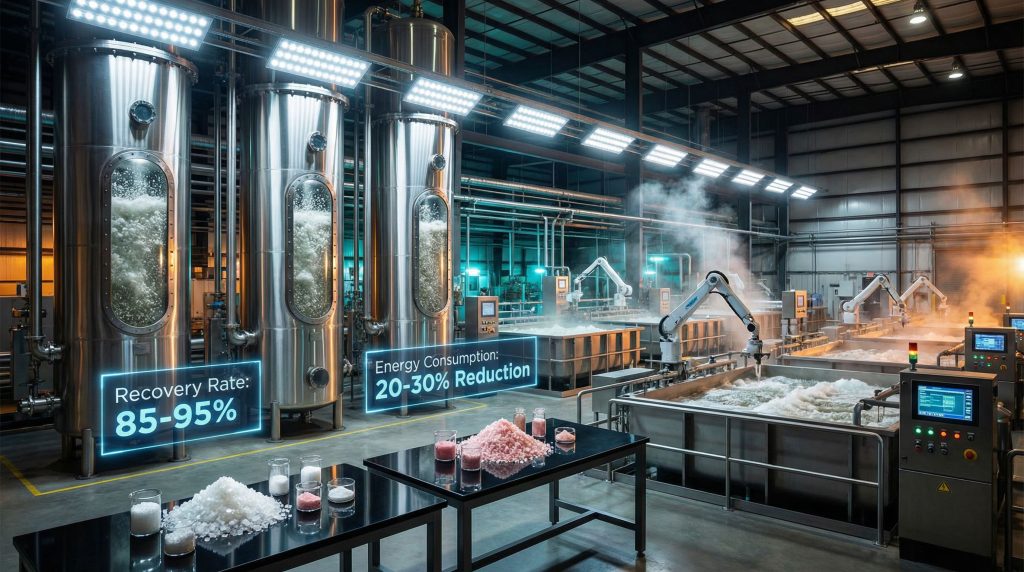
| Ultrafine Recovery | 65-80% | 85-95% |
| Energy Consumption | Baseline | 25% Reduction |
| Water Recirculation | Limited | 90% Closed Loop |
| Maintenance Requirements | High | Reduced by 40% |
The 15% additional recovery achieved through advanced cavitation systems can transform project economics, particularly in operations processing lower-grade ore bodies. This improvement translates to millions of dollars in additional revenue for medium-scale operations processing 500,000 tonnes annually.
Specialized Phosphate Slime Processing Methodologies
Phosphate slime processing demands highly specialized grinding and conditioning approaches that preserve mineral liberation while managing clay content. The technical methodology involves multi-stage grinding protocols optimized for phosphate beneficiation processes and phosphate mineralogy.
Sand Grinding Optimization Strategies
Effective phosphate slime processing begins with controlled grinding environments that maximize liberation without over-grinding. The process involves:
Primary Grinding Stage:
- Controlled residence times between 12-18 minutes
- Rod mill configurations for reduced over-grinding
- Density management at 70-75% solids by weight
Secondary Conditioning:
- Alkaline environment maintenance using sodium hydroxide
- Guar gum addition at 0.3-0.8 kg/tonne for selective depression
- Temperature control between 18-25°C for optimal reagent performance
The grinding strategy significantly impacts downstream flotation performance. Over-grinding creates excessive surface area that consumes flotation reagents, while under-grinding fails to achieve adequate mineral liberation. Optimal grinding produces 80% passing 75 microns with minimal production of particles below 5 microns.
Multi-Stage Flotation Circuit Design
Advanced phosphate slime circuits incorporate sophisticated design elements that maximise recovery while maintaining concentrate quality. Consequently, these systems achieve better beneficiation for phosphate and potash slime through:
Rougher Flotation Configuration:
- Extended retention times of 8-12 minutes
- Controlled air flow rates maintaining 0.8-1.2 cm/s superficial gas velocity
- Multi-point collector addition for optimal coverage
Cleaner Circuit Optimization:
- Three-stage cleaning with intermediate screening
- Middlings recirculation to maximise recovery
- Final magnetic separation for iron contamination removal
Advanced Potash Slime Treatment Protocols
Potash slime processing requires fundamentally different approaches compared to phosphate systems. The primary focus centres on desliming operations that preserve halite crystal integrity while removing clay contaminants that reduce product quality.
Two-Stage Scrubbing System Implementation
Effective potash desliming involves controlled scrubbing in saturated brine environments that prevent dissolution of valuable halite minerals:
Primary Scrubbing Parameters:
- Saturated brine density at 1.18-1.22 specific gravity
- Controlled agitation at 770 feet per minute tip speed
- Residence time optimisation between 3-5 minutes
- Temperature maintenance at 25-30°C
Secondary Treatment Protocols:
- Hydrocyclone separation for fine particle removal
- Density separation using heavy media
- Final flotation feed preparation at optimal density
The scrubbing process effectiveness depends critically on brine saturation levels. Under-saturated conditions result in valuable halite dissolution, while over-saturation can precipitate unwanted salts that complicate downstream processing.
Amine Flotation Chemistry Optimization
Potash flotation relies on specialised amine chemistry that selectively floats halite while depressing sylvite and other potassium-bearing minerals:
| Chemical Reagent | Function | Typical Dosage | Addition Point |
|---|---|---|---|
| Octadecylamine | Primary Collector | 0.8-1.5 kg/t | Pre-flotation |
| Fuel Oil | Frother/Collector | 0.3-0.7 kg/t | Flotation Cells |
| Starch | Selective Depressant | 0.2-0.4 kg/t | Conditioning |
| Sodium Hydroxide | pH Modifier | 0.5-1.2 kg/t | Conditioning |
The amine flotation process requires precise pH control and temperature management. Optimal performance occurs at pH 7.5-8.5 with temperature maintained below 35°C to prevent amine degradation.
Advanced Process Control and Monitoring Systems
Modern slime processing facilities incorporate sophisticated automation systems that continuously monitor and adjust critical process parameters. These systems utilise real-time data analysis to optimise performance and minimise operational variability, particularly through data-driven mining operations.
Critical Monitoring Parameters
Primary Control Variables:
- Pulp density measurements with ±2% accuracy
- pH monitoring with automatic adjustment systems
- Reagent flow rate control with pulse dampening
- Air flow optimisation based on bubble size analysis
- Temperature regulation using heat exchangers
Advanced Analytics Integration:
- Particle size distribution analysis using laser diffraction
- Mineralogical composition tracking via automated XRD
- Recovery rate calculations based on mass balance
- Grade prediction algorithms using AI in mining operations
These control systems enable operations to maintain consistent performance despite variations in ore characteristics. Advanced facilities report 15-25% reduction in process variability when implementing comprehensive monitoring protocols.
The next major ASX story will hit our subscribers first
Economic Impact Analysis of Enhanced Recovery Systems
The financial benefits of improved slime processing extend far beyond simple recovery improvements. Enhanced systems deliver value through multiple operational efficiency gains and cost reduction mechanisms.
Direct Revenue Enhancement
A 15% improvement in recovery rates delivers substantial economic benefits:
- Medium-scale operations (500,000 tpa): Additional $8-12 million annual revenue
- Large-scale operations (2 million tpa): Additional $25-40 million annual revenue
- Extended mine life: 2-4 year extensions through waste reprocessing
- Reduced stripping ratios: Lower waste-to-ore ratios required
Operational Cost Reductions
Energy Efficiency Improvements:
- 20-30% reduction in flotation circuit power consumption
- Decreased grinding energy through improved liberation
- Lower pumping costs via optimised slurry densities
Reagent Cost Management:
- 15-25% reduction in collector consumption per tonne concentrate
- Improved reagent utilisation efficiency
- Reduced waste reagent disposal costs
Water Management Benefits:
- 90% water recirculation rates in closed-loop systems
- Reduced fresh water consumption by 40-60%
- Lower water treatment and discharge costs
- Minimised environmental compliance expenses
Environmental Sustainability and Compliance
Enhanced slime processing contributes significantly to sustainable mining practices through waste reduction and improved resource utilisation. These systems address growing environmental pressures while improving operational economics, aligning with renewable mining solutions.
Waste Minimisation Strategies
Tailings Reduction Benefits:
- 15-25% reduction in tailings pond requirements
- Decreased environmental footprint of waste facilities
- Reduced long-term monitoring and maintenance obligations
- Lower closure bond requirements
Water Quality Improvements:
- Reduced dissolved solids in process water discharge
- Lower turbidity in recycled water systems
- Minimised chemical contamination in tailings
- Enhanced groundwater protection through better containment
Regulatory Compliance Advantages
Advanced processing systems help operations meet increasingly stringent environmental regulations:
- Air quality management through reduced dust generation
- Water discharge compliance via improved treatment efficiency
- Noise reduction through optimised equipment selection
- Chemical handling safety through automated dosing systems
Implementation Strategies for Existing Operations
Retrofitting existing flotation circuits with advanced slime processing capabilities requires careful planning and phased implementation to minimise production disruptions.
Phase 1: Comprehensive Assessment
Ore Characterisation Studies:
- Detailed mineralogical analysis using QEMSCAN technology
- Particle size distribution mapping across size fractions
- Surface chemistry evaluation through zeta potential measurements
- Liberation analysis at various grinding intensities
Circuit Simulation and Modelling:
- Mass balance calculations for existing operations
- Flotation kinetics modelling using HSC Chemistry software
- Economic optimisation modelling for equipment sizing
- Sensitivity analysis for varying ore characteristics
Phase 2: Equipment Integration
Staged Installation Approach:
- Initial pilot-scale testing with 1-2 tph capacity
- Progressive scale-up to demonstration plant (10-20 tph)
- Full-scale implementation with production backup systems
- Parallel operation during commissioning phase
Operator Training Programmes:
- Technical training on cavitation technology principles
- Hands-on equipment operation certification
- Process troubleshooting and optimisation techniques
- Safety protocols for new equipment and chemicals
Phase 3: Performance Optimization
Continuous Improvement Protocols:
- Daily performance monitoring and reporting
- Weekly optimisation meetings with technical teams
- Monthly equipment maintenance and calibration
- Quarterly performance benchmarking against industry standards
Future Technological Developments
The slime processing sector continues evolving through integration of artificial intelligence, advanced materials science, and novel separation techniques that promise further performance improvements.
Artificial Intelligence Applications
Machine Learning Algorithms:
- Predictive models for ore variability management
- Automated reagent dosing optimisation
- Equipment failure prediction and prevention
- Real-time grade prediction with 95% accuracy
Process Automation Advances:
- Autonomous flotation circuit control
- Self-optimising reagent addition systems
- Integrated water management automation
- Predictive maintenance scheduling
Novel Separation Technologies
Electromagnetic Separation Methods:
- High-intensity magnetic separation for iron removal
- Electrostatic separation for clay mineral rejection
- Combined magnetic-flotation hybrid processes
- Superconducting magnetic separation systems
Advanced Hydrocyclone Designs:
- Multi-stage classification systems
- Variable geometry cyclones for size control
- Dense medium cyclone integration
- Automated overflow density control
Quality Assurance and Performance Monitoring
Maintaining consistent performance in slime processing operations requires robust quality control systems that monitor both process parameters and product specifications. However, achieving better beneficiation for phosphate and potash slime demands comprehensive ultrafine phosphate processing research and monitoring protocols.
Advanced Sampling Protocols
Representative Sampling Systems:
- Automated cross-belt samplers with 1% precision
- Multi-point sampling across flotation cells
- Time-based composite sampling for shift analysis
- Statistical sampling protocols following ISO standards
Rapid Analysis Techniques:
- X-ray fluorescence for elemental analysis (2-minute turnaround)
- Automated particle size analysis using laser diffraction
- Online density measurements with nuclear gauges
- Real-time pH and conductivity monitoring
Performance Benchmarking Systems
Key Performance Indicators:
- Recovery efficiency targets (minimum 85% for ultrafines)
- Concentrate grade specifications (±2% tolerance)
- Energy consumption benchmarks (kWh per tonne processed)
- Water usage efficiency metrics (m³ per tonne concentrate)
Continuous Improvement Metrics:
- Monthly recovery trend analysis
- Reagent consumption optimisation tracking
- Equipment availability and utilisation rates
- Environmental compliance indicator monitoring
Disclaimer: This article contains technical information and performance projections that may vary based on specific ore characteristics, operating conditions, and equipment configurations. Readers should conduct site-specific testing and analysis before implementing new technologies. Investment decisions should be made based on comprehensive feasibility studies and professional engineering advice.
Want to Discover the Next Major Mineral Processing Breakthrough?
Discovery Alert's proprietary Discovery IQ model delivers instant notifications about significant ASX mineral discoveries, including breakthrough technologies in phosphate and potash processing that could revolutionise operational efficiency. Begin your 14-day free trial today to position yourself ahead of market movements and discover why major mineral discoveries can generate substantial returns for informed investors.