
June 9, 2026
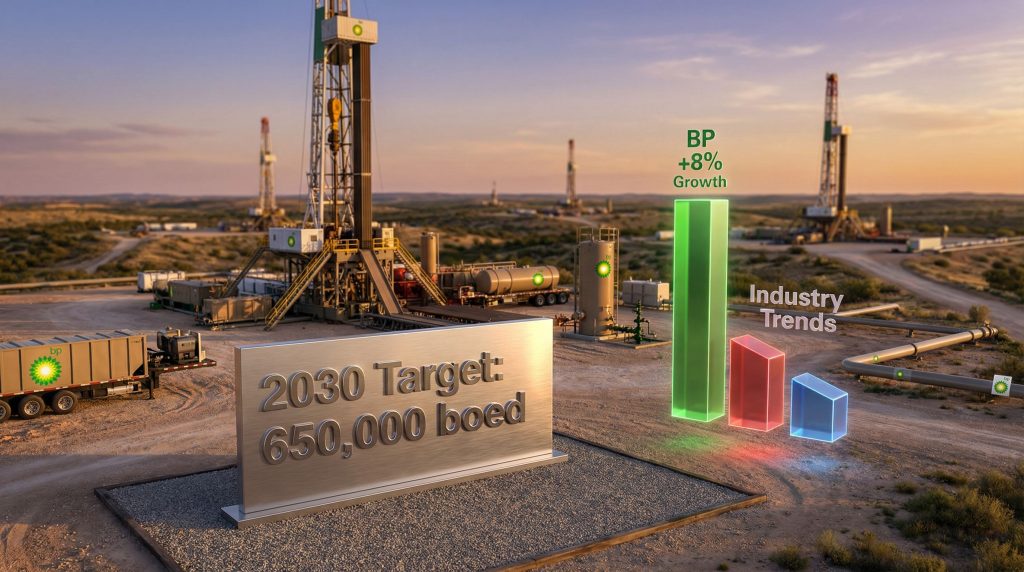
The unconventional oil sector stands at a critical juncture where operational philosophy increasingly determines competitive advantage. While market forces traditionally drove production cycles through boom-bust patterns, a new paradigm emphasises manufacturing-style consistency over reactive capital allocation. This fundamental shift reflects industry maturation and the recognition that steady-state operations generate superior returns compared to cyclical investment approaches. Furthermore, the BP shale drilling expansion exemplifies this strategic evolution within the current market environment.
Understanding BP's Contrarian Market Position
BP's shale drilling expansion through its BPX Energy division represents one of the most ambitious counter-cyclical strategies in the current unconventional landscape. The company targets an 8% production increase in 2026, positioning itself against widespread industry conservatism while competitors adopt wait-and-see approaches amid global crude oversupply concerns. Additionally, these developments occur alongside significant oil price movements affecting global energy markets.
Current operational metrics demonstrate the scale of this strategic commitment:
| Metric | BP (BPX Energy) | Industry Context | Strategic Significance |
|---|---|---|---|
| Daily Production Target | 500,000 boed | Variable peer output | 20% of BP's global production |
| 2030 Production Goal | 650,000 boed | Declining sector focus | Counter-cyclical expansion |
| Capital Efficiency Gain | $800M reduction | Cost optimisation priority | Enhanced cash generation |
| Growth Rate (2026) | +8% annually | Industry average -2% to +1% | Aggressive market positioning |
BPX Energy Chief Executive Officer Kyle Koontz frames this expansion as fundamentally different from traditional cyclical approaches, emphasising manufacturing-style operational consistency over reactive budgeting cycles. According to Bloomberg reporting, this methodology prioritises steady-state operations designed to avoid the capital cycling patterns that historically undermined shale operator profitability.
The strategic positioning gains additional significance when viewed against BP's broader corporate challenges. The company's market capitalisation remains approximately 40% below early 2019 levels, positioning it below ConocoPhillips and Brazil's Petrobras in valuation rankings. This valuation deterioration stems largely from the 2020 renewable energy pivot that failed to generate anticipated commercial returns while simultaneously reducing upstream production capacity.
Capital Allocation Philosophy and Operational Efficiency
The manufacturing approach represents a departure from boom-bust capital allocation cycles that characterised earlier shale development phases. BPX Energy's strategy focuses on consistent operational execution rather than price-responsive production adjustments, creating operational stability that enables long-term planning and cost optimisation. Moreover, these developments incorporate advanced drilling innovation techniques to enhance operational efficiency.
Key elements of this operational philosophy include:
- Steady-state capital deployment across multiple development phases
- Technology integration for enhanced drilling and completion efficiency
- Scale optimisation through coordinated multi-basin operations
- Cost structure discipline maintaining profitability across commodity price cycles
This approach enables the targeted $800 million capital expenditure reduction while achieving production growth from 500,000 to 650,000 barrels of oil equivalent daily by 2030. The capital efficiency gains create financial flexibility for BP's international upstream portfolio, allowing freed resources to support growth project sanctioning in global operations.
When big ASX news breaks, our subscribers know first
What Drives BP's Aggressive Shale Expansion Strategy?
The strategic rationale behind BP's shale drilling expansion extends beyond production growth to encompass portfolio rebalancing and competitive repositioning within the supermajor peer group. The expansion serves as a cash generation platform designed to restore BP's upstream production baseline while funding international project development. In addition, this strategy must navigate ongoing oil price stagnation challenges affecting market dynamics.
Portfolio Restoration and Cash Flow Generation
BP's aggressive shale strategy addresses production declines resulting from the 2020 strategic pivot toward renewable energy investments. The company shed crude and gas assets while trimming upstream investment, creating production gaps that undermined cash flow generation and shareholder returns.
The shale expansion functions as a capital liberation mechanism, generating cash flow for redeployment across BP's global upstream portfolio while demonstrating operational competence to institutional investors.
BPX Energy operations currently contribute approximately 20% of BP's worldwide production, with expansion plans targeting increased contribution levels through 2030. This production baseline provides financial stability for international project sanctioning, particularly in regions requiring higher capital intensity and longer development timelines.
The capital efficiency component proves equally significant. According to Bloomberg reporting, the $800 million capital expenditure reduction creates deployment flexibility for growth projects internationally, allowing BP to maintain diversified upstream exposure while optimising domestic unconventional operations.
Strategic Basin Positioning and Geographic Diversification
BPX Energy maintains operations across three primary unconventional basins, providing geographic diversification and geological risk mitigation:
- Permian Basin Operations: Core unconventional asset base with established infrastructure
- Eagle Ford Presence: Diversified geological exposure and established production systems
- Haynesville Integration: Natural gas component providing commodity price diversification
This multi-basin approach enables operational flexibility and risk management while supporting the manufacturing-style operational consistency that Koontz emphasises as central to the strategic approach.
Why Are Major Shale Players Adopting Conservative Approaches?
The broader unconventional sector demonstrates increasing conservatism as operators respond to crude oversupply warnings and price uncertainty. Major shale producers including Diamondback Energy and EOG Resources have adopted production growth restraint, creating strategic divergence with BP's expansion approach. Furthermore, these conservative trends reflect broader trade war impacts on global energy markets.
Market Dynamics and Risk Assessment Framework
Industry conservatism reflects rational response to multiple risk factors affecting unconventional production economics:
- Global crude oversupply projections creating price pressure concerns
- Capital allocation discipline prioritising shareholder returns over growth
- Technology deployment costs requiring sustained commodity price levels
- Regulatory uncertainty affecting long-term operational planning
These factors contribute to widespread production growth restraint among established operators, who prioritise cash flow generation and shareholder distributions over aggressive expansion strategies.
Industry analysis suggests that widespread warnings of impending worldwide crude glut scenarios drive wait-and-see approaches among established shale operators, creating strategic opportunities for companies willing to maintain growth trajectories.
Competitive Positioning and Market Share Dynamics
The conservative industry approach creates market share redistribution opportunities for operators maintaining expansion strategies. BP's counter-cyclical positioning potentially enables competitive advantage through:
- Service cost optimisation during reduced industry activity periods
- Talent acquisition from competitors reducing operational scale
- Infrastructure utilisation benefiting from reduced regional competition
- Technology deployment at optimal cost structures during market downturns
BPX Energy's willingness to maintain growth trajectories during industry conservatism reflects confidence in operational cost structures and long-term demand fundamentals, distinguishing the strategy from peer risk management approaches.
How Does Shale Production Fit BP's Broader Corporate Transformation?
The BP shale drilling expansion represents a critical component of corporate strategic realignment following the unsuccessful 2020 renewable energy pivot. The strategy addresses shareholder value destruction while repositioning BP within the supermajor competitive landscape. Consequently, this approach also aligns with broader industry consolidation trends affecting energy markets.
Asset Portfolio Rebalancing and Value Recovery
The renewable energy transition strategy implemented in 2020 failed to generate anticipated commercial returns while simultaneously reducing upstream production capacity. Market capitalisation declined approximately 40% from early 2019 levels, reflecting investor scepticism regarding transition execution and profitability timelines.
Corporate governance pressures intensified through 2025, with activist investor Elliott Investment Management pushing for strategic change and executive leadership transitions. Murray Auchincloss was removed as CEO, with Carol Howle serving as interim chief executive pending Meg O'Neill's appointment in April 2026.
According to Bloomberg reporting, Carol Howle emphasised that BPX Energy represents a core part of BP with robust production forecasts through the decade's end, signalling board-level commitment to shale operations rather than divestiture consideration.
Integration with Global Operations Strategy
The shale expansion enables BP's broader international upstream strategy through multiple mechanisms:
- Cash flow generation: Supporting capital requirements for global project sanctioning
- Capital allocation flexibility: Enabling diversified growth strategies across geographic regions
- Risk management: Balancing domestic unconventional production with international conventional assets
- Operational demonstration: Validating upstream execution capabilities to institutional investors
This integration approach positions shale operations as an enabler for international growth rather than as a standalone strategic focus, differentiating BP's approach from pure-play unconventional operators.
What Are the Technical and Economic Fundamentals?
BP's shale drilling expansion relies on operational efficiency improvements and cost structure optimisation to achieve production growth while reducing capital expenditure requirements. The technical approach emphasises manufacturing-style consistency over cyclical capital allocation patterns.
Operational Efficiency and Cost Structure Optimisation
The manufacturing approach methodology represents a fundamental shift from traditional boom-bust operational cycles. BPX Energy's strategy prioritises:
- Steady-state operational planning eliminating capital cycling inefficiencies
- Technology integration optimising drilling and completion performance
- Scale benefits across multi-basin operations reducing per-unit costs
- Supply chain optimisation leveraging consistent activity levels for cost negotiation
According to Bloomberg reporting, Kyle Koontz identifies capital cycling as a historical industry weakness that prevents optimal manufacturing-style operations and reduces profitability potential.
Price Resilience and Breakeven Analysis
While specific breakeven prices for Permian Basin, Eagle Ford, and Haynesville operations were not disclosed, the strategic approach suggests operational resilience across commodity price scenarios. The expansion strategy continues despite international crude prices trading below the $70 per barrel assumption used in BP's February 2025 strategy announcement.
BPX Energy's operational resilience framework includes:
- Long-term planning approach: Insulation from short-term price volatility
- Strategic threshold analysis: Macro disruption response protocols
- Operational continuity: Maintaining growth despite commodity cycles
- Cost structure discipline: Achieving profitability across price ranges
The strategy would only face alteration in response to macro disruptions equivalent to the COVID-19 pandemic impact, indicating significant price decline tolerance built into operational planning.
How Will This Strategy Impact Industry Consolidation Trends?
BP's aggressive shale drilling expansion creates implications for industry consolidation patterns and competitive positioning dynamics within the unconventional sector. The counter-cyclical approach may influence valuation metrics and strategic option availability across the peer group.
Valuation Impact and Strategic Options
The expansion strategy addresses analyst questions regarding BPX Energy value optimisation through potential spin-off or divestiture transactions. Corporate leadership emphasis on core asset designation suggests integration benefits outweigh value unlocking considerations. However, ongoing developments regarding BP's offshore expansion projects demonstrate the company's broader strategic focus.
Key strategic considerations include:
- Scale benefits: Achieving competitive cost structures through operational consistency
- Integration advantages: Supporting BP's international upstream portfolio requirements
- Market positioning: Strengthening competitive stance during industry consolidation
- Technology deployment: Cross-basin operational optimisation and efficiency gains
Sector Leadership Implications and Competitive Dynamics
The production growth trajectory potentially alters competitive rankings within unconventional oil production. BPX Energy's expansion from 500,000 to 650,000 barrels of oil equivalent daily positions the operation among significant unconventional producers.
Competitive implications include:
- Production ranking changes: Challenging established shale operator hierarchy
- Investment flow patterns: Capital allocation toward growth-focused operators
- Service industry impacts: Regional activity levels affecting cost structures
- Technology transfer opportunities: Cross-basin operational optimisation benefits
The next major ASX story will hit our subscribers first
What Are the Macroeconomic Implications for U.S. Energy Security?
BP's shale drilling expansion contributes to broader U.S. energy security objectives through domestic production growth and reduced import dependency. The production increases support national energy independence metrics while contributing to regional economic development.
Domestic Production Contribution and Energy Independence
The 150,000 barrel per day production increase from current levels to 2030 targets represents significant domestic supply contribution:
- Energy independence enhancement: Reducing reliance on crude oil imports
- Supply chain resilience: Supporting domestic refining capacity utilisation
- Economic multiplier effects: Regional employment and tax revenue generation
- Infrastructure utilisation: Optimising existing pipeline and processing capacity
Global Market Positioning and Export Capacity
Increased domestic production supports U.S. energy diplomacy capabilities and global market influence through:
- Export capacity building: Supporting crude oil and refined product export infrastructure
- Price stabilisation contribution: Counter-cyclical production supporting market balance
- Geopolitical leverage: Enhancing U.S. energy diplomacy and alliance support capabilities
- Strategic reserve implications: Domestic production supporting national security requirements
The production growth occurs during a period of industry-wide conservatism, potentially amplifying the strategic significance for national energy security planning.
Future Outlook: Strategic Scenario Modelling Through 2030
The BP shale drilling expansion trajectory through 2030 faces multiple scenario outcomes depending on commodity price evolution, regulatory environment changes, and technology deployment success. The strategic approach demonstrates resilience across various market conditions while maintaining growth objectives.
Growth Trajectory Projections and Risk Assessment
The production scaling pathway from 500,000 to 650,000 barrels of oil equivalent daily represents a 30% increase over four years, requiring sustained operational execution and capital efficiency improvements.
Key success factors include:
- Technology deployment effectiveness: Advanced drilling and completion techniques delivering projected efficiency gains
- Cost structure optimisation: Achieving $800 million capital expenditure reduction while maintaining growth
- Market positioning: Sustaining competitive advantage during industry consolidation
- Regulatory stability: Operating environment supporting long-term development planning
Market Impact and Competitive Response Scenarios
The expansion strategy may influence competitive responses and industry dynamics through multiple pathways:
- Peer operator reactions: Potential strategy adjustments by Diamondback Energy, EOG Resources, and other major producers
- Service industry impacts: Regional activity levels affecting cost structures and service availability
- Infrastructure development: Pipeline capacity and processing facility utilisation rates
- Technology innovation: Operational efficiency improvements influencing sector-wide adoption
The manufacturing approach methodology, if successful, may establish operational best practices adopted across the unconventional sector, amplifying the strategic significance beyond BP's immediate operations.
Investment considerations for this strategy include potential volatility in energy markets, regulatory changes affecting drilling operations, and technology deployment risks that could impact projected efficiency gains. Investors should carefully evaluate these factors alongside the company's operational execution capabilities and broader market conditions when assessing the long-term viability of this expansion approach.
Ready to Capitalise on Energy Market Opportunities?
Discovery Alert's proprietary Discovery IQ model delivers real-time notifications on significant ASX mineral discoveries, instantly empowering subscribers to identify actionable opportunities ahead of the broader market. Begin your 14-day free trial today and secure your market-leading advantage in the evolving energy and resources landscape.