June 17, 2026
Understanding Modern Underground Mining Automation Systems
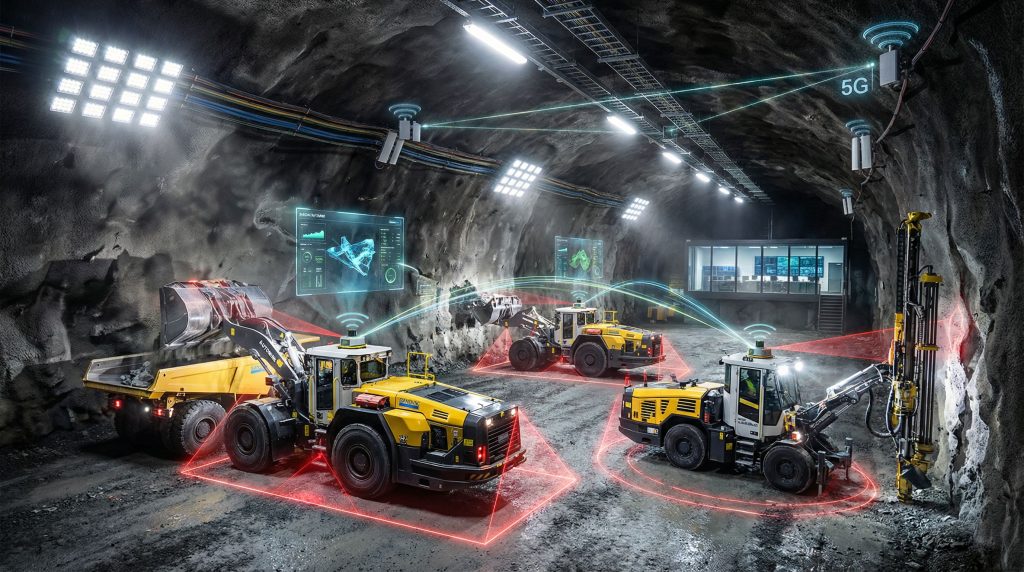
The mining industry has historically relied on heavy manual labour and traditional mechanical equipment to extract valuable resources from beneath the earth. However, emerging technological frameworks are revolutionising how mining companies approach underground extraction operations. Advanced automation systems now enable sophisticated machine coordination that transforms fundamental operational protocols across the sector, particularly through Sandvik AutoMine systems in underground mining.
Modern underground mining automation represents a convergence of multiple technological disciplines, including artificial intelligence, wireless communications, and precision navigation systems. These integrated platforms create environments where multiple pieces of heavy equipment can operate simultaneously with minimal direct human oversight, fundamentally altering traditional mining workflows.
The implementation of these systems requires comprehensive infrastructure development, specialised training programmes, and significant capital investment. Mining companies must evaluate numerous factors including geological conditions, existing equipment compatibility, and workforce transition requirements before deploying automated solutions throughout their operations.
When big ASX news breaks, our subscribers know first
Core Components of Advanced Mining Automation Architecture
Underground mining automation systems rely on sophisticated technological frameworks that integrate multiple communication and control technologies. Modern implementations incorporate high-resolution mapping capabilities, real-time positioning systems, and advanced obstacle detection mechanisms that enable equipment to navigate complex underground environments safely and efficiently.
Communication infrastructure forms the backbone of successful automation deployments. Underground operations require robust wireless networks capable of transmitting large volumes of data between surface control centres and subterranean equipment. These systems must maintain consistent connectivity despite challenging environmental conditions including dust, moisture, and electromagnetic interference from heavy machinery.
Key Communication Requirements:
- High-bandwidth data transmission capabilities
- Redundant communication pathways for system reliability
- Real-time video feed transmission for remote supervision
- Integration with existing mine communication networks
- Environmental hardening for underground conditions
Navigation and positioning technologies enable autonomous equipment to operate precisely within confined underground spaces. Furthermore, these systems combine multiple sensor technologies to create detailed three-dimensional maps of mining environments, allowing equipment to identify optimal pathways while avoiding obstacles and hazards.
The integration process requires careful coordination between different equipment manufacturers and existing mine infrastructure. In addition, successful implementations often involve phased approaches where individual machines are automated first, followed by progressive expansion to fleet-level coordination as operational teams develop expertise and confidence with the technology.
Equipment Categories and Automation Applications
Underground mining automation encompasses several distinct equipment categories, each presenting unique technical challenges and operational benefits. Loading equipment represents one of the most successful automation applications, where remote operators can supervise multiple machines simultaneously from surface-based control rooms.
According to industry developments reported in March 2026, Sandvik AutoMine systems in underground mining enable single operators to control up to three loaders simultaneously through their Multi-Lite automation platform. This represents a significant productivity enhancement compared to traditional one-operator-per-machine configurations.
| Equipment Type | Automation Capability | Supervision Ratio | Primary Applications |
|---|---|---|---|
| Loading Equipment | Full autonomous operation | 1:3 operator ratio | Material movement from stope to designated areas |
| Drilling Operations | Supervised autonomy | Variable ratios | Precision drilling with automated positioning |
| Hauling Systems | Coordinated movement | Fleet coordination | Transport between underground locations |
| Integrated Operations | Multi-machine coordination | Scalable supervision | Complete workflow automation |
Drilling automation offers particular advantages in precision and consistency. However, automated drilling systems can maintain exact positioning and drilling parameters across multiple holes, reducing variability that commonly occurs with manual operations. This consistency improves blast patterns and overall extraction efficiency.
Consequently, hauling automation presents additional complexity due to the need for traffic management systems that coordinate multiple vehicles operating in confined underground roadways. These systems require sophisticated algorithms to prevent collisions while optimising material flow throughout the mine.
Safety Systems and Worker Protection Protocols
Safety considerations drive many automation implementations in underground mining operations. Remote supervision capabilities reduce worker exposure to hazardous underground conditions including dust, noise, vibration, and potential rock falls or equipment accidents, representing significant safety improvements.
Brynecut Manager of Automation and Electrification Luke Clements has emphasised that safety represents their primary priority in automation deployment. The company views automation technology as enabling workers to return home safely while achieving high productivity through precise and repeatable operations.
Modern safety systems incorporate multiple protection layers:
Environmental Protection Benefits:
- Reduced exposure to dust and airborne particles
- Minimised noise and vibration exposure
- Climate-controlled operator environments
- Elimination of direct underground hazard exposure
Operational Safety Features:
- Automated hazard detection and avoidance
- Emergency stop capabilities across all equipment
- Real-time equipment health monitoring
- Predictive maintenance scheduling
Critical Safety Innovation: Advanced automation systems create dynamic safety zones that automatically adapt to equipment movement patterns, ensuring human personnel cannot accidentally enter active automation areas during operations.
Access control systems represent a fundamental safety component, preventing unauthorised personnel from entering automated work zones. For instance, these systems must balance operational efficiency with comprehensive protection, automatically managing access permissions based on real-time equipment locations and operational status.
Emergency response protocols require special consideration in automated environments. Systems must enable immediate remote shutdown of all automated equipment while providing clear communication channels between surface control centres and any underground personnel during emergency situations.
Operational Performance and Productivity Metrics
Automation implementations deliver measurable productivity improvements through several mechanisms. Equipment utilisation rates increase significantly when machines can operate continuously without breaks required for human operators. Additionally, automated systems can maintain consistent operational parameters that optimise cycle times for repetitive tasks.
Shift Change Impact Reduction:
One of the most significant productivity benefits addresses downtime associated with shift changes. Traditional mining operations experience substantial productivity losses during personnel transitions. However, automated systems can maintain material movement and drilling progress continuously, reducing these operational interruptions.
Byrnecut has specifically implemented automation to address shift change downtime, recognising this as one of the largest contributors to overall operational inefficiency. Consequently, the ability to maintain continuous operations across shift boundaries represents a substantial competitive advantage.
Precision and Consistency Benefits:
- Standardised operational procedures across all shifts
- Reduced variability in cycle times and positioning
- Improved maintenance scheduling through consistent usage patterns
- Enhanced data collection for operational optimisation
Cost-benefit analysis requires consideration of multiple factors including initial capital investment, training costs, infrastructure development, and long-term operational savings. Furthermore, these data‑driven operations enable sophisticated analytical capabilities that support strategic decision-making.
Return on investment timelines vary significantly based on operational scale, geological conditions, and implementation complexity. Moreover, larger operations often achieve faster payback periods due to economies of scale, while smaller operations may require longer timeframes to justify automation investments.
Integration with Mine Planning and Data Analytics
Automated systems generate unprecedented amounts of operational data that can transform mine planning and optimisation processes. Real-time equipment performance monitoring provides insights into bottlenecks, maintenance requirements, and operational efficiency opportunities that were previously invisible to mine planners.
Data collection capabilities extend beyond simple productivity metrics to include equipment health diagnostics, environmental conditions, and detailed operational patterns. This information enables predictive maintenance scheduling that reduces unexpected equipment failures while optimising maintenance costs.
Planning Integration Benefits:
- Real-time production monitoring and adjustment
- Dynamic resource allocation based on current conditions
- Integrated scheduling across multiple departments
- Predictive analytics for equipment and operational planning
Workflow optimisation becomes possible when multiple automated systems share operational data. In addition, mine planners can identify interdependencies between different operations and optimise scheduling to maximise overall productivity rather than focusing on individual equipment efficiency.
The integration process requires sophisticated data management systems capable of processing large volumes of information from multiple sources. Consequently, mining companies must invest in data infrastructure and analytical capabilities to fully realise the benefits of automated data collection.
The next major ASX story will hit our subscribers first
Implementation Challenges and Technical Considerations
Successful automation deployment requires comprehensive infrastructure development that extends far beyond the automated equipment itself. Underground communication networks must be installed or upgraded to support high-bandwidth data transmission requirements. Power supply systems require modification to support additional electronic systems and backup capabilities.
Infrastructure Requirements:
- Fibre optic or high-capacity wireless networks throughout underground areas
- Redundant power supply systems with backup capabilities
- Environmental conditioning systems for sensitive electronic equipment
- Maintenance facility modifications to support automated systems
- Integration with existing mine safety and monitoring systems
Workforce transition represents a critical implementation challenge that requires careful management. Traditional equipment operators must be retrained for supervisory and technology-focused roles. However, this transition affects compensation structures, career advancement pathways, and overall organisational culture.
Legacy equipment compatibility often presents unexpected complications during implementation. Existing mining equipment may require significant modifications or replacement to integrate effectively with automated systems. For instance, these compatibility issues can substantially increase implementation costs and timelines.
Integration Complexity Factors:
- Software platform compatibility across different equipment manufacturers
- Data standardisation requirements for unified monitoring systems
- Maintenance procedure modifications for automated equipment
- Emergency response protocol adjustments for automated environments
Change management strategies must address resistance to technological adoption while ensuring adequate training and support for affected personnel. Furthermore, successful implementations typically involve extensive communication about benefits and careful attention to workforce concerns throughout the transition process.
Global Adoption Patterns and Leading Implementations
Byrnecut, identified as the world's largest underground mining contractor, has emerged as a leading adopter of automation technology. According to industry developments reported in March 2026, the company has deployed Sandvik AutoMine systems in underground mining across multiple global operations, with the majority of their operations now utilising automation for loading activities.
Current Byrnecut Implementation Sites:
- Gwalia mine (Australia)
- Ulysses mine (Australia)
- Youanmi mine (Australia)
- Gossan Valley mine (Australia)
- Navachab mine (Namibia)
The geographic distribution of these implementations demonstrates that automation technology can be successfully deployed across diverse geological and regulatory environments. Operations in Australia and Africa indicate that automation systems can adapt to different mining conditions and regulatory frameworks.
Sandvik Vice President of Automation David Hallett has noted growing understanding across the mining sector regarding the benefits of advanced automation solutions. This industry recognition suggests broader adoption patterns may accelerate as more companies observe successful implementations and measurable benefits.
Market Development Indicators:
- Increased order volumes for automation systems
- Geographic expansion across multiple continents
- Scale progression from single machines to fleet-level coordination
- Integration expansion from loading to drilling and other operations
The progression from single-machine automation to comprehensive fleet coordination represents a natural evolution pattern for companies implementing these technologies. However, early adopters typically begin with individual equipment automation before expanding to more complex multi-machine coordination as they develop operational expertise.
How is Technology Transforming Underground Operations?
Modern AI computing system implementations are revolutionising underground mining through enhanced processing capabilities. These systems enable real-time decision-making that supports autonomous equipment operation whilst maintaining optimal safety protocols.
Furthermore, the integration of artificial intelligence with traditional mining equipment creates opportunities for predictive analytics and operational optimisation that were previously impossible to achieve. This technological convergence aligns with broader industry evolution trends that emphasise sustainable and efficient resource extraction methods.
Future Technology Evolution and Development Trajectories
Underground mining automation continues evolving rapidly as new technologies become available and existing systems mature. Artificial intelligence applications are expanding beyond basic navigation and control to include predictive analytics, optimisation algorithms, and autonomous decision-making capabilities.
Machine learning systems can analyse historical operational data to identify patterns and optimisation opportunities that human operators might miss. These systems continuously improve their performance as they accumulate more operational experience and data.
Emerging Technology Areas:
- Advanced artificial intelligence for autonomous decision-making
- Enhanced sensor networks for comprehensive environmental monitoring
- Digital twin technology for virtual operation modelling and optimisation
- Integration with broader mine management and planning systems
Internet of Things (IoT) sensor networks are expanding throughout mining operations, providing detailed environmental monitoring and equipment health data. However, these sensors enable more sophisticated automation systems that can respond to changing conditions automatically.
Digital twin technology offers potential for virtual modelling of entire mining operations, allowing companies to test operational changes and optimisation strategies without disrupting actual production. These systems could enable predictive simulation of different automation scenarios.
Industry transformation predictions suggest that autonomous mining operations may become standard practice within the next decade. Nevertheless, this transformation will likely occur gradually as companies build expertise and confidence with existing automation technologies.
What Role Will Innovation Expo Events Play?
Industry events such as the innovation expo 2025 will provide crucial platforms for technology demonstration and knowledge sharing. These gatherings enable mining professionals to evaluate emerging technologies whilst networking with implementation specialists and technology providers.
Strategic Planning Framework for Implementation Success
Mining companies considering automation implementation must develop comprehensive strategic frameworks that address technical, financial, and organisational considerations. Readiness assessment should evaluate current infrastructure capabilities, workforce skill levels, and operational complexity factors.
Implementation Planning Considerations:
- Geological and operational complexity assessment
- Infrastructure development requirements and timelines
- Workforce transition planning and training programmes
- Financial modelling for capital investment and operational returns
- Risk management strategies for technology deployment
Phased implementation approaches typically yield better results than attempting comprehensive automation deployments simultaneously. Starting with single-machine automation allows organisations to develop expertise gradually while building confidence in the technology.
Implementation Strategy Insight: Successful automation deployments typically begin with proven applications like loading operations before expanding to more complex drilling and integrated fleet coordination, allowing organisations to build expertise progressively while minimising operational disruption.
Financial planning must consider total cost of ownership including initial equipment costs, infrastructure development, training expenses, and ongoing maintenance requirements. Return on investment calculations should account for productivity improvements, safety benefits, and operational cost reductions over extended time periods.
Long-term strategic alignment requires consideration of how automation fits with overall corporate objectives, including safety goals, productivity targets, and sustainability commitments. Automation technology should support broader organisational strategies rather than representing isolated technological implementations.
Risk Management Framework:
- Technical risk assessment for equipment and infrastructure reliability
- Operational risk evaluation for production continuity during implementation
- Financial risk analysis for capital investment recovery
- Organisational risk management for workforce transition and change management
Success measurement requires clear definition of key performance indicators and regular monitoring of implementation progress. Companies should establish baseline metrics before automation deployment to enable accurate measurement of improvements and identification of areas requiring additional optimisation.
Disclaimer: This analysis is based on publicly available information and industry reporting. Mining companies considering automation implementation should conduct comprehensive due diligence including site-specific technical assessments, detailed financial analysis, and consultation with automation technology providers and implementation specialists. Operational results may vary significantly based on specific geological conditions, infrastructure capabilities, and implementation approaches.
What Opportunities Await in Underground Mining Innovation?
Discovery Alert's proprietary Discovery IQ model delivers real-time alerts on significant mining technology and automation discoveries across the ASX, instantly empowering subscribers to identify actionable investment opportunities ahead of the broader market. Begin your 14-day free trial today and secure your market-leading advantage in this rapidly evolving sector.