
June 13, 2026
Understanding Underground Ore Handling Infrastructure
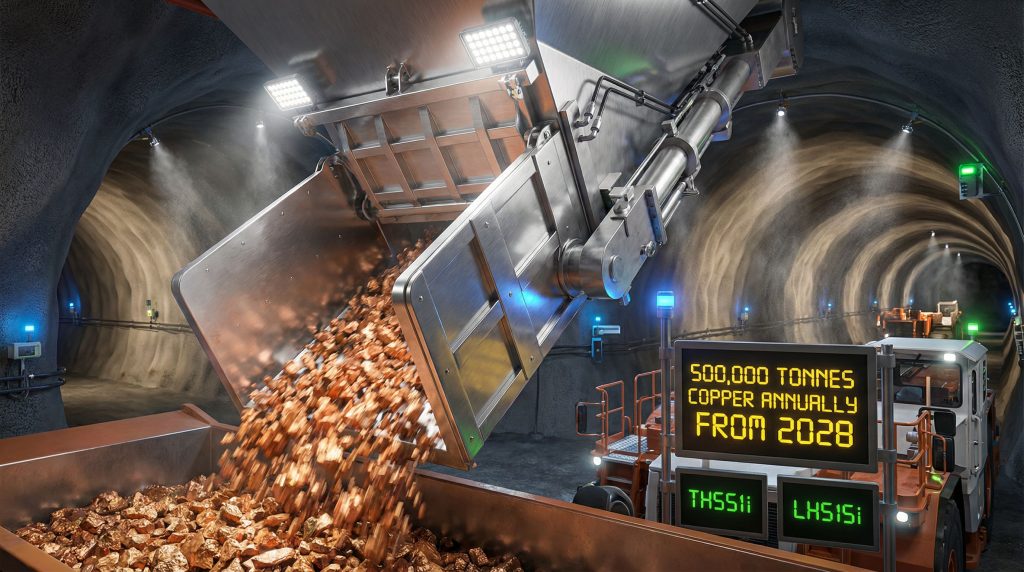
Underground mining operations rely on sophisticated material handling systems to move extracted ore from production areas to surface processing facilities. Truck loading chutes Oyu Tolgoi installations represent critical infrastructure components that bridge the gap between stationary extraction points and mobile haulage equipment in these complex underground environments.
These engineered systems function as controlled ore delivery mechanisms, designed to efficiently transfer material from fixed drawpoints into waiting haulage trucks while maintaining operator safety and operational efficiency. The primary components include robust gate systems that regulate material flow, specialised wear plates that withstand constant abrasion from ore contact, and sophisticated flow control mechanisms that ensure consistent loading cycles.
Modern truck loading chutes integrate seamlessly with underground haulage networks, incorporating safety protocols that protect equipment operators during loading operations. The systems must accommodate varying ore characteristics, from fine-grained materials to large rock fragments, while maintaining precise control over loading rates and volumes.
In block cave mining operations, truck loading chutes serve as the essential interface between gravity-fed drawpoints and mobile equipment fleets. Furthermore, these systems must handle continuous material flow while coordinating with automated loading protocols that optimise cycle times and equipment utilisation across the entire underground operation.
When big ASX news breaks, our subscribers know first
Safety System Integration in Modern Equipment Design
Contemporary truck loading chute systems incorporate multiple layers of operator protection mechanisms that significantly exceed traditional safety standards. Remote monitoring capabilities allow operators to control loading operations from secure locations, reducing exposure to potential hazards during material transfer cycles.
Advanced safety system integration includes real-time monitoring sensors that detect equipment malfunctions, ore flow irregularities, and potential hazards before they compromise operational safety. Emergency shutdown protocols provide immediate response capabilities, incorporating fail-safe designs that automatically halt operations when safety parameters are exceeded.
| Safety Feature | Function | Operational Benefit |
|---|---|---|
| Remote operation capability | Distance-based control systems | Reduced operator exposure |
| Multi-sensor monitoring | Real-time hazard detection | Proactive risk management |
| Emergency shutdown systems | Immediate operation cessation | Rapid incident response |
| Fail-safe mechanisms | Automatic safety engagement | Continuous protection assurance |
Structural engineering for high-impact underground environments requires specialised materials and design approaches that withstand extreme operational conditions. Wear-resistant coating technologies protect critical surfaces from continuous ore contact, while vibration dampening systems reduce stress on structural components and extend equipment service life.
In addition, dust suppression and containment features address environmental and health considerations in underground operations. These systems incorporate engineering controls that minimise airborne particulates during loading cycles, contributing to improved air quality in underground work environments.
Engineering Excellence in Block Cave Mining Operations
The Oyu Tolgoi copper-gold mine in Mongolia represents one of the world's most technically sophisticated underground mining operations, incorporating advanced equipment systems that set industry benchmarks for operational scale and technological integration. This Rio Tinto-operated facility demonstrates how modern truck loading chutes function within large-scale block cave mining frameworks.
Block cave mining methodology relies on controlled gravitational collapse of ore bodies, requiring precise material handling systems that can accommodate variable ore flow rates and particle sizes. Truck loading chutes Oyu Tolgoi operations utilise must handle substantial tonnage per cycle while maintaining consistent performance across extended operational periods.
The underground fleet composition at major block cave operations typically includes multiple loader specifications designed for different operational requirements. However, heavy-duty haulage trucks transport substantial ore volumes through underground networks, requiring loading systems capable of rapid, efficient material transfer whilst minimising cycle times.
Technical Performance Specifications
Modern underground mines engineering installations must meet demanding operational parameters that reflect the scale and intensity of large-scale underground mining operations:
• Material handling capacity: Systems designed for 200-400 tonnes per loading cycle
• Operational durability: Continuous operation capability across multi-year service periods
• Safety system redundancy: Multiple backup systems ensuring continuous operator protection
• Environmental adaptation: Performance maintenance across varying underground conditions
Consequently, these specifications drive the development of increasingly sophisticated hauler safety boost technologies that enhance both operational efficiency and worker protection.
Regional Manufacturing Excellence and Global Competition
Northern Ontario's mining equipment manufacturing sector has developed specialised capabilities that position regional suppliers competitively in global underground mining markets. The Sudbury region's concentration of mining expertise, combined with advanced manufacturing facilities, creates a unique ecosystem for underground equipment innovation and production.
Companies like Variant Mining Technologies, based in Lively, Ontario, demonstrate how regional suppliers leverage decades of underground mining experience to develop technology solutions for major international mining operations. The recent contract award for truck loading chutes Oyu Tolgoi installations represents a significant validation of Canadian manufacturing capabilities in specialised underground equipment sectors.
This competitive success reflects several strategic advantages that characterise northern Ontario's mining supply sector:
• Innovation focus: Development of safety-enhanced equipment systems that exceed industry standards
• Manufacturing scale: Specialised production capabilities for large-scale underground equipment
• Technical expertise: Deep integration of operational mining knowledge with engineering design
• Quality standards: Manufacturing processes that meet international mining operation requirements
Derek Meloche, Manager of Business & Sales at Variant Mining Technologies, noted that their Oyu Tolgoi project demonstrates the global competitiveness of regional mining suppliers and their commitment to advancing safety in underground mining applications. This perspective reflects how specialised regional manufacturers compete on technological innovation rather than cost leadership in global markets.
Design Engineering for Extreme Operational Environments
Engineering truck loading chutes for major underground mining operations requires addressing multiple complex challenges simultaneously. Variable ore characteristics demand systems capable of handling different material properties, from fine-grained sediments to large rock fragments, while maintaining consistent flow control and loading precision.
Extreme operational environments in underground mines subject equipment to continuous stress from multiple sources. For instance, temperature variations, humidity levels, corrosive conditions, and constant vibration from heavy equipment operations create demanding service conditions that influence every aspect of system design and material selection.
Material Selection and Durability Engineering
High-strength steel alloys form the structural foundation of heavy-duty truck loading chutes, providing the mechanical properties necessary to withstand repetitive loading cycles and impact forces. These materials must demonstrate exceptional fatigue resistance while maintaining structural integrity across extended service periods.
Specialised wear-resistant linings protect high-abrasion zones where ore contact occurs continuously during loading operations. Advanced coating systems provide corrosion protection in challenging underground environments where moisture, chemical exposure, and temperature variations can compromise equipment integrity.
Flow control and automation integration represent increasingly sophisticated aspects of modern truck loading chute design. Precise ore metering systems enable operators to optimise loading cycles, whilst integration with mine planning software provides real-time operational data for production optimisation.
Automation Integration and Operational Efficiency
Modern data-driven operations incorporate sensors and control mechanisms that enable integration with autonomous haulage systems and predictive maintenance protocols. These technologies support operational efficiency improvements while reducing manual intervention requirements in underground environments.
Real-time adjustment capabilities allow operators to modify system parameters based on varying ore properties, equipment specifications, and operational requirements. This flexibility ensures consistent performance across different operational scenarios whilst maintaining safety standards.
Economic Impact and Investment Considerations
Underground equipment procurement represents substantial capital investments that influence mine economics across multi-year operational periods. Multi-year contract structures for major equipment systems, such as truck loading chutes, reflect the strategic importance of these systems in overall mine planning and production scheduling.
Total cost of ownership calculations for advanced equipment systems must account for multiple factors beyond initial purchase price. Operational efficiency gains from enhanced safety systems contribute to improved productivity through reduced downtime and increased equipment availability.
Regional Economic Development
Equipment supply contracts for major international mining operations generate significant economic impact in manufacturing regions. The Variant Mining Technologies contract at Oyu Tolgoi creates employment opportunities across northern Ontario's mining supply sector while reinforcing the region's position as a centre for mining technology innovation.
Local manufacturing job creation extends beyond direct employment to include supporting industries, engineering services, and specialised trades that contribute to regional economic development. Technology transfer and skill development associated with major contracts enhance long-term competitiveness of regional suppliers.
Export opportunities for specialised mining equipment demonstrate how regional expertise can generate international revenue streams while building reputation for Canadian mining technology suppliers in global markets.
The next major ASX story will hit our subscribers first
Technological Evolution and Future Developments
Automation and remote operation capabilities represent the leading edge of underground ore handling technology development. Integration with autonomous haulage systems requires sophisticated coordination between loading equipment and mobile units, demanding advanced sensor networks and real-time communication systems.
Predictive maintenance through IoT sensor networks enables equipment operators to anticipate maintenance requirements before failures occur, reducing unplanned downtime and extending equipment service life. Machine learning optimisation of ore flow patterns can improve operational efficiency while reducing wear on equipment components.
Sustainability and Environmental Integration
Energy-efficient operation protocols address growing emphasis on sustainability transformation by reducing power consumption and operational carbon footprints. Dust and emissions reduction technologies contribute to improved environmental performance while enhancing worker safety in underground environments.
Circular economy principles in equipment design influence material selection, component longevity, and end-of-life equipment management. These considerations increasingly factor into equipment procurement decisions as mining operations emphasise sustainability across all operational aspects.
Emerging Safety Technologies
Advanced operator protection systems continue evolving beyond current industry evolution trends, incorporating real-time hazard detection and automated response systems that further reduce operator exposure to potential risks. Integration with mine-wide safety management systems provides comprehensive risk monitoring across entire underground operations.
Frequently Asked Questions
What is the typical operational lifespan for truck loading chutes in major underground mining operations?
Modern truck loading chutes designed for major block cave operations typically maintain operational capability for 15-20 years with appropriate maintenance protocols. High-wear components such as linings and gate mechanisms may require replacement every 3-5 years depending on ore characteristics and operational intensity.
How do advanced truck loading chutes integrate with automated mining systems?
Contemporary systems feature remote control capabilities, comprehensive sensor monitoring, and direct integration with mine management software platforms. These systems coordinate with autonomous haulage networks to optimise material flow and equipment utilisation across underground operations.
What safety certifications apply to underground loading equipment installations?
Underground mining equipment must comply with international safety standards including ISO 19296 for underground mining machinery. Additional regional requirements such as MSHA standards for US operations or equivalent Canadian standards apply based on operational jurisdiction.
How do modern loading chutes accommodate different ore types and material characteristics?
Advanced systems incorporate adjustable gate mechanisms, variable flow controls, and specialised lining materials designed to handle diverse ore characteristics. These features enable consistent loading performance across different material types whilst maintaining operational efficiency.
What factors influence truck loading chute selection for specific mining operations?
Selection criteria include ore characteristics, production targets, equipment compatibility, safety requirements, maintenance accessibility, and integration with existing infrastructure. Site-specific conditions such as underground layout and environmental factors also influence equipment specifications.
Investment Perspective: The truck loading chute sector represents a specialised niche within underground mining equipment markets, where technological innovation and safety enhancement drive competitive differentiation. Regional manufacturers with deep mining expertise can compete successfully against larger international suppliers by focusing on customised solutions that address specific operational challenges in major mining operations.
Looking to Capitalise on Advanced Mining Equipment Innovations?
Discovery Alert's proprietary Discovery IQ model delivers immediate alerts on significant ASX mineral discoveries in mining technology and equipment sectors, helping subscribers identify companies developing next-generation underground infrastructure solutions. Explore historic examples of major mining discoveries that have generated substantial returns, then begin your 30-day free trial today to stay ahead of emerging opportunities in this rapidly evolving sector.