
June 29, 2026
Understanding Period-Adjustable Seismic Technology in Mining Operations
Modern seismic monitoring has evolved through decades of technological advancement, yet the fundamental challenge remains unchanged: detecting minute ground movements that precede catastrophic failures in underground environments. While broadband instruments dominate surface geological surveys, the harsh realities of deep mining operations demand a different approach to seismic detection. Adjustable-period seismometers in deep mining provide a proven solution that prioritises operational reliability over theoretical sophistication.
The engineering principles behind adjustable-period seismometers reflect a pragmatic understanding of mining environments where electromagnetic interference, thermal extremes, and mechanical stress create conditions that can overwhelm sophisticated broadband systems. These instruments prioritise operational reliability over theoretical sensitivity, delivering consistent performance in conditions where failure is not merely inconvenient but potentially catastrophic.
When big ASX news breaks, our subscribers know first
Core Engineering Principles Driving Underground Seismic Detection
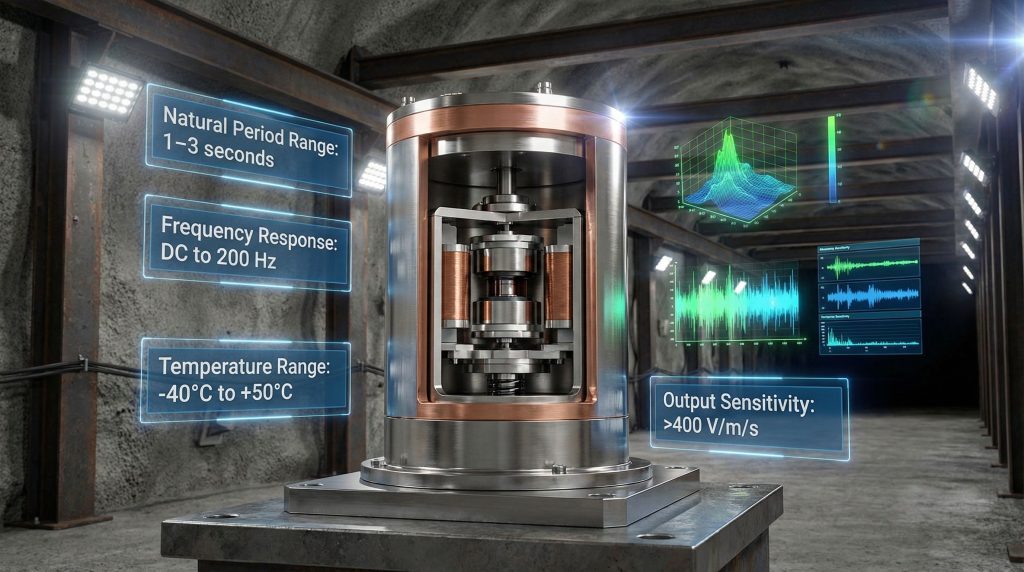
The fundamental design of adjustable-period seismometers centres on proven mechanical principles rather than cutting-edge technology. At the heart of these systems lies a suspended magnet assembly that moves axially over twin coils, generating electrical signals proportional to ground velocity. This velocity-proportional output provides direct measurement capabilities essential for mining applications.
The zero-length spring mechanism enables precise tuning of natural frequency response, typically ranging from 1 to 3 seconds (0.33 to 1 Hz). This adjustability allows operators to optimise detection for specific geological conditions and rock failure modes. Different rock types exhibit distinct failure signatures, and the ability to tune response characteristics ensures optimal sensitivity for dominant frequencies associated with microseismic activity in various geological settings.
Furthermore, the integration of 3D geological modeling enhances the placement and configuration of these seismic systems. Consequently, operators can achieve more precise monitoring capabilities that align with specific geological formations and potential failure zones.
Technical Specifications for Mining Environments
| Parameter | Specification | Mining Application |
|---|---|---|
| Natural Period | 1-3 seconds adjustable | Matches rock failure frequencies |
| Frequency Response | DC to 200 Hz | Covers microseismic to blast events |
| Mechanical Range | ±1.5 mm | Prevents signal clipping |
| Output Sensitivity | >400 V/m/s | Adequate for low-amplitude detection |
| Operating Temperature | -40°C to +50°C | Deep mine thermal conditions |
The twin-coil hum-bucking configuration represents a critical engineering innovation for mining applications. By arranging coils to produce equal but opposite signals in response to electromagnetic interference, this design actively suppresses 50/60 Hz power line noise while preserving seismic signals. In underground environments where heavy machinery creates constant electromagnetic disturbance, this noise rejection capability transforms marginal signals into usable data.
Electromagnetic Interference Challenges in Deep Mining
Underground mining operations present unique electromagnetic challenges that surface installations rarely encounter. The combination of high-power motors, variable frequency drives, welding equipment, and extensive cable networks creates a complex interference environment that can completely mask low-amplitude seismic signals.
The suspended cylindrical magnet design contributes significantly to mechanical stability by isolating the sensing element from vibrations that don't represent true ground motion. The mass-spring system naturally filters high-frequency mechanical noise while maintaining sensitivity to the frequency ranges where mining-induced seismicity occurs.
Moreover, the development of AI in mining operations has introduced additional electromagnetic complexity that adjustable-period seismometers in deep mining must accommodate. However, their robust design principles continue to provide reliable performance in these evolving technological environments.
Key Interference Sources in Deep Mining:
• Ventilation fan motors operating at industrial power levels
• Conveyor systems with variable speed controls
• Underground locomotives and heavy machinery
• Electrical distribution systems carrying hundreds of amperes
• Welding and cutting operations during maintenance
The economic implications of electromagnetic interference extend beyond data quality concerns. False alarms triggered by electrical noise can lead to unnecessary production shutdowns, while genuine microseismic precursors masked by interference may go undetected until catastrophic failure occurs.
Mechanical Range Optimisation for Blast Environments
Mining operations regularly subject seismic instruments to vibration levels that would damage or saturate conventional monitoring equipment. Production blasting can generate ground motions exceeding several millimetres of displacement, while microseismic events requiring detection may produce displacements measured in nanometers.
The ±1.5 mm mechanical working range of adjustable-period seismometers provides sufficient headroom to accommodate blast-induced vibrations without signal clipping while maintaining sensitivity for microseismic detection. This dynamic range capability ensures continuous monitoring throughout the complete spectrum of mining-induced ground motion.
Blast Monitoring Applications
Peak Particle Velocity Measurement:
Mining regulations in many jurisdictions specify maximum allowable ground vibration levels for infrastructure protection. The velocity-proportional output of adjustable-period instruments enables direct PPV calculation without additional signal processing, simplifying compliance monitoring and blast optimisation procedures.
Delay Sequence Validation:
Modern mining blasts utilise precisely timed delay sequences to control fragmentation and minimise ground vibration. Seismic monitoring allows verification that firing sequences occur as designed, identifying misfires or timing errors that could compromise blast effectiveness or increase vibration levels.
Infrastructure Protection:
Critical underground structures, surface facilities, and community buildings require protection from blast-induced vibration. Continuous seismic monitoring enables real-time assessment of vibration levels and adjustment of blast parameters to remain within protective thresholds.
Temperature Stability in Deep Mining Conditions
Geothermal gradients in deep mines create challenging thermal environments where rock temperatures can exceed 40°C and air temperatures fluctuate significantly based on ventilation patterns and seasonal changes. Electronic systems designed for surface applications often fail under these conditions due to thermal drift, component degradation, or complete failure.
The mechanical design of adjustable-period seismometers minimises temperature sensitivity through proven engineering approaches. The magnetic circuit and coil geometry remain stable across the full operating range, while mechanical components utilise materials selected for thermal stability rather than weight minimisation.
In addition, the implementation of data-driven mining operations requires consistent sensor performance across varying thermal conditions to maintain data integrity and analytical accuracy.
Temperature-induced calibration drift in seismic monitoring systems can introduce significant errors in event location and magnitude determination, potentially compromising safety-critical decisions.
Thermal Management Strategies
Component Selection:
Materials used in critical components undergo testing across the full operational temperature range to verify stability. Magnetic properties, spring constants, and coil resistance values must remain within acceptable tolerances to maintain calibration accuracy.
Installation Considerations:
Proper installation techniques can minimise thermal stress through careful cable routing, adequate ventilation around electronics, and protection from direct heat sources. Underground installations often benefit from stable rock temperatures that vary less than surface locations.
Deployment Configurations for Mining Networks
Modern mining operations typically require networks of dozens or hundreds of seismic sensors to provide adequate coverage of active workings and surrounding rock mass. The scalability and reliability of individual instruments directly impacts the effectiveness and economics of these large-scale monitoring systems.
Borehole Array Configurations
Borehole installations enable placement of sensors in competent rock away from underground workings, providing stable platform conditions while maintaining proximity to areas of interest. Typical borehole arrays utilise sensors spaced at 50-200 metre intervals depending on the size of the monitored area and required event location accuracy.
Installation Specifications:
• Standard borehole diameter: 76-100 mm
• Typical installation depth: 20-100 metres
• Sensor orientation: Usually vertical component
• Cable protection: Armoured cable through borehole
• Grouting requirements: Sensor coupling to competent rock
Surface Network Design
Surface installations provide regional coverage for larger seismic events and blast monitoring applications. Surface networks typically utilise wider sensor spacing (200-1000 metres) than underground arrays, taking advantage of better signal propagation conditions in consolidated rock formations.
The choice between Fischer connector and integral flying lead configurations depends primarily on installation geometry and cable run requirements. Fischer connector systems support cable runs up to 100 metres, enabling flexible placement of amplification equipment away from harsh installation environments.
The next major ASX story will hit our subscribers first
Integration with Mining Operations
Effective seismic monitoring requires integration with broader mining operations rather than functioning as an isolated system. This integration encompasses data management, alert procedures, operational response protocols, and long-term trend analysis.
Furthermore, as the mining industry evolution continues toward more sophisticated operational approaches, adjustable-period seismometers in deep mining must seamlessly integrate with modern control systems and safety protocols.
Real-Time Processing Requirements
Mining environments demand rapid processing and decision-making capabilities when seismic data indicates elevated risk conditions. Processing systems must distinguish between normal operational vibrations (blasting, machinery operation) and potentially hazardous seismic activity.
Critical Processing Functions:
-
Automatic Event Detection: Algorithm-based identification of seismic events above background noise levels
-
Event Location: Triangulation using arrival time differences between multiple sensors
-
Magnitude Estimation: Calculation of event energy based on recorded amplitudes
-
Source Classification: Differentiation between blasts, rockbursts, and equipment-generated signals
-
Trend Analysis: Long-term patterns indicating changing stress conditions
Operational Response Protocols
Seismic monitoring systems must integrate with mine safety and production management procedures to provide actionable information rather than merely data collection. This integration requires clearly defined response protocols for different alert levels and coordination with operational personnel.
Alert Level Classification:
• Green Status: Normal background seismicity levels
• Yellow Alert: Elevated activity requiring increased monitoring
• Orange Warning: Significant activity suggesting potential instability
• Red Alert: Immediate evacuation or work suspension required
Economic Considerations in System Selection
The total cost of ownership for large-scale seismic monitoring networks extends far beyond initial equipment procurement. Operating costs, maintenance requirements, system reliability, and operational disruptions significantly impact the economic viability of monitoring programmes.
Lifecycle Cost Analysis
| Cost Component | Adjustable-Period Systems | Broadband Alternatives |
|---|---|---|
| Initial Hardware | Lower per-unit cost | Higher sensitivity equipment |
| Installation | Simplified procedures | Complex calibration requirements |
| Maintenance | Reduced frequency | Specialised technical support |
| Calibration | Stable long-term performance | More frequent recalibration |
| Training | Standard procedures | Specialised operator training |
The reliability advantages of adjustable-period seismometers become particularly significant in remote mining locations where technical support is limited and equipment failures can result in extended downtime. The ability to maintain operations with minimal specialised maintenance reduces operational risk and associated costs.
Moreover, compliance with geological logging standards often requires consistent, long-term data quality that adjustable-period seismometers in deep mining can provide without frequent recalibration intervals.
Performance Optimisation Strategies
Maximising the effectiveness of adjustable-period seismometers in mining applications requires attention to installation quality, network geometry optimisation, and ongoing system management. These factors often prove more critical to overall system performance than individual instrument specifications.
Installation Best Practices
Site Preparation:
Proper sensor coupling to competent rock is essential for accurate measurements. Installation sites should be selected to minimise local noise sources while maintaining adequate coverage of monitored areas.
Cable Management:
Underground installations require careful attention to cable routing to prevent damage from mining equipment and provide adequate strain relief. Cable specifications must account for installation environment challenges including moisture, temperature extremes, and mechanical stress.
Grounding and Shielding:
Effective electromagnetic shielding requires proper grounding techniques and attention to cable shielding integrity throughout the installation. Ground loops and improper shield termination can negate the benefits of hum-bucking coil designs.
Network Geometry Optimisation
The spatial arrangement of sensors directly impacts event location accuracy and detection capability. Optimal network geometry depends on the size and shape of the monitored area, geological conditions, and specific monitoring objectives.
Design Principles:
• Sensor spacing should provide adequate coverage without redundancy
• Array geometry should optimise triangulation accuracy for expected event locations
• Installation sites should balance accessibility with technical requirements
• Network expansion capability should accommodate future mining development
Future Developments in Mining Seismology
The evolution of seismic monitoring technology continues to be driven by increasing mining depths, more complex geological conditions, and enhanced regulatory requirements. However, the fundamental principles that make adjustable-period seismometers effective in mining applications remain relevant as operations become more challenging.
Technology Integration Trends
Modern mining operations increasingly integrate seismic monitoring with other condition monitoring systems including ground deformation measurement, stress monitoring, and environmental sensing. This multi-parameter approach provides more comprehensive understanding of rock mass behaviour and improved prediction of hazardous conditions.
Emerging Integration Applications:
• Wireless sensor networks reducing cable installation costs
• Machine learning algorithms for pattern recognition and predictive analysis
• Integration with mine automation and communication systems
• Real-time data sharing with regulatory authorities and emergency response teams
Regulatory Environment Evolution
Mining safety regulations continue to evolve toward more prescriptive requirements for seismic monitoring systems in high-risk environments. These regulatory developments drive demand for proven, reliable monitoring systems that can demonstrate long-term performance under challenging conditions.
The emphasis on demonstrated reliability rather than theoretical capability aligns with the practical advantages of adjustable-period seismometers, suggesting continued relevance as regulatory requirements become more stringent.
System Reliability and Maintenance Considerations
Long-term reliability of seismic monitoring networks depends on both individual instrument performance and system-level design considerations. Mining environments create unique challenges for maintaining equipment performance over extended periods.
Preventive Maintenance Programmes
Effective maintenance programmes balance the cost of routine servicing against the risk of unexpected failures that could compromise monitoring capability. Adjustable-period seismometers typically require less frequent maintenance than more complex alternatives, but systematic attention to key components ensures optimal performance.
Routine Maintenance Elements:
• Calibration verification using portable calibration equipment
• Cable integrity testing and connector inspection
• Environmental enclosure condition assessment
• Data quality analysis and system performance trending
• Spare parts inventory management and replacement scheduling
The mechanical simplicity of adjustable-period designs contributes to maintenance efficiency by reducing the number of critical components and eliminating complex electronic systems that require specialised diagnostic equipment.
Performance Monitoring and Quality Assurance
Continuous assessment of system performance enables proactive identification of degrading components before complete failure occurs. This approach minimises monitoring gaps and ensures data quality standards necessary for safety-critical applications.
Quality assurance procedures should address both individual sensor performance and network-level functionality, including event detection accuracy, location precision, and magnitude estimation consistency across the monitored area.
Disclaimer: This analysis is provided for informational purposes only. Seismic monitoring system selection should be based on site-specific requirements, professional engineering evaluation, and compliance with applicable safety regulations. Performance specifications and operational characteristics may vary based on specific models, installation conditions, and environmental factors. Readers should consult qualified professionals and manufacturer documentation before making equipment selection decisions.
Want to Stay Ahead of Mining Investment Opportunities?
Discovery Alert's proprietary Discovery IQ model delivers real-time notifications on significant ASX mineral discoveries, transforming complex geological data into actionable investment insights for both short-term traders and long-term investors. Explore why major mineral discoveries can generate substantial returns and begin your 14-day free trial today to secure your market-leading advantage ahead of the broader market.