July 14, 2026
The Invisible Ocean Reserve Reshaping Nuclear Fuel Security Thinking
Few problems in energy science illustrate the gap between abundance and accessibility quite like uranium dissolved in seawater. The ocean is, in effect, a vast low-grade uranium reservoir — one that has been known to scientists since the mid-twentieth century yet remains commercially untapped in 2026. Understanding why requires looking beyond simple chemistry and into the intersection of materials science, marine engineering, economics, and geopolitical strategy that defines this emerging field.
Global nuclear power currently depends almost entirely on terrestrial mining to supply its fuel cycle. That dependence creates a structural vulnerability: uranium reserves are geographically concentrated, politically sensitive, and subject to the same supply disruptions that have periodically rattled other critical mineral markets. It is within this context that uranium extraction from seawater has shifted from a scientific curiosity to a legitimate long-term energy security discussion.
When big ASX news breaks, our subscribers know first
The Hidden Nuclear Fuel Reserve Sitting Beneath Every Ocean on Earth
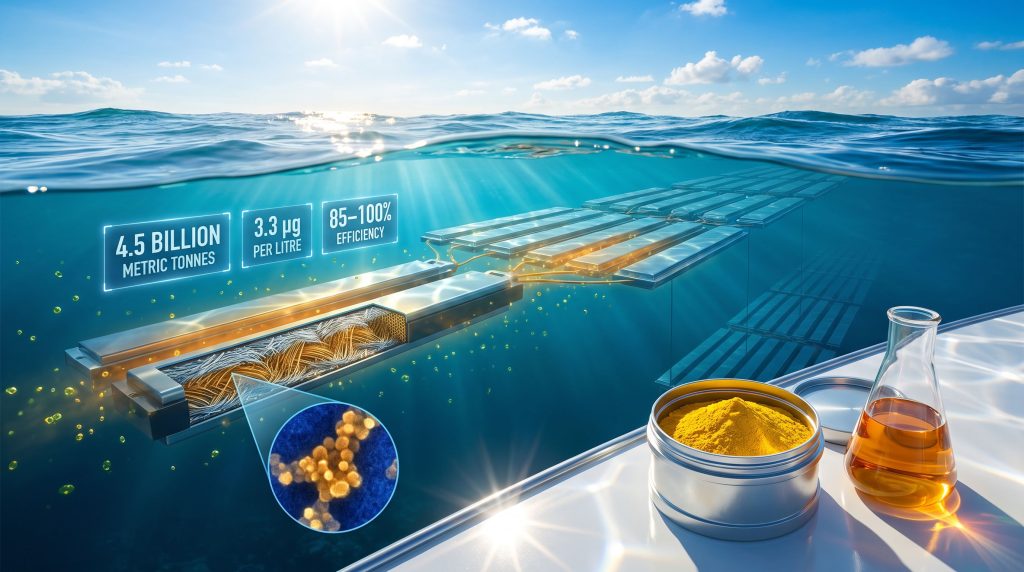
The scale of the oceanic uranium resource defies intuitive comprehension. Approximately 4.5 billion metric tonnes of uranium is dissolved across the world's oceans — a figure that represents roughly 1,000 times the uranium contained in all known terrestrial ore reserves combined. At current global nuclear fuel consumption rates, this quantity could theoretically sustain nuclear power generation for thousands of years.
The uranium exists in seawater primarily as the soluble uranyl carbonate ion, formed when uranium reacts with dissolved carbonate in alkaline ocean water. This speciation is actually useful for extraction purposes, because uranyl ions carry a distinct charge geometry that engineered materials can be designed to target. The challenge is not the chemistry of capture in isolation — it is executing that capture economically across billions of litres of extremely dilute solution.
Seawater contains approximately 3.3 micrograms of uranium per litre — equivalent to 3.3 parts per billion. To put that in perspective, a standard bathtub of seawater contains roughly half a microgram of uranium. Producing one kilogram of uranium from seawater alone would require processing approximately 300 million litres of ocean water.
This dilution problem sits at the heart of every economic and engineering challenge in the field. It explains why, despite the resource being effectively unlimited in scale, no commercial seawater uranium extraction operation exists anywhere in the world today.
How Seawater Uranium Fits Into the Critical Minerals Security Debate
The strategic framing around seawater uranium has evolved considerably in recent years. Nations that lack domestic uranium deposits — including Japan, South Korea, and many European countries — face genuine long-term exposure to supply chain disruption for nuclear fuel. Understanding uranium supply and demand dynamics is increasingly essential for policymakers navigating these risks.
Seawater uranium offers a conceptually appealing answer: a resource that is geographically universal, sovereign to whichever nation deploys the technology in its territorial waters or exclusive economic zone, and renewable in the sense that river systems continuously replenish ocean uranium at a rate estimated at approximately 30,000 tonnes per year. This natural replenishment rate means the ocean's uranium inventory is not static — extraction at scales contemplated by current research would represent a negligible fraction of annual oceanic inputs.
What Makes Uranium Extraction from Seawater So Technically Difficult?
The Concentration Problem: Finding a Needle in a Very Large Ocean
The 3.3 parts per billion concentration of uranium in seawater is not simply a logistical inconvenience — it fundamentally reshapes the economics of every step in the extraction process. Higher volumes of water require larger contact surface areas, longer exposure times, more adsorbent material, and greater energy inputs for pumping or deploying systems at depth.
Terrestrial uranium mines typically target ore grades of 0.1% to 20% uranium oxide (U₃O₈) depending on deposit type. High-grade deposits in Canada's Athabasca Basin can exceed 20% U₃O₈, making them several million times more concentrated than seawater. Even the lowest-grade conventional uranium operations process ore that is orders of magnitude richer than the oceanic resource.
This grade differential is the defining economic challenge of the entire field, and no amount of technological ingenuity fully eliminates it — it can only be managed through materials efficiency, energy optimisation, and co-product revenue models.
Competing Ions and Chemical Interference
Seawater is chemically complex. Uranium exists at 3.3 parts per billion against a backdrop of roughly 35,000 parts per million of dissolved salts, including sodium, chloride, magnesium, calcium, potassium, and sulfate. The magnesium concentration alone is approximately 1,350 mg/L — more than 400,000 times the uranium concentration.
When adsorbent materials are deployed in seawater, these abundant competing ions fight aggressively for the same binding sites. Calcium and vanadium are particularly problematic competitors for amidoxime-based adsorbents, which represent the most extensively tested material class. Achieving meaningful selectivity — the ability of a material to preferentially capture uranyl ions over these competing species — is one of the most demanding materials science problems in the field.
Laboratory experiments routinely use synthetic seawater that underrepresents the complexity of natural ocean chemistry. When the same materials are tested in real seawater, performance typically declines significantly, sometimes by 30% to 50% or more. This gap between simulated and real-world performance is a persistent challenge that has frustrated commercialisation timelines repeatedly.
Biofouling: The Marine Engineering Barrier
Any material deployed in the ocean for extended periods will be colonised by marine microorganisms, algae, barnacles, and invertebrates. This process, known as biofouling, is not merely an inconvenience — for uranium adsorbents, it is a fundamental threat to operational viability.
Biofouling physically blocks the active binding sites on adsorbent surfaces, reducing uranium uptake capacity over time. It also adds significant weight to deployed structures, complicating retrieval logistics. In field trials conducted in the East China Sea and other marine environments, biofouling has been identified as one of the primary factors limiting multi-month deployment cycles.
Current anti-fouling strategies include:
- Incorporating copper-based or silver-based antimicrobial coatings into adsorbent fibre designs
- Using hydrophilic polymer coatings that reduce initial microbial adhesion
- Engineering surface textures that physically discourage biofilm formation
- Designing retrieval-and-refresh cycles short enough that significant fouling does not accumulate
None of these approaches has yet solved the problem completely at the scales required for commercial deployment.
How Does Uranium Extraction from Seawater Actually Work?
Uranium extraction from seawater works by deploying specialised materials called adsorbents that selectively bind dissolved uranium ions as seawater flows past or through them. Once the material becomes saturated with uranium, it is retrieved and treated with an acidic solution to release the captured uranium for downstream processing. More recent electrochemical methods replace passive soaking with an electrically driven capture mechanism, dramatically reducing the time required per extraction cycle.
Step-by-Step: The Adsorption-Elution Cycle
- Deployment — Adsorbent materials in fibre, membrane, or electrode format are submerged in seawater, either from anchored platforms, ocean-floor fixtures, or surface-tethered arrays.
- Uptake Phase — Uranium ions bind to functional groups on the material surface, a process that takes anywhere from 40 minutes (electrochemical methods) to multiple days (passive polymer adsorption).
- Retrieval — Saturated materials are recovered from the marine environment, either mechanically or by reversing the electrical potential in electrochemical systems.
- Elution — An acidic wash, typically dilute hydrochloric or sulfuric acid, strips the uranium from the adsorbent surface, producing a uranium-enriched solution.
- Regeneration — The cleaned adsorbent is conditioned and redeployed for subsequent extraction cycles, with material longevity being a key cost driver.
- Processing — The uranium solution is refined through standard hydrometallurgical steps into yellowcake (uranium oxide, U₃O₈) suitable for nuclear fuel fabrication.
The efficiency of each step — and particularly the number of cycles an adsorbent can complete before degradation requires replacement — determines the ultimate economics of any given technology approach.
What Are the Most Advanced Technologies for Extracting Uranium from Seawater?
Technology Comparison Table
| Technology Type | Key Material | Extraction Efficiency | Cost Estimate | Cycle Time |
|---|---|---|---|---|
| Electrochemical (Hunan University) | Modified carbon electrodes | 85–100% (real seawater) | ~$83.2/kg | ~40 minutes |
| Oxygen-vacancy In₂O₃ nanosheets | Indium oxide nanostructures | 52.6–88.3% | Not yet costed | ~700 seconds |
| Studtite nanodots | Uranium peroxide nanostructures | ~154.5 mg/g uptake capacity | Experimental | 12-day cycle |
| Sulfonic COF frameworks | Covalent organic frameworks | High selectivity reported | Experimental | Variable |
| Amidoxime polymer fibres (US) | Acrylic-based yarn | Field-tested | ~$260/kg | Days to weeks |
| First-generation Japanese polymer | Braided polymer fibre | Baseline performance | ~$1,230/kg | Weeks |
Electrochemical Extraction: The Emerging Frontrunner
Electrochemical uranium extraction applies a controlled electrical potential to modified electrode surfaces submerged in seawater, driving uranium ions to concentrate onto the electrode rather than relying on passive diffusion. Research conducted at Hunan University has produced results that represent a significant step change in the field. Furthermore, a new efficient way to extract uranium from seawater has been reported by the American Nuclear Society, highlighting how rapidly the science is advancing.
Key performance metrics from the Hunan University electrochemical system include:
- 100% efficiency in simulated seawater conditions and 85–100% efficiency in real seawater
- Extraction cycle time of approximately 40 minutes, compared to days or weeks for passive adsorption systems
- Cost estimate of approximately $83.2/kg of uranium extracted — a reduction of more than 75% compared to earlier electrochemical approaches that carried costs around $360/kg
- Energy consumption reduced by more than 1,000-fold compared to earlier electrochemical methods through optimised electrode design and operating parameters
The speed advantage of electrochemical systems is particularly significant. Because the extraction cycle is measured in minutes rather than days, the same adsorbent material can complete far more extraction cycles within a given operational timeframe, amortising material and deployment costs across a much larger total uranium yield.
Nanostructured Adsorbents: Pushing Uptake Capacity to Record Levels
The most striking performance figure in recent seawater uranium research comes from studtite nanodots, a uranium peroxide nanostructure with an uptake capacity of approximately 154.5 mg of uranium per gram of adsorbent material. This figure is remarkable in the context of conventional amidoxime fibres, which typically achieve 3 to 6 mg/g in real seawater conditions — making studtite nanodots potentially 25 to 50 times more efficient per unit mass.
Studtite systems operate through a growth-elution cycling mechanism where uranium peroxide crystals nucleate and grow on the material surface during the uptake phase, then are dissolved and collected during elution. The regenerated surface is then ready for the next growth cycle.
Other notable nanostructured approaches include:
- Sulfonic covalent organic frameworks (COFs): These engineered porous materials create geometrically confined nanospaces matched to the dimensions of the uranyl ion, providing exceptional selectivity over competing dissolved species.
- Oxygen-vacancy indium oxide (In₂O₃) nanosheets: These light-responsive materials achieve extraction efficiencies of 52.6% to 88.3% with cycle times around 700 seconds, exploiting photocatalytic mechanisms to enhance uranium capture.
- Micro-redox reactor adsorbents: These systems use copper(I)/copper(II) redox cycling to continuously regenerate amidoxime binding sites in situ, addressing one of the primary degradation mechanisms that limits conventional amidoxime fibre lifespans.
Polymer Fibre Systems: The Historical Foundation
The intellectual foundation of modern seawater uranium extraction research rests on amidoxime-coated polymer fibres developed initially through Japanese research programmes beginning in the 1980s. These systems established proof-of-concept at meaningful scale, demonstrating that uranium could actually be recovered from open ocean water at gram quantities.
The US Pacific Northwest National Laboratory and Oak Ridge National Laboratory advanced this work substantially through the development of high-surface-area amidoxime-modified acrylic fibres. US field trials in open ocean conditions successfully produced small-scale yellowcake, demonstrating the complete extraction-to-product chain. Through iterative materials development — including the introduction of peptoid-modified polymer coatings that improve selectivity and reduce competing ion interference — costs were reduced from the early Japanese benchmark of approximately $1,230/kg to approximately $260/kg for the most advanced US polymer systems.
That cost reduction, achieved over roughly three decades of research, illustrates both the progress the field has made and the distance still remaining to reach commercial competitiveness.
Is Uranium Extraction from Seawater Economically Viable in 2026?
Current Cost vs. Conventional Mining: A Direct Comparison
| Supply Source | Estimated Cost per Kilogram | Commercial Status |
|---|---|---|
| High-grade terrestrial mining | ~$190/kg | Fully commercial |
| US peptoid polymer (seawater) | ~$260/kg | Research stage |
| Electrochemical latest (Hunan University) | ~$83.2/kg | Laboratory/pilot stage |
| Early adsorption methods | ~$205–$360/kg | Superseded |
| First-generation Japanese polymer | ~$1,230/kg | Historical baseline |
Critical Context: The $83.2/kg electrochemical figure represents laboratory and early pilot conditions, not validated industrial-scale economics. Real-world deployment at scale invariably introduces costs that bench-scale experiments do not capture, including marine infrastructure, retrieval logistics, adsorbent replacement rates, and onshore processing. Investors and policymakers should treat all seawater extraction cost estimates as directional rather than definitive until pilot-scale marine deployments are completed and independently verified.
What Would Need to Change for Commercial Viability?
Several convergent developments would need to occur for seawater uranium extraction to become commercially self-sustaining:
- Uranium spot price increase: The uranium spot price would need to rise substantially above current levels. If terrestrial uranium moved above $200 to $300/kg on a sustained basis, seawater extraction at current electrochemical costs would begin to approach competitiveness.
- Adsorbent manufacturing scale-up: Laboratory synthesis of nanostructured materials like studtite nanodots or sulfonic COFs is expensive. Industrial-scale synthesis through established chemical manufacturing processes would be required to bring material costs to economically viable levels.
- Biofouling solutions: A durable, cost-effective anti-fouling approach would reduce maintenance cycles and extend adsorbent operational life, improving the economics of ocean deployment significantly.
- Multi-mineral co-extraction: This may prove to be the most transformative economic lever. Seawater contains dissolved lithium, vanadium, magnesium, and rare earth elements alongside uranium. If a single deployment can co-recover multiple critical minerals simultaneously, the revenue per tonne of water processed increases substantially, potentially making the economics viable even at current uranium prices.
One emerging commercial concept involves designing extraction systems that target uranium, lithium, and vanadium simultaneously from the same seawater flow. Lithium, in particular, commands significant market value and exists in seawater at concentrations of approximately 0.17 mg/L — low in absolute terms but potentially economically meaningful when combined with uranium recovery at scale.
The next major ASX story will hit our subscribers first
Where Has Uranium Extraction from Seawater Been Field-Tested?
Proven Marine Environments
Field testing has moved beyond controlled laboratory tanks into genuine open ocean deployments across several distinct marine environments:
- East China Sea: Multiple field deployments have tested amidoxime and modified polymer adsorbents under real ocean conditions, including natural biofouling exposure and seasonal chemical variation.
- South China Sea: Trials here have examined how tropical water temperature and marine biology affect both extraction efficiency and adsorbent degradation rates.
- Bohai Sea: Near-coastal deployments in this semi-enclosed sea have explored the logistical and performance characteristics of adsorbent arrays in shallower, more biologically productive waters.
- US open-ocean trials: American research programmes conducted field deployments off the Atlantic coast using amidoxime fibre adsorbents, successfully demonstrating yellowcake production from natural seawater.
What Field Tests Reveal That Laboratory Studies Cannot
The gap between laboratory and field performance is one of the most underappreciated aspects of seawater uranium technology assessment. Key findings from field deployments include:
- Real seawater performance typically runs 30% to 50% below performance in synthetic seawater due to competing ion complexity and variable dissolved organic carbon content
- Biofouling onset in tropical and subtropical waters can occur within days to weeks, significantly faster than laboratory studies anticipate
- Seasonal variation in seawater uranium concentration of 10% to 20% has been observed across different marine environments, affecting annualised production estimates
- Physical ocean currents and wave action subject deployed materials to mechanical stress that accelerates fibre degradation in ways that static laboratory tests do not replicate
These field realities explain why the transition from promising laboratory results to commercially viable ocean operations has taken decades rather than years, and why researchers with genuine field deployment experience tend to be more cautious in their cost and timeline projections than those working exclusively in laboratory settings.
How Does Seawater Uranium Fit Into the Global Nuclear Fuel Security Debate?
The Strategic Resource Argument
The nuclear fuel supply chain has a geographic concentration problem that is rarely discussed with the same urgency as oil or rare earths. Approximately 70% of global uranium mine production comes from just three countries: Kazakhstan, Canada, and Australia. Russia plays a significant role in uranium enrichment and conversion services, and the Russian uranium import ban has added further geopolitical exposure for nations dependent on those processing steps.
Against this backdrop, the US Department of Energy's interest in licensing seawater uranium extraction technology — including through SuperCritical Materials' licencing of DOE-developed technology — reflects a strategic calculation rather than an immediate commercial one. The value of developing the technology today lies in having a viable alternative ready if terrestrial supply chains face disruption, price shocks, or political constraints.
Seawater uranium is best understood as a strategic backstop rather than a near-term primary supply source. The logic is similar to strategic petroleum reserves: you develop and maintain the capability not because you expect to use it constantly, but because its existence changes the risk calculus of your supply position.
The Renewable Nuclear Synergy Case
Nuclear energy's role in global decarbonisation is growing. Multiple net-zero scenarios from the International Energy Agency and other bodies incorporate significant nuclear capacity expansion through 2050, with small modular reactors (SMRs) featuring prominently as a technology pathway for nations and regions that cannot accommodate large conventional nuclear plants.
For island nations, maritime economies, and countries with neither domestic uranium deposits nor geopolitically comfortable supply relationships, seawater uranium extraction could eventually provide genuine energy sovereignty for nuclear fuel. A nation deploying SMRs that extracts its own uranium from surrounding territorial waters would achieve a degree of fuel security that no terrestrial supply chain can match.
Critical Minerals Crossover: Beyond Uranium
Perhaps the most strategically interesting dimension of seawater uranium extraction is its potential to evolve into a broader ocean critical minerals platform. The ocean contains dissolved quantities of virtually every element in the periodic table. While most are present at extremely low concentrations, several — including lithium, magnesium, vanadium, and certain rare earth elements — exist at concentrations that could be economically relevant if co-recovered alongside uranium.
The multi-mineral extraction model changes the economic logic of seawater processing fundamentally. In a uranium-only model, all capital and operating costs must be recovered through uranium revenue alone. In a co-extraction model, uranium becomes one of several value streams, each contributing to cost recovery. This framework could make the economics of seawater extraction commercially viable significantly earlier than uranium-only scenarios suggest. However, understanding the broader uranium market dynamics remains essential context for evaluating where seawater extraction fits within the wider fuel cycle.
What Are the Environmental Implications of Large-Scale Ocean Uranium Extraction?
Potential Ecological Considerations
Large-scale deployment of ocean uranium extraction systems would introduce physical structures into marine environments at scales not previously attempted. Key environmental considerations include:
- Benthic habitat impact: Anchoring systems and submerged adsorbent arrays could affect seafloor habitats, particularly in shallow coastal deployments where light penetration and current patterns support benthic ecosystems.
- Elution chemical footprint: The acidic solutions used to strip uranium from adsorbents after retrieval must be carefully managed. While processing would occur onshore or on platform, acid handling and neutralisation represent a genuine waste stream requiring management.
- Marine species interaction: Physical structures in the ocean inevitably interact with marine fauna. While at current contemplated scales the effects would likely be localised, scaling to commercially meaningful production volumes would require thorough environmental impact assessment.
Regarding ocean chemistry alteration, the mathematics are reassuring at current scales. The ocean's uranium inventory turns over very slowly, and extraction at rates contemplated by existing technology would remove a negligible fraction of total oceanic uranium — far less than natural sedimentation processes already remove annually.
Sustainability Credentials vs. Conventional Mining
Seawater uranium extraction compares favourably to conventional mining on several environmental metrics. Furthermore, the uranium supply challenges facing terrestrial operations make this environmental contrast increasingly relevant to long-term energy planning.
| Environmental Factor | Conventional Uranium Mining | Seawater Extraction |
|---|---|---|
| Land disturbance | Significant (open pit or underground) | None |
| Radioactive tailings generation | Substantial | None in conventional sense |
| Groundwater risk | Documented at multiple sites | Not applicable |
| Carbon footprint | Mine-to-mill energy intensive | Ocean operations energy intensive |
| Habitat destruction | Significant at mine sites | Localised marine impact |
The absence of tailings generation is a particularly meaningful distinction. Conventional uranium mines produce large volumes of radioactive mill tailings that require long-term management and monitoring. Seawater extraction produces no equivalent waste stream, which is a genuine environmental advantage that should feature in lifecycle assessments of the technology.
Frequently Asked Questions: Uranium Extraction from Seawater
How Much Uranium Is Dissolved in the World's Oceans?
Approximately 4.5 billion metric tonnes of uranium is dissolved across the world's oceans, a quantity sufficient to sustain global nuclear power generation at current rates for thousands of years. In addition, global uranium reserves data underscores just how dramatically the oceanic resource dwarfs terrestrial deposits in theoretical scale.
What Concentration of Uranium Exists in Seawater?
Seawater contains approximately 3.3 micrograms of uranium per litre (3.3 parts per billion), which is extremely dilute compared to even the lowest-grade terrestrial ore deposits targeted by conventional mining.
Is Seawater Uranium Extraction Commercially Viable Today?
Not yet. The most advanced electrochemical methods report costs of approximately $83.2/kg under laboratory conditions, while polymer-based systems achieve around $260/kg. High-grade conventional terrestrial mining operates at roughly $190/kg. Commercial viability requires further cost reductions or sustained increases in uranium market prices.
What Is the Most Efficient Method for Extracting Uranium from Seawater?
As of 2026, electrochemical extraction using modified carbon electrodes developed by researchers at Hunan University achieves 85–100% efficiency in real seawater within approximately 40 minutes, representing the highest-performing method reported to date. Consequently, promising materials for extracting uranium from water continue to be a focus of active research globally.
What Is Biofouling and Why Does It Matter for Seawater Uranium Extraction?
Biofouling is the colonisation of submerged surfaces by marine microorganisms, algae, and invertebrates. For uranium adsorbents, fouling blocks active binding sites, reduces extraction efficiency, and accelerates material degradation — representing one of the primary engineering barriers to economical large-scale deployment.
Could Seawater Uranium Extraction Replace Conventional Uranium Mining?
In any near or medium-term scenario, no. Seawater extraction is most credibly positioned as a long-term supply security measure and a strategic technology hedge, not a replacement for terrestrial mining. Its role would likely begin as a supplementary source activated by price conditions or supply disruptions rather than as a primary production method.
The Road Ahead: From Laboratory Breakthrough to Industrial Reality
Near-Term Development Priorities (2026–2030)
The research agenda for the next four years centres on closing the gap between laboratory performance and real-world economic viability:
- Scaling electrochemical systems from bench-scale demonstrations to pilot marine deployments that can generate performance data under genuine operational conditions
- Developing industrial-scale synthesis routes for nanostructured adsorbents to understand whether laboratory-scale cost estimates can be replicated at commercially relevant production volumes
- Validating anti-biofouling approaches across multi-month ocean deployments in different marine climate zones
- Establishing standardised benchmarking protocols that allow meaningful comparison across competing technologies using consistent real-seawater testing conditions
Long-Term Commercialisation Scenarios
- Scenario A — Price Trigger: Sustained uranium spot prices above $250–$300/kg make current electrochemical extraction costs commercially competitive without requiring further technological improvement.
- Scenario B — Technology Leap: Further advances in adsorbent capacity, selectivity, and manufacturing economics reduce extraction costs below $80/kg, enabling commercial deployment independent of uranium price movements.
- Scenario C — Policy Mandate: Energy security legislation in uranium-importing nations creates subsidised or mandated demand for domestically sourced seawater uranium, with policy-supported economics enabling early commercial deployment.
- Scenario D — Multi-Mineral Economics: Co-extraction of lithium, vanadium, and other critical minerals transforms the economic model, with uranium as one of several valuable co-products rather than the sole revenue source.
Key Research Institutions Advancing the Field
| Institution | Country | Primary Contribution |
|---|---|---|
| Hunan University | China | Electrochemical extraction systems |
| Pacific Northwest National Laboratory | USA | Amidoxime polymer adsorbent development |
| Oak Ridge National Laboratory | USA | Materials science and adsorbent capacity research |
| Various Japanese research institutions | Japan | Foundational polymer fibre extraction systems |
| SuperCritical Materials | USA | DOE-licenced commercial development pathway |
The trajectory of seawater uranium research over the past four decades — from first-generation polymer systems costing $1,230/kg to electrochemical methods approaching $83.2/kg — demonstrates that the field responds to sustained research investment with meaningful progress. Whether the next phase of development accelerates through commercial pressure, policy incentives, or materials science breakthroughs remains the defining open question for one of the most strategically consequential resource technologies of the coming decades.
Want to Track ASX Uranium and Critical Minerals Discoveries as They Happen?
Discovery Alert's proprietary Discovery IQ model delivers real-time alerts the moment significant ASX mineral discoveries are announced, transforming complex data across 30+ commodities into clear, actionable insights for both short-term traders and long-term investors. Explore historic examples of major discovery returns and begin your 14-day free trial today to position yourself ahead of the market.