
August 6, 2026
Uranium Market Vulnerabilities and Resource Security Frameworks
Global nuclear fuel supply chains face unprecedented disruption as geopolitical tensions reshape traditional resource partnerships. Strategic mineral dependencies, particularly in uranium market volatility, expose critical vulnerabilities when political instability intersects with resource nationalism. The intersection of military governance, international arbitration disputes, and radioactive material transportation creates complex risk scenarios that extend far beyond conventional commodity market analysis.
Modern energy security frameworks increasingly recognize uranium as a strategic asset subject to the same geopolitical pressures affecting other critical minerals. When examining uranium supply vulnerabilities through risk assessment methodologies, the convergence of political upheaval, resource sovereignty movements, and nuclear security concerns presents unprecedented challenges for global energy planners and investment strategists.
When big ASX news breaks, our subscribers know first
Niger Uranium Crisis: Strategic Resource Conflict and Global Supply Chain Disruption
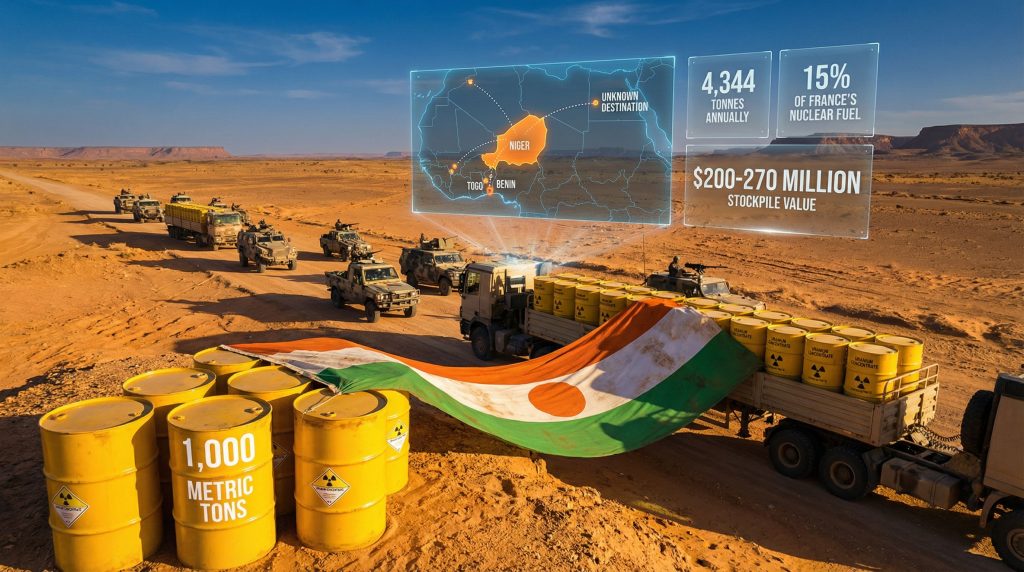
The niger uranium crisis represents a pivotal case study in how resource nationalism intersects with nuclear fuel security. This West African nation plays a crucial role in global uranium markets, contributing approximately 4,300 tonnes annually to international nuclear fuel cycles. The strategic importance of Niger's uranium reserves extends beyond simple production volumes, encompassing critical supply chain relationships that underpin nuclear energy programs across multiple continents.
Defining the Strategic Resource Conflict
Niger's position as the world's seventh-largest uranium producer creates significant leverage in international nuclear fuel markets. The country's uranium production capacity centres on operations in the Arlit region, where decades of French involvement established complex extraction and processing infrastructure. This production base supplies approximately 15% of France's nuclear fuel requirements, representing a critical dependency relationship that extends beyond commercial considerations into national energy security planning.
The escalation timeline from Niger's July 2023 military coup to the June 2025 nationalisation of uranium operations demonstrates how rapidly geopolitical changes can transform resource relationships. The transition from civilian governance under President Mohamed Bazoum to military leadership under General Abdourahamane Tiani fundamentally altered Niger's international partnerships and resource management strategies.
Current uranium stockpiles estimated between 1,000-1,500 metric tonnes represent significant market value, ranging from $200-270 million at current spot prices. These volumes, while modest in global production terms, carry strategic importance due to their contested legal status and potential impact on established supply chain relationships.
Key Stakeholders in the Uranium Standoff
The niger uranium crisis involves multiple stakeholders with competing interests and strategic objectives. Niger's military leadership operates within a framework of resource sovereignty principles, viewing uranium assets as critical national resources requiring domestic control. This perspective reflects broader trends in African resource governance, where governments increasingly challenge legacy arrangements established during colonial periods.
French nuclear company Orano SA maintains a 63.4% stake in the Somaïr uranium mining operation, representing decades of investment in extraction infrastructure and processing capabilities. The company's operations in Niger form part of integrated nuclear fuel cycle management, supporting France's nuclear energy program and international uranium trading activities.
The International Centre for Settlement of Investment Disputes (ICSID) arbitration process introduces legal complexity to the uranium dispute. International arbitration mechanisms, designed to protect foreign investment rights, face challenges when applied to strategic resource sectors under military governance structures that may not recognise conventional legal frameworks.
Regional allies including Mali and Burkina Faso, unified under the Alliance of Sahel States framework, provide political support for Niger's resource sovereignty initiatives. This regional alignment demonstrates coordinated approaches to resource governance that extend beyond individual country policies.
Military Governance and Nuclear Supply Chain Disruption
The transformation from civilian to military governance in Niger fundamentally altered uranium sector dynamics. Military leadership perspectives on resource management often prioritise sovereignty considerations over established commercial relationships, creating disruption in long-standing supply arrangements.
From Political Instability to Resource Nationalism
The July 2023 coup that removed President Mohamed Bazoum marked the beginning of significant changes in Niger's international partnerships. Military leadership under General Abdourahamane Tiani initiated a strategic pivot toward Russia while severing traditional security partnerships with Western nations including France and the United States.
Resource nationalism policies gained momentum throughout 2024, culminating in the June 2025 nationalisation of Somaïr uranium operations. Niger's military government accused Orano of planning operational cessation and share transfers without following proper regulatory procedures, highlighting tensions between international commercial practices and domestic governance expectations.
The accusation of $58 billion in unpaid royalties against Orano reflects broader disputes over resource revenue distribution. These financial claims, whether substantiated or strategic positioning, demonstrate how resource nationalism can encompass historical grievances alongside current operational control issues.
International Arbitration Challenges
The September 2025 ICSID provisional order blocking uranium exports created a legal framework conflict between international arbitration decisions and domestic military governance. This situation illustrates fundamental tensions between global investment protection mechanisms and sovereign resource control under non-traditional governance structures.
Niger's defiance of international arbitration rulings reflects broader challenges facing investment dispute resolution mechanisms when applied to strategic resource sectors. Military governments may prioritise domestic political considerations over international legal obligations, particularly regarding resources deemed critical for national sovereignty.
The uranium stockpile valued between $200-270 million represents significant economic assets caught within legal disputes. Furthermore, international arbitration effectiveness depends on enforcement mechanisms that may prove inadequate when dealing with military-controlled governments prioritising resource sovereignty over foreign investment protection.
Strategic Implications of Radioactive Material Transportation
The movement of uranium stockpiles through unstable regions presents unprecedented security challenges that extend beyond conventional commodity transportation concerns. However, radioactive material handling requires specialised procedures, particularly when transport occurs through territories affected by ongoing security threats.
High-Risk Convoy Operations Through Conflict Zones
The November 2025 movement of approximately 1,000 tonnes of uranium concentrate required transport through regions experiencing active insurgency operations. The planned route through Burkina Faso toward Lomé Port in Togo traverses territories where Al-Qaeda and Islamic State affiliated groups maintain operational presence.
Security concerns extend beyond conventional convoy protection to encompass radiological safety protocols. Uranium concentrate, while not weapons-grade material, requires containment systems designed to prevent environmental contamination and limit human exposure during transport operations.
Improper storage conditions at Niamey's Air Base 101 raise additional safety concerns regarding radiological material management under military oversight. Professional uranium handling requires specialised facilities and trained personnel, areas where military infrastructure may not meet international safety standards.
Potential Market Destinations and Security Implications
Speculation regarding potential uranium purchasers encompasses various strategic scenarios with different proliferation risk profiles:
-
Russia (Rosatom) represents a logical buyer given existing diplomatic relationships and nuclear fuel cycle capabilities. Russian state nuclear corporation possesses processing infrastructure capable of handling Niger uranium, creating potential supply chain integration opportunities.
-
Iran's nuclear program presents higher proliferation risk scenarios, though uranium concentrate requires significant additional processing for weapons applications. International monitoring mechanisms track uranium flows specifically to identify potential diversions toward weapons programs.
-
Turkey's nuclear energy development reflects legitimate civilian nuclear power expansion, though NATO alliance considerations complicate procurement from disputed sources. Turkish nuclear power programs rely on international uranium suppliers for fuel security.
-
Chinese Belt and Road resource access strategies encompass uranium among other critical minerals, supporting both civilian nuclear programs and strategic resource diversification objectives.
French Nuclear Industry Supply Vulnerabilities
France's nuclear energy sector faces significant supply chain reconfiguration following the loss of Niger uranium sources. Consequently, this disruption affects both immediate fuel supply planning and long-term strategic energy security calculations.
Uranium Import Dependency Analysis
The loss of approximately 15% of nuclear fuel imports from Niger operations requires accelerated diversification strategies. French nuclear fuel supply chains must rapidly adjust to replacement sources while maintaining cost-effectiveness and supply security.
Kazakhstan emerges as the primary alternative supplier, currently producing approximately 40% of global uranium output. Kazakh uranium production capacity can potentially absorb additional French demand, though long-term contract negotiations may reflect premium pricing for supply security.
Canadian uranium partnerships offer additional diversification opportunities, particularly given established trade relationships and compatible regulatory frameworks. Canadian uranium producers possess expansion capability that could support increased French import requirements.
Long-term contracts with Uzbekistan and Australia provide further supply diversification. Nevertheless, geographic distribution strategies must balance cost considerations against supply security objectives.
Economic Impact Assessment
Orano's annual revenue exposure of approximately $2.5 billion reflects the significant financial implications of Niger operations loss. This revenue impact extends beyond immediate operational losses to encompass stranded asset considerations and replacement supply premiums.
EDF nuclear power generation faces potential fuel cost increases as replacement uranium sources may command premium pricing. These cost pressures could affect French electricity generation economics and competitive positioning within European energy markets.
Strategic autonomy in nuclear fuel cycles requires domestic processing capability maintenance combined with diversified supply sources. France's nuclear industry must balance supply security objectives against cost optimisation in competitive energy markets.
Regional Geopolitical Realignment in West Africa
The niger uranium crisis reflects broader geopolitical realignment patterns across West Africa's Sahel region. Military governance transitions in multiple countries create coordinated approaches to resource sovereignty and international partnership restructuring.
Alliance of Sahel States Formation
The military cooperation agreement between Mali, Burkina Faso, and Niger extends beyond traditional security partnerships to encompass economic integration objectives. This alliance framework provides mutual support for resource nationalism policies whilst reducing dependence on Western economic relationships.
Economic integration initiatives beyond ECOWAS structures demonstrate alternative regional development models. The Alliance of Sahel States pursues economic policies that prioritise domestic resource control over international investment frameworks established during earlier political periods.
Russian Wagner Group security partnerships provide alternative military cooperation models that support resource sovereignty initiatives. These security relationships facilitate military government stability whilst enabling policy independence from Western diplomatic pressure.
Chinese Belt and Road infrastructure investments create alternative development financing sources that reduce dependence on Western development aid programmes. Chinese infrastructure projects often include resource extraction components that align with local government sovereignty objectives.
Western Influence Decline Across the Sahel
French military base closures throughout the Sahel region reflect fundamental changes in security partnership frameworks. The termination of Operation Barkhane and related military cooperation agreements demonstrates reduced French influence capacity in former sphere-of-influence territories.
US Senate uranium ban initiatives parallel French disengagement, indicating coordinated Western policy responses to military governance transitions. American military cooperation programmes face suspension as democratic governance conditions remain unmet.
European Union aid programme suspensions create economic pressure designed to encourage democratic transitions. However, alternative financing sources from China and Russia may reduce the effectiveness of traditional development aid leverage mechanisms.
The next major ASX story will hit our subscribers first
Environmental and Radiological Risk Considerations
Uranium extraction operations create long-term environmental obligations that extend beyond immediate production activities. Legacy contamination issues and current transportation risks present ongoing challenges that affect regional stability and international relations.
Legacy Contamination and Remediation Challenges
Radioactive waste management at Arlit mining sites represents ongoing environmental obligations that transcend political transitions. Uranium extraction operations generate tailings and contaminated materials requiring long-term monitoring and containment systems.
Groundwater contamination in uranium extraction areas affects local communities and agricultural systems. Environmental remediation costs often become contested issues between mining companies and host governments, particularly during political transitions that emphasise resource sovereignty.
Health impact assessments for communities near uranium mining operations require ongoing monitoring and medical support systems. These public health obligations continue regardless of operational control changes, creating shared responsibilities between private operators and government authorities.
Transportation Safety and Security Protocols
The movement of 1,000 tonnes of uranium concentrate through unstable regions raises significant radiological safety concerns. Yellowcake uranium requires specialised containment systems designed to prevent dispersal during transport operations, particularly through areas with limited emergency response capabilities.
Professional uranium transportation standards mandate specific vehicle requirements, route planning protocols, and emergency response procedures. Military-supervised transportation may not meet international safety standards developed for civilian radioactive material handling.
Emergency response preparedness along transport routes requires coordination between multiple national authorities and international monitoring organisations. The International Atomic Energy Agency maintains protocols for tracking uranium movements specifically to ensure appropriate safety measures.
Resource Sovereignty Precedents and African Mining Transformation
The niger uranium crisis establishes important precedents for resource sovereignty movements across Africa. Mining sector transformations in multiple countries demonstrate coordinated approaches to resource control that extend beyond individual commodity markets.
Continental Resource Nationalism Trends
Democratic Republic of Congo cobalt nationalisation discussions reflect similar sovereignty principles applied to critical battery mineral resources. Cobalt supply chains face potential disruption as government policies prioritise domestic value addition over raw material exports.
Ghana gold mining revenue renegotiations demonstrate how established mining relationships can face fundamental restructuring under resource nationalism policies. Historical mining agreements increasingly face review processes that emphasise domestic benefit maximisation.
Tanzania mineral export restrictions illustrate how resource sovereignty can encompass trade policy mechanisms designed to encourage domestic processing. Export limitations on raw materials create incentives for value-added processing investments within producing countries.
Zambia copper mine ownership reviews reflect broader trends toward increased state participation in strategic resource sectors. Government equity participation requirements and local content mandates reshape international mining investment frameworks.
International Investment Framework Implications
ICSID arbitration effectiveness faces challenges when applied to military-governed states that may not recognise conventional legal frameworks. International investment protection mechanisms require enforcement capabilities that may prove inadequate for strategic resource disputes.
Bilateral investment treaty enforcement encounters difficulties when host governments prioritise resource sovereignty over international legal obligations. Investment protection agreements developed during civilian governance periods may lack enforceability under military leadership structures.
Sovereign wealth fund development strategies increasingly emphasise resource revenue capture for domestic development financing. African governments pursue resource monetisation approaches that reduce dependence on traditional development aid and foreign investment models.
Strategic Scenario Analysis and Future Projections
Multiple scenarios exist for resolving the niger uranium crisis, each carrying different implications for international mining relationships and regional stability. Scenario analysis provides frameworks for understanding potential outcomes and associated risk profiles.
Negotiated Settlement Scenarios
A negotiated settlement maintaining Orano participation whilst increasing Niger ownership could preserve operational expertise whilst addressing sovereignty concerns. Revenue-sharing agreements that address historical royalty disputes might create frameworks for continued cooperation under modified terms.
International oversight mechanisms for uranium export procedures could provide transparency frameworks that satisfy both commercial and sovereignty requirements. Third-party monitoring systems might bridge gaps between private sector operational needs and government control objectives.
This scenario probability estimate of approximately 35% reflects moderate likelihood given current political dynamics and international pressure for stability preservation.
Complete Nationalisation Outcomes
Niger assumption of full operational control through state-owned SOPAMIN represents the highest probability scenario at approximately 40%. This outcome reflects strong political momentum toward resource sovereignty and reduced willingness to compromise with international commercial interests.
Orano asset seizure possibilities in international jurisdictions could create complex legal battles extending far beyond Niger's borders. International asset recovery mechanisms might provide partial compensation, though enforcement challenges would likely persist.
Alternative buyer agreements with non-Western partners would fundamentally reshape uranium supply chains whilst supporting Niger's geopolitical realignment objectives.
Regional Conflict Escalation Risks
ECOWAS military intervention consideration remains possible though unlikely, given member state reluctance to engage in complex military operations. Regional security concerns focus primarily on preventing conflict spillover rather than governance restoration.
Uranium stockpile security during potential conflicts presents radiological risks that extend beyond conventional security concerns. International monitoring organisations maintain protocols for securing radioactive materials during political instability.
This scenario carries approximately 15% probability, reflecting regional stability concerns whilst acknowledging limited intervention capacity.
International Mediation Possibilities
United Nations or African Union mediation efforts represent low-probability outcomes given current political dynamics. International mediation requires willingness from all parties to compromise on fundamental sovereignty principles.
Gradual transition to joint venture models might provide face-saving mechanisms for all stakeholders, though political momentum currently favours more dramatic changes.
This scenario probability of 10% reflects limited current political support for compromise solutions.
Global Uranium Markets and Nuclear Security Implications
The niger uranium crisis creates broader implications for uranium markets and nuclear security frameworks. Supply chain disruption affects pricing mechanisms whilst raising questions about nuclear fuel security planning.
Market Impact and Supply Chain Resilience
Uranium spot prices currently trading around $82 per pound reflect various market pressures including the Niger situation alongside broader nuclear energy expansion plans. Price volatility demonstrates market sensitivity to geopolitical supply disruption risks.
Long-term contract renegotiations increasingly incorporate geopolitical risk premiums as utilities recognise supply chain vulnerabilities. Nuclear power operators pursue diversified supply strategies that balance cost considerations against security objectives through uranium investment strategies.
Strategic uranium reserve policies receive increased attention as governments recognise critical mineral supply vulnerabilities. National stockpiling programmes provide buffer capacity against supply disruption scenarios whilst supporting domestic nuclear programmes.
Alternative supplier capacity expansion requires significant capital investment and lead times measured in years rather than months. Uranium mining development timelines create structural supply constraints that amplify geopolitical disruption impacts.
Nuclear Non-Proliferation Framework Challenges
International Atomic Energy Agency monitoring systems track uranium movements to ensure compliance with non-proliferation obligations. Unaccounted uranium stockpiles present challenges for comprehensive nuclear material accounting systems.
Secondary market tracking mechanisms require enhanced capabilities to monitor uranium flows through non-traditional channels. International cooperation frameworks must adapt to address resource sovereignty movements that may bypass established monitoring systems.
Export control regime effectiveness depends on cooperation from producing countries that may prioritise sovereignty over international regulatory compliance. Non-proliferation objectives require balancing approaches that recognise legitimate sovereignty concerns whilst maintaining security frameworks.
Regional safeguards agreement enforcement requires ongoing diplomatic engagement with governments that may not recognise traditional international obligations. Nuclear security frameworks must adapt to political transitions that alter international cooperation relationships.
Investment Risk Assessment and Policy Implications
The niger uranium crisis provides important lessons for international mining investment strategies and government policy development. Risk assessment frameworks must incorporate political transition scenarios alongside traditional operational and market risks.
Mining Investment Risk Frameworks
Political risk insurance premium increases reflect growing recognition of resource sovereignty trends across multiple African countries. Insurance markets price coverage based on expanded risk scenarios that encompass resource nationalism alongside traditional political instability concerns.
Environmental, social, and governance (ESG) compliance requirements in conflict-affected regions create additional due diligence obligations for international mining investments. ESG frameworks must address resource sovereignty movements alongside traditional community relations and environmental management concerns.
Due diligence requirements for African mining ventures increasingly emphasise political stability assessment and resource policy analysis. Investment evaluation processes must incorporate scenario analysis for potential nationalisation or forced partnership restructuring.
Currency and operational hedging strategies require sophisticated risk management approaches that account for potential asset seizure alongside traditional operational disruptions. Financial risk management tools must address political risk scenarios that may not be covered by traditional hedging mechanisms.
Policy Response Development
Diversified uranium supply chain development requires coordinated policy support for alternative supplier development and strategic stockpile management. Government policies must balance market efficiency objectives with supply security requirements given US uranium market disruptions.
Diplomatic engagement strategies with Sahel governments require recognition of legitimate sovereignty concerns whilst maintaining international cooperation frameworks. Diplomatic approaches must adapt to military governance structures that may not respond to traditional diplomatic pressure mechanisms.
Enhanced IAEA safeguards implementation requires additional resources and international cooperation frameworks designed to maintain nuclear security objectives during political transitions. Nuclear security policies must adapt to changing political circumstances whilst maintaining non-proliferation effectiveness.
Regional stability investment programmes should address underlying development challenges that contribute to political instability whilst supporting legitimate governance improvement initiatives. Long-term stability requires addressing root causes of political transition rather than simply responding to immediate crisis symptoms.
The niger uranium crisis demonstrates how rapidly geopolitical changes can disrupt established resource relationships and create cascading effects across global supply chains. Strategic scenario analysis provides frameworks for understanding potential outcomes whilst risk assessment methodologies help stakeholders prepare for multiple contingencies in an increasingly complex global resource environment. Furthermore, understanding tariff impact on uranium markets remains crucial for comprehensive risk assessment across the nuclear fuel supply chain.
Want to Stay Ahead of the Next Resource Crisis?
Geopolitical disruptions like the Niger uranium crisis demonstrate how rapidly mineral supply chains can transform, creating immediate trading opportunities for astute investors. Discovery Alert's proprietary Discovery IQ model delivers instant notifications on significant ASX mineral discoveries, enabling subscribers to position themselves strategically before broader market recognition whilst major mineral discoveries continue delivering exceptional returns for early-stage investors.