June 9, 2026
The uranium sector's transformation accelerates as nuclear energy becomes central to global decarbonisation strategies. This shift represents more than policy alignment; it reflects fundamental changes in energy infrastructure planning, supply chain resilience, and geopolitical risk management. Furthermore, the recent Russian uranium import ban has amplified these dynamics, requiring examination of how individual projects fit within broader market forces that will determine energy security & critical minerals for decades ahead.
Strategic Market Context Behind Uranium Mining Expansion
Nuclear energy capacity worldwide continues expanding as governments prioritise carbon-neutral baseload power generation. This creates sustained uranium demand growth that existing supply sources cannot adequately meet through current production levels. However, market participants recognise this supply-demand imbalance as a structural shift rather than cyclical fluctuation, particularly given the ongoing uranium supply-demand volatility.
The timing of new uranium projects reflects sophisticated market analysis considering multiple factors:
- Reactor Construction Pipelines: Over 50 nuclear reactors currently under construction globally according to International Atomic Energy Agency data
- Existing Mine Depletion: Major producing mines experiencing natural reserve decline requiring replacement capacity
- Geopolitical Supply Concentration: Kazakhstan and Russia control approximately 40% of global uranium production
- Western Energy Security: North American and European nations seeking supply diversification strategies
Mining companies developing projects during this period position themselves to capture premium pricing whilst supporting strategic energy objectives. This alignment between commercial opportunity and national security priorities creates favourable conditions for project advancement within North American mining trends.
When big ASX news breaks, our subscribers know first
In-Situ Recovery Technology Advantages in High-Grade Environments
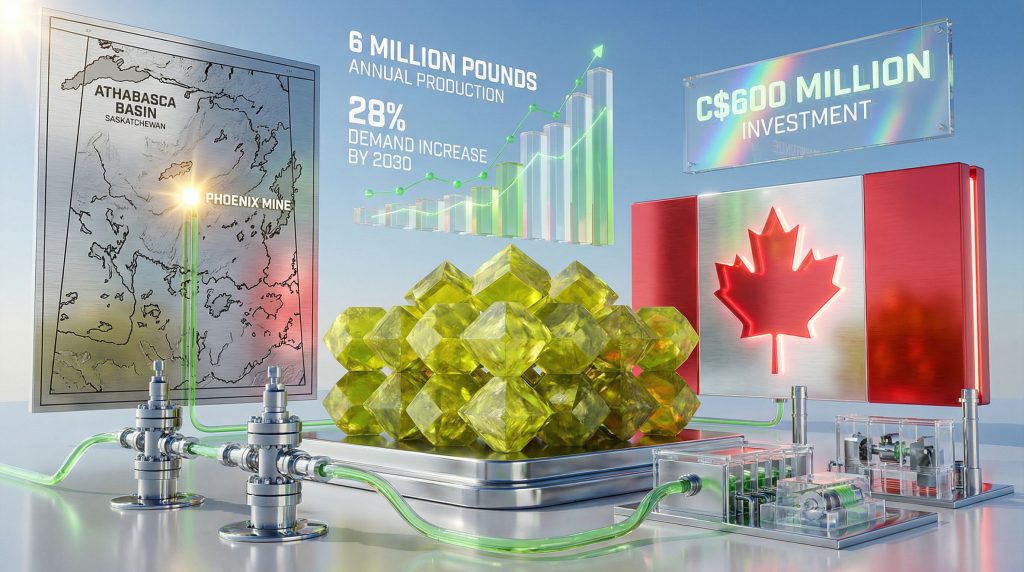
Denison to start construction of Phoenix uranium mine operations utilise in-situ recovery methodology, representing technological innovation in the Athabasca Basin's high-grade uranium environment. This approach offers significant operational advantages compared to conventional mining techniques.
ISR technology delivers multiple benefits:
- Environmental Impact Reduction: Minimises surface disturbance by approximately 70% compared to open-pit operations
- Capital Efficiency: Reduces initial infrastructure requirements and construction timelines
- Operational Flexibility: Enables selective extraction from multiple zones within deposit areas
- Regulatory Compliance: Simplifies environmental permitting through reduced surface footprint
The Phoenix project's expected annual production of 6 million pounds of uranium oxide (U₃O₈) positions it among significant global producers. This output level represents approximately 4.3% of current worldwide uranium production, assuming baseline production near 140 million pounds annually.
| Production Category | Annual Output Range | Phoenix Positioning |
|---|---|---|
| Tier 1 Global Producers | 10M+ lbs U₃O₈ | Approaching threshold level |
| Tier 2 Regional Producers | 3-10M lbs U₃O₈ | Upper tier classification |
| Emerging Market Producers | Under 3M lbs U₃O₈ | Significantly exceeds category |
Financial Economics Driving Investment Decisions
The C$600 million capital investment reflects detailed economic modelling across various uranium price scenarios. Project economics demonstrate resilience under different market conditions, supporting investment thesis validation.
Base Case Financial Projections:
- Post-tax Net Present Value: C$1.16 billion
- Internal Rate of Return: 90%
- Construction Timeline: 24 months from site preparation to production
- Target Production Start: Mid-2028
- Payback Period: Under 3 years from first production
These financial metrics indicate exceptionally strong project economics, though investors should verify assumptions through independent engineering studies and market analysis. The projected 90% IRR suggests either conservative cost estimates or optimistic price assumptions warranting careful evaluation.
Long-term uranium price assumptions of US$65-75 per pound U₃O₈ align with current market fundamentals supporting sustained price levels. Recent uranium contracting activity demonstrates constructive price discovery between producers and utilities, contributing to market confidence.
Operating cost targets position the project in the bottom quartile globally, enabling profitability across various price environments. This cost advantage stems from ISR operational efficiency and high-grade ore characteristics specific to Athabasca Basin deposits.
Regulatory Milestone Significance for Industry Development
The project achieved the first Canadian uranium mine construction approval in over 20 years, establishing important precedents for future developments. This regulatory milestone validates technical approaches and stakeholder engagement protocols applicable to similar projects, reflecting broader mining industry innovation.
Regulatory Framework Components:
- Canadian Nuclear Safety Commission environmental assessment approval
- Site preparation and construction licensing
- Indigenous community consultation protocols
- Regional municipality participation agreements
Stakeholder Partnership Structure includes comprehensive benefit sharing arrangements:
Impact Benefit Agreement with Métis Nation–Saskatchewan confirms community support and participation in project benefits
Nuhenéné Benefit Agreement covers multiple First Nations and four northern Saskatchewan municipalities
These agreements demonstrate evolving standards for Indigenous consultation and benefit sharing in resource development, potentially influencing regulatory expectations for future projects.
Geographic Supply Chain Diversification Strategy
Denison to start construction of Phoenix uranium mine contributes to Western uranium supply diversification objectives. Current global production concentration creates vulnerability to geopolitical disruptions affecting energy security planning.
Current Supply Concentration Risks:
- Kazakhstan: Approximately 40% of global uranium production
- Russia/Rosatom: Significant uranium processing and enrichment capacity
- Central Asian political stability: Potential supply disruption scenarios
- Transportation logistics: Limited routing options for landlocked producing regions
Phoenix production helps mitigate these risks by providing North American supply from a politically stable jurisdiction. Canada's established nuclear regulatory framework and mining expertise support reliable long-term operations.
Strategic Supply Benefits:
- Reduced Import Dependence: Decreases Western reliance on potentially unstable supply sources
- Supply Chain Resilience: Creates alternative sourcing options for nuclear utilities
- Technology Transfer: Validates ISR applications in high-grade deposits for future projects
- Regional Expertise Development: Builds specialised workforce capabilities in Saskatchewan
Market Timing and Construction Risk Factors
Project execution occurs during favourable market conditions but faces typical construction challenges. Timeline risks include potential delays from weather conditions, equipment availability, and regulatory compliance requirements.
Construction Phase Milestones:
- Site Preparation: March 2026 commencement
- Infrastructure Development: Q2-Q4 2026
- Processing Plant Installation: Q1-Q3 2027
- Wellfield Development: Q3-Q4 2027
- Commissioning and Testing: Q4 2027 – Q1 2028
- First Production: Mid-2028 target
Risk Mitigation Strategies include:
- Fixed-price construction contracts for major equipment
- Experienced construction management through Wood Canada
- Local workforce development initiatives
- Comprehensive project insurance coverage
Currency fluctuation between Canadian dollars and US dollar-denominated uranium sales could impact project returns. However, Canadian operating costs partially hedge this exposure compared to projects with foreign currency cost structures.
The next major ASX story will hit our subscribers first
Technology Innovation and Industry Applications
The Phoenix project advances ISR technology applications in high-grade uranium deposits, potentially influencing extraction methods across the Athabasca Basin. Traditional ISR operations typically occur in lower-grade deposits where solution mining proves most economical.
Technical Innovation Aspects:
- High-Grade Solution Management: Optimising extraction efficiency in uranium-rich zones exceeding 20% U₃O₈
- Groundwater Protection: Advanced monitoring systems preventing aquifer contamination
- Processing Integration: Coordinating wellfield operations with surface processing facilities
- Environmental Restoration: Post-production groundwater restoration protocols
Successful demonstration of these technologies could accelerate similar developments throughout the region. The Athabasca Basin contains approximately 25% of known high-grade uranium reserves globally, offering significant expansion potential using proven methodologies.
Investment Strategy Implications for Uranium Sector
Phoenix construction commencement signals institutional confidence in uranium's long-term fundamentals, potentially catalysing broader sector investment. Denison to start construction of Phoenix uranium mine provides investors exposure to multiple value drivers simultaneously.
Portfolio Diversification Benefits:
- Geographic Risk Mitigation: Stable jurisdiction exposure reducing political risk
- Technology Risk Reduction: Proven ISR methodology with demonstrated applications
- Timeline Risk Management: Clear construction-to-production pathway with defined milestones
- Market Risk Balance: Exposure to growing nuclear energy demand trends
Sector-Wide Investment Catalysts:
- Exploration Spending: Increased investment in Athabasca Basin exploration programmes
- Development Project Acceleration: Enhanced investor interest in advanced-stage uranium companies
- Technology Investment: Innovation funding for extraction method improvements
- Infrastructure Development: Regional service capacity expansion supporting multiple projects
Market sentiment improvements often create momentum effects across uranium equity valuations. Phoenix success could demonstrate commercial viability encouraging similar project developments regionally.
Long-Term Energy Security Positioning
As global energy systems transition toward decarbonisation, Denison to start construction of Phoenix uranium mine positions Canada as a strategic nuclear fuel supplier. This role becomes increasingly valuable as nuclear capacity expands worldwide.
Strategic National Benefits:
- Export Revenue Generation: High-value mineral exports supporting trade balance
- Technology Leadership: Advanced mining technique development and application
- Regional Economic Development: Employment and business opportunities in northern Saskatchewan
- Energy Partnership: Strengthened relationships with nuclear energy-dependent nations
The project contributes to nuclear fuel supply security for growing reactor fleets across North America and allied nations. This strategic value extends beyond commercial returns to encompass national security considerations.
Future Development Implications:
Phoenix success could establish templates for responsible uranium development balancing economic objectives with environmental stewardship and Indigenous partnership. These models may influence regulatory approaches and industry standards for future resource projects.
The intersection of commercial opportunity, technological innovation, and strategic resource development positions this project at the forefront of uranium sector evolution. Success would validate investment approaches combining financial returns with broader economic and security benefits.
Disclaimer: This analysis contains forward-looking statements and projections based on current market conditions and company announcements. Uranium market dynamics, project execution, and financial returns involve significant risks and uncertainties. Investors should conduct independent due diligence and consider professional advice before making investment decisions.
Looking to Capitalise on Major Uranium Discoveries?
Discovery Alert's proprietary Discovery IQ model delivers real-time alerts on significant uranium and mineral discoveries across the ASX, instantly empowering subscribers to identify actionable opportunities ahead of the broader market. Explore Discovery Alert's dedicated discoveries page to understand how historic mineral discoveries have generated exceptional returns, then begin your 14-day free trial today to secure your market-leading advantage.