May 19, 2026
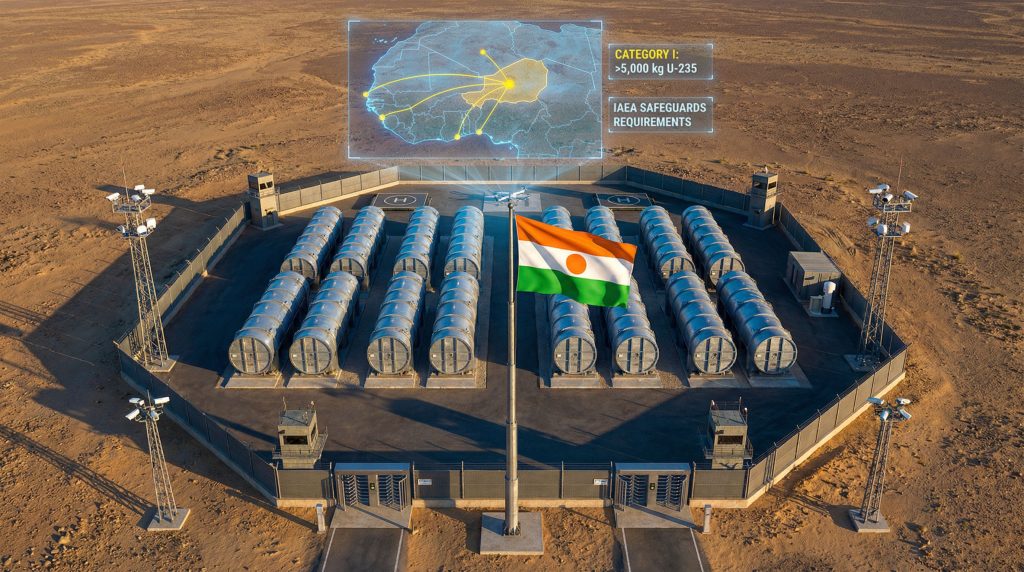
The concentration of uranium production in politically unstable regions creates systemic vulnerabilities that threaten global nuclear fuel supply chains. The Niger airport attack uranium stockpile incident of January 30, 2026, exemplifies how security threats near critical uranium infrastructure can rapidly escalate market uncertainty. When uranium storage facilities operate adjacent to civilian airports in volatile regions, the resulting security challenges demonstrate the interconnected nature of geopolitical instability and strategic resource supply.
Recent developments across West Africa highlight how uranium market volatility emerges from the intersection of resource nationalism, regional conflicts, and strategic partnership realignments. Furthermore, these factors create complex risk environments that uranium market participants must navigate with increasing sophistication.
Geographic Concentration of Critical Resources
Niger's uranium sector operates through a highly concentrated infrastructure network that creates significant supply chain vulnerabilities. The country accounts for approximately 5-7% of global uranium production, with operations heavily concentrated around the Arlit-Akokan mining district in northern Niger. Consequently, this geographic concentration means that disruptions at key facilities can cascade through the entire supply chain.
Orano's Somair mine in Arlit represented the primary uranium extraction facility before recent disruptions, with production capacity reaching approximately 3,200 tonnes of uranium concentrate per annum. The facility's remote location, combined with limited alternative processing capacity, creates what security analysts term "hub vulnerability" where single-point failures affect entire supply networks.
The concentration risk became starkly apparent during the January 30, 2026 security incident at Niamey's Diori Hamani International Airport. Unidentified assailants launched an assault that brought them perilously close to concentrated uranium powder stored at a military facility adjacent to the airport. The attack involved gunmen on motorbikes and drone strikes, resulting in at least 20 attackers killed and 4 Niger security force members injured.
Military-Civilian Infrastructure Integration
The proximity of uranium storage facilities to civilian infrastructure creates compounding security challenges. Diori Hamani International Airport handles approximately 180,000-200,000 passengers annually, making it a significant civilian hub that must simultaneously accommodate uranium storage security requirements.
During the January 2026 attack, aircraft from Air Côte d'Ivoire and two Asky Airlines planes positioned on the tarmac suffered damage. Witnesses reported flames several meters high and multiple vehicles ablaze, demonstrating how security incidents affecting civilian operations directly threaten adjacent uranium facilities.
However, when civilian airports require relatively open access for aircraft operations while military installations demand restricted access zones with layered perimeter security, the overlapping requirements create operational conflicts between efficiency and security protocols.
Transportation Corridor Dependencies
Niger's landlocked position creates additional vulnerabilities as uranium concentrate must traverse multiple countries and security jurisdictions before reaching international markets. Following Niger's June 2025 nationalisation of Orano operations, authorities removed uranium stockpiles from the Somair mine despite an International Centre for Settlement of Investment Disputes tribunal ruling prohibiting such action.
This transportation occurred through jihadist-controlled territories in the Sahel region, creating elevated vulnerability for radioactive material. Road transport through insecure areas eliminates standard security practices such as predictable routing, standardised armed escorts, and real-time monitoring capabilities.
The transportation challenges highlight systemic vulnerabilities in uranium supply chains:
- Multi-jurisdictional exposure: Material crosses numerous borders with varying security capabilities
- Infrastructure limitations: Limited rail or pipeline alternatives force reliance on road transport
- Security coordination gaps: Inconsistent protection standards across transit countries
- Environmental contamination risks: Compromised containers in hostile territory create long-term hazards
When big ASX news breaks, our subscribers know first
Post-Colonial Resource Nationalism Trends
Niger's seizure and nationalisation of Orano's Somair mine represents a broader pattern of resource nationalism across West Africa. The military government, led by Abdourahamane Tiani who ousted President Mohamed Bazoum in 2023, initially seized the facility in 2024, alleging the French nuclear company intended to cease operations without following proper protocols.
The June 2025 completion of full nationalisation removed Orano from operational control, leaving the French company without oversight despite ongoing international arbitration. The government's willingness to ignore ICSD tribunal rulings demonstrates how nationalist imperatives now override international arbitration agreements in uranium-producing regions.
This shift reflects a transition from post-colonial consensus that permitted foreign uranium operators in exchange for tax revenues toward direct state control of strategic resources. However, the replacement of international technical expertise with domestic management capability creates productivity risks and potential production disruptions, highlighting broader trends in uranium ban policy impact across different regions.
Strategic Partnership Realignments
Military ruler Abdourahamane Tiani has fundamentally reoriented Niger's strategic partnerships from Western to Russian alignment. The country has severed security relationships with Washington and Paris while establishing closer ties with Moscow. This realignment carries profound implications for uranium supply chain security and Western strategic inventory planning.
Niger's withdrawal from the Economic Community of West African States (ECOWAS), a 16-member regional bloc traditionally aligned with Western partners, signals a broader geopolitical restructuring. The country joined Mali and Burkina Faso in establishing the Alliance of Sahel States, creating a new regional bloc oriented toward alternative great power partnerships.
During the January 30, 2026 airport attack, Tiani credited Russian partners for enabling forces to defeat attackers within 20 minutes. This acknowledgment highlights the operational security transition from French military guarantees to Russian support arrangements.
Regional Security Alliance Formation
The Alliance of Sahel States represents an unprecedented consolidation of uranium-producing and uranium-potential countries into a unified geopolitical bloc. This alliance includes:
- Niger: Current significant uranium producer (5-7% global production)
- Mali: Hosts uranium deposits at Faléa and other locations with limited current production
- Burkina Faso: Explored uranium potential without significant commercial production
The alliance formation could eventually create coordinated uranium supply strategies independent of international market mechanisms, with implications for global uranium pricing and availability. In addition, this development parallels concerns about the Russian uranium ban and its effects on Western uranium supply security.
International Regulatory Framework Challenges
International Atomic Energy Agency (IAEA) safeguards represent the primary mechanism for ensuring civilian uranium materials remain under appropriate oversight. However, the Niger situation demonstrates limitations in international regulatory enforcement when national governments prioritise resource control over international agreements.
IAEA Physical Protection recommendations establish three material categorisation levels based on enrichment and quantities:
| Security Level | Storage Capacity | Protection Measures | Access Controls |
|---|---|---|---|
| Category I | >5,000 kg U-235 | Armed response teams, detection systems | Restricted personnel only |
| Category II | 1,000-5,000 kg | Enhanced perimeter security | Background-checked staff |
| Category III | <1,000 kg | Standard industrial security | Basic access controls |
Yellowcake uranium concentrate (U₃O₈) requires secure storage in controlled environments due to radiological hazard classifications. The material must maintain specific humidity and temperature conditions to prevent degradation. When stored at military facilities adjacent to civilian airports, standard industrial security protocols become insufficient.
Emergency Response Protocol Gaps
The January 2026 attack revealed potential gaps in emergency response coordination between civilian airport operations and military uranium storage security. When security incidents occur simultaneously affecting both civilian infrastructure and uranium facilities, response protocols must address:
- Civilian evacuation procedures while maintaining uranium security
- Radiological contamination assessment during active combat situations
- International notification requirements for potential uranium material exposure
- Transportation security for emergency uranium material relocation
Technology Integration in Uranium Security
Modern uranium security increasingly relies on integrated technology systems that can address both physical and cyber threats. Advanced detection technologies include radiation portal monitors for real-time material movement tracking, drone surveillance networks for perimeter monitoring, and biometric access controls for personnel authentication.
However, the integration of digital monitoring systems creates new vulnerabilities. Cybersecurity becomes critical as uranium facilities implement networked control systems that could be compromised by sophisticated threat actors. The Niger situation demonstrates how traditional security frameworks struggle to address hybrid threats combining physical attacks with potential cyber components.
Remote monitoring capabilities through satellite-based systems and sensors enable continuous facility oversight, particularly valuable in politically unstable regions. These technologies allow international monitoring bodies and commercial operators to maintain situational awareness even when direct access becomes restricted.
Investment Implications and Risk Assessment
Security incidents near uranium facilities create immediate market volatility as investors assess potential supply disruptions. The proximity of the January 2026 attack to uranium storage facilities demonstrates how quickly security concerns can affect market confidence, even when actual material damage remains limited.
Portfolio risk assessment must now incorporate geopolitical stability factors alongside traditional operational and geological considerations. The Niger situation illustrates how rapidly political changes can eliminate access to established uranium sources, requiring diversified supply strategies and comprehensive uranium investment strategies.
Alternative Supply Development Acceleration
Security concerns in major producing regions often accelerate investment in alternative uranium sources, potentially benefiting projects in more stable jurisdictions. Countries with established regulatory frameworks and political stability may see increased investment as markets seek supply security.
Key considerations for uranium investment risk management include:
- Jurisdictional diversification across multiple stable countries
- Transportation route analysis evaluating security and reliability
- Strategic inventory planning to buffer supply disruptions
- Insurance coverage for geopolitical and security risks
Strategic reserve considerations become increasingly important as nations evaluate uranium supply security. When supply concerns emerge from major producing regions, governments may accelerate strategic reserve accumulation, creating additional demand pressure on global markets. Furthermore, this trend contributes to broader concerns about US uranium market disruption and supply chain resilience.
Future Scenario Planning for Uranium Security
Climate change adaptation may require enhanced physical security measures for uranium facilities, particularly those in geographically vulnerable locations. Extreme weather events could compromise facility integrity and require upgraded protection systems.
Emerging technologies like artificial intelligence and blockchain could revolutionise uranium supply chain security and transparency. AI-powered threat detection systems could identify potential security risks before they escalate, while blockchain technology could provide immutable chain-of-custody documentation for uranium materials.
Regional cooperation frameworks may emerge to address uranium security challenges collectively. The Alliance of Sahel States represents one model, though international cooperation mechanisms focused on security rather than resource extraction control might prove more effective for global supply stability.
"Critical Risk Assessment: The Niger airport attack uranium stockpile incident reveals how quickly established uranium supply relationships can be disrupted by the intersection of political instability, resource nationalism, and security threats. Market participants must develop comprehensive risk management strategies that account for both immediate security disruptions and long-term geopolitical realignments."
The next major ASX story will hit our subscribers first
Strategic Risk Management for Uranium Markets
The concentration of uranium infrastructure in politically volatile regions creates systemic vulnerabilities that extend beyond traditional commodity market risks. The January 2026 Niger incident demonstrates how security events near uranium storage facilities can create immediate market uncertainty and long-term supply chain disruption.
Market participants must now integrate security risk assessment into their operational planning. This includes evaluating facility locations relative to conflict zones, assessing transportation corridor security, and maintaining strategic inventory buffers to manage supply disruptions.
Monitoring Indicators for Uranium Security
Key indicators for assessing uranium supply security include:
- Regional security incident frequency and proximity to uranium facilities
- Government stability metrics in major producing countries
- Transportation route accessibility and alternative corridor development
- International sanctions developments affecting uranium trade flows
- Strategic partnership shifts between producing countries and major powers
The Niger situation illustrates how resource nationalism combined with security instability can rapidly transform uranium market dynamics. Understanding these interconnected risks becomes essential for maintaining supply chain resilience in an increasingly uncertain geopolitical environment.
Disclaimer: This analysis is based on publicly available information and should not be considered investment advice. Uranium market participants should conduct independent due diligence and consult qualified professionals when making investment or operational decisions. Geopolitical situations remain fluid and can change rapidly, affecting market conditions and supply chain security.
Looking to Navigate Complex Uranium Market Risks?
Discovery Alert's proprietary Discovery IQ model delivers real-time alerts on significant uranium and mineral discoveries across the ASX, helping subscribers identify actionable opportunities while geopolitical uncertainties reshape global supply chains. With uranium security incidents demonstrating how quickly established supply relationships can be disrupted, explore Discovery Alert's dedicated discoveries page to understand how major mineral discoveries can generate substantial returns and begin your 14-day free trial today to position yourself ahead of market volatility.