June 8, 2026
Global energy networks face unprecedented vulnerability when critical maritime chokepoints experience disruption, creating cascading effects across interconnected supply chains. The US blockade of Hormuz represents one of the most significant energy security challenges in recent history, with energy security calculations now requiring scenario planning around major transit route closures, fundamentally altering risk assessment frameworks for both governments and private sector stakeholders.
Understanding the Strategic Importance of Hormuz in Global Energy Security
Why the Strait of Hormuz Matters to World Oil Markets
The Strait of Hormuz represents one of the world's most critical energy transit bottlenecks, with recent data revealing the scale of dependency on this narrow waterway. Analysis of vessel movements during the ongoing US-Iran conflict shows that 36 percent of all tanker traffic transiting the strait since February 28, 2026, either departed from or was bound for Iranian ports. Among the 148 tankers that have navigated these waters during this period, 53 vessels were conducting Iranian-linked voyages, including 20 very large crude carriers (VLCCs), five Suezmax tankers, two Aframax vessels, and ten Medium Range tankers.
This concentration of maritime traffic highlights the geographic constraints that make alternative routing extremely challenging. The strait's narrow passage forces vessels into predictable transit patterns, creating vulnerabilities that extend far beyond regional conflicts. Energy market participants have observed that tankers complying with Iranian transit conditions during the current crisis reportedly pay unofficial tolls equivalent to $1 per barrel for crude shipments, demonstrating how quickly transportation costs can escalate during supply disruptions.
Historical precedents show similar patterns of market volatility when Hormuz faces closure threats. The Iran-Iraq War of the 1980s, known as the "Tanker War," saw insurance rates spike dramatically and oil prices experience sustained volatility as markets priced in supply disruption risks. Current vessel tracking data indicates that even partial restrictions can affect substantial portions of global energy flows, with 34 ships transiting on a single day representing the highest volume since recent closures began.
Current Geopolitical Tensions and Naval Positioning
Military positioning around the strait reflects the complex balance of regional power projection capabilities and international maritime law considerations. The US blockade enforcement commenced at 10:00 AM ET (14:00 GMT) on April 13, 2026, with operational parameters designed to intercept vessels leaving Iranian ports or heading to Iran through the waterway. This represents a significant escalation in naval enforcement compared to previous standoffs in the region.
Iranian military capabilities have been substantially degraded according to official assessments, with reports indicating the elimination of naval assets, air defense systems, and command infrastructure. However, Iran retains asymmetric warfare capabilities including speedboat fleets that could threaten commercial shipping. The warning that any Iranian vessels approaching the blockade zone would face immediate elimination underscores the hair-trigger nature of current military tensions.
Coalition building efforts face significant challenges as allied nations weigh economic interests against security commitments. The UK and France announced plans to co-host a summit with more than 40 countries participating to discuss Hormuz shipping security, though their involvement will only begin after conflict resolution. This diplomatic approach reflects the complexity of maintaining international maritime law while addressing security threats to global energy supplies.
When big ASX news breaks, our subscribers know first
Economic Impact Analysis: How Energy Markets React to Supply Disruptions
Immediate Price Volatility and Trading Patterns
Energy market disruptions from the US-Iran conflict have created unprecedented supply constraints across multiple sectors. Global crude output from the Middle East has declined by 12 million barrels per day, according to analysis from major trading firms. This represents the largest regional production loss in modern energy market history, with net crude exports from the Middle East Gulf falling by 9 million barrels per day since the conflict began.
The downstream sector has experienced equally severe impacts, with global refining capacity reduced by more than 5 million barrels per day. Approximately 3 million barrels per day of refining capacity sits offline in the Middle East Gulf region itself, while an additional 2-3 million barrels per day of capacity outside the region cannot operate due to lost Middle Eastern crude supplies. Asia-Pacific refineries have been most heavily affected, facing the dual challenge of supply disruption and increased transportation costs for alternative crude sources.
Regional demand patterns have shifted dramatically in response to the crisis. Middle East Gulf jet fuel demand has declined by approximately 300,000 barrels per day as aviation sectors adapt to conflict conditions. Furthermore, our oil price rally insights indicate that such supply disruptions create cascading effects across interconnected energy markets. The broader economic impact extends beyond energy, with Middle East GDP projected to fall by 2 percent this year as tourism industries across Gulf Cooperation Council states experience significant disruption.
Strategic Petroleum Reserve Deployment Scenarios
International Energy Agency coordination mechanisms have already activated emergency response protocols. The organization announced a record 400 million barrel emergency oil release by member countries on March 11, 2026, subsequently increased to 426 million barrels. This represents the largest coordinated strategic reserve release in history, highlighting the severity of current supply constraints.
Current global inventory levels provide limited buffer capacity for extended disruptions. IEA members held 1.25 billion barrels of oil in public stocks as of the end of 2025, accounting for approximately 30 percent of total OECD oil inventories. However, reserve releases serve primarily as temporary market stabilization tools rather than long-term supply solutions, with officials emphasising that such measures only reduce market pain rather than solve underlying supply deficits.
The effectiveness of reserve deployments depends heavily on coordination mechanisms among the IEA's 32 member countries. Any additional release would require extensive consultation processes, potentially limiting response speed during rapidly evolving crisis situations. Industry analysts note that even if conflicts ended immediately, infrastructure restoration could take 3-4 months for refining capacity and up to two years for upstream production to return to pre-conflict levels.
Which Countries Face the Greatest Energy Security Risks?
Asian Import Dependencies and Alternative Supply Routes
Asian economies face the most severe energy security challenges due to their heavy reliance on Middle Eastern crude imports through Hormuz. China, Japan, and South Korea represent the largest importers of Middle Eastern crude, making them particularly vulnerable to supply disruptions. These nations lack sufficient domestic production capacity and strategic reserves to offset major import losses for extended periods.
Pipeline infrastructure provides limited alternative routing options for Asian markets. Unlike European consumers who can access multiple supply corridors through various pipeline systems, Asian importers depend primarily on seaborne transportation. The geographic constraints of the Asian continent mean that alternative supply sources often require significantly longer shipping routes, increasing transportation costs and delivery timeframes.
However, understanding LNG market implications becomes crucial as substitution potential remains constrained by existing infrastructure and long-term contract obligations. While Asian markets have invested heavily in LNG import terminals, the ability to replace crude oil imports with natural gas depends on end-use flexibility and industrial adaptation capacity. Many petrochemical facilities and refineries cannot easily switch between feedstock sources without substantial technical modifications.
European Energy Resilience Under Supply Stress
European energy markets demonstrate greater diversification compared to Asian counterparts, but still face significant challenges during Middle Eastern supply disruptions. The continent's extensive pipeline network connecting to Russian, North African, and North Sea production provides multiple supply corridors that enhance security of supply. However, recent geopolitical tensions have highlighted vulnerabilities in these alternative supply chains.
Natural gas import dependencies create additional complexity for European energy security planning. While oil supply disruptions affect transportation fuels and petrochemical feedstocks, natural gas constraints impact heating, electricity generation, and industrial processes across multiple sectors. Storage capacity limitations mean that European markets cannot rely solely on inventory drawdowns during extended supply interruptions.
Renewable energy acceleration serves as a strategic response to supply security concerns, but deployment timelines limit near-term impact. Solar and wind capacity additions can reduce long-term fossil fuel dependencies, but current renewable penetration levels cannot fully offset major conventional energy supply losses. Industrial sector adaptation to higher energy costs may accelerate efficiency improvements and fuel switching initiatives.
How Would Shipping and Maritime Insurance Markets Respond?
Tanker Fleet Redeployment and Route Optimization
Global tanker fleet capacity faces severe constraints during Hormuz disruptions, as vessel operators must balance risk management with commercial opportunities. The current crisis has demonstrated the complexity of tanker fleet redeployment, with vessels carrying 20 VLCCs, five Suezmax, two Aframax, and ten Medium Range tankers representing just the Iranian-linked portion of traffic through the strait.
Alternative routing through the Cape of Good Hope adds substantial time and cost penalties to crude oil transportation. VLCC vessels face particularly challenging economics when forced to use longer routes, as additional sailing time reduces fleet utilisation rates and increases fuel consumption. The limited availability of alternative loading terminals outside the Persian Gulf creates bottlenecks that can drive up transportation costs even for vessels not directly affected by Hormuz restrictions.
Port congestion scenarios at alternative terminals create cascading delays throughout the global shipping network. When major shipping routes face disruption, vessels concentrate at remaining operational ports, leading to queue delays and demurrage costs. These bottlenecks can persist for weeks or months after initial supply disruptions end, as the shipping industry works to clear accumulated backlogs.
War Risk Insurance Premium Calculations
Maritime insurance markets experience dramatic rate adjustments during conflict situations, with war risk premiums potentially increasing by orders of magnitude for vessels transiting high-risk areas. Lloyd's of London and other major marine insurers typically implement zone-based pricing that reflects assessed threat levels, with premiums escalating rapidly as military tensions increase.
Coverage exclusions and force majeure considerations become critical factors during active conflict scenarios. Insurance policies may exclude coverage for losses resulting from acts of war, requiring vessel operators to purchase separate war risk insurance or accept self-insurance for conflict-related damages. These additional costs can make some voyages economically unviable, further constraining global shipping capacity.
Consequently, the impact on smaller shipping companies versus major operators creates market concentration effects during crisis periods. Large shipping firms with diversified fleets and stronger balance sheets can better absorb higher insurance costs and operational risks, while smaller operators may be forced to avoid high-risk routes entirely. This dynamic can lead to market share consolidation during extended conflict periods.
What Are the Long-Term Strategic Implications for Energy Infrastructure?
Accelerated Investment in Alternative Energy Corridors
Infrastructure planners are reassessing pipeline route diversity and capacity expansion projects in response to demonstrated vulnerabilities in maritime chokepoints. Trans-Arabian Pipeline systems and other overland routes gain strategic importance when seaborne transportation faces disruption risks. However, pipeline construction timelines typically span multiple years, limiting their effectiveness as near-term solutions to supply security concerns.
Red Sea and Mediterranean export terminal development represents another potential avenue for reducing Hormuz dependency. Middle Eastern producers are evaluating westward export infrastructure that would provide alternative market access routes. These projects require substantial capital investment and face their own geopolitical risks, as recent shipping disruptions in Red Sea routes have demonstrated.
Overland pipeline projects connecting Central Asian production to European markets offer additional diversification opportunities. However, these initiatives face complex political and economic negotiations among multiple transit countries. Route security and long-term commercial viability remain significant challenges for large-scale pipeline development across politically unstable regions.
Renewable Energy Transition Acceleration Scenarios
Energy security concerns may accelerate government policy support for renewable energy deployment as a strategy to reduce import dependencies. While renewable electricity generation cannot directly replace crude oil in transportation applications, electrification initiatives across multiple sectors could reduce overall petroleum consumption over time. The timeline for such transitions typically spans decades rather than years, limiting their impact on current security challenges.
Private sector investment reallocation toward energy independence reflects changing risk assessments for fossil fuel supply chains. Companies may prioritise domestic energy production capabilities and renewable energy projects that reduce exposure to international supply disruptions. However, the scale of investment required for meaningful energy independence often exceeds private sector capacity without government policy support.
Technology deployment timelines under crisis conditions may benefit from accelerated regulatory approval processes and emergency funding mechanisms. While standard renewable energy project development typically requires 3-5 years, crisis situations might justify streamlined permitting and fast-track construction procedures. The effectiveness of such measures depends on supply chain availability and skilled workforce capacity.
Regional Economic Consequences Beyond Energy Markets
Middle Eastern GDP Impact Projections
Economic analysis indicates that Middle Eastern economies face GDP contraction of 2 percent this year due to comprehensive disruption across multiple sectors. Tourism represents a particularly vulnerable industry, with Gulf Cooperation Council states experiencing significant visitor declines as travel advisories and security concerns affect international mobility. Aviation sector constraints compound these challenges, with jet fuel demand declining by 300,000 barrels per day across the region.
Foreign investment withdrawal scenarios could amplify economic pressures beyond immediate conflict effects. International companies may postpone or cancel investment projects in affected regions, leading to reduced capital formation and employment opportunities. The duration and intensity of investment impacts depend heavily on conflict resolution timelines and post-conflict stability assessments.
Currency stability concerns emerge as regional economies face balance of payments pressures from reduced export earnings and increased defence spending. Oil-dependent economies typically maintain currency stability through energy export revenues, but production disruptions can strain foreign exchange reserves. Central banks may need to implement capital controls or currency interventions to maintain monetary stability during extended conflict periods.
Global Inflation Pressures and Central Bank Responses
Energy cost pass-through to consumer prices creates challenging policy dilemmas for central banks worldwide. Higher transportation fuel costs affect consumer budgets directly while also increasing costs for goods transportation and distribution. The magnitude of inflation effects depends on energy price elasticity and the duration of supply disruptions.
Central bank responses to supply-driven inflation typically differ from demand-driven price pressures. Monetary policy tightening may be less effective at controlling inflation caused by supply constraints, potentially leading to stagflation scenarios where economic growth slows while prices continue rising. Policy makers must balance inflation control against economic growth objectives during energy supply crises.
Emerging market economies face particular vulnerability to energy import cost increases, as higher oil prices strain current account balances and foreign exchange reserves. Countries with significant energy import dependencies may experience currency depreciation and debt sustainability concerns if global energy prices remain elevated for extended periods. International monetary policy coordination becomes important for maintaining global financial stability.
The next major ASX story will hit our subscribers first
Military and Diplomatic Resolution Pathways
International Mediation Mechanisms and Precedents
Diplomatic negotiations face complex challenges as multiple stakeholder interests intersect around energy security and regional stability concerns. The recent ceasefire agreement effective through April 21, 2026 provides a framework for continued diplomatic engagement, though previous weekend talks in Islamabad failed to achieve breakthrough agreements. Nuclear program issues remain a key stumbling block in US-Iran negotiations, with American officials maintaining firm positions on weapons development restrictions.
United Nations Security Council intervention possibilities face political obstacles given the veto powers held by permanent members with conflicting interests. Previous UN involvement in Persian Gulf shipping disputes has typically focused on freedom of navigation principles rather than comprehensive conflict resolution. The complexity of current military positioning may require more extensive international coordination mechanisms than traditional UN frameworks can provide.
Regional diplomatic initiatives involving neutral parties could offer alternative mediation pathways. Countries with economic interests in maintaining energy supplies but limited direct involvement in US-Iran tensions might serve as honest brokers for negotiated settlements. The involvement of more than 40 countries in planned UK-France summit discussions indicates broad international interest in shipping security solutions.
De-escalation Scenarios and Market Recovery Timelines
Infrastructure restoration timelines following conflict resolution will significantly influence market normalisation patterns. Even if hostilities ended immediately, analysts estimate 3-4 months would be required to restart shuttered refining capacity in the Middle East Gulf region. Upstream production recovery could take even longer, with up to two years needed to restore oil output to pre-conflict levels due to well damage and equipment replacement requirements.
The International Energy Agency reports that more than 80 facilities have sustained damage during the current conflict, including refineries, terminals, upstream production sites, and pipeline infrastructure. More than one-third of these facilities have experienced severe damage requiring extensive reconstruction rather than simple repairs. The scope of infrastructure damage suggests that market recovery will be gradual rather than immediate following diplomatic resolution.
Market confidence restoration depends on sustainable security arrangements that provide long-term stability for commercial shipping operations. Previous Persian Gulf conflicts demonstrate that energy markets can remain volatile for months or years after formal ceasefire agreements if underlying security concerns persist. Investment in protective infrastructure and international security cooperation mechanisms may be necessary to restore normal commercial operations in the region.
Investment Strategy Implications for Energy Sector Portfolios
Defensive Positioning in Energy Equity Markets
Energy sector valuations reflect complex risk-reward calculations during supply disruption scenarios, with integrated oil companies potentially benefiting from higher commodity prices while facing operational constraints in affected regions. Companies with diversified geographic portfolios and substantial reserve bases may command valuation premiums as investors seek exposure to energy price increases without concentrated geopolitical risks.
Refining margin expansion opportunities emerge during periods of supply constraint and crude price volatility. Complex refineries with flexible crude input capabilities can capture enhanced margins when specific crude grades become scarce or when regional price differentials widen. However, refiners located in conflict zones face operational challenges that may offset margin improvements from favourable market conditions.
Renewable energy stock performance during fossil fuel supply crises often reflects investor interest in long-term energy security solutions. While renewable energy cannot immediately replace lost fossil fuel supplies, companies developing alternative energy infrastructure may benefit from increased policy support and accelerated deployment timelines. Investment returns depend on the ability to execute projects rapidly and at scale during potentially constrained supply chain conditions.
Commodity Trading and Hedging Strategies
Oil futures market structure experiences significant changes during supply disruption scenarios, with backwardation typically emerging as near-term supply constraints drive spot prices above forward prices. Global oil demand is expected to be approximately 100 million barrels lower this year than pre-conflict projections, yet supply losses have exceeded demand destruction, creating severe inventory draws and price volatility.
Natural gas arbitrage opportunities develop between regions with different supply accessibility and transportation constraints. Asian LNG markets may trade at substantial premiums to European gas prices when Middle Eastern suppliers face operational constraints. However, long-term contract structures and limited shipping capacity can prevent full arbitrage activity from equalising regional price differentials.
Furthermore, understanding commodities market hedging becomes essential as currency strategies become critical for energy-importing nations facing both commodity price increases and potential currency depreciation. Countries with significant energy import bills may experience balance of payments pressures that weaken their currencies, amplifying the domestic impact of higher international energy prices. Effective hedging requires coordinating both commodity price and foreign exchange risk management strategies.
Frequently Asked Questions About Hormuz Blockade Scenarios
How Long Could Global Oil Reserves Last During a Complete Blockade?
Strategic petroleum reserve calculations indicate that IEA member countries hold 1.25 billion barrels in public stocks, representing approximately 30 percent of total OECD oil inventories. Under normal consumption patterns, these reserves could theoretically supply global markets for approximately 60-90 days, though actual deployment would likely be partial rather than complete to maintain emergency buffer capacity.
Commercial inventory depletion timelines vary significantly based on demand response and alternative supply availability. Industry estimates suggest that complete Hormuz closure would create supply deficits of 9 million barrels per day from lost Middle Eastern exports alone. This magnitude of supply loss would rapidly drain commercial stocks and strategic reserves simultaneously, potentially creating critical shortages within weeks rather than months.
Critical threshold levels for economic disruption typically occur well before complete inventory depletion. Energy markets begin experiencing severe price volatility and supply allocation problems when inventory levels fall below historical norms. The psychological impact of declining reserves can trigger demand hoarding behaviour that accelerates inventory drawdowns beyond normal consumption patterns.
What Alternative Routes Exist for Middle Eastern Oil Exports?
Pipeline capacity through Turkey, Saudi Arabia, and UAE provides limited alternative export options for regional crude production. The Trans-Arabian Pipeline and other overland systems can handle several million barrels per day, but total pipeline capacity falls far short of normal maritime export volumes through Hormuz. Pipeline utilisation rates are already high under normal market conditions, limiting spare capacity available during emergency situations.
Overland transport limitations through truck and rail systems face severe capacity and cost constraints compared to pipeline and maritime alternatives. While emergency arrangements might facilitate some overland crude transportation, the logistics complexity and infrastructure requirements make such options suitable only for small volumes relative to regional production capacity. Cross-border coordination requirements add additional complications during crisis situations.
Port infrastructure constraints outside the Persian Gulf create bottlenecks even when crude reaches alternative export terminals. Red Sea ports and other facilities lack the loading capacity and storage infrastructure to handle major increases in throughput volumes. Terminal modifications and capacity expansions require months or years to implement, limiting their effectiveness as emergency alternatives.
How Would Different Blockade Scenarios Affect Oil Prices?
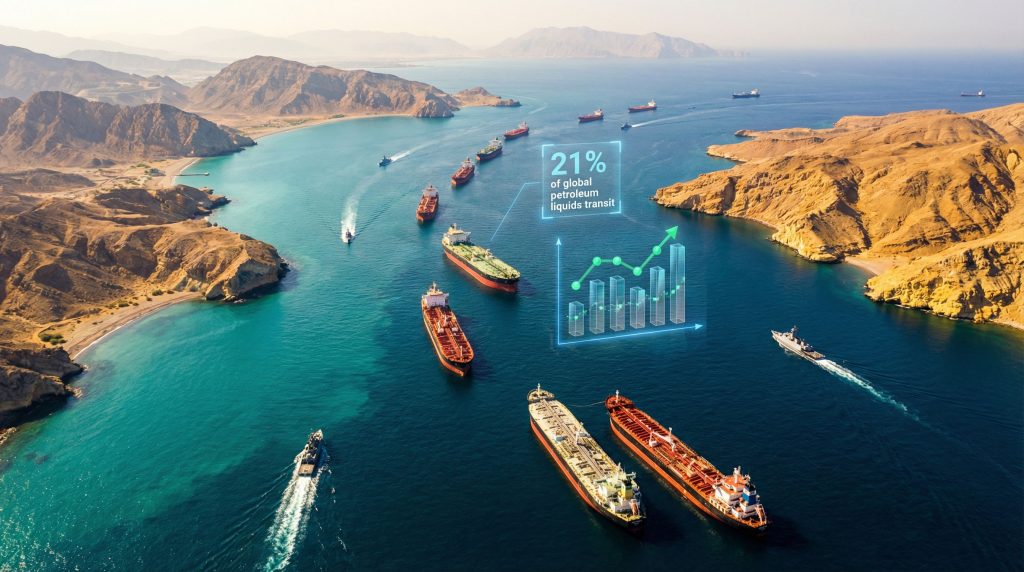
Partial versus complete transit restrictions create substantially different market impacts based on the percentage of normal traffic that can continue operating. Current data showing 36 percent of Hormuz transit traffic linked to Iranian operations suggests that targeted restrictions might allow majority traffic flows to continue, though at higher costs and with increased delays. Complete closure scenarios would eliminate approximately 20-25 percent of global oil transportation capacity.
Duration-dependent price elasticity models indicate that short-term supply disruptions typically generate more severe price spikes than longer disruptions that allow demand adjustment and alternative supply development. Markets can absorb brief supply interruptions through inventory drawdowns, but extended closures force structural changes in supply chains and consumption patterns. Price impacts tend to moderate over time as market participants adapt to new supply realities.
Seasonal demand variations significantly influence market response to supply disruptions, with winter heating demands and summer driving seasons creating periods of reduced demand flexibility. Disruptions during high-demand seasons typically generate more severe price effects than those occurring during shoulder seasons. Additionally, the US oil production decline compounds supply constraints, while global crude consumption growth of 1.38 million barrels per day projected for 2026 indicates tight market conditions that would amplify disruption impacts.
Understanding OPEC's Role During Crisis Periods
The Organization of Petroleum Exporting Countries faces complex decisions regarding production adjustments during Hormuz blockade scenarios. Traditional OPEC production impact analysis suggests that member countries outside the immediate conflict zone could increase output to partially offset supply losses. However, spare capacity limitations and infrastructure constraints limit the effectiveness of such measures during major supply disruptions.
OPEC's ability to coordinate emergency production increases depends heavily on existing spare capacity among member nations. Saudi Arabia, UAE, and Kuwait maintain the largest readily available spare capacity, but combined increases typically cannot fully compensate for the loss of multiple Middle Eastern producers simultaneously. The organization's response effectiveness also depends on maintaining unity among members with different political and economic priorities during crisis situations.
Additionally, OPEC decisions regarding emergency production must consider long-term market stability versus short-term supply security. Rapid production increases to address immediate shortages might contribute to price volatility and market uncertainty if not carefully coordinated with strategic reserve releases and demand management measures. The organization's role becomes particularly complex when some member countries are directly involved in the conflicts causing supply disruptions.
Conclusion: Preparing for Energy Security in an Uncertain World
The strategic implications of a US blockade of Hormuz extend far beyond immediate energy supply concerns, fundamentally reshaping long-term planning frameworks for energy security and economic resilience. Current events demonstrate how quickly global energy systems can face unprecedented disruption, requiring stakeholders to develop more robust risk management strategies and alternative supply arrangements.
Diversification imperatives for energy-dependent economies must balance immediate security needs against long-term economic efficiency considerations. While alternative supply routes and infrastructure provide enhanced security, they typically involve higher costs and longer development timelines than existing arrangements. The challenge lies in determining appropriate levels of redundancy and security investment without imposing excessive economic burdens on energy consumers.
Infrastructure resilience planning requires comprehensive approaches that address both physical security and operational flexibility. Recent experience indicates that facility damage can create supply disruptions lasting months or years, emphasising the importance of protective measures and rapid reconstruction capabilities. International cooperation frameworks for crisis management become essential components of energy security strategies, given the global nature of energy supply chains and market interdependencies.
Moreover, the situation highlights the need for strategic analysis of Middle East tensions and their broader implications for global energy markets. As demonstrated throughout this analysis, the US blockade of Hormuz represents a critical inflection point that will influence energy security planning and investment strategies for years to come.
This analysis is based on current information available as of April 2026 and is intended for educational purposes. Energy market conditions and geopolitical situations can change rapidly, and readers should consult current sources for the most up-to-date information when making investment or policy decisions.
Could Australia's Mining Sector Benefit from Global Energy Disruptions?
Australia's mineral and energy sector presents unique opportunities during global supply chain disruptions, as investors seek exposure to stable resource production outside geopolitically volatile regions. Discovery Alert's proprietary Discovery IQ model delivers real-time alerts on significant ASX mineral discoveries, transforming complex geological data into actionable insights for capitalising on emerging opportunities in Australia's resource markets. Begin your 14-day free trial today to position yourself ahead of market shifts driven by global energy security concerns.