
August 23, 2026
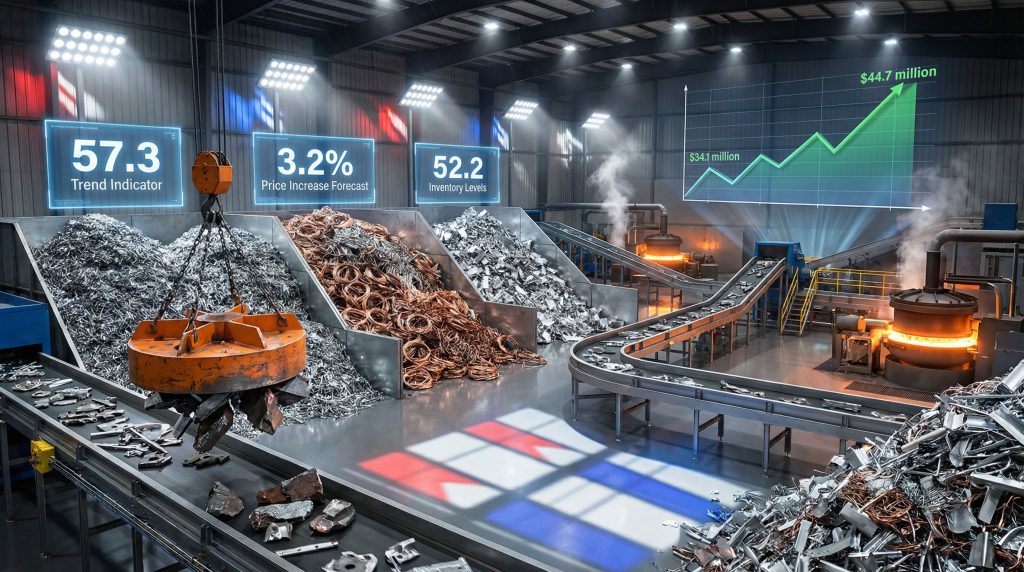
The US ferrous scrap market forecast indicates strengthening conditions as technological demands reshape traditional recycling operations. Steel recycling networks operate through complex interdependencies that extend far beyond simple collection and processing operations. Understanding these industrial mechanics requires examining how material flows, technological capabilities, and market forces interact within integrated supply chains.
The ferrous scrap ecosystem represents a critical component of North American manufacturing infrastructure, where operational efficiency directly influences both raw material costs and finished product availability across multiple industrial sectors. Electric arc furnace expansion continues reshaping demand patterns throughout the steel production landscape.
Supply Chain Architecture and Material Flow Dynamics
Advanced steelmaking technologies require increasingly precise material specifications, creating differentiated markets for various scrap grades rather than treating all recycled steel as a commodity input. This technological evolution fundamentally alters how processors, collectors, and mills approach inventory management and procurement strategies.
Weather-related disruptions significantly impact collection efficiency across different geographic regions during winter months. Current inventory levels at mills registered 52.2, positioning slightly above historical averages according to industry surveys. This positioning suggests procurement teams maintain adequate buffer stocks while avoiding excessive carrying costs associated with oversized inventories.
Collection infrastructure faces ongoing challenges from seasonal transportation constraints. However, rail transport updates demonstrate improved safety protocols that enhance operational reliability. Processing facilities must coordinate storage capacity with irregular inbound flows, particularly when winter storms disrupt normal collection schedules.
Material density and contamination levels vary substantially based on source categories:
- Industrial scrap: Typically 85-92% iron content with minimal contamination
- Automotive hulks: Require extensive processing to remove non-ferrous components
- Appliance recycling: Mixed material streams requiring sophisticated sorting
- Construction demolition: Variable quality depending on structure age and type
Geographic concentration of scrap generation creates logistics challenges for efficient distribution. The Midwest industrial corridor produces approximately 40% of total US ferrous scrap volume, yet coastal mills often require material transport across multiple time zones. This geographic imbalance drives transportation cost premiums that can exceed $30-50 per ton for long-distance shipments.
When big ASX news breaks, our subscribers know first
Advanced Steelmaking Technology Requirements
Electric arc furnace operators demand increasingly stringent quality specifications for metallurgical performance optimization. Copper contamination limits typically cannot exceed 0.25% for high-grade automotive steel production, while tin contamination must remain below 0.04% for certain applications. These restrictions force scrap processors to invest in advanced sorting technologies including X-ray fluorescence analyzers and magnetic separation systems.
EAF capacity additions scheduled through 2030 will increase total North American electric steelmaking capability by an estimated 28%. This expansion pattern creates sustained demand growth for prime scrap grades while potentially oversupplying lower-quality material that integrated mills traditionally consumed. Furthermore, companies exploring decarbonisation benefits increasingly favour scrap-intensive production methods over traditional blast furnace operations.
Processing technology investments focus on contamination reduction rather than volume throughput increases. Modern shredding facilities incorporate:
- Eddy current separators for non-ferrous metal recovery
- Dense media separation for automotive fluff processing
- Magnetic intensity controls optimised for different material streams
- Optical sorting systems capable of identifying stainless steel contamination
Quality certification requirements increasingly mirror primary steel production standards. Mills now specify maximum allowable levels for elements including nickel, chromium, and molybdenum that were previously considered acceptable in recycled feedstock. This trend forces processors to implement statistical quality control programs and maintain detailed material traceability records.
Market Intelligence and Forecasting Framework
The US ferrous scrap market forecast methodology incorporates multiple data streams beyond traditional price reporting. Trend indicators synthesise inventory levels, sentiment surveys, and macroeconomic factors to generate forward-looking assessments. January 2026 readings show a 57.3 trend indicator suggesting upward price pressure, translating to a forecasted 3.2% monthly price increase.
Consensus measurement techniques aggregate perspectives from buyers, sellers, and intermediaries. Current sentiment readings reveal:
| Participant Category | Sentiment Index | Market Outlook |
|---|---|---|
| Buyers | 59.72 | Most bullish positioning |
| Sellers | 57.3 | Moderate bullish stance |
| Brokers | 55.0 | Conservative outlook |
The 58% consensus level aligns with 24-month historical averages, indicating balanced market expectations rather than extreme bullish or bearish positioning. This alignment suggests participants view current conditions as sustainable rather than anticipating dramatic structural changes in supply-demand relationships.
Price elasticity calculations incorporate both supply-side constraints and demand-side technological factors. Historical analysis indicates ferrous scrap prices demonstrate approximately 0.65 demand elasticity, meaning 10% price increases typically reduce consumption by 6.5%. However, EAF expansion and steel import restrictions may be reducing this elasticity as mills have fewer alternative feedstock sources.
Stakeholder Positioning and Strategic Behavior
Buyer sentiment registering 59.72 represents the most optimistic outlook among market participants, suggesting procurement teams anticipate sustained price strength. This bullish positioning typically translates into accelerated contract negotiations and inventory building ahead of anticipated cost increases. Mills may be securing forward commitments to lock in current pricing before projected increases materialise.
Seller sentiment at 57.3 mirrors overall trend indicators while remaining below buyer optimism levels. This positioning indicates processors and collectors view pricing power as adequate but not excessive. Consequently, production scheduling remains focused on normal operational efficiency rather than capacity maximisation strategies designed to capture premium pricing opportunities.
Broker conservatism at 55.0 reflects intermediary concerns about execution risks and margin compression. Several factors contribute to this cautious stance:
- Credit risk management during periods of price volatility
- Transportation cost uncertainty affecting delivery margins
- Quality specification changes increasing rejection risks
- International trade policy developments creating contractual uncertainty
Market participants cite 'All Unchanged' as the dominant driver for January 2026, indicating expectations of business-as-usual conditions rather than structural market disruptions.
International Trade Dynamics and Policy Implications
Cross-border scrap flows increased 9.6% during 2025, with Mexico and Canada representing primary import sources. Quality standardisation challenges persist as international material often requires additional processing to meet domestic EAF specifications. Mexican scrap typically contains higher copper levels due to different industrial source compositions, while Canadian material may include automotive components with varying alloy content.
Steel import tariffs create complex market dynamics affecting scrap demand patterns. For instance, steel tariff exemptions can significantly impact competitive positioning within the US ferrous scrap market forecast. Protection policies designed to support domestic steel production paradoxically can reduce scrap consumption when higher finished steel prices decrease downstream manufacturing activity.
Furthermore, global tariffs impact creates potential oversupply conditions in scrap-generating regions while simultaneously supporting higher prices through reduced competitive pressure. Infrastructure capacity at border crossings limits import volume growth despite favourable pricing differentials.
Trade policy developments scheduled for implementation in February 2026 may alter competitive dynamics between domestic and imported scrap. Industry participants monitor these developments for potential impacts on:
- Duty and tariff structures affecting import costs
- Country-of-origin requirements influencing sourcing strategies
- Quality certification standards creating compliance costs
- Transportation infrastructure investments improving logistics efficiency
Regional Infrastructure and Capacity Analysis
Transportation networks represent critical bottlenecks during weather-related disruptions. Rail capacity utilisation typically operates at 85-90% during normal conditions, leaving minimal surge capacity when truck transport becomes unavailable. Barge transport along inland waterways provides alternative routing but requires terminal infrastructure that limits geographic accessibility.
Processing facility utilisation varies significantly by region and technology deployment. Shredding operations in the Great Lakes region demonstrate higher productivity due to concentrated industrial scrap sources, while Southeast facilities process greater volumes of automotive and appliance material requiring more complex separation techniques.
Storage capacity management becomes critical during collection flow disruptions. Modern facilities maintain 15-20 days of processing inventory under normal conditions, but winter weather can extend this to 30-35 days when inbound logistics experience delays. Inadequate storage space forces temporary production curtailments or emergency shipments to alternative facilities.
Yard management optimisation incorporating lean inventory principles reduces handling costs while maintaining operational flexibility:
- Material segregation by grade and contamination level
- First-in-first-out rotation preventing quality degradation
- Weather protection for sensitive material categories
- Loading sequence coordination optimising transportation efficiency
The next major ASX story will hit our subscribers first
Technology Innovation and Competitive Positioning
Decarbonisation initiatives drive sustained EAF expansion supporting long-term scrap demand growth projected at 3.1% annually through 2030. This growth rate exceeds historical averages and reflects both environmental policy requirements and economic advantages of scrap-intensive steelmaking compared to integrated blast furnace operations.
Market revenue projections indicate expansion from baseline levels toward $44.7 million by 2030, representing sustained sector growth despite cyclical pricing volatility. These projections assume continued EAF capacity additions and stable international trade relationships supporting consistent material flows.
In addition, digital transformation insights focus on supply chain visibility rather than processing automation. Internet-of-Things tracking systems enable real-time inventory monitoring, while predictive analytics help optimise collection routing and processing schedules.
Advanced facilities implement:
- RFID tracking throughout material handling processes
- Automated weighing systems improving transaction accuracy
- Quality scanning technology reducing manual sorting requirements
- Demand forecasting algorithms optimising inventory management
Investment priorities emphasise technological differentiation over capacity expansion. Successful operators focus resources on quality improvement capabilities rather than volume throughput increases, recognising that EAF specification requirements create premium pricing opportunities for consistently high-grade material.
Seasonal Patterns and Operational Strategies
Winter collection challenges extend beyond transportation disruptions to include material handling difficulties. Frozen scrap requires additional processing time, while snow and ice accumulation complicates sorting operations. Equipment maintenance costs increase during cold weather periods as hydraulic systems and conveyor mechanisms experience accelerated wear.
Monthly price variation analysis reveals January typically demonstrates 2-4% higher volatility compared to summer months. This pattern reflects combined impacts of weather-related supply constraints and seasonal manufacturing activity changes affecting demand patterns. According to market analysis, construction industry slowdowns reduce structural steel scrap generation, while automotive production schedules influence processing facility throughput.
Inventory cycle management strategies account for seasonal demand fluctuations through forward planning techniques. Successful operations build buffer stocks during high-generation periods to maintain consistent mill supply during weather-related collection disruptions. Optimal inventory levels balance carrying costs against supply security considerations.
Contract timing optimisation allows market participants to minimise exposure to seasonal price volatility. Fixed-price agreements negotiated during stable periods provide cost certainty, while spot market exposure during favourable conditions captures upside pricing opportunities. However, sophisticated operators maintain portfolio approaches balancing contract and spot exposure.
Risk Assessment and Strategic Planning
Price volatility mitigation requires comprehensive hedging strategies incorporating financial instruments beyond traditional commodity futures. Options contracts, forward sales agreements, and price-averaging mechanisms help manage exposure to sudden market movements. Transportation cost hedging becomes increasingly important as fuel price volatility affects delivered scrap economics.
Supply diversification strategies reduce dependence on single-source material streams. Operators maintaining relationships with industrial generators, demolition contractors, and automotive recyclers achieve greater supply security compared to facilities relying primarily on dealer networks. Geographic diversification across multiple collection regions provides additional stability during localised disruptions.
Quality assurance protocols prevent costly rejections and maintain customer relationships essential for premium pricing. Statistical quality control programs monitor key contamination elements, while incoming material inspection procedures identify potential problems before processing. Grade certification documentation supports premium pricing claims and reduces customer audit requirements.
Regulatory compliance management addresses evolving environmental standards affecting processing operations. Research data indicates that air quality requirements, water discharge permits, and waste handling regulations create ongoing compliance costs while potentially creating competitive advantages for facilities exceeding minimum standards.
Proactive environmental management often generates cost savings through improved operational efficiency. Additionally, the US ferrous scrap market forecast suggests continued regulatory evolution will favour operators implementing advanced environmental management systems ahead of mandated requirements.
Disclaimer: This analysis incorporates forward-looking projections and market forecasts that involve inherent uncertainties. Actual market conditions may differ substantially from projected scenarios due to macroeconomic developments, regulatory changes, or unforeseen supply chain disruptions. Investment and operational decisions should incorporate comprehensive risk assessment beyond the scope of this analysis.
Ready to Capitalise on Steel and Scrap Market Opportunities?
Discovery Alert's proprietary Discovery IQ model delivers real-time alerts on significant ASX mineral discoveries, instantly empowering subscribers to identify actionable opportunities across the metals sector ahead of the broader market. Begin your 30-day free trial today and understand why major mineral discoveries can lead to significant market returns by exploring examples of exceptional historic outcomes.