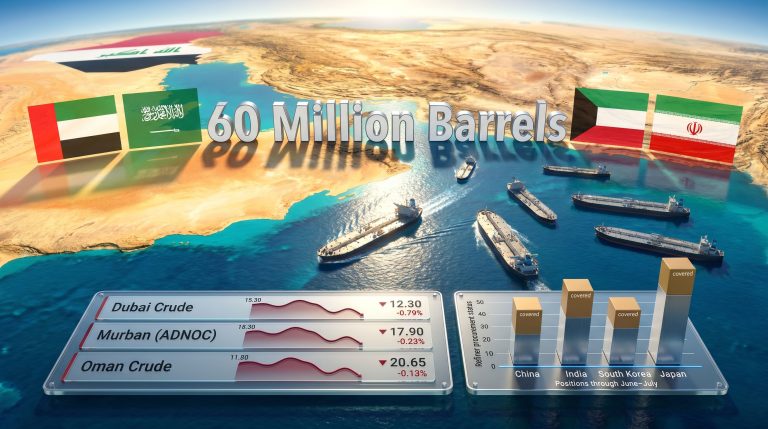
June 26, 2026
The Slow Death of a Half-Century Energy Paradigm
For roughly fifty years, the global oil market operated on a single foundational assumption: that the Persian Gulf was the irreplaceable centre of the world's energy supply. Every refinery configuration, every long-term supply contract, every geopolitical alliance was shaped around this reality. That assumption is now fracturing under the weight of deliberate policy, geographic opportunity, and a once-in-a-generation supply disruption that has accelerated a shift decades in the making.
The U.S. takeover of global energy flows is not a headline-grabbing prediction. It is a measurable, documented process that is reshaping trade routes, rewriting bilateral agreements, and restructuring the leverage that OPEC has exercised over Western economies since the early 1970s. Understanding how this shift is unfolding requires looking beyond the immediate crisis in the Middle East and examining the longer strategic architecture that Washington has been quietly constructing.
When big ASX news breaks, our subscribers know first
When the World's Most Critical Chokepoint Went Dark
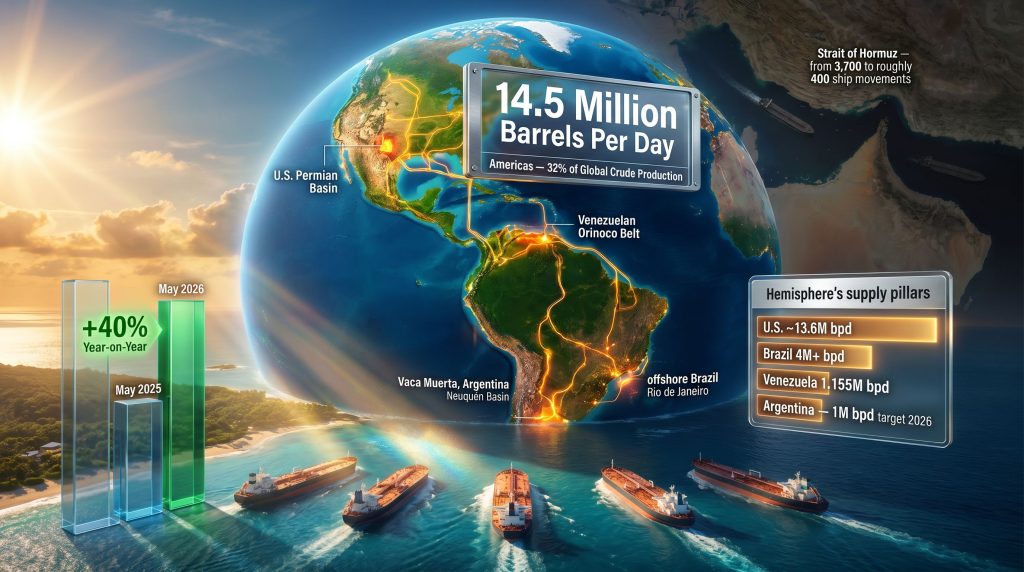
The Strait of Hormuz handles a share of global oil so large that its disruption registers immediately in futures markets, freight rates, and energy security planning in every major importing nation. Between February and May 2026, total ship movements through the strait collapsed by approximately 89%, falling from over 3,700 transits to roughly 400. The trigger was the conflict involving the U.S., Israel, and Iran, which rendered the corridor functionally unusable for a significant portion of this period.
The economic consequences were immediate and severe. VLCC (Very Large Crude Carrier) earnings spiked to approximately $470,000 per day at peak disruption, reflecting the acute shortage of available alternative routing and the scramble among major importers to secure non-Gulf supply. Asian buyers who had built entire refining systems around Gulf crude grades found themselves exposed to a supply vacuum with few short-term substitutes. For a broader context, the crude oil market overview during this period reflects just how severe the pricing dislocation became.
The disruption was not simply a temporary geopolitical shock. For energy planners in Washington, it functioned as a live demonstration of exactly the vulnerability that U.S. strategy had been designed to exploit and ultimately replace.
What many observers underestimate is the duration of the recovery problem. Even as the Strait moves toward normalisation, key production facilities, processing infrastructure, and loading terminals within the conflict zone face recovery timelines measured in months at best, and years in the most severely affected cases. The supply gap is not a tap that can be turned back on overnight.
A Record That Reveals a Structural Shift, Not a Spike
Against this backdrop, dirty tanker shipments originating from the Americas reached an all-time record of 14.5 million barrels per day in May 2026, rising from 13.8 million bpd in April and representing a 40% increase compared to May 2025. These are not figures driven purely by crisis-response opportunism. They reflect the maturation of a supply base that has been systematically developed across multiple jurisdictions over more than a decade.
The Americas now collectively account for approximately 32% of global crude production, with growth trajectories accelerating across four distinct regions simultaneously:
- U.S. Permian Basin producing at record domestic rates near a baseline of 13.6 million bpd for total U.S. output
- Offshore Guyana emerging as a rapid-growth, high-quality producer with significant remaining upside
- Argentina's Vaca Muerta formation on track to reach 1 million bpd in 2026, a 26% increase over 2025 levels
- Brazil's deepwater pre-salt fields exceeding 4 million bpd of crude output, with total hydrocarbon production hitting a new record of 5.3 million boe/d
| Supply Region | Key Growth Driver | Approximate Output |
|---|---|---|
| United States (total) | Permian Basin record output | ~13.6 million bpd |
| Brazil | Petrobras deepwater + supermajor JVs | 4+ million bpd crude |
| Venezuela | Post-Maduro stabilisation | 1.155 million bpd (May 2026) |
| Argentina (Vaca Muerta) | Shale expansion + U.S. investment | On track for 1 million bpd in 2026 |
| Guyana | Rapid upstream development | Emerging top-tier producer |
The Strategic Blueprint: Energy Dominance as Geopolitical Architecture
Why This Is Not Improvisation
The U.S. 2025 National Security Strategy frames global power organisation around a three-sphere model. Under this construct, China holds primary influence across Asia, Russia exercises dominance or significant influence over Europe depending on the trajectory of the Ukraine conflict, and the United States maintains overarching dominance while exerting direct influence across the entire Western Hemisphere. Energy is explicitly identified as the foundational layer of this architecture, because it underpins the economies and therefore the political systems of every nation involved.
National Energy Dominance Council executive director Jarrod Agen articulated the operational vision behind this strategy. He described the Western Hemisphere as now being the leading driver of global energy, with the U.S. positioned at the centre of that system from Alaska to Venezuela, with the explicit objective of routing crude through American refineries before exporting refined products to the rest of the world. This framing is significant: it positions the U.S. not just as a producer but as a refining and export hub, which represents a far more durable form of energy control than production volumes alone. Furthermore, this ambition is well documented in analysis of U.S. energy dominance and whether global markets will ultimately accommodate it.
U.S. Assistant Secretary of State for Economic, Energy, and Business Affairs Caleb Orr has confirmed that Washington operates in close coordination with partners including Ecuador and El Salvador on security frameworks across the hemisphere, describing security as the foundational condition for any productive economic engagement. This security-first framing reflects an understanding that physical control of trade routes and investment environments is as important as production capacity in establishing long-term energy dominance.
Fifty Years of OPEC Conflict Compressed Into a Single Policy Objective
The roots of U.S. hostility toward OPEC's cartel pricing power are deep and well-documented. The 1973 oil embargo, led by Saudi Arabia in response to U.S. support for Israel in the Yom Kippur War, caused oil prices to surge from approximately $3 per barrel to nearly $11 per barrel by the time the embargo ended in March 1974. The economic damage to the Western world was substantial, and the political lesson was seared into American strategic memory: energy dependency on a hostile or unreliable cartel creates permanent national security vulnerability. OPEC's global influence over pricing decisions continues to shape how Washington approaches its long-term supply strategy.
OPEC's attempt to destroy U.S. shale production through the 2014–2016 oil price war failed to achieve its objective. Rather than crushing the nascent American shale industry, the sustained low-price environment accelerated efficiency improvements, driving breakeven costs down and making U.S. producers more resilient than at any point in their history. The 2020 oil price war, again initiated by Saudi Arabia with a similar strategic aim, produced a similar failure and further hardened Washington's resolve.
The legislative dimension of this campaign is the No Oil Producing and Exporting Cartels Act (NOPEC), which would expose sovereign oil producers to antitrust litigation under U.S. law for engaging in coordinated production and pricing behaviour. If enacted, it could expose state-owned producers including Saudi Aramco to legal and financial liability capable of fundamentally altering the commercial and political foundations of OPEC itself.
Venezuela, Argentina, and Brazil: Three Growth Vectors With Distinct Risk Profiles
Venezuela: The World's Largest Reserve Base Begins Its Recovery
Venezuela's geological endowment is extraordinary and frequently underappreciated in Western analysis. The country holds approximately 303 billion barrels of proven crude reserves, representing roughly 17% of the global total and the largest proven reserve base of any nation on earth. Of its 14 supergiant oil fields, 11 retain more than half of their original reserves, meaning that the depletion challenge is primarily a function of infrastructure degradation and capital starvation rather than geological exhaustion.
The majority of Venezuela's reserves are held in the Orinoco Belt in the form of extra-heavy crude oil. This grade is technically demanding and requires specialised upgrading infrastructure to convert into commercially viable lighter products. However, it offers two significant economic advantages: it is relatively cheap to lift at the wellhead, and once upgrading infrastructure is in place, it can generate strong refining margins for processors with the right equipment. U.S. Gulf Coast refineries, many of which were originally configured specifically to handle heavy sour crudes, are among the most technically suited facilities in the world for processing Venezuelan production.
Following the removal of Nicolás Maduro from power on 3 January 2026, U.S. Secretary of State Marco Rubio outlined a structured three-phase recovery framework: political stabilisation and economic crisis prevention, recovery of the economy and the oil sector, and an eventual long-term political transition. The Venezuela oil policy shift under the new U.S. administration has been central to unlocking this production recovery. Output has risen from approximately 940,000 bpd in January to 1.155 million bpd in May 2026. Venezuelan executive vice president Jovanny Martinez has projected output reaching 1.37 million bpd by end-2026.
The recovery runway is substantial. Venezuela produced approximately 3 million bpd as recently as 2008, meaning that even a partial restoration of historical capacity would add volumes equivalent to a mid-sized OPEC member's entire output to Western Hemisphere supply.
Argentina: Vaca Muerta's Emergence as a Global Tier-One Asset
The Vaca Muerta shale formation in Patagonia has been described by industry analysts as a Southern Hemisphere analogue to the Permian Basin, and the comparison is increasingly justified by production data and investment commitments. Washington provided Argentina with a $20 billion financial package in October 2025, explicitly designed to underpin President Javier Milei's pro-market reform programme and create the conditions for large-scale foreign investment in strategic sectors.
The Reciprocal Trade and Investment Agreement signed on 4 February 2026 fast-tracks the deployment of U.S. capital into Argentine energy and critical minerals. Several major U.S. operators have moved aggressively:
- Continental Resources acquired non-operating interests in four Vaca Muerta blocks, accelerating development
- Chevron is positioning the formation as a potential core global portfolio asset
- Baker Hughes secured a significant contract to supply gas compression infrastructure for the San Matias Pipeline, supporting gas transport from the basin
Argentina is projected to reach 1 million bpd of oil production in 2026, representing a 26% increase over 2025 levels. The fiscal risks associated with Argentina's historically volatile economic environment remain a key execution risk. However, the scale of U.S. institutional commitment to Milei's reform agenda represents a qualitatively different form of backing than Argentina has received in previous investment cycles. It is also worth noting that the Saudi strategic shift toward critical minerals and diversification reflects how even traditional Gulf producers are responding to the Americas' growing influence.
Brazil: The Deepwater Giant Approaching Top-Five Global Status
Brazil's production trajectory may be the most structurally secure of the three major Americas growth stories. Record crude output exceeding 4 million bpd, combined with total hydrocarbon production of 5.3 million boe/d, positions the country as a genuine tier-one global producer. Industry forecasts project Brazil becoming a top-five global oil producer by 2030.
The supermajor investment commitment is deep and broad:
- ExxonMobil achieved its first-ever upstream production in Brazil at the Bacalhau deepwater field in October 2025, a facility with capacity of 220,000 bpd
- Chevron was awarded new offshore blocks alongside Petrobras and ExxonMobil in mid-2025
- Baker Hughes and Halliburton provide critical equipment and engineering services supporting Petrobras's $109 billion five-year capital investment programme
Washington's interest in Brazil extends beyond oil volumes. As a founding BRIC nation and one of the largest emerging-market economies in the world, Brazil's alignment with U.S.-led energy infrastructure carries strategic weight that transcends the barrels it produces.
The Repricing of Global Oil Risk
From OPEC Premiums to Hemisphere Stability Discounts
Global oil pricing has embedded a structural Middle East risk premium for decades, reflecting the constant possibility of supply disruption through chokepoint closure, cartel action, or regional conflict. As the Americas supply base matures and deepens, major importing nations gain access to geopolitically stable, U.S.-aligned supply chains that substantially reduce Hormuz-linked exposure. Consequently, the trade war oil markets dynamic adds yet another layer of complexity to how benchmark pricing will evolve going forward.
This dynamic creates the conditions for a gradual but meaningful compression of the risk premium embedded in benchmark crude prices over the medium term. The speed of that compression will depend on how durably the Americas supply base establishes itself relative to Gulf volumes, and whether OPEC retains the discipline and economic capacity to manage its own production in a more competitive supply environment.
| Scenario | OPEC Pricing Power | U.S. Strategic Leverage |
|---|---|---|
| Americas reaches 35%+ of global output | Severely constrained | High: can undercut OPEC price floors |
| Hormuz remains partially disrupted | Moderate | Very High: Americas becomes default supplier |
| Venezuela recovers to 3 million bpd | Minimal | Maximum: OPEC loses significant Asian market share |
| NOPEC legislation enacted | Existential threat | Legislative and economic dominance |
Maritime Geometry and the New Trade Axis
The traditional east-west energy trade axis connecting the Middle East to Asia and Europe is being supplemented by a growing north-south and trans-Atlantic axis originating in the Americas. This shift has implications not just for production economics but for the entire freight market, port infrastructure investment, and the security frameworks governing maritime transit. Indeed, analysis from Hormuz to Houston illustrates precisely how this new axis is being constructed in real time.
The spike in VLCC earnings to approximately $470,000 per day during peak Hormuz disruption illustrated how rapidly supply route transitions can generate extreme freight market volatility. As Americas-origin volumes become a larger structural share of global trade, the investment implications for tanker operators, port infrastructure, and pipeline connectivity within the Western Hemisphere become increasingly significant.
The next major ASX story will hit our subscribers first
Risks That Could Slow the Transition
No structural energy transition unfolds without friction. The Americas pivot faces several meaningful constraints that investors and policymakers should monitor closely:
- Venezuelan political fragility remains the single largest execution risk. A governance vacuum or renewed internal instability could rapidly reverse the production recovery trajectory
- Argentine fiscal volatility is an enduring concern. The country's history of economic crises creates genuine uncertainty about whether long-term investment commitments will survive potential political cycle changes
- Oil price sensitivity affects project economics. Sub-$60 per barrel sustained pricing would place some Vaca Muerta and Brazilian deepwater projects under margin pressure, potentially slowing new capital deployment
- OPEC counter-strategy could involve a sustained production increase designed to suppress prices and slow Americas investment, though this approach has historically failed to dislodge U.S. shale economics over any meaningful time horizon
This article contains forward-looking projections, production forecasts, and geopolitical scenario analysis. These are based on publicly available data and analytical frameworks and should not be construed as investment advice. Energy market conditions are subject to rapid change, and actual outcomes may differ materially from any projections discussed.
Frequently Asked Questions
What does the U.S. takeover of global energy flows actually mean in practical terms?
It refers to the repositioning of the United States and its Western Hemisphere partners as the dominant source of global crude supply, replacing the Middle East as the world's primary export hub. This extends beyond production volumes to encompass refining capacity, export infrastructure, maritime security frameworks, and bilateral investment agreements across the Americas.
How significant is the Americas share of global oil production?
The Americas currently account for approximately 32% of global crude production and that share is growing annually across multiple jurisdictions. The U.S. alone produces around 13.6 million bpd, while Brazil, Venezuela, and Argentina are each on accelerating growth trajectories that will add meaningful volumes over the next several years.
What makes Venezuela's reserve base strategically important despite years of underperformance?
Venezuela holds approximately 303 billion barrels of proven crude reserves, the largest proven reserve base in the world. The production underperformance has been driven by political dysfunction and capital starvation rather than geological depletion. Of its 14 supergiant fields, 11 retain more than half their original reserves, meaning the recovery potential is substantial if political and investment conditions stabilise.
What is the NOPEC Act and how could it reshape the global oil market?
The No Oil Producing and Exporting Cartels Act would expose sovereign oil producers to antitrust litigation under U.S. law for coordinating production and pricing decisions. If enacted, it would fundamentally challenge the legal foundation of OPEC's cartel structure and could expose state-owned producers to significant financial and legal liability, potentially disrupting the commercial and political systems of major Gulf producers.
How does this shift affect benchmark crude pricing over time?
As Americas supply becomes a larger structural share of global trade, the Middle East risk premium historically embedded in Brent and WTI benchmarks faces downward pressure. The pace of that compression depends on the durability of the Americas supply base, OPEC's capacity to manage its own production discipline, and how quickly major Asian importers diversify their supply chains away from Gulf-dependent routes.
Want To Stay Ahead of the Next Major Resource Discovery Driving These Global Energy Shifts?
Discovery Alert's proprietary Discovery IQ model instantly identifies significant ASX mineral discoveries — from the critical minerals fuelling the energy transition to the commodities reshaping Western Hemisphere supply chains — delivering real-time alerts so subscribers can act before the broader market reacts. Explore historic discoveries and the returns they generated, then begin your 14-day free trial to secure your market-leading edge.