June 14, 2026

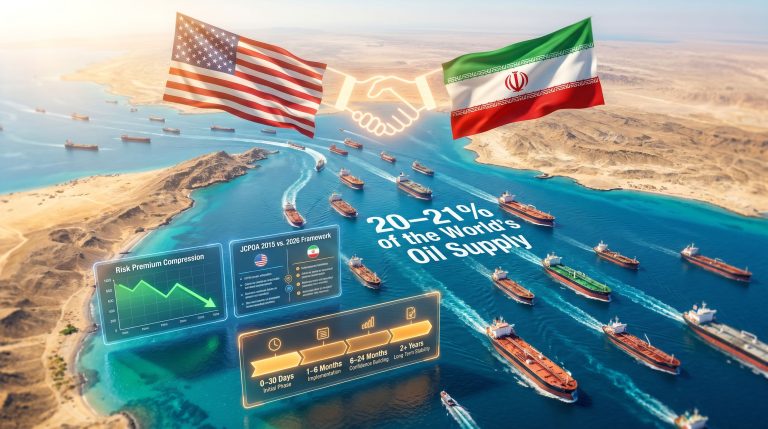
The geopolitical landscape has fundamentally altered energy market dynamics, with US Gulf crude premiums serving as a critical barometer for supply chain vulnerabilities and regional pricing mechanisms. When traditional oil price movements experience disruption through military conflicts and infrastructure attacks, domestic crude grades often command significant premiums that reflect both quality advantages and geographic security benefits. Furthermore, the intricate web of global energy flows depends on a relatively small number of critical transit points, making the entire system susceptible to rapid premium volatility when these chokepoints face disruption.
Understanding Regional Crude Premium Dynamics in Global Supply Disruptions
Regional crude oil markets operate through complex differential pricing structures that reflect both quality specifications and geographic supply-demand imbalances. These premium mechanisms serve as the primary adjustment tool when traditional supply patterns face disruption, creating price signals that incentivise alternative sourcing and production responses.
The Economics of Crude Oil Differential Pricing
Crude oil differential pricing establishes the fundamental architecture through which regional markets respond to supply disruptions. Premium structures reflect multiple variables including API gravity specifications, sulfur content levels, and processing yield advantages that specific crude grades offer to refineries. These quality-based differentials create distinct market segments where imported and domestic grades compete directly based on their technical specifications rather than simple availability metrics.
The Argus Sour Crude Index (ASCI) methodology demonstrates how volume-weighted averaging systems create dynamic benchmarking mechanisms. ASCI incorporates transaction data from multiple deepwater sour crude deals, including Mars, Poseidon, and Southern Green Canyon grades, establishing a reference price that reflects actual market activity rather than theoretical pricing models. This approach ensures that premium structures adjust automatically to reflect changing supply-demand dynamics within specific quality categories.
Key Differential Categories:
- Medium Sour Crudes: 15-25° API gravity, 0.5-2.0% sulfur content
- Heavy Sweet Crudes: 20-30° API gravity, <0.5% sulfur content
- Light Sweet Crudes: >30° API gravity, <0.5% sulfur content
- Heavy Sour Crudes: <20° API gravity, >2.0% sulfur content
Supply Chain Vulnerability Assessment Framework
Critical chokepoint analysis reveals how geographic concentration creates systemic vulnerabilities in global crude oil flows. The Strait of Hormuz represents the most significant single point of failure in the global energy system, handling approximately 21% of global petroleum liquids transit. When this chokepoint experiences disruption, the resulting supply shortfalls create immediate premium adjustments in regions that can provide substitute crude grades.
Infrastructure dependency mapping demonstrates how pipeline networks, terminal facilities, and storage systems create additional vulnerability layers. The concentration of refining capacity in specific geographic regions means that alternative supply sources must not only match quality specifications but also possess the logistical infrastructure to deliver crude to the affected refineries within acceptable timeframes.
Critical Global Chokepoints (Daily Flow Capacity):
- Strait of Hormuz: 21.0 million barrels/day
- Strait of Malacca: 16.0 million barrels/day
- Suez Canal: 5.5 million barrels/day
- Bab al-Mandab: 4.8 million barrels/day
When big ASX news breaks, our subscribers know first
What Drives Extreme Premium Volatility in US Gulf Coast Markets?
Premium volatility in US Gulf crude premiums reflects the intersection of multiple structural factors that create amplified price responses during supply disruptions. Understanding these mechanisms requires examination of both historical precedents and the unique characteristics that distinguish current market conditions from previous crisis periods.
Historical Premium Patterns and Market Memory
The March 2026 premium surge represents the highest recorded levels since April 2020, yet the underlying dynamics differ fundamentally from the COVID-19 crisis. During 2020, premium expansion occurred as a compensatory mechanism for collapsing benchmark prices, with storage constraints threatening negative pricing scenarios. However, the current situation presents inverted dynamics where rising benchmark prices combine with scarcity premiums to create dual-layer economic advantages for domestic producers.
Market memory effects demonstrate how previous disruptions establish behavioural patterns that influence current premium determination. The April 2020 experience, where WTI crude briefly traded negative due to storage constraints, created lasting structural changes in how market participants evaluate storage capacity and production shut-in economics.
Historical Premium Comparison Analysis:
- 2020 Crisis Driver: Demand destruction + storage constraints
- 2026 Crisis Driver: Supply disruption + geopolitical risk
- Premium Persistence: 2020 levels sustained for 4-6 months
- Current Trajectory: Premium expansion alongside benchmark strength
Quality-Based Premium Segmentation Analysis
The differentiated response across crude quality categories reveals how refinery processing economics drive premium determination during supply shortages. Heavy crude processing advantages increase disproportionately during distillate shortage periods because heavy crude conversion yields higher middle distillate percentages compared to light crude processing.
US Gulf Coast Crude Premium Structure (March 2026)
| Crude Grade | Quality Type | Premium Range | Volume-Weighted Average | Pre-Crisis Level |
|---|---|---|---|---|
| Mars | Medium Sour | $3.75-$5.00/bl | $4.25/bl | $1.50/bl |
| Southern Green Canyon | Medium Sour | $2.50-$3.00/bl | $2.75/bl | $0.75/bl |
| Heavy Louisiana Sweet | Heavy Sweet | $4.50-$5.25/bl | $4.85/bl | $1.20/bl |
| Thunder Horse | Light Sweet | $5.00-$5.50/bl | $5.25/bl | $2.00/bl |
The 210 basis-point spread between Thunder Horse ($5.25/bl) and Southern Green Canyon ($2.75/bl) demonstrates how quality differentials create distinct economic value propositions. Thunder Horse commands the highest absolute premium despite experiencing smaller relative gains compared to heavy grades, reflecting light crude's fungibility with global markets and available substitution from other light crude producers.
How Do Middle Eastern Import Dependencies Shape Domestic Pricing?
Middle Eastern crude import patterns create specific vulnerability structures that directly influence domestic pricing mechanisms when supply disruptions occur. The concentration of imports within particular quality categories determines which domestic crude grades experience maximum premium volatility during geopolitical crises.
Import Substitution Economics in Crisis Scenarios
The displacement of 587,000 barrels per day of Middle Eastern crude imports created immediate substitution dynamics favouring domestic production. Of the crude delivered to US Gulf Coast facilities, approximately 95% consisted of medium sour grades that competed directly with domestic Mars, Poseidon, and Southern Green Canyon production. This quality matching explains why medium sour premiums experienced dramatic adjustments while light sweet crude premiums remained relatively stable.
Middle Eastern Import Composition (November 2025-February 2026)
| Source Country | Daily Volume | Primary Grade | Market Share |
|---|---|---|---|
| Saudi Arabia | 213,000 b/d | Arab Light/Medium | 36.3% |
| Iraq | 51,000 b/d | Kirkuk | 8.7% |
| Kuwait & Others | 323,000 b/d | Mixed Medium Sour | 55.0% |
| Total | 587,000 b/d | 95% Medium Sour | 24% of US Imports |
The 65% year-over-year increase in Middle Eastern crude imports during the pre-crisis period reflected both the unwinding of OPEC+ production cuts and lower relative pricing that made imports more economically attractive. Consequently, this growth trajectory established higher baseline dependency levels that amplified the disruption impact when exports ceased.
Geographic Distribution of Supply Risk Exposure
Regional concentration analysis reveals how specific geographic areas face disproportionate exposure to Middle Eastern supply disruptions. US Gulf Coast refineries, which received 277,000 barrels per day of Middle Eastern crude, experienced immediate feedstock gaps that domestic production increases alone could not address within existing geological and infrastructure constraints.
The quality-matching dynamics between imported medium sour grades and domestic Gulf Coast production created direct substitution competition, with approximately 264,000 barrels per day from Saudi Arabia and Iraq representing 45% of all Middle Eastern crude entering US markets.
National Oil Company Pricing Mechanisms
Official Selling Price (OSP) differential structures employed by Saudi Arabia, Iraq, and Kuwait create automatic price adjustment mechanisms tied to ASCI benchmark movements. When ASCI values surge during supply disruptions, the entire Middle Eastern supply stream to the US automatically becomes more expensive for import-competing refineries, reinforcing premium structures established by domestic shortage economics.
This pricing architecture means that National Oil Companies maintain fixed differentials to the ASCI benchmark through monthly reviews, creating a feedback loop where domestic crude premium increases automatically translate to higher import costs for the same quality grades.
Why Are Distillate Markets Amplifying Crude Premium Effects?
Product market dynamics create additional layers of support for crude premium structures, particularly when distillate shortages coincide with crude supply disruptions. The relationship between middle distillate pricing and heavy crude processing advantages explains why certain crude grades experience disproportionate premium expansion during crisis periods.
Product Crack Spread Transmission Mechanisms
Middle distillate supply disruptions create immediate processing advantages for crude grades that yield higher distillate percentages during refining operations. US Gulf crude premiums reached 29-month highs during the March 2026 crisis, while diesel prices experienced substantial gains that directly supported heavy crude premiums through improved processing economics.
The transmission mechanism operates through crack spread expansion, where the differential between crude input costs and refined product output values widens dramatically during product shortages. Refineries processing heavy crude grades gain disproportionate economic advantages because their product yields align with the products experiencing maximum price appreciation.
Distillate Market Impact Metrics:
- Jet Fuel Premium Expansion: 29-month high reached March 4, 2026
- Diesel Strength Index: Strong gains supporting heavy crude economics
- Middle Distillate Supply Gap: Global rally following Hormuz disruption
- Processing Advantage: Heavy crude yields higher distillate percentages
Refinery Yield Optimisation Under Supply Constraints
Refinery complexity distribution determines how effectively different facilities can optimise their operations during concurrent crude and product supply disruptions. Complex refineries with heavy crude processing capabilities gain competitive advantages during distillate shortage periods because they can convert lower-value heavy crude inputs into higher-value middle distillate outputs at superior efficiency rates.
The limitation on refinery optimisation involves crude slate flexibility constraints, where procurement decisions made 30-60 days in advance lock facilities into specific intake specifications. When disruptions occur, refineries cannot immediately adjust their crude diet to optimise for changing crack spread economics, creating temporary inefficiencies that premium adjustments must address.
What Regional Arbitrage Opportunities Are Emerging?
Supply disruptions create temporary arbitrage opportunities as regional price differentials adjust to reflect changing availability and transportation costs. These opportunities often emerge rapidly but require sophisticated logistics and risk management capabilities to execute profitably.
Asia-Pacific Substitution Demand Analysis
Asia-Pacific refiners dependent on Abu Dhabi's light sour Murban crude began evaluating WTI Houston as an alternative source due to Murban's surging prices and escalating vessel insurance difficulties in the Middle East Gulf region. This substitution demand creates trans-Pacific arbitrage opportunities for US crude producers capable of accessing Asian markets.
Indonesian supply security diversification strategies include considering imports of non-Middle Eastern crude to reduce dependency on traditional sources. However, most Indonesian imports from the Middle East consist of Saudi Arabian medium sours, which provides additional structural support to similarly-graded US domestic crude when Middle Eastern volumes become unavailable.
Regional Substitution Flows:
- Murban Displacement: Asian refiners seeking WTI Houston alternatives
- Indonesian Diversification: Evaluating non-Middle Eastern sources
- Quality Matching Requirements: Medium sour specifications remain constant
- Transportation Economics: Pacific route optimisation requirements
Alternative Export Route Economics
Pipeline capacity constraints and terminal vulnerabilities create additional complexity layers for crude export optimisation. The East-West Pipeline utilisation rates determine how effectively Middle Eastern producers can bypass Hormuz disruptions, while terminal facilities in alternative locations face capacity constraints that limit substitution effectiveness.
Fujairah terminal vulnerability assessments reveal how alternative export routes themselves face attack risks that compromise their utility as Hormuz bypasses. This creates multiple layers of geographic risk that compound rather than offset, explaining why premium adjustments often exceed simple supply shortage calculations.
How Do War Risk Premiums Reshape Global Trade Flows?
Insurance market responses to geopolitical conflicts create immediate economic impacts that reshape global trade patterns through differential cost structures. War risk premiums represent direct economic costs that influence routing decisions and supplier selection across the entire crude oil supply chain.
Insurance Market Response Mechanisms
Additional War Risk Premiums (AWRP) escalation patterns demonstrate how insurance markets price geopolitical uncertainty in real-time. Regional rates surged from 0.15-0.2% to approximately 1.0% for Middle Eastern Gulf transit, equivalent to roughly $1.34 million for a 2-million-barrel VLCC. These cost increases make alternative supply sources more economically attractive even when crude prices remain higher.
Regional War Risk Premium Comparison
| Route/Region | Pre-Crisis AWRP | Current AWRP | Equivalent Cost (VLCC) |
|---|---|---|---|
| Strait of Hormuz | 0.15-0.2% | 1.0% | $1.34 million |
| Red Sea | 0.5% | 2.5% | $3.35 million |
| US Gulf Coast | 0.05% | 0.1% | $134,000 |
Force majeure declarations create contractual implications that extend beyond immediate insurance costs. QatarEnergy declared force majeure following production halts, establishing legal frameworks that protect suppliers from contract penalties while shifting supply shortage costs to buyers through higher spot market premiums.
Shipping Route Optimisation Under Conflict Conditions
Route optimisation requires balancing war risk premiums against voyage duration, fuel consumption, and cargo delivery timing. The 94% reduction in Hormuz transit from February 28 to March 1 demonstrates how quickly shipping patterns adjust to insurance availability rather than gradual cost increases.
Physical geography considerations reveal why certain shipping lanes remain vulnerable despite naval protection efforts. Hormuz shipping lanes are 2 nautical miles wide in each direction, with vessels transiting at 10-12 knots and requiring turns at the narrowest point adjacent to Iranian islands. Consequently, these constraints limit the effectiveness of naval escorts while maintaining high vulnerability to multiple attack vectors.
The next major ASX story will hit our subscribers first
What Production Adjustment Mechanisms Are Activating?
Production curtailment decisions reflect both storage capacity limitations and economic optimisation under disrupted market conditions. When export routes become unavailable, producers must balance shut-in economics against storage costs and production restart logistics.
Storage Capacity Constraints and Output Decisions
Iraqi production curtailment analysis demonstrates how limited storage capacity forces rapid production adjustments when export routes close. Iraq produced approximately 4.2 million barrels per day in January 2026, with most production concentrated in southern fields that rely exclusively on Basrah terminal exports through the Hormuz strait for international market access.
The loss of 3.3 million barrels per day of southern Iraqi exports creates immediate storage pressure that necessitates production shut-ins within days rather than weeks. Northern field shutdowns provide additional complexity as the Iraq-Turkey pipeline suspension removes the remaining 220,000 barrels per day export capacity, creating total export dependency on storage-limited domestic consumption.
Production Adjustment Timeline:
- Day 1-3: Storage capacity utilisation increases
- Day 4-7: Voluntary production cuts begin
- Day 8-15: Mandatory shut-ins to prevent storage overflow
- Day 15+: Long-term production optimisation for domestic supply
Alternative Pipeline Utilisation Strategies
East-West Pipeline capacity reallocation demonstrates how existing infrastructure can provide partial relief for export-dependent producers. Saudi Arabia's 7 million barrel per day pipeline capacity to Yanbu on the Red Sea offers substantial export capability, although loading capacity constraints limit throughput optimisation.
Iran's Jask terminal bypass route remains largely untested under high-volume scenarios, creating uncertainty about its effectiveness as a Hormuz alternative. The pipeline's limited operational history means that capacity constraints and technical limitations may emerge only under stressed conditions, reducing its reliability as a primary export route.
How Will Market Structure Evolution Impact Long-term Premiums?
Structural changes in production patterns and infrastructure development create lasting impacts on premium determination mechanisms that extend beyond immediate crisis periods. Understanding these evolutionary trends requires analysis of both supply-side developments and demand-side adaptation strategies.
Offshore Production Growth Implications
US Gulf deepwater expansion projects face accelerated economic evaluation as US Gulf crude premiums improve project break-even calculations. Rising offshore production had been placing downward pressure on Gulf sour crude premiums prior to the March 2026 disruption, indicating that marginal production capacity existed but required higher price incentives for activation.
Infrastructure investment requirements for deepwater development include specialised drilling equipment, subsea production systems, and floating production platforms that require 18-36 month lead times for implementation. This temporal disconnect between price signals and supply responses explains why premium volatility persists longer in offshore-dependent regions compared to onshore production areas.
Production Cost Curve Positioning:
- Deepwater Break-even: $45-65/barrel (project-dependent)
- Premium Enhancement: $3-5/barrel additional revenue
- Total Project Economics: $48-70/barrel effective pricing
- Investment Timeline: 2-3 years from decision to first production
Energy Security Policy Response Framework
Strategic reserve utilisation protocols demonstrate how government intervention mechanisms can influence premium duration and magnitude. The Trump administration's offer of political risk insurance through the Development Finance Corporation represents a direct market intervention designed to restore normal trade flows through insurance market support rather than military escort alone. Additionally, the US‑China trade war dynamics have influenced energy policy decisions that affect premium structures.
Naval escort programme implementation faces substantial logistical challenges that limit effectiveness in narrow waterways. The Merchant Marine Act of 1936 provides legal authority for war risk insurance and reinsurance, but implementation requires coordination between multiple agencies and private sector participants to achieve market impact.
What Investment Implications Emerge from Premium Volatility?
Investment strategy adaptation requires understanding how premium volatility affects both upstream development economics and downstream processing optimisation. Furthermore, the tariff economic implications create additional complexity in international trade considerations. The duration and magnitude of premium adjustments determine which investment categories benefit most from disruption scenarios.
Upstream Development Economics Reassessment
Break-even price recalculations for Gulf Coast projects incorporate both higher baseline crude prices and sustained premium levels into long-term development models. Projects that previously required $60-65/barrel oil prices for economic viability now achieve positive returns at $55-60/barrel due to $3-5/barrel premium enhancements from quality-based market segmentation.
Infrastructure hardening investment priorities shift toward redundancy and security enhancements that reduce vulnerability to geopolitical disruptions. Pipeline network diversification, storage capacity expansion, and alternative transportation route development become higher priority investment categories when premium volatility demonstrates the economic value of supply chain resilience.
Investment Priority Matrix:
- Production Acceleration: Existing field development optimisation
- Infrastructure Redundancy: Alternative pipeline and terminal capacity
- Storage Expansion: Strategic inventory management capabilities
- Processing Flexibility: Refinery crude slate optimisation systems
Trading Strategy Adaptation Requirements
Volatility hedging mechanism evolution reflects how derivative markets adapt to new risk patterns created by geopolitical premium structures. Basis risk management becomes increasingly complex when regional premiums experience sustained volatility that differs from benchmark price movements, requiring specialised hedging instruments that address quality-specific price risks.
Counterparty credit risk assessment requires enhanced evaluation of geographic exposure and supply chain dependencies. Entities with concentrated exposure to disruption-prone regions face higher counterparty risk regardless of their financial strength, necessitating enhanced due diligence and risk management protocols.
Frequently Asked Questions About US Gulf Coast Crude Premiums
How Long Do Geopolitical Premiums Typically Persist?
Historical analysis indicates that geopolitically-driven premiums typically persist for 4-18 months, depending on the underlying conflict resolution timeline and alternative supply source development. The 2003 Iraq War created premium structures that lasted approximately 8 months, while the 2019 Hormuz tensions resulted in 3-4 month premium elevation periods.
Current premium persistence depends on both the military conflict duration and insurance market confidence restoration. Even if physical disruptions resolve quickly, insurance markets often require 30-90 day observation periods before reducing war risk premiums to pre-crisis levels.
Which Crude Grades Benefit Most from Middle Eastern Disruptions?
Medium sour crude grades experience maximum premium benefits due to direct quality competition with Middle Eastern exports. Mars, Poseidon, and Southern Green Canyon crudes compete directly with Arab Light, Arab Medium, and Kirkuk grades, creating immediate substitution demand when Middle Eastern supplies become unavailable.
Heavy sweet crude grades benefit secondarily through distillate processing advantages during periods when middle distillate supply shortages coincide with crude disruptions. Light sweet crude premiums remain relatively stable due to global supply fungibility and alternative sourcing availability.
What Role Do Strategic Reserves Play in Premium Normalisation?
Strategic petroleum reserves can provide temporary supply augmentation but typically cannot sustain long-term premium suppression due to limited release volumes relative to total market size. The US Strategic Petroleum Reserve contains approximately 400 million barrels, representing roughly 20 days of total US crude consumption at maximum release rates.
Reserve releases primarily impact benchmark crude prices rather than regional premiums, since strategic reserve crude may not match the specific quality requirements that create premium structures in the first place. Quality mismatches between strategic reserve inventory and disrupted supply sources can limit reserve effectiveness for premium normalisation.
Strategic Outlook for Regional Energy Market Integration
Long-term market evolution trends indicate increasing integration between regional crude markets and global supply chain resilience mechanisms. The development of alternative transportation routes, expanded storage capacity, and enhanced processing flexibility create structural changes that may reduce future premium volatility while maintaining quality-based differential pricing.
Infrastructure Resilience Investment Priorities
Pipeline network redundancy development focuses on creating alternative routes that bypass traditional chokepoints while maintaining economic efficiency. Cross-regional pipeline projects require substantial capital investment but provide long-term premium volatility reduction through supply source diversification.
Storage capacity expansion economics demonstrate positive returns when premium volatility levels exceed $2-3/barrel on a sustained basis. Strategic storage placement near refining centres reduces logistics costs while providing operational flexibility during supply disruption periods.
Infrastructure Investment Framework:
- Redundancy Value: Premium volatility reduction benefits
- Capacity Optimisation: Storage and throughput expansion
- Security Enhancement: Physical and cyber protection systems
- Integration Efficiency: Cross-regional connectivity improvements
Policy Framework Evolution for Supply Security
International coordination mechanism development requires balancing market intervention capabilities with free trade principles. Emergency response protocol standardisation across allied nations can provide rapid supply reallocation during crisis periods while maintaining competitive market structures during normal operations.
Market intervention threshold establishment involves determining when government action becomes necessary to prevent economic disruption while avoiding moral hazard creation. In addition, the Venezuela oil policy changes demonstrate how political decisions can reshape supply dynamics. Consequently, the broader resource energy exports challenges facing Australia illustrate similar vulnerabilities across global markets. Strategic reserve coordination and insurance market support mechanisms represent policy tools that can address market failures without displacing private sector price discovery mechanisms.
Finally, regional crude oil markets continue adapting to evolving premium structures that reflect both immediate supply disruptions and long-term structural changes in global energy security frameworks.
This analysis is provided for informational purposes and should not be considered investment advice. Commodity markets involve substantial risk, and premium volatility can result in significant losses. Readers should consult qualified financial advisors before making investment decisions based on geopolitical market analysis.
Considering New Ways to Capitalise on Commodity Market Volatility?
Discovery Alert's proprietary Discovery IQ model delivers instant notifications when significant ASX mineral discoveries are announced, helping investors identify actionable opportunities as premium structures shift and new supply sources emerge. With major discoveries historically generating substantial returns, begin your 14-day free trial today to position yourself ahead of market movements and gain the edge you need in volatile commodity markets.