
August 22, 2026
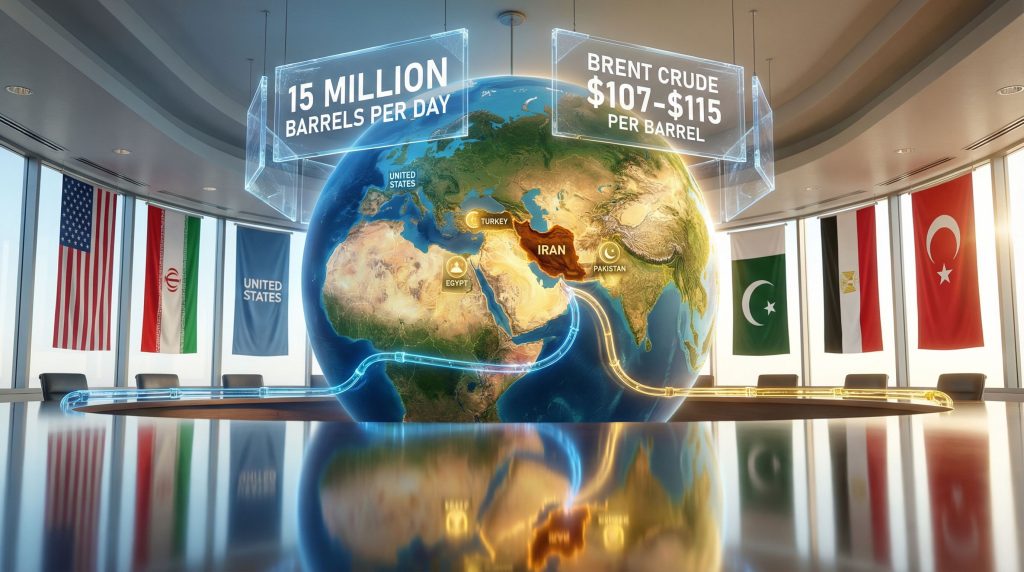
The current diplomatic crisis surrounding the ceasefire proposal between US and Iran demonstrates the evolving complexity of modern international mediation, where traditional bilateral channels have given way to sophisticated trilateral frameworks involving Pakistan, Egypt, and Turkey as primary intermediaries. This multi-track approach represents a significant departure from conventional diplomatic protocols, creating distributed pressure mechanisms that operate independently while maintaining coordinated strategic objectives.
Strategic Framework Analysis of Multi-Track Diplomatic Architecture
The trilateral mediation structure operating in the US-Iran ceasefire proposal negotiations demonstrates sophisticated escalation management through distributed leverage mechanisms. Pakistan's submission of the formal proposal on April 6, 2026, with President Trump establishing a 45-hour deadline until 8:00 PM Eastern Time on April 7, created a compressed timeline that forces rapid decision-making while maintaining face-saving opportunities for all parties.
Each mediating nation brings distinct strategic capabilities that create multiple pressure vectors. Pakistan operates through established military-to-military communication channels and shared regional security concerns that provide credible neutral ground for sensitive negotiations. Turkey's dual-alliance positioning through NATO membership creates leverage with Western partners while maintaining substantial energy and commercial relationships with Middle Eastern actors.
Furthermore, Egypt's control over the Suez Canal and Arab League leadership authority establishes economic interdependence relationships that affect both Washington and regional powers. These dynamics directly impact energy security dynamics across multiple markets simultaneously.
Key Mediator Strategic Assets:
| Mediator | Primary Leverage | Communication Channels | Strategic Value |
|---|---|---|---|
| Pakistan | Nuclear status, regional security | Military-to-military networks | Neutral Islamic state credibility |
| Egypt | Suez Canal control | Arab League leadership | Economic interdependence leverage |
| Turkey | NATO membership | Dual-alliance positioning | East-West bridge authority |
This distributed mediation approach allows different diplomatic pressures to operate independently while maintaining plausible deniability for core negotiators. According to Reuters reporting, Pakistan's direct submission of the proposal to both parties bypassed traditional bilateral channels, creating operational flexibility that avoids the political costs of direct US-Iran engagement.
When big ASX news breaks, our subscribers know first
Operational Components of the Two-Phase Ceasefire Framework
The proposed diplomatic structure operates through a sophisticated escalation management mechanism designed to address immediate tactical concerns while creating negotiating space for comprehensive strategic settlements. Phase One establishes a 45-day operational pause with specific objectives including immediate cessation of kinetic operations and Strait of Hormuz reopening as documented primary goals.
Phase One Immediate Objectives:
• Immediate cessation of all kinetic military operations
• Establishment of direct communication protocols between military commands
• Confidence-building measures implementation across contested zones
• Strait of Hormuz navigation route stabilisation for commercial traffic
The 45-day duration represents a strategic compromise between immediate tactical pauses that Tehran had previously rejected and indefinite timeframes that might satisfy either party's long-term interests. This timeframe provides sufficient duration for demonstrating good faith while avoiding the extended commitments that create domestic political vulnerability for both leadership structures.
Phase Two contemplates permanent conflict termination agreements with comprehensive nuclear programme oversight mechanisms and regional security architecture reconstruction. The framework specifically addresses navigation protocols for the Strait of Hormuz, which typically handles approximately 15 million barrels per day of crude transit, recognising that energy security disruptions create compounding pressure on all negotiating parties.
However, these developments must be considered alongside broader Trump tariff implications that could affect regional economic calculations.
Implementation Evidence:
Real-world compliance indicators emerged even before formal agreement completion. Limited tanker traffic began resuming through the Strait of Hormuz, with a Suezmax-class tanker loaded in Basrah, Iraq successfully crossing the strait around April 6, 2026. This vessel represented the first such movement since the conflict began on February 28, 2026, demonstrating that partial Phase One objectives may occur through unilateral actions before formal diplomatic resolution.
Iran's announcement on April 5, 2026 that Iraq would be exempt from vessel passage restrictions created an operational precedent for selective compliance. Iranian authorities cited Iraq's experience with American occupation and expressed solidarity with Iraq's resistance efforts, indicating that ideological considerations influence implementation flexibility.
Prior to the conflict, Iraq exported up to 3.3 million barrels per day from Basrah terminals via strait passage.
Iranian Strategic Calculus Behind Ceasefire Rejection Patterns
Tehran's documented rejection of previous short-term ceasefire proposals reflects sophisticated strategic calculations that prioritise permanent resolution mechanisms over temporary tactical accommodations. Iranian decision-makers appear concerned that brief operational pauses could allow opponents to regroup militarily while providing insufficient negotiation time to secure meaningful concessions on core strategic issues.
The military asymmetry dynamics create particular vulnerabilities for Iranian forces during cessation periods. US conventional force projection superiority becomes more pronounced during operational pauses when American forces can conduct resupply, reinforcement, and repositioning activities that enhance subsequent campaign capabilities.
Consequently, this creates a strategic timing problem where ceasefire periods benefit the conventionally superior force more than the asymmetric actor.
Iranian Strategic Concerns:
• Military disadvantage accumulation during pause periods favouring US conventional capabilities
• Insufficient negotiation duration for addressing nuclear programme constraints and sanctions relief
• Domestic political costs from Revolutionary Guard criticism of perceived weakness
• Proxy relationship management complications with Hezbollah, Houthis, and PMF units
Recent military incidents compound these strategic calculations. Two US military aircraft were shot down on April 3, 2026 (an F-15 fighter jet and an A-10 attack aircraft), with subsequent rescue operations successfully recovering both aircrew members. These losses create asymmetric bargaining power dynamics where Iranian defensive capabilities demonstrate effectiveness against advanced US military systems, potentially strengthening their negotiating position.
The rescue operations timeline illustrates escalation management complexity. The first aircrew member was recovered on April 3-4, while the second (described as a colonel) was retrieved after a seven-hour manhunt on April 5, 2026. President Trump characterised these operations as occurring behind enemy lines in treacherous Iranian mountain terrain while being hunted by hostile forces, demonstrating how military incidents rapidly compound diplomatic complexity.
Domestic political pressure from economic hardship creates additional constraints on Iranian flexibility. Revolutionary Guard influence over foreign policy decisions and religious authority consultation requirements limit leadership manoeuvrability, making short-term agreements politically risky without guaranteed permanent concessions.
Energy Market Disruption Impact on Negotiation Dynamics
The Strait of Hormuz closure has created unprecedented global energy supply chain disruptions affecting approximately 15 million barrels per day of crude oil transit, fundamentally altering international energy security calculations and providing Iran with substantial leverage while simultaneously creating urgent international pressure for conflict resolution.
Production Capacity Reduction Data:
Crude production from Iraq, Kuwait, Saudi Arabia, and the UAE has fallen by a combined 9.15 million barrels per day versus February 2026 levels according to Argus assessments. Kuwait has declared force majeure on oil exports, indicating that production disruption severity exceeds normal operational challenges and reaches conditions where contract performance becomes legally impossible.
| Producer | Pre-Conflict Output | Current Status | Impact Magnitude |
|---|---|---|---|
| Iraq | 3.3 million b/d via Basrah terminals | Limited exports via alternative routes | Majority volume blocked |
| Kuwait | Major Gulf producer | Force majeure declared | Complete export suspension |
| Saudi Arabia | Leading OPEC+ producer | Significantly curtailed | Major capacity offline |
| UAE | Key Gulf exporter | Reduced production | Substantial limitations |
Market Volatility Indicators:
The Ice front-month June Brent contract traded as low as $107.36/barrel on April 6, 2026 (down 1.5% from April 2 settlement), with earlier session highs reaching $111.89/barrel. The contract had previously reached $115/barrel levels, demonstrating significant price volatility linked to geopolitical risk premiums.
In addition, the Nymex front-month May crude performance showed similar patterns, hitting session highs above $115/barrel before falling below $109/barrel on April 6. The 4% decline in crude futures from session highs upon ceasefire proposal announcement provides quantified evidence of market response to reduced geopolitical risk expectations.
These patterns reflect broader oil price rally drivers affecting global markets during periods of heightened tension.
"The eight core OPEC+ members expressed concern regarding attacks on energy infrastructure, noting that restoring damaged energy assets to full capacity requires substantial time and cost investment, thereby affecting overall supply availability. They emphasised that actions undermining energy supply security, whether infrastructure attacks or maritime route disruption, increase market volatility significantly."
Alternative supply routes operate at maximum capacity limitations, unable to compensate for the blocked 15 million barrel-per-day Strait of Hormuz volume. This creates cascading economic pressure across energy-dependent economies and provides Iran with considerable negotiating leverage through chokepoint control.
OPEC+ Production Response:
Despite the 9.15 million barrel-per-day production loss, the eight core OPEC+ members agreed on April 5-6, 2026 to raise their collective production target by an additional 206,000 barrels per day for May, matching April levels. This decision occurred with full awareness of ongoing conflict disruptions, indicating that geopolitical factors operate within constrained decision spaces rather than preventing production policy entirely.
For instance, this response demonstrates how OPEC market influence operates during crisis periods.
Commercial Traffic Recovery Signals:
Two very large crude carriers (VLCCs) carrying non-Iranian crude left the Mideast Gulf on April 2, 2026, marking the first such shipments since the war began February 28, 2026. This indicates that partial strait reopening has begun through commercial pressure and Iran's selective exemptions, even without formal ceasefire agreement completion.
Military Escalation Risk Management in Diplomatic Calculations
Military escalation operates across multiple interconnected timescales that create compound complexity for diplomatic resolution efforts. Immediate tactical incidents generate rescue operation requirements consuming military resources while creating prisoner-of-war risks that complicate political messaging for both sides throughout negotiation periods.
Infrastructure Attack Timeline:
President Trump established April 7, 2026 at 8:00 PM Eastern Time as the deadline for infrastructure attacks on Iran if demands for Strait of Hormuz passage are not met. This represents an extension from his initially announced April 6 deadline set on April 1, providing additional 1-2 days for negotiation progress. The threat extension pattern suggests political calculation regarding negotiation momentum maintenance.
Escalation Ladder Components:
• Tactical military incidents: Aircraft shootdowns and rescue operations
• Strategic infrastructure threats: Power plants and bridge targeting
• Geopolitical consequences: Strait of Hormuz closure/reopening dynamics
• Nuclear facility proximity constraints: Force limitation considerations for military planning
Trump specifically threatened Power Plant Day, and Bridge Day, all wrapped up in one, in Iran for the April 7 deadline. This targeting scope definition indicates comprehensive infrastructure campaign planning that would affect civilian populations and create humanitarian complications beyond military objectives.
Military Incident Cascade Effects:
The sequence of events from April 3-6, 2026 demonstrates classical escalation cycle progression. Iranian defensive systems shot down US military aircraft, prompting rescue operations that successfully recovered both aircrew members, which then triggered infrastructure attack threats in response. Each military action generates diplomatic reactions that create reciprocal military threat escalation.
Continued Tactical Operations:
Attacks on commercial vessels in the Gulf continued throughout the negotiation period. A vessel was attacked off the UAE on April 5-6, 2026 per UK Maritime Trade Operations (UKMTO) reporting, demonstrating that tactical military operations persist even as strategic diplomatic negotiations progress simultaneously.
The successful aircrew rescues averted what Trump characterised as a high-profile prisoner-of-war crisis, but the immediate aftermath saw escalated infrastructure targeting threats, illustrating how military success can paradoxically increase rather than decrease political pressure for dramatic response measures.
Economic Sanctions Integration with Ceasefire Implementation Mechanisms
Any sustainable ceasefire proposal between US and Iran must address the complex network of economic restrictions that have shaped bilateral relations for decades. Sanctions relief mechanisms could serve as both negotiation incentives and implementation verification tools, though domestic political constraints significantly limit flexibility for both negotiating parties.
Economic Leverage Architecture:
• Energy sector sanctions modification: Potential restoration of Iranian oil export capabilities
• Financial system access restoration: SWIFT network reconnection and banking relationship normalisation
• Regional trade route normalisation: Commercial shipping and logistics infrastructure rehabilitation
• Investment restriction adjustments: Foreign direct investment limitations and technology transfer constraints
The integration of economic incentives with military de-escalation creates verification mechanisms that provide objective measures of compliance commitment from both parties. Iranian willingness to modify Strait of Hormuz restrictions could correlate with American sanctions relief implementation, creating reciprocal confidence-building measures.
However, Congressional oversight requirements and domestic political opposition create substantial limitations on executive branch flexibility regarding sanctions modification. Similarly, Iranian decision-making requires Revolutionary Guard consensus and religious authority approval, constraining leadership manoeuvrability on economic concessions.
These constraints intersect with broader economic uncertainty trends affecting global markets.
The next major ASX story will hit our subscribers first
Probability Assessment Framework for Agreement Success
High Probability Outcomes (60-70% likelihood):
• Extended negotiation timeline beyond current April 7 deadline through additional deadline extensions
• Partial confidence-building measures implementation without comprehensive permanent agreement
• Limited Strait of Hormuz reopening for specific vessel categories or neutral nation traffic
• Continued diplomatic engagement through intermediary channels maintaining negotiation momentum
Medium Probability Outcomes (25-35% likelihood):
• Comprehensive two-phase agreement acceptance with binding implementation timelines
• Full Strait of Hormuz navigation restoration for international commercial traffic
• Broader regional security framework initiation involving multiple Middle Eastern actors
• Coordinated international monitoring mechanisms with third-party verification capabilities
Low Probability Outcomes (5-15% likelihood):
• Complete negotiation breakdown with return to full-scale military operations
• Significant military escalation through infrastructure targeting implementation
• Regional conflict expansion involving additional state and non-state actors
• Long-term energy supply disruption creating sustained global economic impacts
The compressed 45-hour negotiation timeline from April 6-7, 2026 creates artificial urgency that may force suboptimal outcomes rather than comprehensive solutions. Axios reporting characterised the chances of reaching a partial deal within 48 hours as slim, despite official optimism regarding negotiation progress.
Domestic Political Constraint Analysis
Both American and Iranian leadership structures face substantial domestic political pressures that limit negotiating flexibility and create additional complexity for mediating parties. Understanding these internal dynamics becomes crucial for crafting sustainable agreements that can survive domestic political challenges beyond initial implementation periods.
US Political Considerations:
• Congressional oversight requirements: Senate ratification needs for permanent treaty arrangements
• Public opinion dynamics: Polling data regarding foreign military engagement and casualty tolerance
• Alliance management obligations: Coordination requirements with Israeli and Gulf state partners
• Election cycle timing impacts: Political calendar pressures affecting negotiation position flexibility
Iranian Political Constraint Factors:
• Revolutionary Guard institutional influence: Military leadership veto power over foreign policy decisions
• Economic hardship domestic pressure: Public expectations for sanctions relief and economic improvement
• Regional proxy relationship management: Coordination requirements with Hezbollah, Houthis, and PMF units
• Religious authority consultation requirements: Clerical leadership approval processes for major policy shifts
The domestic political timeline misalignment creates additional negotiation complexity. American electoral politics operate on different cycles than Iranian institutional decision-making processes, making long-term commitment credibility challenging for both leadership structures to maintain.
Alternative Diplomatic Framework Possibilities
Should current mediation efforts through Pakistan, Egypt, and Turkey fail to achieve comprehensive resolution, several alternative diplomatic mechanisms could emerge that address immediate concerns without requiring complete political settlement between Washington and Tehran.
Multi-Framework Approach Options:
• UN Security Council intervention: Formal international mediation through established multilateral institutions
• Regional security organisation mediation: Gulf Cooperation Council or Arab League facilitated negotiations
• Economic-first cooperation approach: Energy sector agreements preceding broader political resolution
• Humanitarian corridor establishment: Limited cooperation on civilian protection and emergency response
• Technical working group formation: Operational-level coordination on specific maritime and airspace management
The economic-first approach could prove particularly viable given the substantial commercial pressure from $107-$115 per barrel crude price volatility and 9.15 million barrels per day production capacity loss. Energy market stabilisation provides mutual benefits that might support limited cooperation even without comprehensive political agreement.
Sector-Specific Arrangement Potential:
Maritime navigation protocols could operate independently of broader political relations, similar to Cold War-era technical agreements that maintained operational coordination despite strategic competition. The 15 million barrels per day transit volume through the Strait of Hormuz creates sufficient economic incentive for specialised arrangements focused exclusively on commercial shipping protection.
Regional Security Architecture Transformation Implications
The outcome of current ceasefire proposal between US and Iran negotiations will likely establish precedents for future Middle Eastern conflict resolution mechanisms and could reshape regional power dynamics for decades. Success could demonstrate multi-track diplomacy viability, while failure might accelerate military solution preferences and alliance restructuring throughout the region.
Regional Transformation Scenario Analysis:
• Enhanced regional mediation capacity development: Pakistan, Egypt, and Turkey emerging as permanent Middle Eastern diplomatic facilitators
• Modified US Middle East engagement strategy: Reduced direct bilateral approaches in favour of intermediary-managed relationships
• Iranian regional integration pathway changes: Potential normalisation with Gulf states through economic cooperation frameworks
• Energy security architecture evolution: Alternative supply route development and strategic reserve coordination mechanisms
Nuclear Proliferation Risk Management Frameworks:
The ceasefire negotiations directly impact broader nuclear programme oversight mechanisms and regional proliferation prevention strategies. Successful diplomatic resolution could establish verification protocols that serve as models for other regional actors, while failure might accelerate independent nuclear capability development throughout the Middle East.
The 45-day Phase One timeline provides insufficient duration for comprehensive nuclear facility inspection regime establishment, but could create operational precedents for monitoring cooperation that support longer-term strategic frameworks. International Atomic Energy Agency integration into ceasefire verification mechanisms could bridge immediate conflict resolution with broader nonproliferation objectives.
Long-Term Strategic Stability Considerations:
Regional power balance shifts resulting from successful or failed ceasefire implementation will influence alliance patterns, military procurement decisions, and economic cooperation frameworks for decades. The precedent established by Pakistan, Egypt, and Turkey's mediation success or failure will determine whether multi-track diplomacy becomes a standard regional conflict resolution mechanism or remains an exceptional approach limited to crisis situations.
Disclaimer: This analysis contains forward-looking statements and predictions based on current available information. Geopolitical situations remain highly volatile and actual outcomes may differ substantially from projected scenarios. Energy market impacts and diplomatic resolution timelines involve significant uncertainty that could affect regional stability and economic conditions.
Could This Geopolitical Crisis Be Impacting Your Investment Strategy?
Major geopolitical events like the US-Iran ceasefire negotiations create ripple effects across commodity markets, energy security, and mining exploration activities, particularly affecting small-cap ASX companies with exposure to critical minerals and energy infrastructure. Discovery Alert's proprietary Discovery IQ model delivers instant notifications on significant ASX mineral discoveries, empowering subscribers to identify actionable opportunities that emerge during periods of market volatility and begin your 14-day free trial to position yourself ahead of shifting geopolitical dynamics.