
August 11, 2026
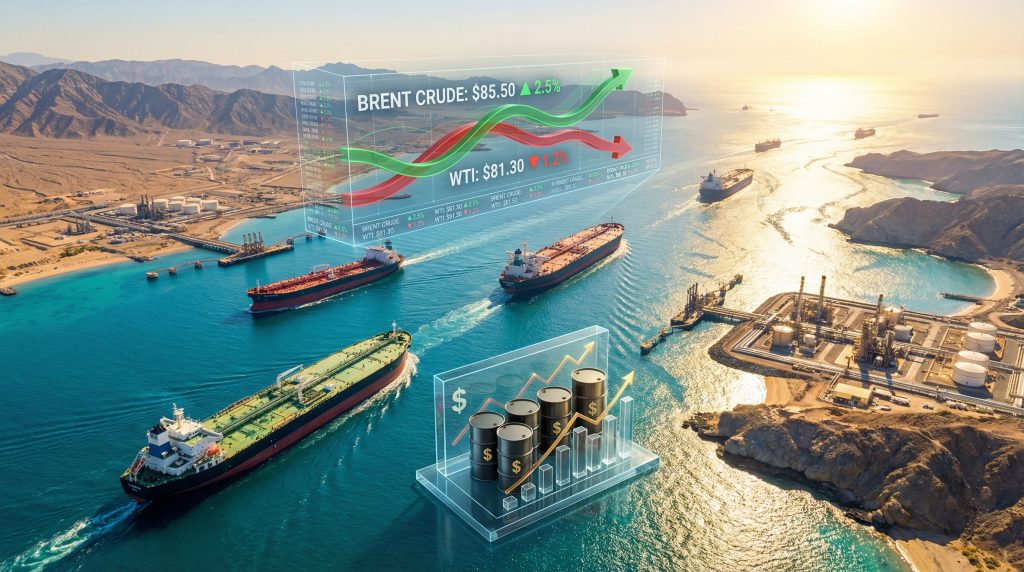
Global energy infrastructure faces unprecedented vulnerability as supply chain disruptions cascade across international markets, with the us iran conflict latest news dominating headlines and market movements worldwide. The interconnected nature of modern commodity systems means that regional tensions can rapidly transform into worldwide economic pressures, affecting everything from transportation costs to manufacturing inputs. Understanding these transmission mechanisms becomes critical for investors, policymakers, and industry participants navigating an increasingly complex geopolitical landscape.
Furthermore, the escalating situation has created immediate ripple effects across multiple sectors, demonstrating how geopolitical tensions translate into measurable economic consequences within hours of conflict developments.
Understanding the Economic Ripple Effects of Regional Instability
Energy markets demonstrate remarkable sensitivity to geopolitical developments, with price volatility patterns revealing the immediate market response to supply uncertainty. WTI crude futures experienced dramatic movements, trading at $70.60 per barrel at 12:30pm ET on March 2, 2026, representing a $3.58 per barrel increase or 5.3% gain from the previous settlement. This followed an earlier surge to $75.33 per barrel on March 1, marking a 12% increase or $8.31 per barrel gain before retracing to approximately $70 per barrel levels.
The mathematical precision of these price movements reflects sophisticated risk assessment mechanisms within futures markets. Traders evaluate probability-weighted scenarios ranging from baseline operations continuation to extended supply route closures and major infrastructure destruction. The initial spike followed by retracement demonstrates classic speculative positioning patterns, where market participants enter positions based on headline risk before adjusting based on physical supply data availability.
Moreover, these market reactions underscore the immediate financial implications that extend far beyond regional boundaries, affecting US economy tariffs and global trade patterns.
The Strategic Importance of Middle Eastern Energy Infrastructure
Critical shipping routes through the Strait of Hormuz expose substantial global energy supply to potential disruption. Saudi Arabia ships approximately 6.5 million barrels per day from ports within the Strait, while Iraq exports approximately 3.3 million barrels per day and the UAE contributes slightly over 1 million barrels per day with similar vulnerability. Combined, these volumes represent approximately 21% of global seaborne crude oil export capacity facing direct transit risk.
Oman represents the only major regional producer without direct Strait exposure, loading instead from Duqm in the Arabian Sea. This geographic diversification provides limited relief given the scale of potentially affected volumes. The concentration of production capacity within a single chokepoint creates systemic vulnerability that extends far beyond regional markets.
Approximately 20 unladen Very Large Crude Carriers (VLCCs) positioned southeast of the Strait of Hormuz face potential booking cancellations if loading date deadlines cannot be met. Each vessel represents committed capital awaiting cargo allocation, with daily operational costs ranging from $30,000 to $50,000 creating compound economic pressure when diversions extend voyage times by 20-25 days for alternative routing around the Cape of Good Hope.
Immediate Market Reactions Across Asset Classes
Insurance market mechanisms collapsed as major Protection and Indemnity (P&I) insurance clubs cancelled war risk coverage for the Mideast Gulf region. War risk premium calculations reached approximately 1% of hull and machinery value, but coverage cancellation eliminates traditional insurance backstops entirely. Without these covers, shipowners face either uninsured transit risk or route abandonment, creating de facto shipping embargoes independent of formal sanctions.
Transportation sector responses demonstrate immediate operational adjustments to changing risk profiles. Maersk suspended all vessel transits through the Strait of Hormuz until further notice, while VLCC rates surged to 6-year highs according to market reports. US Gulf MR (medium-range) tanker rates also increased significantly following Mideast fighting developments.
At least three vessels were struck by explosive projectiles near the Strait of Hormuz since conflict began, with the US-flagged tanker Stena Imperative catching fire in the Port of Bahrain after being hit by two unknown projectiles. These incidents transform theoretical risk into documented operational reality, justifying precautionary shipping company responses.
In addition, the broader implications of such conflicts extend to global trade policies, as demonstrated by Trump's tariff impact on international commerce relationships.
When big ASX news breaks, our subscribers know first
Key Economic Indicators Signalling Market Stress
Multiple commodity sectors experienced simultaneous price surges, revealing interconnected market dynamics under supply shock conditions. Asian LPG prices increased 12% on Iran conflict news, while US propane prices surged on Middle East conflict emergence. Brazilian ethanol demand potential increased due to Middle East conflict reducing ethanol availability, demonstrating cross-commodity substitution effects.
However, the us iran conflict latest news continues to evolve, creating uncertainty about the duration and intensity of these market disruptions.
Energy Market Disruption Patterns
Refined product markets exhibited differentiated responses based on inventory levels and seasonal demand patterns. US Gulf Coast gasoline prices increased due to conflict impacts, while European middle distillates rallied as Strait risks escalated. Asian middle distillate and high-sulfur fuel oil (HSFO) prices rose on supply risk perceptions, with Asian gasoline surging on supply disruption concerns.
The variation in product price responses reflects underlying market structure differences. Gasoline price increases of lesser magnitude than crude reflect inventory adequacy in consuming markets, whereas middle distillate prices spike more dramatically due to seasonal heating demand and inventory tightness. European distillate rallies outpaced gasoline given European winter demand patterns and reduced refinery throughput.
Consequently, these disruptions highlight the importance of diversified energy portfolios and strategic planning in asset allocation strategies during periods of heightened geopolitical risk.
Crude Oil Price Dynamics and Supply Chain Concerns
Front month Nymex WTI contracts demonstrated classic futures market transmission mechanisms for geopolitical risk pricing. The $3.58 per barrel gain (5.3%) reflects immediate market assessment of supply disruption probabilities. April Nymex WTI contracts tracked front-month movements with similar percentage gains, indicating forward curve consistency in risk assessment.
Price formation under geopolitical stress involves complex probability weighting across multiple scenarios. Markets simultaneously price baseline operations continuation likelihood, extended Strait closure creating rerouting costs, and major infrastructure destruction eliminating supply entirely. The 12% trading range over two days (from $70 per barrel floor to $75.33 per barrel peak) demonstrates market elasticity responding to evolving conflict escalation patterns.
Natural Gas and LNG Market Transformations
LNG market disruptions created immediate supply shortfalls with cascading effects across energy systems. QatarEnergy halted LNG production and associated products following drone attacks on operating facilities in Ras Laffan and Mesaieed Industrial City. Qatar's action removes approximately 5-7% of global LNG supply from available markets when Asian LNG demand remains robust for Japanese and South Korean manufacturing requirements.
Dana Gas suspended gas flows from the Khor Mor field, expected to cut electricity generation capacity by 2,500-3,000 megawatts in Iraqi Kurdistan. This upstream energy infrastructure disruption propagated through downstream energy systems, demonstrating how gas supply interruptions immediately affect power generation capacity and industrial operations.
Indian LNG tankers diverted away from the Strait of Hormuz as shipping companies conducted operational security assessments. Asian LNG buyers adopted cautious positioning as the crisis unfolded, with traders assessing no immediate risk to Iranian gas flows despite infrastructure attacks elsewhere in the region.
For instance, these developments have significant implications for LNG supply implications across global markets, potentially reshaping long-term supply agreements and pricing mechanisms.
Industries Facing Greatest Economic Exposure
Energy-intensive industries experienced immediate cost pressures as feedstock availability tightened through refinery shutdowns and supply route disruptions. Manufacturing sectors dependent on petrochemical inputs faced margin compression as raw material costs increased faster than finished product pricing could adjust.
Energy-Intensive Sectors Under Pressure
Refinery operations demonstrated immediate vulnerability to physical infrastructure targeting. Saudi Aramco shut its 550,000 barrels per day Ras Tanura refinery on Saudi Arabia's east coast after being struck by debris from intercepted Iranian drones. Rather than attempting continued operations amid targeting risks, the operator chose complete suspension, removing substantial refined product capacity from global supply.
This facility represents a significant portion of Saudi Arabia's domestic refining capacity while serving export markets across Asia and Europe. The 550,000 barrels daily of refined product capacity removal creates immediate supply tightness in gasoline, diesel, and other petroleum products across multiple regional markets.
Gulf Keystone temporarily shut crude production at its Shaikan field in Iraqi Kurdistan, which produced just over 41,500 barrels per day in 2025. The company implemented precautionary measures to protect staff given the developing regional security environment, adding to cumulative production losses across the region.
Refining Margin Compression and Capacity Utilisation
Refinery operators face binary decision frameworks when infrastructure becomes potential military targets. Continuing operations risks personnel safety and facility damage, while suspension eliminates revenue streams and creates downstream supply shortages. The economic calculus favours precautionary shutdowns when insurance coverage becomes unavailable and replacement costs could exceed annual profits.
Refined product cracks demonstrated compression mechanics as crude oil feedstock availability tightened. Gasoline price increases of lesser magnitude than crude reflect inventory adequacy, while middle distillate prices spike more dramatically due to seasonal demand and inventory constraints. Regional product market interconnections explain why European distillates responded differently than Asian markets.
Agricultural and Fertiliser Market Disruptions
Fertiliser markets experienced immediate feedstock cost transmission effects. NOLA (New Orleans, Louisiana) urea prices surged following conflict developments, reflecting natural gas feedstock supply concerns. Urea production requires natural gas inputs for hydrogen production used in ammonia synthesis, making fertiliser prices sensitive to energy supply disruptions.
The fertiliser market surge demonstrates how energy supply disruptions propagate across industrial chemical supply chains. Middle East conflict creates natural gas supply concerns through both direct LNG disruption and refinery curtailments affecting hydrogen production. These upstream disruptions immediately translate into higher fertiliser costs for agricultural producers globally.
Global Food Security Economic Implications
Agricultural input cost inflation transmission threatens global food price stability as fertiliser supply chains face bottlenecks and pricing pressures. Thailand halted oil exports on conflict developments, while multiple major Middle East urea producers withdrew offers from international markets, creating immediate supply uncertainty for agricultural users.
Chinese domestic ammonia sulphate prices surged on conflict developments, while Australian urea faced supply risks. These disruptions occur during critical planting seasons for major agricultural regions, potentially affecting crop yields and food production capacity for the coming harvest cycle.
Central Bank and Government Economic Response Frameworks
Monetary policy authorities face complex trade-offs between addressing energy price inflation pass-through and maintaining economic growth support. Central banks must assess whether energy price increases represent temporary supply shocks or persistent inflation pressures requiring policy response adjustments.
Monetary Policy Considerations
Energy price pass-through to core inflation creates challenging policy environments for central banks operating under inflation targeting frameworks. President Trump stated the US military campaign against Iran could last 4-5 weeks, while noting capability to extend operations beyond that timeframe. This timeline guidance helps markets assess duration risks for energy price elevations.
The joint US-Israeli military operation commenced February 28, 2026, entering its third day by March 2. Defense Secretary Pete Hegseth characterised military objectives as realistic and scoped to American interests and allied defence, emphasising operational limitations by stating this represents neither Iraq nor endless engagement.
Currency intervention and capital flow management become critical tools as emerging market economies face energy import cost pressures. Reserve adequacy and liquidity provision mechanisms require activation when energy price shocks threaten external balance positions and domestic financial stability.
Furthermore, these developments occur within the broader context of ongoing trade tensions, particularly the US–China trade war which continues to influence global economic dynamics.
Inflation Expectations and Policy Rate Implications
Central bank communication strategies must address market concerns about persistent energy price increases while avoiding premature policy tightening that could amplify economic slowdown risks. The disparity between geopolitical risks and market expectations creates uncertainty about appropriate monetary policy responses.
According to Clayton Seigle, senior fellow at the Center for Strategic and International Studies, "significant disparity exists between geopolitical risks to global energy security and market expectations". Analysis suggests either market participants and the Trump administration possess knowledge indicating less severe consequences than anticipated, or global markets face prospects of crude oil reaching triple-digit price levels in the near term.
Strategic Reserve Utilisation and Emergency Measures
Government response frameworks involve strategic petroleum reserve deployment considerations and emergency economic support measures. International cooperation agreements become critical for coordinating reserve releases and maintaining global supply adequacy during extended supply disruptions.
The Trump administration's assertion that Iran's attacks on Mideast Gulf Arab states prompted regional leaders to offer military support suggests coalition-building efforts to address supply security concerns. Qatar's confirmation that its air force shot down two Iranian fighter jets demonstrates active regional participation in conflict response.
Potential Long-term Economic Scenarios
Market structure evolution pathways depend heavily on conflict duration and infrastructure damage assessment outcomes. Extended disruptions could accelerate alternative supply chain establishment and energy transition investments, while brief interruptions might result in temporary risk premium incorporation without fundamental system changes.
Market Structure Evolution Pathways
Regional trading hub development prospects increase as traditional supply routes face persistent security risks. Alternative supply chain establishment timelines become critical variables determining long-term energy market architecture, with technology adoption patterns potentially accelerating under supply security pressures.
Investment flow redirection patterns toward resilience building could reshape capital allocation priorities across energy infrastructure sectors. Infrastructure investment prioritisation shifts toward supply diversity and security rather than pure cost optimisation, potentially increasing overall system costs but improving reliability metrics.
Energy Market Architecture Redesign
Permanent risk premium incorporation into energy pricing models reflects structural market changes rather than temporary shock absorption. Insurance market modifications and investment decision framework adjustments indicate lasting alterations to how market participants evaluate project risks and required returns.
Geopolitical risk pricing mechanisms evolve to incorporate higher baseline assumptions about supply disruption probabilities. This structural shift affects everything from long-term contract negotiations to infrastructure investment economics and strategic planning horizons across energy-intensive industries.
Global Economic Rebalancing Implications
Trade pattern restructuring opportunities emerge as traditional supply relationships face persistent uncertainty. Regional economic bloc strengthening accelerates when energy security considerations outweigh pure economic efficiency metrics in policy decision-making frameworks.
Supply chain regionalisation trends gain momentum as companies prioritise supply security over cost minimisation. Comparative advantage shifts occur when transportation costs and insurance premiums alter the relative economics of different production locations and trade routes.
The next major ASX story will hit our subscribers first
Economic Outlook and Strategic Considerations
Risk management framework development becomes essential for corporations operating in energy-intensive sectors or with Middle Eastern exposure. Supply chain stress testing methodologies must incorporate extended disruption scenarios and alternative sourcing strategies to maintain operational continuity.
The us iran conflict latest news continues to evolve rapidly, with live updates from major news organisations providing real-time coverage of developments across the region. Additionally, comprehensive analysis from Reuters offers detailed insights into the broader geopolitical implications.
Corporate Strategy Adaptation Requirements
Financial hedging strategy optimisation involves reassessing commodity price exposure and duration assumptions given elevated volatility expectations. Operational flexibility enhancement priorities include maintaining higher inventory levels and developing relationships with alternative suppliers across different geographic regions.
Companies must evaluate whether current just-in-time inventory models remain appropriate given demonstrated supply chain vulnerabilities. The economic benefits of inventory minimisation must be weighed against the costs of production stoppages when supply disruptions exceed normal buffering capacity.
Investment Portfolio Rebalancing Approaches
Asset allocation adjustment considerations include increased weighting toward sectors benefiting from energy price increases and supply chain disruptions. Commodity exposure optimisation becomes critical for portfolios seeking to hedge against inflation risks from persistent energy price elevation.
Currency exposure management techniques gain importance as energy-importing economies face balance of payments pressures from higher import costs. Geographic diversification benefits extend beyond traditional risk reduction to include supply chain resilience and geopolitical risk distribution across different regional exposures.
However, defensive positioning strategies must balance protection against downside economic risks with participation in sectors benefiting from supply chain restructuring and alternative energy infrastructure development. The timing of sector rotation decisions becomes critical as markets transition from immediate shock response to longer-term structural adaptation patterns.
In conclusion, the current crisis demonstrates how rapidly geopolitical events can transform global economic conditions, requiring adaptive strategies across all sectors of the economy.
This analysis is based on market data and developments as of March 2026. Energy markets remain highly volatile during geopolitical conflicts, and investors should conduct thorough due diligence before making investment decisions. Past performance and current market conditions do not guarantee future results.
Ready to Navigate Geopolitical Market Volatility?
Discovery Alert's proprietary Discovery IQ model delivers real-time alerts on significant ASX mineral discoveries, instantly empowering subscribers to identify actionable opportunities that can emerge during market volatility and supply chain disruptions. Understanding how major mineral discoveries can lead to substantial market returns becomes crucial during uncertain times – explore Discovery Alert's dedicated discoveries page and begin your 14-day free trial today to position yourself ahead of the market.