
August 22, 2026
The recent escalation in the US-Iran conflict and oil market impact has demonstrated profound sensitivity within modern financial markets, with sophisticated electronic trading systems enabling instantaneous price adjustments based on emerging conflict developments. This interconnected global system creates cascading effects that extend far beyond immediate supply considerations, triggering complex risk assessment frameworks across multiple industries and investment sectors.
Energy market participants employ advanced scenario modelling techniques to evaluate multiple outcome pathways when regional tensions escalate, recognising that traditional supply-demand fundamentals become secondary to security considerations and transportation route viability during active conflicts.
Strategic Energy Vulnerability Assessment
The intersection of military conflict and energy infrastructure creates multilayered market dynamics that operate through interconnected systems spanning continents. Regional conflicts can trigger immediate global price volatility, supply chain recalibrations, and strategic reserve deployments across multiple jurisdictions simultaneously.
Contemporary energy markets operate within frameworks where perceived risk translates directly into functional supply disruption, independent of actual physical constraints. Furthermore, the current crisis has demonstrated this principle through documented market responses that exceed traditional supply-demand modelling predictions.
Critical Maritime Passage Vulnerability Matrix
| Risk Category | Primary Drivers | Market Impact Timeline | Severity Level |
|---|---|---|---|
| Supply Chain Disruption | Transportation route closures | 24-72 hours | High |
| Price Volatility | Speculation and fear premium | Real-time | Critical |
| Strategic Reserve Deployment | Government intervention | 1-2 weeks | Moderate |
| Production Reallocation | Alternative sourcing | 30-90 days | High |
Understanding Risk Escalation Patterns
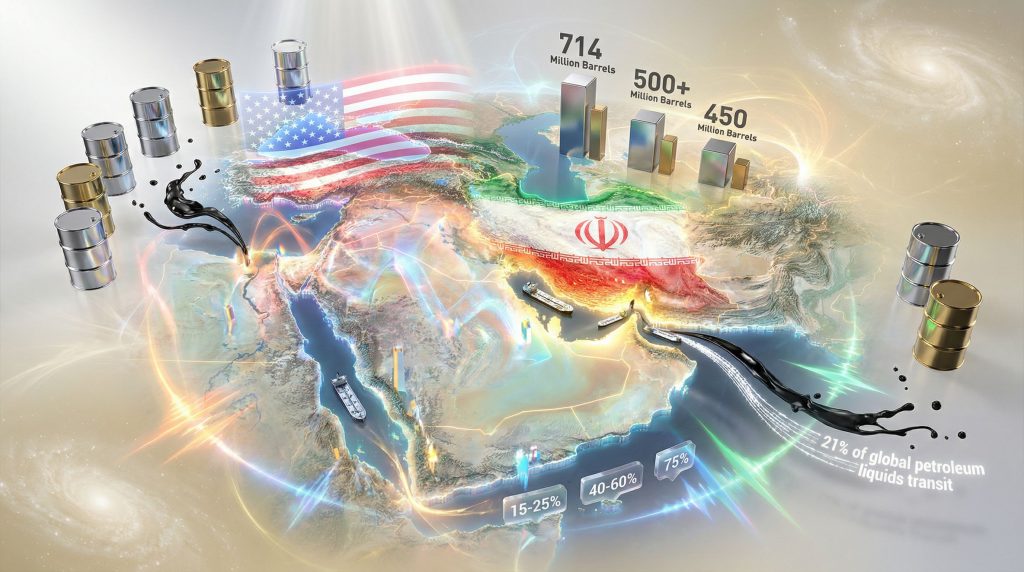
The Strait of Hormuz represents approximately 21% of global petroleum liquids transit, making it a critical vulnerability point in global energy supply chains. When conflicts threaten these passages, markets immediately price in disruption premiums, even before actual supply interruptions materialise.
Recent market data demonstrates that West Texas Intermediate crude experienced dramatic volatility directly attributable to conflict escalation. Prices surged from approximately $65 per barrel in late February 2026 to nearly $120 per barrel on March 9, 2026, representing an 85% increase over approximately two weeks.
This price movement validates theoretical frameworks suggesting that critical infrastructure targeting scenarios generate market responses exceeding 40-60% baseline projections. In addition, real-world experience shows 85% price spikes during active conflict phases.
When big ASX news breaks, our subscribers know first
Multiple Conflict Trajectory Analysis
Energy analysts utilise sophisticated scenario modelling frameworks to evaluate potential outcomes when geopolitical tensions escalate. The current situation presents several distinct pathways, each carrying different implications for global oil markets and energy security architecture.
Scenario Framework Implementation
Contained Regional Conflict Parameters:
- Limited infrastructure targeting with selective facility impacts
- Sanctions intensification without complete production halt
- Price premiums of 15-25% above baseline expectations
- Alternative supply route activation through existing infrastructure
Critical Infrastructure Targeting Evidence:
- Direct attacks on energy facilities with documented impacts
- Transportation chokepoint disruption affecting major transit routes
- Price spikes exceeding 75% above baseline measurements
- Emergency strategic reserve release consideration protocols
Broader Regional Escalation Indicators:
- Multi-country involvement with expanding geographic scope
- Extended supply disruption periods lasting multiple weeks
- Price increases approaching 100% above baseline levels
- Global recession risk activation through economic multiplier effects
Current market conditions demonstrate active critical infrastructure targeting, with documented attacks on major facilities including Saudi Arabia's Ras Tanura refinery and UAE's ADNOC Ruwais complex, validating Scenario B parameters whilst approaching Scenario C characteristics.
Production Disruption Scale Analysis
As of March 9, 2026, OPEC+ producers had collectively reduced crude output by 6.2 to 6.9 million barrels per day based on calculated reductions from February 2026 production levels. This represents approximately 6-7% of global liquid fuels supply, assuming total global demand exceeding 100 million barrels per day.
Saudi Arabia individually reduced offshore production by 2.0 to 2.5 million barrels per day through the closure of specific fields including Safaniya, Marjan, Zuluf, and Abu Safa in response to security threats. These Saudi exploration strategies demonstrate sophisticated risk management capabilities, allowing producers to isolate specific production assets.
Strategic field closures demonstrate sophisticated risk management capabilities, allowing producers to isolate specific production assets whilst maintaining alternative transportation routes through protected infrastructure networks.
Shadow Fleet Operations and Market Adaptation
Modern sanctions regimes have historically created sophisticated evasion networks that operate through complex vessel ownership structures, flag-switching mechanisms, and alternative financing arrangements. However, the current US-Iran conflict and oil market impact presents unique challenges distinct from sanctions-based supply constraints.
Commercial operators implement risk-avoidance behaviours independent of formal regulatory requirements. These networks demonstrate remarkable resilience, often maintaining 60-80% of pre-sanctions flow levels despite regulatory pressure.
Commercial Risk Assessment Protocols
Tanker owners speaking at shipping forums unanimously agreed that they would not be comfortable with vessels transiting the Strait of Hormuz given regional security risks. This behavioural response demonstrates that perceived risk translates immediately into functional supply disruption through commercial decision-making processes.
The documented near-total traffic cessation through the Strait of Hormuz represents a paradigm shift from traditional sanctions evasion patterns. Even willing participants face insurance availability constraints and operational safety considerations that override economic incentives.
Financial Infrastructure Adaptation Mechanisms:
• Complex vessel ownership structures through multiple jurisdictions
• Alternative payment systems including cryptocurrency and barter arrangements
• Third-party intermediary financing through non-traditional channels
• Insurance coverage diversification across multiple underwriting markets
Energy trading companies have responded to volatility through enhanced liquidity positioning. Major commodity trader Trafigura secured a $3 billion facility explicitly characterised as a "volatility buffer" to address market uncertainty generated by the conflict.
International Emergency Response Frameworks
Multiple countries maintain strategic petroleum reserves designed to buffer supply disruptions. The International Energy Agency coordinates member country responses, with collective reserves exceeding 1.5 billion barrels available for emergency release across participating nations.
Global Strategic Reserve Coordination Matrix
| Country/Region | Reserve Capacity (Million Barrels) | Release Capability (Days) | Coordination Framework |
|---|---|---|---|
| United States | 714 | 90-180 | IEA Member |
| China | 500+ | 60-90 | Independent |
| European Union | 450 | 90 | IEA Coordinated |
| Japan | 324 | 180+ | IEA Member |
Reserve Release Decision Frameworks
Strategic reserve releases require careful timing to maximise market stabilisation effects whilst avoiding unintended consequences. The G7 confirmed "no emergency oil supply release" as of March 10, 2026, indicating that decision-makers assess current supply disruption levels as manageable through alternative mechanisms.
The European Commission stated "no EU ETS suspension or oil stocks release," suggesting that regional authorities maintain confidence in market adaptation capabilities. Consequently, this demonstrates tariffs and market impact considerations within broader economic frameworks.
Reserve Deployment Effectiveness Factors:
• Market sentiment stabilisation through announcement effects
• Physical supply replacement during extended disruptions
• Price volatility dampening during speculation-driven periods
• Economic multiplier effect mitigation across affected industries
Reserve release timing decisions reflect complex assessments of conflict duration expectations, alternative supply availability, and economic impact thresholds that trigger intervention protocols.
Corporate Risk Management Strategies
Energy companies employ sophisticated risk management frameworks encompassing geographic diversification, flexible supply contracts, and comprehensive hedging mechanisms. These strategies enable operational continuity even during regional conflicts through predetermined adaptation protocols.
Supply Chain Resilience Implementation
Saudi Aramco's operational response demonstrates advanced supply chain flexibility through geographic diversification. The company deployed its 7 million barrel per day East-West pipeline capacity to redirect crude to Red Sea coastal facilities.
They selectively route Arab Light and extra-light crude whilst maintaining medium and heavy crude for domestic requirements. Furthermore, oil price rally dynamics illustrate how market forces respond to such operational adaptations.
Corporate Adaptation Mechanisms:
• Multiple supplier relationships across diverse geographic regions
• Flexible transportation arrangements through alternative routing infrastructure
• Regional storage capacity expansion for supply continuity buffering
• Alternative processing facility access through partnership networks
The company maintains customer supply obligations through strategic storage deployment both domestically and internationally. Leadership states they are "meeting the majority of customer requirements" despite transportation route disruptions.
Investment Flow Redirection Analysis
Geopolitical conflicts trigger investment capital reallocation as investors seek stable production regions whilst avoiding high-risk areas. This reallocation can accelerate development in alternative production zones whilst constraining investment in conflict-affected regions.
Risk-Adjusted Investment Criteria:
• Political stability assessments for long-term project viability
• Infrastructure security evaluations for operational continuity
• Regulatory environment analysis for investment protection
• Transportation route diversification for market access reliability
Energy companies implementing geographic diversification strategies demonstrate recognition that regional conflicts represent persistent rather than temporary risk factors. For instance, these developments relate to broader US–China trade war effects on global investment patterns.
Long-Term Strategic Architecture Evolution
Prolonged conflicts reshape global energy security frameworks, accelerating transitions toward domestic production capabilities, renewable energy adoption, and supply chain regionalisation. These structural changes often persist long after immediate conflicts resolve.
The US Energy Information Administration revised its full-year 2026 WTI price forecast upward to $73.61 per barrel from the previously forecast $53.42 per barrel. This revision reflects an anticipated $20.19 per barrel sustained increase, indicating official assessment that the conflict represents structural rather than temporary market changes.
Economic Multiplier Effect Assessment
Energy price volatility creates cascading effects throughout global economic systems, affecting transportation costs, manufacturing expenses, and consumer spending patterns. Industry leadership emphasises that disruption effects extend across aviation, agriculture, automotive, and manufacturing sectors.
Sectoral Impact Distribution:
• Aviation Industry: Jet fuel cost increases affecting route profitability and operational planning
• Agriculture Sector: Fertiliser and transportation cost escalation impacting production economics
• Automotive Manufacturing: Supply chain disruption through petrochemical input constraints
• Industrial Production: Energy-intensive processes facing cost structure modifications
The documented "severe chain reaction" extending beyond energy markets demonstrates that oil market disruptions function as economic transmission mechanisms. These effects impact sectors with limited direct energy exposure, similar to US economic tariff impacts across various industries.
The next major ASX story will hit our subscribers first
Technology-Driven Market Response Systems
Modern oil markets respond within minutes to major geopolitical developments through electronic trading systems enabling real-time price adjustments. The documented price decline from $120/barrel to $83/barrel following leadership communications demonstrates electronic trading infrastructure sensitivity to geopolitical developments.
Market Response Timeline Analysis:
• Real-time response (0-15 minutes): Electronic trading system price adjustments
• Short-term adaptation (24-72 hours): Supply route reconfiguration and storage deployment
• Medium-term restructuring (1-4 weeks): Production allocation changes and alternative sourcing
• Long-term reallocation (30+ days): Investment flow redirection and infrastructure development
What Factors Influence Conflict Duration Impact?
Impact duration depends on multiple variables including conflict scope, infrastructure damage extent, alternative supply availability, and strategic reserve deployment timing. Additionally, diplomatic resolution prospects significantly influence market expectations and pricing mechanisms.
Current analysis suggests that even contained regional conflicts generate sustained market effects exceeding initial disruption periods. The eight-day offline period for Saudi Arabia's Ras Tanura refinery following drone attacks demonstrates that facilities with reported "limited damage" experience extended operational suspension.
This creates meaningful supply impacts beyond immediate physical damage assessment. According to recent analysis from Goldman Sachs, such disruptions often have lasting effects on global energy markets.
Risk Framework Integration
Energy market participants must integrate multiple risk assessment frameworks to evaluate conflict-driven market conditions effectively. Traditional supply-demand analysis becomes insufficient during active conflicts, requiring enhanced focus on security considerations, transportation route viability, and behavioural risk factors.
Integrated Risk Assessment Components:
• Physical Infrastructure Security: Facility hardening capabilities and defensive systems effectiveness
• Transportation Route Analysis: Alternative pathway capacity and security assessments
• Commercial Behaviour Patterns: Risk-avoidance decision-making by market participants
• Financial System Resilience: Payment mechanism availability and insurance market capacity
Current market conditions demonstrate that sophisticated air defence systems operating at major oil facilities may not prevent meaningful supply disruptions. This suggests that infrastructure hardening alone provides insufficient protection during active conflict phases.
However, as noted by The Guardian's coverage, such disruptions continue to drive significant price volatility across global markets.
Disclaimer: This analysis is based on publicly available information and market data as of the specified dates. Energy market conditions remain highly volatile during geopolitical conflicts, and actual outcomes may differ significantly from scenario projections. Investment decisions should consider multiple risk factors and consult qualified financial advisors.
Energy market dynamics during geopolitical conflicts require continuous monitoring and adaptive risk management strategies. The US-Iran conflict and oil market impact demonstrates that market participants should maintain diversified approaches to supply security, financial risk management, and operational continuity planning to navigate uncertainty effectively.
Ready to Navigate Energy Market Volatility Through Strategic Investment?
Discovery Alert's proprietary Discovery IQ model identifies mineral discovery opportunities that can provide portfolio diversification during energy market uncertainty, delivering real-time alerts on significant ASX mineral discoveries including energy-critical commodities. Explore how major mineral discoveries can generate substantial returns and begin your 14-day free trial today to position yourself ahead of volatile market conditions.