August 5, 2026
The Middle East's most critical maritime chokepoint faces unprecedented threats as escalating tensions between Washington and Tehran create potential for widespread energy supply disruptions. The US-Iran conflict and strait of Hormuz situation represents more than regional instability—it embodies the fragility of global energy infrastructure dependent on narrow waterways. This interconnected vulnerability demonstrates how geopolitical flashpoints can rapidly transform into worldwide economic crises affecting everything from fuel prices to industrial production.
Understanding Critical Energy Transit Vulnerabilities
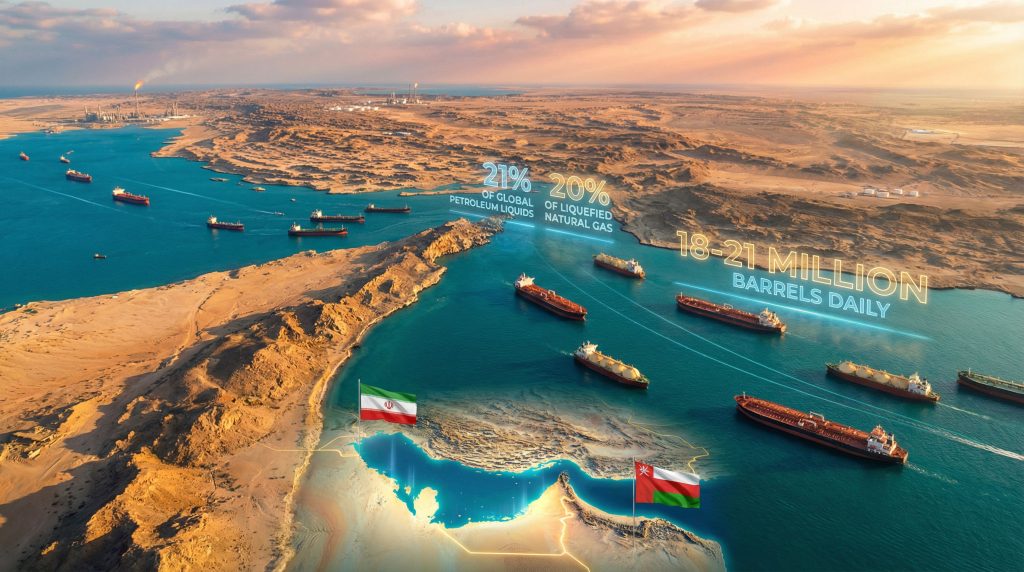
The Persian Gulf waterway represents far more than a shipping lane, functioning as the world's most critical energy artery. This narrow passage channels approximately 21% of global petroleum liquids through its confined waters, creating a single point of failure that could paralyse global energy systems within days.
Recent disruptions have demonstrated the fragility of this system. According to market reports from March 2026, vessel traffic through this key passage for crude, petrochemicals, fertilisers and other commodities came to a virtual halt when regional conflicts escalated. The Joint Maritime Information Center elevated the threat level to "critical" status, directly halting commercial transit operations.
Geographic Constraints Create Systemic Risk
The waterway's 21-mile width at its narrowest point creates unique vulnerabilities that distinguish it from other global shipping routes. Unlike alternative passages with multiple routing options, this chokepoint lacks sufficient backup infrastructure to maintain global energy flows.
Key vulnerability metrics include:
- Daily oil transit volume: 18-21 million barrels
- Global oil trade percentage: 21%
- Alternative pipeline capacity: Less than 6 million barrels per day combined
- Strategic replacement gap: 75% of current flow irreplaceable
When big ASX news breaks, our subscribers know first
Why Alternative Routes Cannot Replace Critical Transit Capacity
The mathematical reality of energy infrastructure reveals a stark imbalance between primary transit routes and available alternatives. Saudi Arabia's East-West Pipeline provides the largest alternative capacity at 5 million barrels per day, while Iran's Goreh-Jask pipeline handles under 300,000 barrels daily.
| Infrastructure | Capacity | Operational Status |
|---|---|---|
| Primary Strait Transit | 18-21 million bbl/day | Currently disrupted |
| Saudi East-West Pipeline | 5 million bbl/day | Operational |
| Iran Goreh-Jask Pipeline | <300,000 bbl/day | Limited capacity |
| Total Alternative Capacity | <6 million bbl/day | Insufficient replacement |
Strategic Petroleum Reserve Considerations
The US Strategic Petroleum Reserve held 415.4 million barrels as of March 2026, stored across four sites in Texas and Louisiana. However, policy tensions exist between immediate market relief and long-term strategic reserve preservation. US Secretary of State Marco Rubio indicated that the administration had contingency plans in place, stating that treasury and energy secretaries would begin rolling out mitigation measures, though strategic drawdowns were not being considered at that time.
Geopolitical Tensions and Maritime Security Risks
Regional military capabilities have evolved to exploit the geographic constraints of narrow waterways. Iran's naval strategy deliberately targets the strait's limitations through integrated coastal defence systems, fast attack craft operations, and drone coordination networks.
Documented Military Capabilities
Intelligence assessments reveal sophisticated asymmetric warfare capabilities:
Coastal Defence Systems:
- Shore-based anti-ship missiles with 200+ kilometre range
- Integrated radar networks across strategic islands
- Advanced targeting systems for confined-space operations
Maritime Denial Operations:
- Sea mine deployment in shallow water zones
- Fast attack craft designed for harassment tactics
- Submarine operations optimised for narrow passages
Recent military actions have demonstrated these capabilities in practice. US Central Command reported destroying 11 Iranian vessels in the Gulf of Oman during March 2026, including the Iranian drone carrier Shahid Bagheri. Despite these losses, Iranian Revolutionary Guard Corps advisors declared intentions to target any ship trying to pass through the waterway.
Insurance Market Response to Escalating Risks
Maritime insurance markets provide real-time risk assessments through premium adjustments. War risk premiums surged to approximately 1% of hull and machinery value during the March 2026 escalation, compared to peaceful operation rates of 0.05-0.10%.
Vessel insurers cancelled war risk coverage entirely for strait transits, forcing shipping companies to assume direct financial exposure or avoid the route altogether. This insurance market behaviour often serves as a leading indicator of operational risk, as insurers typically withdraw coverage before physical attacks intensify.
Economic Impact Cascades Across Global Markets
Energy price volatility during the US-Iran conflict and strait of Hormuz crisis demonstrated how quickly regional disruptions translate into global economic impacts. WTI crude futures experienced 5-6% daily swings, while Asian LPG prices rose 12% within the initial conflict period.
Furthermore, the oil price rally reflects broader market concerns about supply security. Similarly, US economy tariffs considerations add complexity to energy market dynamics during periods of geopolitical tension.
Transportation Cost Escalation
Shipping markets responded immediately to increased risk perceptions:
- Americas VLCC tanker rates reached 6-year highs
- US Gulf MR tanker rates jumped following regional fighting
- Alternative routing added 2-3 weeks to delivery schedules
- War risk insurance premiums reached 1% of vessel value
The US-flagged tanker Stena Imperative exemplified these risks when it caught fire at Bahrain port after being struck by projectiles, demonstrating that even vessels in supposedly secure harbour facilities faced exposure.
Secondary Economic Effects
Manufacturing sectors dependent on petrochemical feedstocks faced immediate supply chain disruptions. European middle distillates rallied as regional risks increased, while US Gulf coast gasoline prices rose in anticipation of supply constraints.
Energy-intensive industries began implementing contingency protocols:
- Petrochemical producers evaluated feedstock allocation priorities
- Fertiliser manufacturers faced potential supply shortages
- Industrial fuel users prepared for allocation scenarios
- Power generation facilities assessed alternative fuel options
In addition, tariffs impact on markets amplifies these effects, creating compounding pressure on global supply chains. The interconnected nature of these disruptions demonstrates how maritime security issues can trigger broader economic instability.
Regional Strategic Responses and Adaptation Mechanisms
Gulf state economies dependent on energy exports implemented immediate risk mitigation strategies. Qatar announced the halt of all LNG production following drone strikes at the Ras Laffan facility, while Saudi Aramco shut its 550,000 barrel-per-day Ras Tanura refinery after drone debris impacts.
International Coordination Frameworks
The Baltic and International Maritime Council (BIMCO) assessed that US military operations would eventually establish sufficient security to enable commercial shipping resumption. This reflected broader expectations that international naval cooperation could restore operational stability to critical shipping lanes.
Military officials outlined strategic objectives focused on eliminating long-range missile capabilities rather than pursuing broader conflict escalation. US Defense Secretary Pete Hegseth emphasised realistic, scoped ambitions aligned with alliance defence rather than regime change objectives.
However, concerns about oil price stagnation during prolonged conflicts could undermine regional economic stability, particularly for oil-dependent economies.
Historical Context and Precedent Analysis
The 1980-1988 Tanker War provides crucial historical context for understanding how sustained maritime conflicts affect global energy systems. During that conflict, shipping volumes decreased by 40-60% during peak tension periods, ultimately triggering international naval intervention through Operation Earnest Will.
Modern Technology Amplifiers
Contemporary threats have evolved significantly beyond 1980s capabilities:
Enhanced Offensive Capabilities:
- Precision-guided munitions with improved targeting accuracy
- Electronic warfare systems disrupting navigation equipment
- Social media amplification of psychological warfare effects
- Drone swarm coordination technologies
Advanced Defensive Measures:
- Satellite surveillance providing real-time threat assessment
- Improved missile defence systems protecting key facilities
- International communication networks for coordinated responses
- Automated shipping technologies reducing crew exposure
The next major ASX story will hit our subscribers first
Long-term Infrastructure Adaptation Strategies
Energy security concerns drive accelerated development of alternative export infrastructure. Regional powers are expanding pipeline networks, developing new terminal facilities, and restructuring supply relationships to reduce chokepoint dependency.
Alternative Route Development
Pipeline Expansion Projects:
- Trans-Arabian Pipeline capacity increases
- Red Sea terminal development acceleration
- East African pipeline routes bypassing Gulf waters entirely
Regional Refining Capacity:
- Crude processing closer to production sources
- Product export substitution for crude shipments
- Strategic petroleum product stockpiling in consuming regions
Investment Framework Implications
Energy infrastructure investment priorities are shifting toward diversification and resilience rather than pure cost optimisation. This represents a fundamental change from decades of efficiency-focused globalisation toward security-conscious regionalisation.
Market psychology reflects growing recognition that energy security premiums justify higher infrastructure costs. Investors increasingly factor geopolitical risk scenarios into long-term project evaluations, particularly for facilities dependent on vulnerable maritime routes.
Consequently, trade war effects compound these challenges, as nations seek to secure reliable energy supplies amid broader economic tensions.
Risk Management Evolution in Energy Markets
Financial markets are developing more sophisticated tools for pricing geopolitical risk in energy infrastructure investments. Traditional discounted cash flow models now incorporate scenario analysis for various conflict duration and intensity assumptions.
Self-Insurance Adoption Trends
Major energy companies are developing internal risk pools rather than relying entirely on commercial insurance markets. This trend reflects both cost considerations and recognition that commercial coverage may become unavailable during extended crisis periods.
State-owned entities increasingly assume direct transit risks, viewing energy security as a strategic national interest rather than purely commercial consideration. This approach enables continued operations when private sector risk tolerance reaches limits.
Strategic Implications for Global Energy Architecture
The fundamental tension between energy efficiency and security is reshaping global infrastructure planning. While immediate disruptions create market volatility and supply concerns, longer-term adaptations may enhance global energy resilience through forced diversification.
The US-Iran conflict and strait of Hormuz situation represents a critical juncture for global energy security architecture. Analysts recognise that strait closure could trigger economic chaos across interconnected global markets.
Understanding these dynamics enables stakeholders to develop more robust risk management strategies that account for both immediate disruption potential and structural transformation opportunities. The challenge lies in managing transition costs while maintaining affordable energy access during the restructuring process.
Energy market participants must now balance traditional economic optimisation with security considerations, recognising that the lowest-cost energy sources may carry unacceptable supply reliability risks. This evolution represents a permanent shift in how global energy systems operate, with implications extending far beyond immediate conflict zones.
The US-Iran conflict and strait of Hormuz crisis demonstrates that energy security requires diversified supply chains, robust alternative infrastructure, and coordinated international responses to maritime threats. For instance, understanding the broader implications requires recognising how global oil markets respond to geopolitical tensions across various supply scenarios.
Investment decisions involving energy infrastructure should consider both immediate market conditions and long-term geopolitical risk factors. The analysis presented here is for informational purposes and should not be considered as specific investment advice. Energy market participants should consult with qualified professionals when making strategic decisions regarding geopolitical risk exposure.
Considering Opportunities in Energy-Related ASX Companies?
Discovery Alert's proprietary Discovery IQ model delivers real-time notifications on significant ASX mineral discoveries, including critical metals essential for energy infrastructure and security. Explore historic examples of major discoveries that generated substantial returns and begin your 14-day free trial today to position yourself ahead of the market during volatile geopolitical periods.