July 12, 2026
The intricate relationship between diplomatic negotiations and energy markets continues to shape global oil pricing, with US Iran nuclear talks oil impact creating persistent uncertainty that supports elevated crude valuations. The interplay between international relations and commodity valuations creates risk premiums that reflect market participants' assessments of potential supply disruptions. Understanding these dynamics requires examining how political negotiations influence energy security calculations across global trading platforms.
Understanding the Geopolitical Oil Price Foundation
The mechanism through which diplomatic uncertainty creates crude oil price floors operates independently from fundamental supply-demand calculations. When major oil-producing regions experience prolonged political tensions, traders incorporate probability-weighted assessments of supply disruption scenarios into their pricing models. This creates what energy analysts term a "geopolitical premium" – additional value embedded in crude prices that reflects potential future supply constraints rather than current market conditions.
Historical precedents demonstrate how nuclear diplomacy affects energy commodity valuations through multiple transmission channels. Regional supply vulnerability becomes amplified when diplomatic talks involve nations controlling significant petroleum export capacity. Forward-looking pricing mechanisms in futures markets incorporate escalation probabilities, creating immediate price impacts even when physical supply remains uninterrupted.
Current market analysis suggests that without geopolitical tensions providing price support, benchmark crude oil would likely trade $5-10 below current levels. This differential represents the market's assessment of potential supply disruption risks embedded in diplomatic uncertainty. The persistence of this premium indicates that traders view political resolution as unlikely in the near term, maintaining elevated valuations as insurance against escalation scenarios.
Furthermore, transportation infrastructure vulnerability plays a crucial role in establishing these risk premiums. Critical maritime chokepoints through which approximately 21% of global petroleum flows transit daily become focal points for market anxiety during diplomatic tensions. According to Reuters analysis, any potential military confrontation that could disrupt these transportation arteries immediately translates into supply security concerns for consuming nations.
When big ASX news breaks, our subscribers know first
Current Market Fundamentals Behind Oil Price Stability
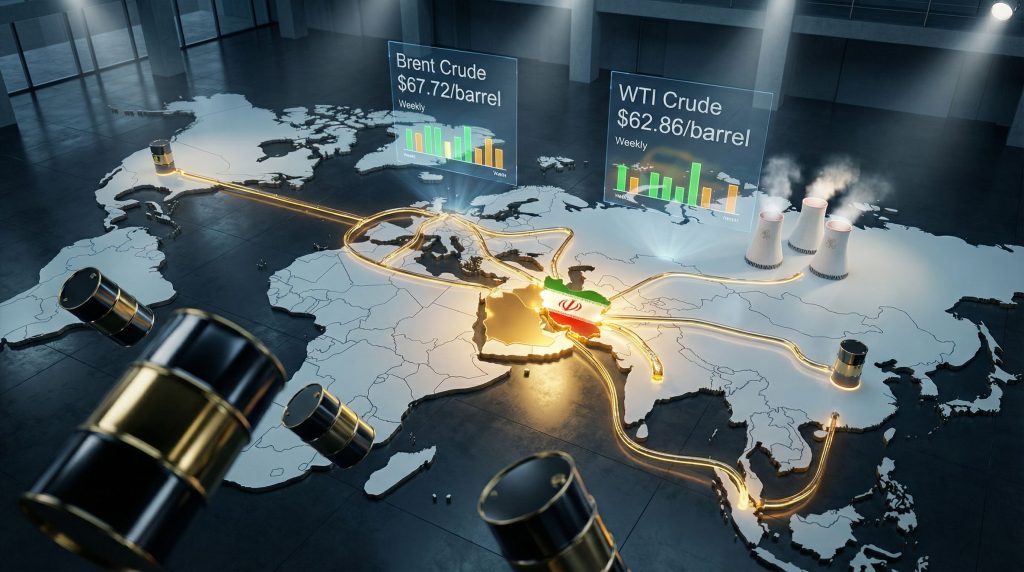
Contemporary crude oil markets demonstrate resilience through sideways trading patterns that reflect balanced pressures from conflicting market forces. Brent crude maintains relative stability around $67.72 per barrel, while WTI crude trades at $62.86 per barrel, creating a spread that reflects typical structural differences in crude quality and regional supply-demand dynamics.
| Benchmark | Current Price | Weekly Change | Trading Pattern |
|---|---|---|---|
| Brent Crude | $67.72/barrel | -0.5% decline | Sideways consolidation |
| WTI Crude | $62.86/barrel | -1.0% decline | Holiday-adjusted volatility |
Trading volume and liquidity analysis reveals how reduced activity in Asian markets amplifies geopolitical risk premiums. During periods when major Asian financial centers close simultaneously for holiday observances, global price discovery mechanisms contract significantly. Reduced liquidity allows smaller trading volumes to create more pronounced price movements, as fewer market participants are available to provide offsetting supply or demand pressure.
The $4.86 spread between Brent and WTI reflects not only quality differentials and transportation costs but also regional geopolitical risk assessments. Brent crude, with greater exposure to Middle Eastern supply disruption scenarios, commands a premium that incorporates potential supply constraints from diplomatic escalation.
Holiday-adjusted volatility patterns create additional complexity in price formation during periods of reduced global trading activity. When major benchmark settlements cannot be established due to market closures, pricing gaps emerge that must be reconciled during subsequent trading sessions, introducing artificial volatility unrelated to fundamental supply or demand changes.
Nuclear Diplomacy Timelines and Oil Market Volatility
The structured approach to international negotiations creates predictable volatility patterns as markets continuously update probability assessments following each diplomatic round. Geneva talks scheduled for February 18, 2026 represent the second round of renewed negotiations, with market participants closely monitoring outcomes for signals about potential resolution or escalation.
Market analysts characterise current expectations as maintaining "low confidence that comprehensive agreements can be reached," describing the environment as "the calm before potential escalation."
Negotiation timeline dynamics create systematic volatility because traders must continuously recalibrate their probability assessments as each diplomatic round concludes. The stated timeline of approximately one month for potential agreement completion provides a specific timeframe for market expectations, with price movements reflecting changing assessments of success likelihood.
The dual-signal approach of simultaneous diplomatic engagement and military preparation creates contradictory market inputs. While negotiation announcements typically pressure oil prices downward on expectations of sanctions relief, concurrent military deployments and contingency planning provide upward price support through escalation risk premiums.
Iranian negotiating objectives reportedly include:
- Economic benefits packages for energy sector development
- Mining sector investment opportunities
- Aviation sector agreements and aircraft purchases
- Broader sanctions relief across multiple economic sectors
Counter-escalation signalling from involved parties creates self-reinforcing tension cycles that support elevated crude prices. Public warnings about potential retaliation against military installations establish credible escalation pathways that traders must incorporate into their risk assessments.
Supply-Side Factors Influencing Current Oil Dynamics
OPEC+ production strategy demonstrates sophisticated coordination between supply management and geopolitical risk assessment. The OPEC+ production impact shows a decision to implement a three-month production halt followed by planned increases beginning April 2026, reflecting careful timing to coincide with seasonal demand strengthening while avoiding market disruption during diplomatic uncertainty.
Analysis indicates that OPEC+ production resumption plans received favourable market reception, suggesting traders view supply increases as manageable within the context of embedded geopolitical risk premiums.
The balance between maintaining market share and supporting price stability requires OPEC+ to navigate competing pressures. Seasonal demand patterns typically strengthen during May through September, providing natural support for increased production without creating oversupply conditions. However, this strategy must account for potential supply disruptions from sanctions-related export restrictions.
Regional production capacity assessment reveals vulnerability concentrations in areas affected by diplomatic tensions. Alternative supply sources have limited capacity to immediately replace potential disruptions from major producing regions, creating supply inelasticity that amplifies price responses to geopolitical developments.
Production resumption considerations include:
- Peak summer demand accommodation (May-September seasonal strength)
- Geopolitical premium maintenance without triggering oversupply
- Market share preservation against potential supply disruptions
- Price stability support through measured production increases
In addition, the Saudi Arabia exploration impact demonstrates how regional supply developments influence global market dynamics during periods of diplomatic uncertainty.
Sanctions Regimes and Global Energy Economics Impact
Economic sanctions targeting major oil producers create systematic supply disruption risks that extend beyond direct export restrictions. Enhanced sanctions implementation could potentially reduce global supply by 1-2 million barrels per day, representing approximately 1-2% of total global production and creating significant upstream pressure on international pricing.
The multiplier effect of restricted energy exports operates through several interconnected channels:
Direct Export Restrictions:
- Prohibition of crude oil purchases by sanctioning nations and allies
- Elimination of derivative product trade relationships
- Cancellation of existing long-term supply contracts
Financial System Disruption:
- Banking restrictions preventing transaction settlement
- Insurance limitations affecting shipping operations
- Payment mechanism complications for importing nations
Secondary Market Effects:
- Deterrent impacts on third-party trading relationships
- Supply chain disruption in refining and distribution
- Alternative supply source premium pricing
Critical infrastructure vulnerability analysis reveals that energy transportation networks face particular exposure during escalation scenarios. Maritime chokepoints represent concentrated risk factors where relatively small physical disruptions can create disproportionate global supply impacts.
Hypothetical escalation scenarios suggest:
- Supply reduction timeframe: 3-6 month phase-in as contracts expire
- Alternative sourcing capacity: Limited immediate replacement availability
- Price impact magnitude: Potentially $10-15 per barrel premium during active disruption
- Duration considerations: Extended periods required for supply chain reestablishment
How Do Energy Markets React to Diplomatic Tensions?
The interconnection between crude oil pricing and macroeconomic policy creates transmission mechanisms through which diplomatic developments affect broader financial markets. Central bank decision-making incorporates energy cost assessments when evaluating monetary policy adjustments, as petroleum price volatility directly influences consumer price indices and inflation expectations.
Investment flow patterns during periods of diplomatic uncertainty demonstrate systematic risk-on versus risk-off positioning across commodity markets. Capital allocation shifts between energy sector investments reflect changing assessments of supply security and long-term price stability expectations.
Correlation analysis reveals:
- Energy sector performance closely tracking geopolitical development timelines
- Currency market impacts through petrodollar flow modifications
- Bond market reactions to inflation expectation adjustments
- Equity market sector rotation favouring energy during escalation periods
The relationship between energy costs and monetary policy creates feedback loops where diplomatic tensions influence central bank policy expectations. Energy price volatility affects inflation targeting strategies, potentially constraining policy flexibility during periods of elevated geopolitical uncertainty.
For instance, the oil price rally analysis demonstrates how policy announcements create immediate market responses that extend beyond direct energy sector impacts.
The next major ASX story will hit our subscribers first
Market Participant Preparation Strategies
Hedging approaches for energy price volatility require sophisticated risk management frameworks that account for both fundamental supply-demand factors and geopolitical risk premiums. Effective strategies must address asymmetric risk profiles where escalation scenarios create significantly higher price impacts than diplomatic resolution scenarios.
Recommended portfolio positioning strategies:
- Diversified commodity exposure across multiple benchmarks and geographic regions
- Time-spread positioning to capture volatility premiums during uncertainty periods
- Options strategies for asymmetric risk protection against escalation scenarios
- Geographic arbitrage opportunities during regional supply disruptions
Risk management considerations include:
- Correlation monitoring between geopolitical events and energy sector performance
- Volatility timing strategies for entering and exiting positions
- Sector rotation preparation for different diplomatic outcome scenarios
- Currency hedging against petrodollar flow disruptions
Portfolio construction during diplomatic cycles requires attention to sector-specific risk factors and their correlation with broader market movements. Energy sector allocations should consider both direct commodity exposure and indirect impacts through related industries such as transportation, chemicals, and utilities.
Consequently, understanding the oil price trade war implications helps investors prepare for various diplomatic outcome scenarios.
What Are the Long-Term Structural Market Implications?
Energy security realignment represents a fundamental shift in how nations approach supply diversification and strategic reserve management. Diplomatic outcomes increasingly influence long-term energy partnership agreements and infrastructure investment decisions across consuming nations.
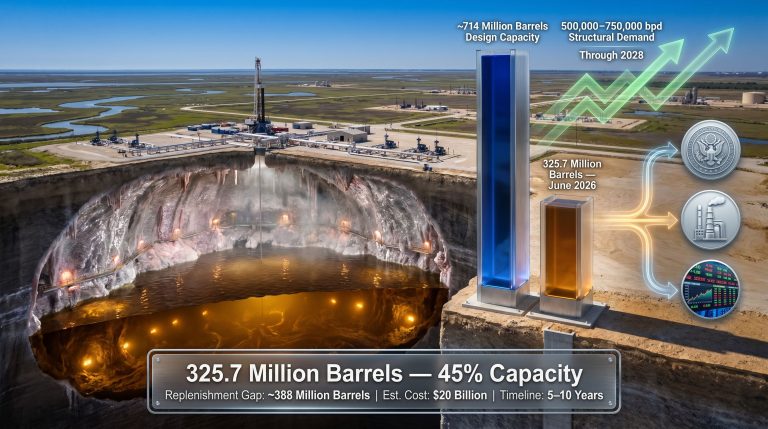
The acceleration of alternative energy investments during periods of supply uncertainty creates structural market changes that extend beyond immediate diplomatic resolution. Strategic petroleum reserve utilisation patterns demonstrate how governments manage short-term supply security while supporting longer-term energy transition objectives.
Market structure evolution encompasses:
- Trading pattern modifications reflecting new supply source diversification
- Price discovery mechanism changes incorporating geopolitical risk assessment tools
- Infrastructure investment prioritisation toward supply security enhancement
- Technology adoption acceleration in alternative energy development
International energy partnerships face restructuring as diplomatic relationships evolve, creating opportunities for alternative supplier nations to establish long-term market share gains. Supply chain resilience improvements become strategic priorities for consuming nations seeking to reduce vulnerability to future diplomatic tensions.
Furthermore, Yahoo Finance analysis indicates that sustained diplomatic uncertainty continues to support crude oil valuations through embedded risk premiums.
The US Iran nuclear talks oil impact remains a critical factor in global energy market stability, with diplomatic developments creating immediate pricing implications that extend far beyond direct supply considerations. Moreover, the oil price stagnation analysis provides additional context for understanding how multiple geopolitical factors interact to influence petroleum valuations.
Disclaimer: This analysis involves forecasts and speculation about geopolitical developments and market responses. Energy markets are subject to rapid changes based on diplomatic developments, military actions, economic sanctions, and other factors beyond prediction. Investment decisions should account for significant uncertainty and potential for substantial price volatility in either direction.
Ready to Capitalise on Commodity Market Volatility?
Discovery Alert's proprietary Discovery IQ model delivers real-time alerts on significant ASX mineral discoveries, enabling subscribers to identify actionable opportunities ahead of broader market movements during periods of geopolitical uncertainty. Begin your 14-day free trial today at Discovery Alert and secure your market-leading advantage in volatile commodity markets.