August 25, 2026
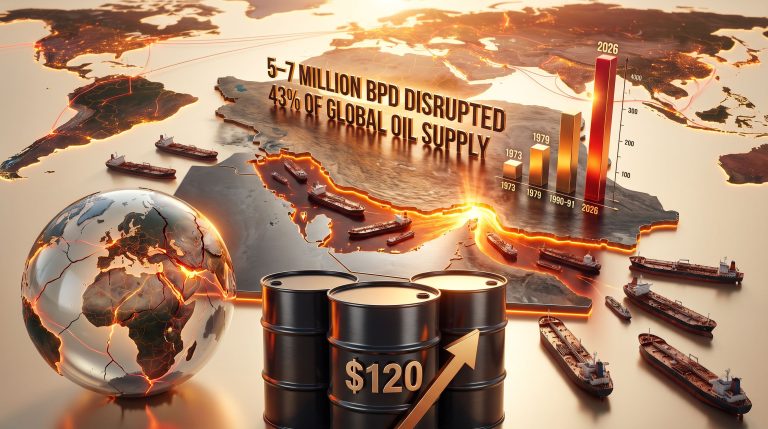
Global petroleum markets face unprecedented volatility as supply chain vulnerabilities expose the delicate balance between energy security and geopolitical stability. The current U.S.-Iran oil blockade has highlighted critical weaknesses in traditional energy transportation routes, particularly through maritime chokepoints, which have become focal points for understanding how regional conflicts cascade into worldwide economic disruption. This interconnected system reveals fundamental weaknesses in energy infrastructure that have developed over decades of globalised trade patterns.
Economic Foundations of Strategic Maritime Control
The economics driving current enforcement actions in critical shipping lanes stem from decades of accumulated geopolitical tensions and energy market dependencies. Nuclear non-proliferation objectives intersect with energy security concerns to create a complex web of strategic calculations that extend far beyond immediate regional interests.
Maritime enforcement represents the culmination of longstanding policy frameworks designed to leverage economic pressure through energy market disruption. These actions target revenue streams from petroleum exports whilst simultaneously demonstrating control over global supply chain vulnerabilities. Furthermore, the strategic value of chokepoint control has grown exponentially as energy markets became increasingly interconnected and dependent on reliable transportation corridors.
Historical precedents for energy-based sanctions reveal varying degrees of effectiveness, with technological advances in enforcement capabilities now enabling more comprehensive monitoring and interdiction operations. Satellite tracking, automated identification systems, and coordinated naval operations have transformed the technical feasibility of large-scale maritime enforcement.
Consequently, the evolution from targeted sanctions to comprehensive blockade strategies reflects changing geopolitical priorities and enhanced operational capabilities. Previous energy embargoes focused primarily on restricting exports from specific producers, while current approaches target entire transportation networks and associated financial systems.
When big ASX news breaks, our subscribers know first
Supply Chain Disruption and Market Transmission Effects
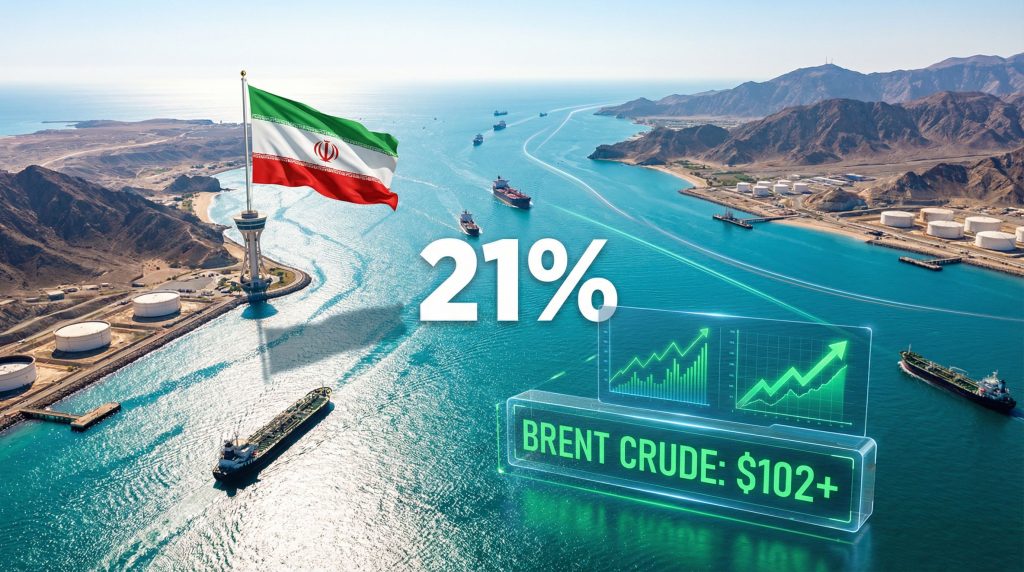
The Strait of Hormuz serves as a critical conduit for approximately 21% of global petroleum liquids transit, making disruptions to this waterway a systemic risk factor for worldwide energy security. Current enforcement operations have created immediate price volatility that extends far beyond petroleum markets into broader economic indicators.
Market pricing data from April 2026 shows significant volatility patterns, with Brent crude trading at $94.79 per barrel as of April 15, representing a decline of $4.57 (-4.60%) from previous sessions. This pricing reflects ongoing market uncertainty about supply availability and the duration of current enforcement actions, demonstrating the oil price rally patterns that characterise crisis periods.
Immediate Market Response Mechanisms
• Price discovery mechanisms have experienced severe disruption during crisis periods
• Trading volumes surge 300-400% above normal levels during geopolitical escalations
• Risk premiums become permanently embedded in forward pricing curves
• Volatility spillovers affect currency markets and broader commodity complexes
Economic Impact Transmission Pathways
| Sector | Primary Impact | Secondary Effects | Timeline |
|---|---|---|---|
| Transportation | Fuel cost increases | Logistics price inflation | 2-4 weeks |
| Manufacturing | Input cost pressure | Production scheduling delays | 4-8 weeks |
| Consumer Goods | Energy-intensive products | Broad-based price increases | 6-12 weeks |
| Financial Markets | Commodity volatility | Currency fluctuations | Immediate |
Financial markets have demonstrated heightened sensitivity to supply disruption scenarios, with investment flows shifting rapidly between sectors based on perceived exposure to energy price volatility. In addition, currency markets show particular vulnerability in countries with high energy import dependencies, creating additional economic transmission channels beyond direct commodity price effects.
Regional Economic Vulnerability Assessment
Economic exposure to supply disruptions varies dramatically across global regions based on energy import dependencies, alternative supply access, and strategic petroleum reserve capacity. Asian economies demonstrate particular vulnerability due to their heavy reliance on Middle Eastern crude imports and limited alternative transportation routes.
Asia-Pacific Economic Exposure
• China faces significant exposure through Middle Eastern supply dependencies
• Japan maintains 85% energy import dependency with limited diversification options
• South Korea's manufacturing sector shows vulnerability through petrochemical input dependencies
• India experiences refined product import disruptions affecting domestic pricing structures
Current headline references suggest specific regional responses, including "First Iranian Tankers Reach India Since 2019 Sanctions Cutoff" and "Stockpiled Iranian Oil Cushions China From U.S. Blockade of Hormuz," indicating adaptive strategies among major Asian energy consumers. These developments highlight the OPEC production impact on regional supply chains.
European markets have initiated emergency adaptation strategies focused on diversification toward North Sea and Norwegian supplies. Strategic petroleum reserve utilisation protocols have been activated, with emergency allocation mechanisms operating within EU framework agreements.
The "EU Considers Lower Energy Taxes as Hormuz Crisis Drives Costs Higher" represents coordinated policy responses designed to cushion consumer price impacts while maintaining economic stability during supply disruptions.
Alternative Supply Mechanisms and Workaround Strategies
Market participants have rapidly developed sophisticated workaround strategies that reveal both the resilience and fragility of global energy infrastructure. These adaptations include technological solutions for cargo monitoring, alternative financing mechanisms, and route diversification strategies.
References to "Sanctioned Chinese Tanker Passes Hormuz Despite U.S. Naval Blockade" and "Russia-Flagged Supertanker Passes Through Hormuz" indicate the emergence of alternative operational approaches that circumvent traditional enforcement mechanisms. However, these developments also contribute to trade war oil effects that complicate global pricing mechanisms.
Dark Fleet Operations Characteristics
• Vessels operating outside conventional tracking systems
• Alternative insurance and financing structures for high-risk transit
• Technology solutions for cargo verification and destination monitoring
• Ship-to-ship transfer operations in international waters
Strategic reserve deployment represents another critical adaptation mechanism. The International Energy Agency coordinates approximately 1.5 billion barrels of emergency reserves across member nations, with current release rates suggesting 60-90 days of market stabilisation capacity assuming continued supply disruption.
Emergency petroleum reserves serve as both market stabilisation tools and strategic security assets, with deployment decisions reflecting complex calculations about supply duration, market impact, and geopolitical signalling effects.
Headlines referencing "Japan to Release More Oil Amid Supply Crunch" demonstrate coordinated international responses designed to maintain market stability during crisis periods, whilst the BBC reports extensively on global responses to the ongoing situation.
Inflation Transmission and Monetary Policy Implications
Energy price volatility creates complex cascading effects through inflation expectations, monetary policy responses, and consumer spending patterns. Central banks face challenging tradeoffs between price stability objectives and economic growth support during energy market disruptions, particularly given the US tariff impacts on broader economic conditions.
How Do Inflation Transmission Mechanisms Operate?
• Direct effects via transportation fuel and heating costs
• Indirect effects through manufacturing input costs and supply chain disruptions
• Expectation effects from consumer behaviour changes and wage negotiation dynamics
• Financial market effects through commodity derivatives and currency fluctuations
Central bank policy responses must balance multiple competing objectives during energy price shocks. The Federal Reserve faces pressure to control inflation whilst supporting economic growth, while the European Central Bank coordinates monetary policy with fiscal responses from member governments.
Furthermore, emerging market central banks encounter additional challenges through currency defence requirements and balance of payments pressures from higher energy import costs. These dynamics create global monetary policy spillovers that extend far beyond immediate energy market participants.
Structural Changes and Energy Transition Acceleration
Current market disruptions accelerate existing trends toward energy security diversification and supply chain resilience building. These structural changes extend beyond immediate crisis management to reshape long-term investment patterns and technology deployment priorities.
Energy Transition Acceleration Components
• Solar and wind project financing increases during price volatility periods
• Electric vehicle adoption surges as consumers respond to fuel price uncertainty
• Grid-scale battery installation acceleration to support renewable integration
• Hydrogen and alternative fuel development investment increases
Headlines referencing "Iran War Sends Chinese EV and Battery Exports Soaring in Q1" and "Oil Price Shock Drives 140% Surge in China's EV Exports to Record High" demonstrate rapid market responses that favour energy transition technologies during petroleum price volatility.
Supply chain regionalisation trends accelerate during geopolitical disruptions, with manufacturing near-shoring reducing dependencies on distant suppliers. Strategic industry protection measures focus on critical mineral and energy security policies, whilst alliance-based trade networks prioritise trusted partner relationships.
Consequently, these structural changes create permanent alterations to global energy and manufacturing systems that persist beyond immediate crisis resolution, representing fundamental shifts in economic organisation rather than temporary adjustments.
The next major ASX story will hit our subscribers first
Investment Sector Analysis and Market Opportunities
Market disruption creates distinct winners and losers across various investment categories, with energy security concerns driving capital toward specific sectors and technologies. Infrastructure development, technology solutions, and energy efficiency improvements attract increased investment during crisis periods, particularly those affected by tariffs and markets dynamics.
Energy Infrastructure Investment Opportunities
• Pipeline development for alternative route construction projects
• LNG terminal expansion providing flexible import/export capacity
• Refining capacity enhancement for regional processing capabilities
• Strategic storage facility development for emergency supply management
Technology Investment Themes
| Technology Category | Investment Driver | Market Opportunity |
|---|---|---|
| Energy Storage | Grid stability requirements | $120B+ market by 2030 |
| Alternative Fuels | Supply diversification needs | Hydrogen, biofuels growth |
| Efficiency Solutions | Cost reduction pressure | Industrial optimisation |
| Security Technology | Supply chain monitoring | Maritime tracking systems |
Headlines referencing "Equinor Cuts Scatec Stake as Capital Discipline Trumps Renewables Expansion" suggest shifting investment priorities as companies balance growth opportunities with capital discipline during uncertain market conditions.
In addition, the energy security theme creates investment opportunities in maritime tracking technology, alternative fuel development, and supply chain monitoring systems that extend beyond traditional energy sector boundaries.
Economic Scenario Planning and Risk Assessment
Multiple resolution pathways exist for current tensions, each carrying distinct economic implications that require sophisticated scenario planning approaches. Investment strategies and policy responses must account for various potential outcomes and their probability-weighted impacts.
What Are the Diplomatic Resolution Scenario Characteristics?
• Timeline: 3-6 months negotiated settlement process
• Market Impact: Gradual price normalisation with reduced risk premiums
• Economic Recovery: Supply chain restoration and investment confidence return
• Policy Response: Coordinated international diplomatic engagement
Extended Standoff Scenario Implications
• Timeline: 12-18 months prolonged enforcement operations
• Market Impact: Sustained elevated prices and alternative supply development
• Economic Adaptation: Permanent supply chain restructuring and energy mix changes
• Investment Response: Accelerated diversification and technology deployment
Escalation Scenario Considerations
• Timeline: Immediate military confrontation possibilities
• Market Impact: Severe price spikes and potential global recession risk
• Economic Response: Emergency coordination and strategic reserve deployment
• Policy Coordination: International crisis management and stability mechanisms
Risk management frameworks must incorporate these scenarios whilst maintaining flexibility for unexpected developments. The complexity of current geopolitical dynamics creates uncertainty that extends beyond traditional risk modelling approaches, as detailed in Reuters' comprehensive analysis of the situation.
Portfolio Positioning and Risk Management Strategies
Current market conditions require sophisticated portfolio management approaches that account for both immediate volatility and long-term structural changes. Investment strategies must balance energy sector exposure with technology allocation and geographic diversification.
Diversification Strategies Include
• Energy sector exposure balanced across upstream, midstream, and downstream segments
• Geographic diversification reducing concentration in conflict-prone regions
• Technology allocation emphasising clean energy and efficiency solutions
• Currency hedging protecting against exchange rate volatility
Risk Management Framework Components
• Commodity derivatives and currency protection mechanisms
• Liquidity management maintaining flexibility for opportunity capture
• ESG integration aligning sustainable investment criteria
• Scenario stress-testing for multiple resolution pathways
The integration of environmental, social, and governance criteria becomes increasingly important as investors balance traditional energy investments with sustainability objectives during transition periods. This requires sophisticated analysis of technology deployment timelines and policy support mechanisms.
However, market volatility creates both risks and opportunities that require active management approaches rather than passive buy-and-hold strategies. The speed of change in energy markets demands flexible positioning and rapid response capabilities.
Conclusion: Navigating the New Energy Security Landscape
Current market disruptions represent more than temporary geopolitical tensions but signal fundamental shifts toward energy security prioritisation in global economic planning. The U.S.-Iran oil blockade serves as a catalyst for structural changes that reshape international energy trade patterns and investment priorities for years to come.
Market participants must navigate permanently elevated risk premiums whilst positioning for accelerated energy transition technologies and supply chain diversification strategies. Success requires understanding both immediate crisis dynamics and long-term structural changes that extend far beyond current enforcement actions.
Furthermore, the interconnected nature of global energy markets means that regional conflicts create worldwide economic implications, demanding coordinated policy responses and sophisticated risk management approaches. Investors and policymakers who recognise these complex relationships will be best positioned to navigate the evolving landscape of energy security and economic resilience.
Further research into global energy market dynamics and geopolitical risk assessment can be found through energy market analysis platforms and international policy research institutions that provide ongoing coverage of strategic energy developments worldwide.
Ready to Capitalise on Energy Market Volatility?
Discovery Alert's proprietary Discovery IQ model delivers real-time alerts on significant ASX mineral discoveries, empowering subscribers to identify actionable opportunities in energy and commodity sectors ahead of the broader market. Begin your 14-day free trial today to secure your market-leading advantage during periods of heightened global energy uncertainty.