June 19, 2026
When Markets Price Hope Before Evidence: The ASX Relief Rally and Its Limits
Diplomatic announcements have a long history of moving financial markets faster than the underlying reality warrants. From the 2015 JCPOA nuclear agreement to the various US-China trade truces of the late 2010s, investors repeatedly face the same dilemma: how much conviction should flow from a headline that sounds transformative but remains structurally unresolved? The US Iran peace deal and ASX relief rally it has generated presents exactly this challenge, and the response is both entirely rational and potentially premature in equal measure.
When big ASX news breaks, our subscribers know first
The Anatomy of a Relief Rally: How Geopolitical De-escalation Moves the ASX
Understanding the Risk-On Mechanism Behind Diplomatic Breakthroughs
A relief rally is a specific market phenomenon distinct from a fundamentals-driven bull run. It occurs when a known risk is perceived to have diminished, releasing the risk premium that had been compressed into asset prices. In the case of Middle East geopolitical events, the transmission mechanism into Asia-Pacific equity markets operates with striking speed, often within hours of a major diplomatic development as institutional algorithms, derivatives pricing, and currency markets reprice simultaneously.
The critical distinction for ASX investors is between this kind of sentiment-driven relief bounce and a genuine structural bull move. The former is front-loaded by definition. The largest single-session gains typically occur before the specifics of any agreement are fully understood, creating a narrow window where headline-driven momentum and analytical reality diverge.
Key Insight: Relief rallies driven by diplomatic news tend to be front-loaded. The largest single-session gains often occur before deal specifics are fully understood, creating both opportunity and risk for investors who act on headlines alone.
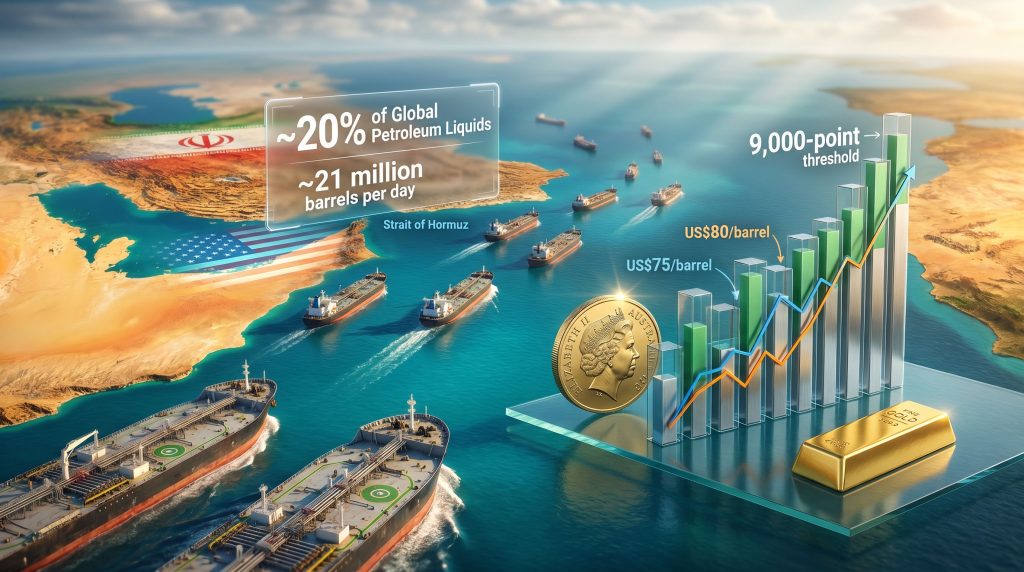
The ASX tariff response seen in earlier 2025 demonstrated a similar dynamic, where the ASX 200's approach toward the psychologically significant 9,000-point threshold served as a concrete marker of restored investor confidence. Market commentators noted the index was approaching 9,000 points for the first time in months, with traders clearly voting with their capital even amid widespread scepticism about the deal's durability.
The ASX 200's Position Heading Into the US-Iran Framework Announcement
Prior to the peace deal news, Australian equities had spent months operating below the 9,000-point level, weighed down by a combination of elevated geopolitical risk premium, oil price volatility stemming from Strait of Hormuz uncertainty, and domestic RBA policy ambiguity. The Australian share market performance over this period reflected a structural sensitivity to Middle East risk events that exceeds what many investors appreciate, primarily because of the commodity exposure baked into the ASX's composition.
The pre-existing compression in valuations effectively created a coiled spring. When a credible-sounding diplomatic framework emerged, the repricing was immediate and broad-based, even among participants who retained significant scepticism about the deal's ultimate durability.
What Does the US-Iran Peace Framework Actually Mean for Global Markets?
Breaking Down the MOU: What Was Agreed, What Remains Unsettled
Perhaps the most important analytical point about the current agreement is what it structurally is: a memorandum of understanding rather than a binding treaty. Market observers have drawn a pointed comparison, noting that characterising it as a peace deal MOU sounds unusual to anyone familiar with commodity-sector announcement language, where MOUs are well understood to represent intent rather than commitment.
This distinction matters enormously for assessing durability. Several unresolved structural questions remain that markets appear to be treating as already answered:
- Iran's nuclear technology ambitions, which represent the foundational issue that precipitated the broader conflict in the first place
- The question of US financial reparations to Iran and the significant domestic political feasibility constraints surrounding any such payments
- Israel's strategic response calculus and whether it operates within, or independently of, any bilateral US-Iran framework
Each of these variables independently represents a potential deal-breaker capable of rapidly reversing the current risk-on positioning. Together, they constitute a substantial uncertainty load that experienced investors are not dismissing.
The Strait of Hormuz: The World's Most Consequential Chokepoint
| Metric | Context |
|---|---|
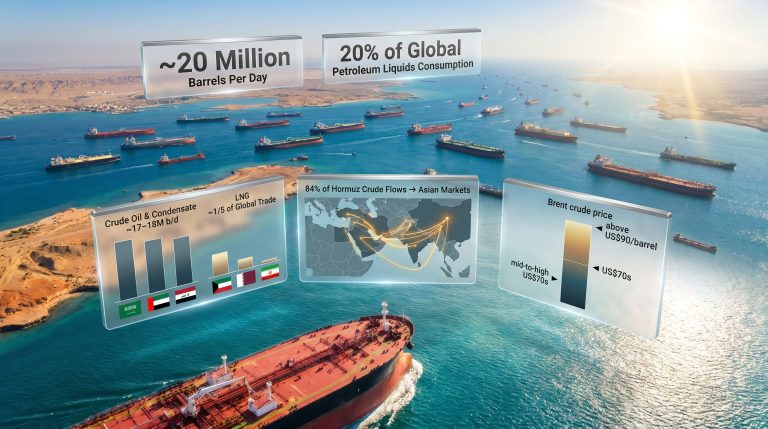
| Share of global oil transit through Hormuz | Approximately 20% of global petroleum liquids |
| Daily volume at peak flow | ~21 million barrels per day |
| Impact of full closure on Brent crude | Historically associated with 20-40% price spikes |
| Current status post-framework | Partially reopening; transit fee negotiations ongoing |
The Strait of Hormuz situation introduces a layer of complexity that goes beyond simple open-or-closed binary logic. Reports indicating partial reopening of the waterway carry a significant caveat: Iran's leadership is reportedly seeking to impose transit fees on vessels passing through the chokepoint. This is not an administrative footnote — it represents a continuing assertion of Iranian sovereignty over a globally critical shipping lane.
Furthermore, experienced market watchers have noted that you cannot simply announce a peace deal and expect oil to flow again overnight. The physical, logistical, and geopolitical complexity of restoring full Hormuz transit is considerable, and the transit fee question injects an ongoing friction point that could sustain volatility in crude oil price trends even under a nominally positive diplomatic backdrop.
Two scenarios therefore deserve serious modelling: full normalisation where oil flows restore completely and energy prices fall sustainably, versus a managed reopening with friction where partial flows and ongoing transit fee disputes maintain price volatility and geopolitical uncertainty.
How Australian Equity Sectors Are Responding: A Sector-by-Sector Impact Framework
The Classic Relief Rally Sector Rotation Pattern on the ASX
Market Pattern Alert: Geopolitical de-escalation events consistently produce a predictable sector rotation on the ASX. Energy names soften on lower oil expectations while materials, gold, and growth sectors attract capital inflows. The June 2026 rally is tracking this pattern closely, with some notable exceptions.
Energy Sector: Why Lower Oil Prices Are a Double-Edged Sword for ASX Energy Stocks
The inverse relationship between Hormuz normalisation expectations and ASX-listed energy producer valuations creates an awkward dynamic for the sector. Lower expected oil prices compress revenue assumptions for upstream producers even as the broader market environment improves. However, the picture is more nuanced than a simple headwind.
Australian LNG exporters, for instance, operate predominantly on long-term contract pricing structures rather than spot Brent crude benchmarks. This insulates them meaningfully from short-term oil price movements, making the sector rotation away from energy more relevant to pure-play crude-exposed producers than to the broader Australian energy complex.
Materials and Mining: BHP's Record High as a Bellwether Signal
BHP printing a fresh record high during the rally week carries genuine informational content beyond mere sentiment. As the dominant weighting in the ASX 200, BHP's performance acts as a confidence barometer for the entire materials complex. Copper-focused names benefited from the combination of risk-on sentiment and persistent long-term electrification demand narratives.
Uranium stocks found support in the energy security reframing that Middle East de-escalation paradoxically reinforces. In addition, the relationship between gold and mining equities during this period is analytically the most intriguing feature of the rally. Under standard risk-on conditions, gold typically weakens as investors rotate toward growth assets; however, its resilience here signals that a meaningful portion of market participants is maintaining safe-haven hedges.
The broader gold safe-haven dynamics at play effectively say, through positioning, that participants believe the peace framework may not hold — a telling signal worth monitoring closely.
The Australian Dollar as a Real-Time Sentiment Gauge
The AUD functions as a real-time proxy for global risk appetite in a way that few other currencies match, given its commodity-linked character and sensitivity to Chinese economic activity. Its strengthening during the relief rally provides institutional confirmation of the risk-on shift. A sustained AUD recovery carries downstream implications for import costs, inflation readings, and ultimately the RBA's rate decision timeline.
The RBA Dimension: How Domestic Policy Intersects With Geopolitical Relief
Why the RBA's Rate Hold Added a Second Layer of Positive Sentiment
The RBA's decision to hold rates without a further hike during this period created a compounding effect that amplified the geopolitical positive. Lower geopolitical risk premium combined with stable domestic monetary conditions provided a dual tailwind for ASX valuations. Major Australian banks have pointed toward eventual RBA rate cuts as a forward-looking positive for rate-sensitive sectors, and the rate hold reinforced rather than undermined that narrative.
What Lower Oil Prices Mean for Australian Inflation and Rate Expectations
The transmission pathway from Hormuz normalisation to RBA rate cut timing is direct and quantifiable. Sustained lower global oil prices reduce Australian fuel costs, which feed into lower CPI inputs, consequently increasing the probability of RBA monetary easing. According to CNBC's analysis of the relief rally, RBA research suggests that for every sustained US$10 per barrel decline in Brent crude, Australian headline CPI declines by approximately 0.1 to 0.2 percentage points. If Hormuz normalisation proves durable, this pathway could meaningfully bring forward the RBA's rate cut timeline.
Scenario Modelling: Three Futures for the US-Iran Framework and Their ASX Implications
Scenario 1: Full De-escalation and Durable Peace (Probability: Low-to-Moderate)
Conditions required: Both parties adhere to framework commitments beyond the initial 48-hour window; nuclear ambitions are formally constrained; Israel does not take unilateral action; Hormuz transit normalises without fee imposition.
ASX implications: Sustained risk-on environment; energy sector re-rates lower on oil price normalisation; materials and growth sectors extend gains; AUD strengthens further; RBA cut timeline accelerates.
Key risk: Over-positioning in the relief trade before deal durability is confirmed.
Scenario 2: Partial Agreement With Persistent Uncertainty (Probability: High)
Conditions: Framework holds in headline terms but implementation stalls on nuclear and reparations questions; Hormuz partially open but transit fee dispute creates ongoing friction; Israel maintains strategic ambiguity.
ASX implications: Volatile sideways trading; sector rotation continues with higher dispersion; gold maintains strength as a hedge; energy stocks remain range-bound.
Key risk: Market participants who priced in full resolution face a gradual repricing as deal complexity becomes apparent.
Scenario 3: Framework Collapses or Backtracking Occurs (Probability: Moderate)
Conditions: One or both parties publicly walk back commitments; nuclear talks break down; military posturing resumes; Hormuz closure risk re-emerges.
ASX implications: Sharp reversal of the relief rally; energy stocks spike on oil price surge; gold outperforms as safe-haven demand returns; AUD weakens; RBA rate cut timeline pushed out.
Key risk: Investors who entered on the relief rally without disciplined risk management face asymmetric downside.
| Scenario | Probability | ASX 200 Direction | Key Sector Winners | Key Sector Losers |
|---|---|---|---|---|
| Full De-escalation | Low-Moderate | Sustained upside | Materials, Growth | Energy producers |
| Partial Agreement | High | Volatile/sideways | Gold, Diversified miners | Pure-play energy |
| Framework Collapse | Moderate | Sharp reversal | Energy, Gold | Financials, Growth |
The next major ASX story will hit our subscribers first
The Suspended Disbelief Problem: Why Market Conviction Lags Diplomatic Headlines
Why Experienced Investors Are Cautious Despite the Positive Price Action
The most accurate characterisation of current market psychology may be suspended disbelief: a state where participants want the peace framework to be real, are positioning partly as if it is, but have not yet converted that positioning into genuine conviction. This dynamic has historical precedent. The 2015 JCPOA market response generated an initial risk-on move that ultimately partially reversed as implementation difficulties emerged.
The specific credibility signals that would need to emerge to convert cautious optimism into genuine conviction buying include:
- Verified Hormuz transit data showing normalised shipping flows through independent vessel tracking services
- Formal ratification steps progressing meaningfully beyond the MOU stage
- Israel's public acknowledgment of or acquiescence to the framework's boundaries
- Sustained Brent crude pricing below US$70 per barrel for a meaningful period
The Political Timing Discount: How Markets Price Strategic Announcements
Sophisticated market participants apply a scepticism discount to diplomatically timed announcements, particularly when the surrounding context creates incentives for optics over substance. As noted in reporting on the deal's market implications, the June 2026 announcement coincided with high-profile domestic US events, including a prominent White House celebration and the ongoing FIFA World Cup hosted on American soil.
This is what analysts sometimes describe informally as a "TACO" discount: Talks Announced, Commitments Optional. It does not mean the deal is necessarily hollow, but it does mean that probability-weighted deal value is lower than face-value optimism would suggest. The 48-to-72-hour compliance window immediately following the announcement represents the first genuine test of whether commitments survive contact with post-announcement political reality.
What Should ASX Investors Watch in the Coming Days and Weeks?
The Critical Indicators That Will Determine Whether This Rally Has Legs
- 48-to-72-hour compliance window: Whether both parties publicly reaffirm commitments in the days immediately following the announcement
- Brent crude price trajectory: A sustained move below US$75 per barrel signals genuine market belief in Hormuz normalisation; a bounce back above US$80 signals scepticism
- Hormuz shipping data: Real-time vessel tracking through the strait as an objective measure independent of diplomatic statements
- Gold price behaviour: Continued gold strength alongside rising equities signals incomplete market confidence in the peace framework
- ASX 200 consolidation above 8,800: Whether the index can hold gains above this level or whether profit-taking emerges as deal specifics disappoint
A Checklist for Investors Navigating the Relief Rally
- Avoid chasing momentum in sectors that have already moved significantly on the headline announcement
- Monitor deal-specific developments rather than relying solely on equity price signals as confirmation
- Maintain commodity exposure diversification, holding gold as a hedge against deal failure alongside copper and materials as beneficiaries of sustained de-escalation
- Watch the AUD as a real-time barometer of whether institutional investors are maintaining or unwinding their risk-on positions
- Track RBA commentary for any signals that lower oil prices are being incorporated into the Bank's inflation and rate outlook
The Rally Is Real, But the Conviction Has Not Arrived Yet
The US Iran peace deal and ASX relief rally dynamic is neither irrational exuberance nor a false signal. It reflects a genuine reduction in perceived tail risk that had been suppressing Australian equity valuations for months. The dual tailwind of reduced geopolitical risk premium and a domestic RBA rate hold created conditions for a meaningful repricing, and the market has responded accordingly.
What experienced investors recognise, however, is that the most significant potential upside from genuine US-Iran de-escalation has not yet been priced in. Markets are still discounting a meaningful probability of deal failure, which means a durable resolution would generate a second, potentially larger leg of upside that headline-chasers from the first session will have already partially missed.
The analytical framework for navigating this environment treats the current moment as a conditional opportunity rather than a confirmed trend. Position sizing and risk management discipline matter more than directional conviction when the underlying catalyst remains structurally unresolved. The relief rally is real. The peace deal may or may not be.
This article is intended for informational and educational purposes only and does not constitute financial advice. Any forward-looking statements, scenario projections, or market analysis represent opinion only and should not be relied upon as a basis for investment decisions. Readers should conduct their own research and consult a qualified financial adviser before making any investment decisions.
Want to Stay Ahead of the Next Major ASX Mineral Discovery?
While geopolitical relief rallies create short-term opportunities across the ASX, some of the most significant long-term returns have historically come from major mineral discoveries — and Discovery Alert's proprietary Discovery IQ model delivers real-time alerts the moment significant ASX discoveries are announced, turning complex data across 30+ commodities into clear, actionable insights. Explore historic discovery returns on Discovery Alert's dedicated discoveries page and begin a 14-day free trial to ensure you're positioned before the broader market moves.