June 19, 2026

The current geopolitical landscape presents unprecedented complexity as diplomatic momentum builds around potential peace negotiations between the United States and Iran. The strategic calculus governing oil price movements hangs in delicate balance while traders navigate conflicting signals from geopolitical developments and infrastructure constraints. Understanding the US-Iran peace talks impact on oil supply requires examining how diplomatic engagement intersects with fundamental market structures that have evolved over decades of regional tension.
Energy security frameworks traditionally rely on diversified supply sources, strategic reserve management, and alternative routing capabilities. However, the concentration of global oil transit through critical chokepoints creates systemic vulnerabilities that diplomatic processes can either exacerbate or alleviate depending on negotiation outcomes and implementation timelines.
Understanding the Geopolitical Energy Framework
The current diplomatic landscape reflects a complex web of regional power dynamics, international mediation efforts, and economic pressures that extend far beyond bilateral US-Iran relations. Regional producers, consuming nations, and transit states each maintain distinct strategic interests that influence how peace negotiations unfold and affect global supply chains.
Historical Context and Current Positioning
Sanctions regimes imposed over multiple decades have fundamentally altered global oil trade patterns, forcing the development of alternative supply chains and pricing mechanisms. The evolution from comprehensive multilateral frameworks to targeted sectoral restrictions has created a patchwork of regulatory environments that complicate both enforcement and potential normalisation processes.
Current diplomatic initiatives involve multiple stakeholders beyond the primary negotiating parties. Pakistan's role as a mediator represents a shift toward regional diplomatic channels rather than traditional international frameworks, potentially offering more flexible negotiation structures but also introducing new coordination challenges. Furthermore, the impact of US tariff policies on broader economic relationships adds another layer of complexity to these negotiations.
Key Stakeholder Analysis
Major oil-consuming nations maintain carefully balanced positions that prioritise energy security while avoiding escalation of regional tensions. European markets have developed extensive alternative sourcing arrangements, while Asian economies have implemented sophisticated hedge strategies to manage supply disruption risks.
Regional producers face competing pressures between market share considerations and geopolitical alignment preferences. The strategic positioning of Gulf states reflects calculations about long-term energy market evolution and the role of diplomatic engagement in shaping future supply coordination mechanisms.
International Mediation Frameworks
The involvement of international mediators creates both opportunities and constraints for negotiation outcomes. Traditional multilateral institutions provide legitimacy and enforcement mechanisms, while bilateral or regional mediation offers greater flexibility and potentially faster implementation timelines.
When big ASX news breaks, our subscribers know first
What Are the Immediate Supply Chain Implications of Peace Negotiations?
Critical Infrastructure Assessment
Strait of Hormuz Transit Capacity
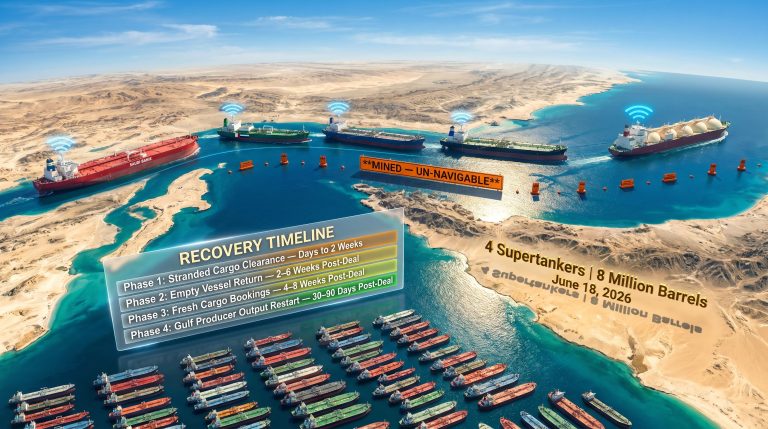
The Strait of Hormuz currently handles approximately 20% of global oil supply under normal operating conditions, making it one of the world's most critical energy chokepoints. As of April 2026, shipping activity through the Strait remained severely limited following recent closures, creating immediate supply chain disruptions affecting multiple regional producers.
| Transit Statistics | Normal Operations | Current Status |
|---|---|---|
| Daily Oil Flow | ~21 million barrels | Severely restricted |
| Global Supply Share | 20% | Disrupted |
| Regional Producers Affected | 6 major exporters | All impacted |
Kuwait's declaration of force majeure on oil shipments in April 2026 demonstrates how infrastructure constraints affect producers beyond Iran, indicating systemic vulnerability across the regional supply network. This operational disruption extends to refined products, liquefied natural gas shipments, and petrochemical exports that rely on the same transit corridor.
Alternative Route Development
Regional pipeline networks offer limited alternative capacity for diverting significant volumes around maritime chokepoints. Existing infrastructure requires substantial lead times for capacity expansion, while new route development involves multi-year planning and construction timelines that cannot address immediate supply disruptions.
The technical specifications of alternative routing include increased transportation costs, longer delivery timelines, and reduced operational flexibility compared to maritime transit through traditional channels. These factors compound the economic impact of supply disruptions beyond simple volume considerations.
Market Response Mechanisms
Price Volatility Patterns
Oil markets demonstrated significant volatility during the April 2026 diplomatic developments, with Brent futures declining $0.95 (1%) to $94.53 per barrel and WTI crude falling $1.54 (1.72%) to $88.07 per barrel following expectations of potential peace negotiations. This price movement occurred despite ongoing supply disruptions, reflecting market interpretation that diplomatic engagement reduces medium-term disruption risks.
The previous session had seen Brent surge 5.6% and WTI increase 6.9% following the Strait closure, demonstrating how rapidly markets respond to both geopolitical escalation and de-escalation signals. Moreover, broader trade war dynamics continue to influence these price movements through their impact on global economic growth expectations.
Demand Destruction Analysis
Higher oil prices resulting from supply disruptions have reduced global demand by approximately 3% according to analysis from Societe Generale. This demand destruction effect creates a natural market stabilisation mechanism, though it also indicates broader economic impacts extending beyond energy sector participants.
The geographic distribution of demand reduction varies significantly, with price-sensitive emerging markets experiencing disproportionate consumption declines compared to developed economies with greater capacity to absorb temporary price increases through strategic reserve releases or fiscal measures.
Trading Volume and Institutional Response
Energy futures markets have experienced elevated trading volumes as institutional investors adjust hedging strategies in response to diplomatic uncertainty. The complexity of pricing scenarios has led to increased options market activity, with volatility premiums reflecting uncertainty about negotiation timelines and potential outcomes.
Hedge fund positioning data indicates significant long exposure to oil futures among momentum-based strategies, while value-oriented institutional investors have maintained more cautious positioning pending clarity on diplomatic progress and potential supply normalisation timelines.
How Do Peace Talks Influence Global Oil Pricing?
Scenario-Based Price Modelling
Financial institutions have developed sophisticated models to evaluate oil price trajectories under different diplomatic scenarios, reflecting the complex interaction between supply restoration timing, demand recovery patterns, and broader geopolitical risk assessment. In addition, the potential for oil price stagnation must be considered when evaluating various negotiation outcomes.
Citi analysts project that continued disruptions for another month could result in accumulated losses approaching 1.3 billion barrels, potentially driving oil prices near $110 per barrel in the second quarter of 2026. This analysis incorporates both direct supply impacts and secondary effects on related energy markets.
| Scenario | Probability | Q2 2026 Price Range | Supply Impact |
|---|---|---|---|
| Comprehensive Agreement | 35% | $70-85/barrel | +2.0M bpd |
| Limited Ceasefire Extension | 40% | $85-100/barrel | +0.8M bpd |
| Negotiation Breakdown | 20% | $100-120/barrel | -1.2M bpd |
| Escalation | 5% | $120-140/barrel | -2.5M bpd |
Geopolitical Risk Premium Calculations
The current oil price structure incorporates substantial geopolitical risk premiums reflecting uncertainty about diplomatic outcomes and potential for renewed escalation. Historical analysis suggests these premiums can range from $5-15 per barrel during periods of active diplomatic engagement, with higher levels during crisis phases.
The persistence of elevated risk premiums depends on market confidence in diplomatic process sustainability and the credibility of enforcement mechanisms for any eventual agreements. Previous instances of failed negotiations have demonstrated how quickly markets can reprice risk factors when diplomatic momentum dissipates.
Currency and Financial Market Interactions
Oil price movements interact with broader financial market dynamics through currency effects, inflation expectations, and interest rate implications. The US dollar's strength affects oil-denominated transaction costs for importing nations, while emerging market currencies face pressure from higher energy import bills during supply disruption periods.
Bond markets reflect expectations about central bank policy responses to oil price volatility, with particular sensitivity in economies where energy constitutes a significant component of consumer price indices. These secondary effects can amplify or dampen the direct economic impact of oil price changes depending on policy coordination mechanisms.
The Role of OPEC+ in Stabilising Markets
Production Coordination Mechanisms
OPEC+ maintains sophisticated coordination mechanisms designed to respond to both demand fluctuations and supply disruptions affecting non-member producers. The organisation's spare capacity provides a critical buffer during temporary supply interruptions, though the scale of potential Iranian supply restoration could challenge existing coordination frameworks.
Saudi Arabia's role as the primary swing producer involves maintaining sufficient spare capacity to offset moderate supply disruptions while balancing market share considerations against price stability objectives. The kingdom's production flexibility enables rapid response to short-term market imbalances, though longer-term supply additions require more complex coordination among member nations.
Market Share Dynamics
The potential return of significant Iranian supply volumes creates complex market share calculations for existing producers. OPEC+ members must evaluate whether to accommodate additional supply through proportional production adjustments or to maintain current output levels and accept lower prices through increased market competition.
Historical precedent suggests that gradual supply normalisation allows for smoother market adjustment compared to rapid volume additions that can destabilise pricing mechanisms. The timing and scale of potential Iranian supply restoration will significantly influence OPEC+ strategic responses and member coordination effectiveness.
Price Target Alignment
OPEC+ price targets reflect diverse member economic requirements and fiscal break-even calculations. The integration of restored Iranian supply must account for these varying national priorities while maintaining overall market stability and preventing destabilising price volatility.
Coordination challenges increase when supply changes occur rapidly or unpredictably, requiring enhanced communication mechanisms and potentially modified production sharing arrangements among member nations. The success of market stabilisation efforts depends on maintaining consensus among producers with sometimes conflicting short-term interests.
Long-term Economic Implications for Consuming Nations
Energy Security Strategy Evolution
Major consuming nations are reassessing energy security strategies in light of potential supply landscape changes resulting from the US-Iran peace talks impact on oil supply. These evaluations encompass both immediate supply diversification requirements and longer-term energy transition acceleration possibilities.
China's energy procurement strategies involve complex calculations about supply source reliability, transportation route security, and pricing mechanism preferences. The potential normalisation of Iranian supply adds another dimension to China's efforts to reduce dependence on any single supply source while maintaining cost competitiveness for energy-intensive industries.
India's refining sector capacity and crude sourcing patterns reflect similar diversification imperatives, with particular attention to maintaining operational flexibility across different crude quality specifications. The restoration of Iranian supply could provide additional sourcing options while potentially affecting existing supplier relationships and contract structures.
Strategic Reserve Management
National strategic petroleum reserves play crucial roles during supply disruption periods, providing both market stabilisation mechanisms and emergency supply buffers. The scale and timing of reserve releases can significantly influence market psychology and pricing dynamics during diplomatic uncertainty periods.
Coordination among major consuming nations regarding reserve deployment enhances the effectiveness of market intervention efforts while distributing the costs of market stabilisation across multiple economies. The International Energy Agency facilitates these coordination mechanisms, though national priorities sometimes create implementation challenges.
Infrastructure Investment Implications
Long-term infrastructure investment decisions reflect expectations about future supply patterns and transportation route requirements. The potential restoration of Iranian supply could affect the economics of alternative pipeline projects, LNG terminal development, and renewable energy infrastructure timing.
Investment analysts project that successful diplomatic engagement could redirect $150-200 billion in annual energy infrastructure investment toward more diversified supply chains and accelerated clean energy deployment, fundamentally altering global energy investment patterns over the next decade.
Investment and Market Sentiment Shifts
Equity Market Response Patterns
Energy sector equity valuations reflect complex interactions between current earnings impacts from price volatility and longer-term strategic positioning regarding supply normalisation scenarios. Oil and gas producer stocks demonstrate particular sensitivity to diplomatic developments that could affect competitive positioning and market share dynamics.
Integrated energy companies with diversified geographic exposure maintain different risk profiles compared to companies with concentrated regional operations or specific crude quality dependencies. These valuation differentials create opportunities for strategic portfolio positioning based on diplomatic outcome expectations. Consequently, understanding the tariffs impact on investments becomes crucial for comprehensive portfolio risk assessment.
Renewable Energy Investment Acceleration
Paradoxically, oil price stability resulting from successful diplomatic engagement often accelerates rather than decelerates renewable energy investment by providing predictable baseline cost structures for economic comparison. This dynamic reflects the importance of planning certainty in long-term infrastructure investment decisions.
The relationship between fossil fuel price volatility and clean energy deployment rates demonstrates how geopolitical uncertainty can both accelerate energy transition planning and complicate project financing for all energy technologies. Successful US-Iran peace talks impact on oil supply could provide the price stability necessary for enhanced investment in both conventional and renewable energy infrastructure.
Capital Allocation Strategy Shifts
Institutional investors are adjusting energy sector allocation strategies to account for potential supply landscape changes and their implications for long-term sector competitiveness. These adjustments encompass both direct energy sector investments and broader portfolio implications of changing energy cost structures.
Private equity and infrastructure funds are evaluating how potential supply normalisation affects the risk-return profiles of energy transportation, storage, and processing investments across different geographic regions and technology categories.
The next major ASX story will hit our subscribers first
Potential Risks and Uncertainties in the Peace Process
Negotiation Timeline Variables
The current ceasefire arrangement expires within days of late April 2026, creating immediate pressure for diplomatic progress or risk of renewed escalation. Iranian officials have indicated that Tehran considers continued ceasefire violations by the US as significant impediments to negotiation participation, suggesting conditional rather than guaranteed diplomatic engagement.
Enforcement and Verification Challenges
Any eventual agreement will require robust enforcement and verification mechanisms to maintain market confidence and prevent rapid re-emergence of supply disruption risks. The technical complexity of monitoring compliance with comprehensive diplomatic agreements creates implementation challenges that can affect market pricing even after initial agreement announcement.
Regional Stakeholder Alignment
The success of bilateral US-Iran negotiations depends significantly on broader regional stakeholder support and coordination mechanisms. Other Gulf producers, regional allies, and international partners must maintain alignment with diplomatic outcomes to ensure sustainable supply normalisation and prevent future escalation.
Market Psychology and Confidence Factors
Oil market psychology demonstrates significant sensitivity to both diplomatic progress indicators and potential setback signals. The fragility of market confidence during negotiation periods can create destabilising volatility that undermines the economic benefits of supply restoration even when diplomatic progress occurs.
Historical analysis of previous diplomatic efforts reveals how market expectations can create self-reinforcing cycles that either support or undermine negotiation success through their impact on economic incentives for all parties involved.
Infrastructure Restart Technical Requirements
The technical requirements for restarting Iranian oil production and export infrastructure after extended periods of restricted operation involve significant complexity and potential delays. Equipment maintenance, personnel training, and system testing requirements create practical constraints on supply restoration timelines regardless of diplomatic agreement timing.
Societe Generale analysts project that full supply normalisation may not occur until late 2026 even under optimistic diplomatic scenarios, reflecting these technical and operational constraints that extend beyond purely political considerations. This timeline aligns with broader concerns about the US-Iran peace talks impact on oil supply and the realistic expectations for market recovery.
Disclaimer: This analysis contains forward-looking statements and speculative assessments based on current market conditions and publicly available information. Oil market dynamics involve significant uncertainty and volatility that can result in substantial investment losses. Past performance of diplomatic initiatives does not guarantee future outcomes. Readers should consult qualified financial advisors and conduct independent research before making investment decisions based on geopolitical analysis.
Ready to Capitalise on Energy Market Volatility?
Discovery Alert's proprietary Discovery IQ model delivers real-time alerts on significant ASX mineral discoveries, including critical battery metals and energy commodities that benefit from geopolitical supply disruptions. Explore Discovery Alert's dedicated discoveries page to understand how major mineral discoveries have generated substantial returns during periods of market uncertainty, then begin your 14-day free trial to position yourself ahead of volatile commodity markets.