June 13, 2026
The Energy Chokepoint That Holds the World Hostage
Every few decades, a single geographic feature becomes the focal point of global power politics. In 2026, that feature is a narrow strip of water roughly 33 kilometres wide at its most constricted point, separating the southern tip of Iran from the Omani exclave of Musandam. The Strait of Hormuz has always been consequential. Today, it is the single most contested piece of ocean on the planet, and the diplomatic scramble to reopen it is reshaping alliances, energy markets, and the architecture of Middle Eastern security simultaneously.
Understanding the US Iran Strait of Hormuz deal requires stepping back from the daily news cycle and examining the deeper mechanics of why this waterway commands such extraordinary geopolitical leverage, what each party actually needs from a deal, and why the path to agreement remains treacherous despite both sides publicly signalling progress.
When big ASX news breaks, our subscribers know first
Why the Strait Cannot Be Replaced or Rerouted
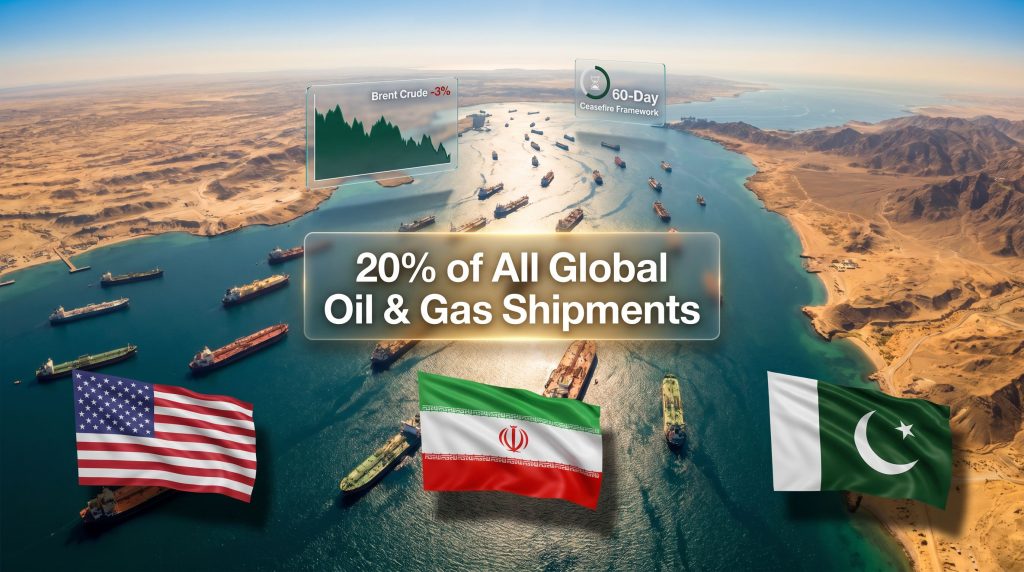
The Strait of Hormuz is not merely one of several important shipping lanes. It is, by a considerable margin, the most concentrated chokepoint for fossil fuel exports anywhere on Earth. Before the conflict that began in February 2026 following Operation True Promise 3, the strait served as the primary exit corridor for approximately one-fifth of all global oil and gas shipments, including a substantial portion of the liquefied natural gas exports originating from Qatar, the world's largest LNG exporter.
The alternative routes are either non-existent or deeply inadequate:
- Saudi Arabia operates the East-West Abqaiq-Yanbu pipeline, which can carry roughly 5 million barrels per day across the peninsula to Red Sea terminals, but this capacity falls far short of total Gulf export volumes.
- The UAE's Habshan-Fujairah pipeline bypasses the strait but has a capacity ceiling of approximately 1.5 million barrels per day, again insufficient to compensate for full Hormuz closure.
- Overland pipeline options for other Gulf producers such as Kuwait, Iraq, and Bahrain are either underdeveloped or nonexistent.
The arithmetic is unforgiving. The strait is not merely important; it is, in practical terms, irreplaceable for the volume of energy trade currently flowing through it. This is precisely why Iranian strategists have long regarded Hormuz control as their most potent asymmetric lever against Western pressure. Furthermore, the global LNG supply outlook has been significantly disrupted as a direct consequence of this leverage being activated.
The simultaneous enforcement of Iran's strait closure and the US naval blockade on Iranian ports represents the most severe disruption to Gulf energy transit infrastructure in over five decades, according to regional economic assessments cited by Arab News.
The Conflict Timeline and How the Blockade Emerged
The current crisis did not emerge from a single incident. It represents the culmination of years of escalating pressure, miscalculation, and ultimately military confrontation. The conflict's formal outbreak in February 2026, framed by Iran as Operation True Promise 3, set in motion a sequence of retaliatory measures that transformed the strait from a theoretical leverage point into an active theatre of economic warfare.
Iran enforced a closure of the waterway in direct response to what its military leadership characterised as US attacks on Iranian facilities in the country's southern regions. The United States countered by imposing a naval blockade on Iranian ports, creating a dual-closure dynamic that effectively paralysed both directions of Gulf maritime commerce. Iranian Foreign Ministry spokesman Esmail Baqaei stated that Iran's General Staff of the Armed Forces had formally concluded that safe passage through the strait could no longer be guaranteed, issuing warnings to all commercial vessels to exercise extreme caution.
The most recent military incident underscores just how volatile the current environment remains. On June 12–13, 2026, US Central Command confirmed that Iranian forces had launched multiple one-way attack drones targeting commercial vessels transiting the strait. US forces intercepted all of them. The timing of the drone launches, occurring even as diplomatic signals from both capitals were becoming more optimistic, illustrates a critical dynamic: military operations and peace negotiations are proceeding on separate and sometimes contradictory tracks.
Decoding the Islamabad MOU: What the Draft Deal Actually Contains
The framework under negotiation, referred to by Iranian Foreign Minister Abbas Araghchi as the Islamabad Memorandum of Understanding, takes its name from the Pakistani capital that hosted the key rounds of indirect talks. Pakistan has served as the primary mediating architecture throughout the negotiation process, a role President Trump publicly acknowledged, crediting Pakistan and Gulf states for facilitating the dialogue.
The draft deal, as it stands, is best understood as a temporary stabilisation mechanism rather than a comprehensive peace settlement. Its core provisions involve:
| Deal Component | US Position | Iran's Position |
|---|---|---|
| Strait of Hormuz | Full reopening to commercial traffic | Joint Iran-Oman control over waterway |
| Ceasefire Extension | 60-day extension of April 2026 truce | Linked to lifting of US naval blockade |
| Nuclear Program | Halt enrichment; follow-on negotiations | Down-blend uranium inside Iran; no dismantlement |
| Sanctions Relief | Conditional; tied to verifiable compliance | Immediate partial relief; freedom to sell oil |
| Asset Unfreezing | Possible as part of broader final deal | Required in any interim arrangement |
The 60-day window is designed to accomplish a specific purpose: provide enough breathing room for energy markets to stabilise while creating a structured pathway toward more difficult conversations about Iran's nuclear activities, sanctions architecture, and long-term regional security arrangements. Crucially, neither side had formally approved the arrangement as of June 13, 2026, and both publicly acknowledged that significant gaps remained.
Iran's Strategic Calculus: More Than Just a Ceasefire
What Tehran Is Actually Demanding
Iran's negotiating position is more layered than headlines suggest. The surface-level demands are relatively clear: lifting of the US naval blockade, joint control over the strait alongside Oman, partial sanctions relief, and the freedom to resume oil exports. However, underneath these specific asks lies a deeper strategic objective.
Tehran is attempting to use the current crisis as leverage to permanently institutionalise its role as a co-administrator of the world's most critical energy chokepoint. Araghchi's framing that Iran and Oman would retain joint control over Hormuz traffic under any deal is not simply a negotiating position; it is a structural demand that would fundamentally alter the legal and operational status of the waterway under international maritime law.
Araghchi stated publicly that Iran's preferred resolution for its highly enriched uranium stockpile is to dilute the material inside Iran rather than surrendering it or allowing international custody, a position that is structurally incompatible with Washington's verification requirements.
The IRGC's Parallel Narrative
While diplomats negotiate, the Islamic Revolutionary Guard Corps has been conducting its own communications strategy. In a statement marking the anniversary of Operation True Promise 3, the IRGC declared that Iran had emerged from the conflict stronger and more capable than ever, asserting that the country was operating at its highest level of military readiness and deterrence with comprehensive intelligence awareness of adversary activities.
The IRGC defended the Hormuz closure as a justified response to US aggression and warned that any threat to the waterway would carry serious consequences. This dual-track approach, where Iranian diplomats signal openness to a deal while the IRGC asserts permanent strategic dominance, creates a negotiating environment where verifying Iran's actual intentions becomes exceptionally difficult.
Washington's Three-Part Framework and Its Internal Tensions
The Primary Objectives
The US negotiating position rests on three interconnected goals:
- Restoring freedom of navigation through the Strait of Hormuz, which Washington views as the most urgent near-term priority given the strait's role in global energy supply chains.
- Constraining Iran's nuclear activities through verifiable follow-on negotiations, with the interim deal serving as a gateway to a more comprehensive denuclearisation framework.
- Consolidating the April 2026 ceasefire through a structured 60-day extension that avoids requiring either side to make irreversible concessions in the short term.
The Messaging Problem
The US position has been complicated by inconsistent public communications. On June 12, 2026, President Trump publicly accused Iran of negotiating in bad faith and misrepresenting agreed terms. Hours later, he shared Araghchi's optimistic social media post on his own feed, suggesting a more conciliatory posture.
This oscillation between accusation and engagement signals that Washington's internal deliberations are not fully resolved, a fact that Iranian negotiators have reportedly noted with concern. US officials have been explicit that sanctions relief and the unfreezing of Iranian assets would only be considered within a more complete and verifiable agreement, not as components of an interim framework. This hardline position on economic incentives creates a significant asymmetry: Iran is being asked to reopen the strait and constrain its nuclear programme before receiving the economic relief it most urgently needs.
The next major ASX story will hit our subscribers first
How Global Energy Markets Are Processing the Risk
The Hormuz Risk Premium
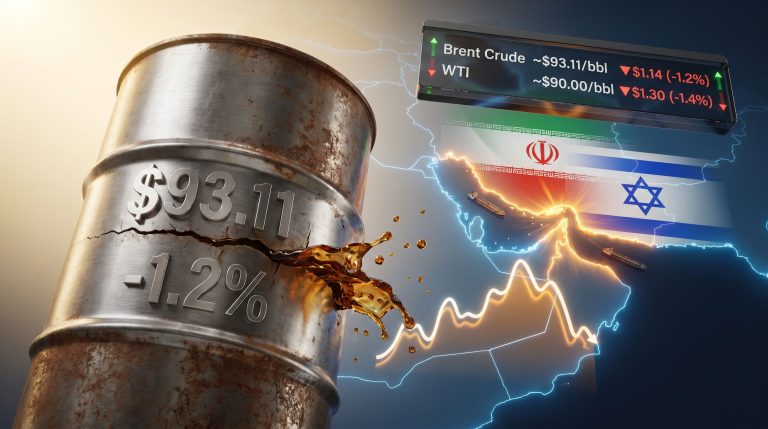
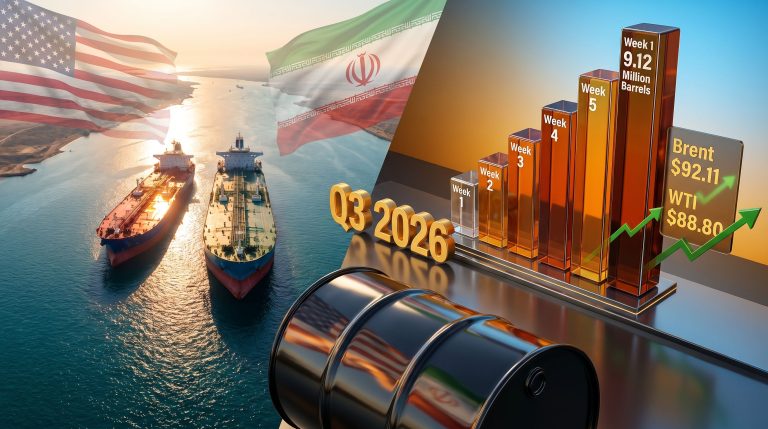
Energy traders have spent months attempting to quantify the precise discount or premium embedded in oil prices as a result of the strait's closure. The oil price geopolitical tensions driving current market behaviour have created an exceptionally complex pricing environment. The market's reaction to diplomatic progress has provided a partial answer: news of progress toward a deal caused Brent crude to fall more than 3% at one point, as traders priced in the possibility of Hormuz reopening.
That single-day move represents billions of dollars in market value and reflects the scale of the risk premium that has accumulated since the closure began. The scenario analysis for oil markets breaks down as follows:
| Scenario | Probability | Oil Market Impact |
|---|---|---|
| Full deal signed; strait reopens within 30 days | Moderate | Brent crude falls sharply; shipping costs normalise |
| 60-day interim deal; partial reopening | Higher probability near-term | Moderate price relief; uncertainty premium persists |
| Talks collapse; blockade continues | Possible | Oil prices spike; shipping insurance costs surge |
| Deal signed but IRGC disrupts implementation | Low-to-moderate | Volatile price action; risk premium re-emerges |
Beyond Oil: The Shipping and Trade Cascade
The impact of the strait's closure extends well beyond crude oil tankers. LNG carriers serving Asian markets, container vessels moving manufactured goods through the Gulf, and bulk commodity ships carrying agricultural products have all been forced to reroute or suspend operations. The resulting increase in shipping insurance premiums, voyage distances, and port congestion has added inflationary pressure to supply chains across Asia, Europe, and East Africa.
In addition, the broader market volatility reset triggered by this disruption has reverberated across bond markets, currency valuations, and commodity indices well beyond energy. A confirmed reopening of the strait would consequently represent a meaningful deflationary impulse for global trade, not merely an energy market event.
The Mediators: Pakistan, Oman, and the Architecture of Indirect Diplomacy
Pakistan's Unique Positioning
Pakistan's role as the primary mediator reflects a rarely discussed dimension of its foreign policy strategy. Islamabad maintains functional diplomatic and economic relationships with both Washington and Tehran, giving it access to both capitals that most other states cannot replicate. Pakistan also shares a long border with Iran, making regional stability a direct national interest rather than an abstract foreign policy concern.
The "Islamabad MOU" label, used by Araghchi himself, effectively elevates Pakistan's diplomatic standing in a region where it is more commonly discussed in the context of its own security challenges. Whether Islamabad can convert this mediation role into longer-term diplomatic capital remains an open question.
Oman's Proposed Role in Hormuz Governance
Oman's inclusion in the strait governance framework is perhaps the most technically significant and least discussed element of the proposed arrangement. Muscat has historically served as a trusted back-channel between Tehran and Western governments, most notably during the early negotiating phases that eventually produced the 2015 Joint Comprehensive Plan of Action.
Oman's geography, with its Musandam Peninsula forming the southern bank of the strait, also gives it a legitimate operational claim to co-administration of the waterway. By inserting Oman into the governance structure, Iran appears to be attempting to provide an internationally credible oversight mechanism that softens the perception of unilateral Iranian control without actually surrendering its strategic leverage. Furthermore, the geopolitical trade tensions surrounding this arrangement extend far beyond the immediate dispute, touching the foundational rules governing international maritime commerce.
The Unresolved Variables That Could Collapse the Deal
The Highly Enriched Uranium Impasse
No aspect of the current negotiation is more technically complex or politically charged than the fate of Iran's highly enriched uranium stockpile. Washington's position requires that any arrangement include verifiable constraints on Iran's nuclear activities, with international oversight of the HEU material. Tehran has categorically rejected the transfer of this material to a third party or any form of international custody, insisting that down-blending inside Iran is the only acceptable path.
These two positions are not merely far apart; they reflect fundamentally different assumptions about sovereignty, verification, and trust. Bridging them within a 60-day interim framework is, by most assessments, extraordinarily ambitious.
The Lebanon and Israel Complication
Araghchi's suggestion that a successful deal could also facilitate a resolution of the Lebanon conflict and lead to an Israeli withdrawal from occupied territories introduces a geopolitical variable that significantly expands the deal's scope. Israeli officials have publicly rejected this linkage, and the United States has not endorsed it. Allowing these third-party territorial issues to become formally attached to the Hormuz negotiation risks creating a framework so complex that it collapses under its own weight.
The Mutual Distrust Dynamic
Both sides have publicly accused the other of misrepresenting agreed terms, a pattern that has characterised the entire negotiation process. Iranian state media published an account of the proposed deal that diverged materially from Washington's version, creating public confusion and providing domestic audiences in both countries with incompatible narratives.
Iran's Foreign Ministry explicitly noted remaining wary of US positions, citing what it characterised as repeated shifts in Washington's stance during talks. This mutual suspicion creates a fragile negotiating environment where any public statement risks destabilising progress, and where the gap between what each side says publicly and what its negotiators accept privately may be wider than observers can readily assess. The trade war impact on oil markets has further complicated these dynamics, layering additional economic pressure onto an already fraught diplomatic process.
What to Monitor in the Days Ahead
For anyone tracking the US Iran Strait of Hormuz deal closely, the following indicators will signal whether negotiations are advancing or unravelling:
- Formal approval signals from Washington and Tehran, as neither side had signed any arrangement as of June 13, 2026.
- CENTCOM operational statements, particularly any further drone interception reports from the strait, which would indicate that military pressure is actively complicating diplomatic progress.
- Brent crude price movements, which function as a real-time market confidence gauge for deal progress.
- Pakistan's public diplomatic communications, as the mediating party's statements will reflect the actual temperature of the talks.
- Any IAEA or nuclear verification language emerging from either capital, which would signal whether the HEU impasse is moving toward resolution.
- Gulf state reactions, particularly from Saudi Arabia and the UAE, whose oil export revenues depend directly on unimpeded Hormuz transit and who have strong incentives to pressure both sides toward agreement.
Disclaimer: This article contains forward-looking analysis and scenario projections based on publicly available information as of June 13, 2026. Geopolitical situations are subject to rapid change. Nothing in this article should be construed as financial or investment advice. Readers should consult qualified advisers before making decisions based on energy market or geopolitical forecasts.
Want to Stay Ahead of the Resource Opportunities Emerging From Global Energy Disruptions?
Discovery Alert's proprietary Discovery IQ model delivers real-time alerts on significant ASX mineral discoveries, instantly identifying actionable opportunities in commodities directly impacted by geopolitical events like the Hormuz crisis — from LNG to critical minerals. Explore how historic mineral discoveries have generated substantial returns and begin your 14-day free trial today to position yourself ahead of the broader market.