June 29, 2026
The Strait of Hormuz: Why a 21-Mile Waterway Holds the Global Energy System Hostage
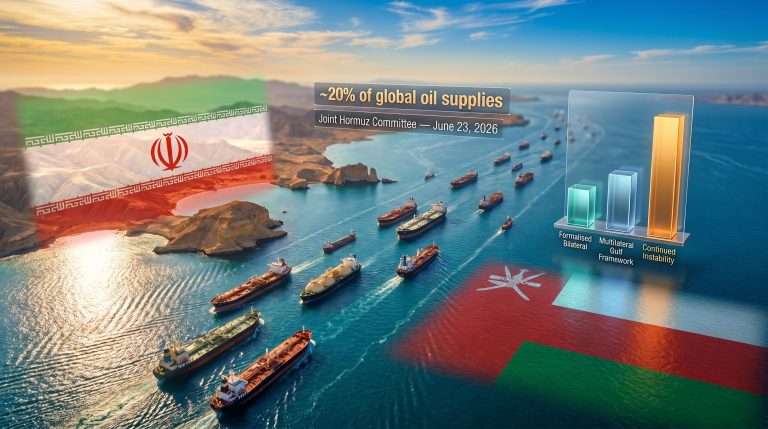
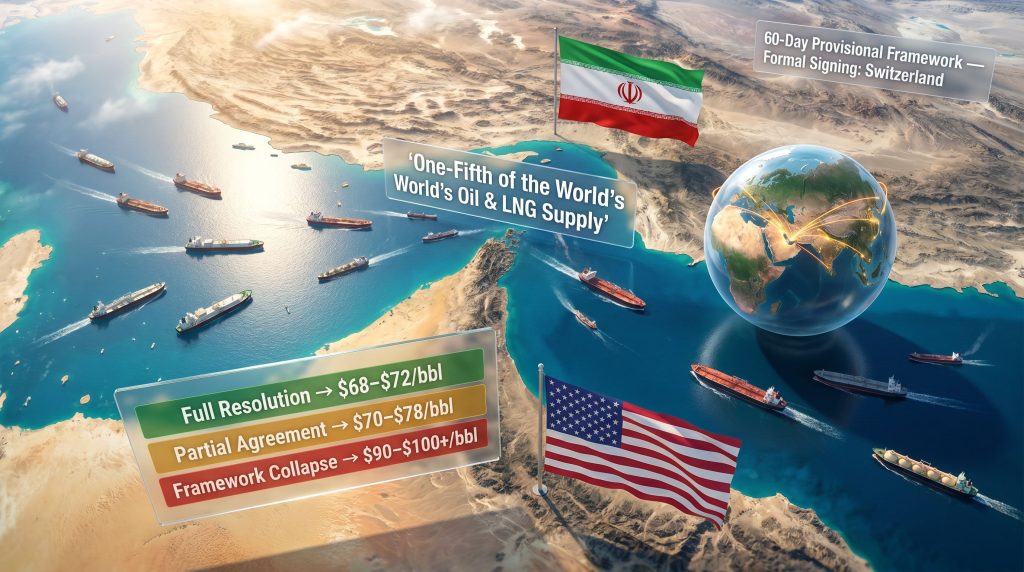
Every barrel of crude oil and every liquefied natural gas cargo moving through the Persian Gulf must navigate a single, narrow corridor connecting the Gulf of Oman to international shipping lanes. At its most constrained point, the navigable channel through the Strait of Hormuz measures roughly two miles in each direction. The implications of that geographic reality are staggering: approximately one-fifth of the world's combined oil and LNG supply depends on uninterrupted access to this passage, and no realistic alternative route exists for the landlocked producers that depend on it.
Understanding this context is essential to interpreting the significance of the provisional US Iran talks Strait of Hormuz ceasefire framework that emerged in late June 2026, and why its failure carries consequences far beyond bilateral diplomacy. The interplay of trade and geopolitics in this region makes the stakes particularly high for global energy markets.
When big ASX news breaks, our subscribers know first
The Architecture of the Provisional Framework: What Is and Is Not Agreed
Describing the current arrangement as a "deal" overstates its durability. What has been provisionally established is better understood as a structured pause — a platform designed to create enough diplomatic space for more substantive negotiations to take hold. Each element of the framework carries its own set of preconditions, and the chain of dependencies makes execution genuinely complex.
| Agreement Element | Status |
|---|---|
| Ceasefire Extension | Provisionally agreed, 60-day window |
| Strait of Hormuz Reopening | Conditionally agreed, pending US sign-off |
| Nuclear Enrichment Talks | Scheduled within the 60-day negotiation period |
| Sanctions Relief and Frozen Assets | Contingent on Iranian compliance |
| Formal Signing Ceremony | Expected in Switzerland |
| Trump Administration Final Approval | Not yet confirmed |
The framework establishes a 60-day window for diplomatic engagement across multiple simultaneous tracks: maritime security, nuclear enrichment protocols, sanctions relief, and frozen asset releases. The interdependence of these tracks creates what analysts describe as a cascading dependency chain. If either party perceives a default on any precondition, the entire structure risks unravelling before formal negotiations formally commence.
Iran's military has already complicated the picture by reasserting its right to close the Strait, citing what it characterises as unfulfilled US commitments, including the absence of a comprehensive ceasefire covering Lebanon. Meanwhile, US officials have publicly confirmed that both parties agreed to stand down and that vessel transits are continuing despite these declarations, revealing a notable communications gap at the highest levels of both governments.
A Crisis in Three Acts: How Escalation Reached This Point
The sequence of events that produced the June 2026 provisional framework followed a trajectory that has become disturbingly familiar in the modern geopolitics of the Persian Gulf: incremental escalation, partial de-escalation, renewed provocation, and emergency diplomacy.
- Late February 2026: US and Israeli military operations initiate the current conflict cycle, disrupting pre-war shipping conditions across Gulf transit corridors
- June 17, 2026: A memorandum aimed at halting hostilities is signed, producing a temporary stabilisation of Strait transit activity and an initial recovery in shipping volumes
- Late June 2026: Renewed military exchanges between US and Iranian forces erode ceasefire confidence; an unidentified strike on an oil tanker following the provisional framework signals that proxy or non-state actors retain destabilisation capacity
- June 29, 2026: Diplomatic channels reopen; President Donald Trump announces that talks are expected to resume in Doha following an Iranian request for engagement, though Iranian officials publicly disputed both the venue and the timeline
That final point deserves emphasis. The simultaneous contradiction between US and Iranian public statements about whether a meeting was officially scheduled is not merely an administrative discrepancy. It reflects a deeper structural fault in the negotiation process: both parties are managing domestic political audiences while attempting to construct a workable bilateral framework, and those two objectives are frequently in tension.
How Energy Markets Are Pricing Hormuz Risk in Real Time
Is the Market Underpricing Geopolitical Risk?
Brent crude's behaviour throughout this cycle has been instructive. Prices briefly rose on escalation fears before retreating as diplomatic signals emerged, with Brent trading below $73 per barrel following confirmation that both sides had agreed to pause hostilities. That price behaviour tells a story about market psychology that goes beyond the immediate news cycle.
Energy traders have increasingly adopted what market participants describe as a mean-reversion posture toward Middle East conflict premiums. The logic is intuitive: repeated cycles of escalation and de-escalation since the 2018 US withdrawal from the Joint Comprehensive Plan of Action (JCPOA) have conditioned professional traders to discount headline geopolitical risk as temporary and reversible. Furthermore, Brent and WTI futures markets have reflected this cautious but watchful sentiment throughout the crisis.
Haris Khurshid, chief investment officer at Karobaar Capital LP, described this sentiment to Bloomberg, noting that market participants have grown comfortable treating Hormuz-related price movements as tactical in nature rather than indicators of structural change to global supply fundamentals, and that this posture is likely to persist until something fundamentally alters the underlying equation.
Critical Risk Note: The behavioural conditioning described above carries its own embedded danger. Markets that systematically fade geopolitical risk premiums become progressively less capable of pricing a genuine structural disruption accurately. If and when a real Strait closure materialises, the absence of adequate risk premium in prices could amplify the shock considerably.
The three-scenario framework below captures the range of realistic near-term oil market outcomes:
| Scenario | Probability | Brent Crude Trajectory |
|---|---|---|
| Full diplomatic resolution within 60 days | Low to moderate | Continued softness; $68-$72/bbl range |
| Partial agreement with ongoing proxy tensions | Most likely near-term outcome | Range-bound volatility, $70-$78/bbl |
| Framework collapse and Strait closure | Tail risk, non-negligible | Spike potential toward $90-$100+/bbl |
The tail risk scenario deserves more attention than current pricing suggests. A genuine Strait closure would not merely push crude prices higher. It would trigger a simultaneous surge in war risk insurance premiums, force voyage rerouting around the Cape of Good Hope (adding approximately 10-15 days to voyages from the Gulf to Asian markets), and potentially disrupt global LNG supply deliveries to time-sensitive buyers in Japan and South Korea.
The Jurisdictional Battle Over Hormuz Transit Governance
One of the most consequential and underreported dimensions of the current US Iran talks Strait of Hormuz negotiations concerns a proposal that could permanently alter the economics of global energy transportation.
Iranian Deputy Foreign Minister Kazem Gharibabadi has been engaged in discussions with Oman regarding future administrative arrangements for the Strait. Reports indicate that proposals under consideration include the imposition of transit charges on vessels using the waterway, effectively converting an internationally recognised passage corridor into a toll route under Iranian administrative influence.
The reaction from Western governments and Gulf Arab states has been unified and immediate. The objections operate on three distinct levels:
- Economic: Transit charges would directly increase the landed cost of energy for import-dependent economies, with the burden falling disproportionately on East and South Asian buyers who source the majority of their crude and LNG from Gulf producers
- Legal: The proposal conflicts with the principle of innocent passage codified in the United Nations Convention on the Law of the Sea (UNCLOS), under which straits used for international navigation carry specific legal protections against unilateral transit restrictions or fees
- Precedential: Establishing a toll mechanism on the Strait of Hormuz would create a template potentially applicable to other critical maritime chokepoints, including the Malacca Strait, Bab-el-Mandeb, and the Suez Canal, each of which carries vital global trade flows
Oman's involvement in these discussions adds a significant multilateral dimension. Oman has historically served as a backchannel intermediary between Iran and Western powers — a role that derives from its geographic position sharing the Strait and its longstanding policy of neutrality in regional conflicts. Consequently, Oman's participation transforms what might otherwise be a purely bilateral US-Iran dispute into a more complex regional governance question.
Nuclear Enrichment: The Agenda Item That Could Define or Destroy the 60-Day Window
The provisional framework does not limit itself to maritime security. It explicitly incorporates discussions on Iran's nuclear enrichment programme and the disposition of its highly enriched uranium stockpiles, effectively bundling two of the most contentious issues in modern geopolitics into a single 60-day negotiating window.
Iran's enrichment capacity has expanded substantially since the 2018 JCPOA withdrawal. The country is understood to have accumulated stockpiles of uranium enriched to levels well above those permitted under the original agreement, a development that has significantly altered the nonproliferation calculus for Western governments.
Three scenarios define the realistic range of nuclear negotiation outcomes within the current timeframe:
- Confidence-building measures only: Iran agrees to limited transparency steps such as enhanced IAEA access without committing to substantive enrichment rollbacks. This represents the most likely near-term outcome and carries the lowest immediate geopolitical value.
- Partial enrichment cap: A negotiated ceiling on enrichment levels in exchange for phased sanctions relief and frozen asset releases. This outcome carries moderate probability but would represent a significant diplomatic achievement if realised.
- Full collapse: Disagreement over enrichment thresholds or verification mechanisms triggers Iranian withdrawal from talks and a potential reassertion of Strait closure. Low probability but highest consequence.
The nuclear dimension fundamentally changes the character of these negotiations. A maritime security deal that does not address enrichment concerns is unlikely to produce lasting sanctions relief, and a sanctions relief package without enrichment concessions is unlikely to survive domestic political scrutiny in Washington.
The next major ASX story will hit our subscribers first
Regional Energy Security: Who Bears the Greatest Exposure
The asymmetry of Hormuz dependency across global regions is one of the most important and frequently overlooked dimensions of this story. However, the risk is not distributed evenly.
| Region | Hormuz Dependency | Primary Vulnerability |
|---|---|---|
| East Asia (Japan, South Korea, China) | Very High | Approximately 65-70% of Gulf oil exports flow eastward |
| South Asia (India) | High | Major importer of Gulf crude and LNG |
| Europe | Moderate | Qatari LNG exports transit the Strait |
| United States | Lower (net exporter) | Indirect exposure via allied economies and global benchmarks |
Japan and South Korea present a particularly acute case. Both countries maintain strategic petroleum reserves calibrated to buffer short-term supply disruptions, but neither reserve system is designed to absorb a prolonged Strait closure. Japan's oil self-sufficiency rate sits below 1%, making it structurally dependent on uninterrupted Gulf access in a way that few other advanced economies are.
India's position is also worth examining carefully. As one of the world's fastest-growing major oil consumers and a net importer of Gulf crude, India has a direct economic stake in Strait stability that its traditionally neutral foreign policy posture complicates. A sustained Hormuz disruption would force Indian refiners to compete for Atlantic Basin and West African crude in a tighter, higher-cost market.
Shipping Industry Conditions: The Ground-Level Reality
Beyond headline oil prices, the condition of physical shipping through the Strait provides the most direct indicator of how the situation is actually developing. Vessel transits had partially recovered following the June 17 memorandum before slowing again amid renewed hostilities. As of late June 2026, shipping activity has not fully returned to pre-conflict baseline levels.
Shipowners continue to operate under elevated security protocols, and war risk insurance premiums remain above pre-crisis levels across the market. The unidentified strike on an oil tanker following the provisional framework announcement represents the single most destabilising event since the deal emerged. This is because it demonstrates that ceasefire declarations between state actors do not automatically neutralise the threat environment faced by commercial vessels operating in the corridor.
The potential for oil market disruption extends well beyond immediate price movements. The US proposal to potentially impose its own transit tolls on the waterway as a negotiating lever introduces additional uncertainty for freight operators. Regardless of which party controls any future toll mechanism, the addition of regulatory complexity and cost to Hormuz transits would represent a structural change to global energy freight economics.
Key Milestones That Will Define the Next 60 Days
For analysts, investors, and energy market participants tracking the US Iran talks Strait of Hormuz situation, the following indicators carry the most diagnostic weight.
Near-term signals (next 30 days):
- Formal confirmation of a meeting venue for resumed US-Iran talks, whether in Doha or an alternative location
- Trump administration sign-off on the provisional framework, which remains the single most consequential near-term variable for the deal's viability
- Daily shipping traffic data through the Strait as a real-time confidence barometer
- Whether the Switzerland signing ceremony proceeds as anticipated, which would represent the most significant diplomatic milestone of the current conflict cycle
Medium-term structural questions (within the 60-day window):
- Whether nuclear enrichment discussions produce any verifiable, measurable commitments that can anchor a longer-term agreement
- The trajectory of Lebanon ceasefire negotiations, which Iran has explicitly linked to its own compliance obligations under the Hormuz framework
- OPEC's market influence and potential production strategy adjustments in response to the evolving Hormuz risk picture
- Whether Oman's engagement in Strait governance discussions advances or is shelved as part of a broader settlement
Frequently Asked Questions: US-Iran Talks and the Strait of Hormuz
What percentage of global oil supply passes through the Strait of Hormuz?
Approximately 20% of the world's oil and LNG supply transits the Strait annually, making it the most strategically significant maritime energy corridor on the planet. Saudi Arabia, the UAE, Kuwait, Iraq, and Qatar all depend on the Strait as their primary or sole oil export route.
Has the Strait of Hormuz been officially reopened?
The provisional June 2026 framework includes a conditional agreement to restore pre-conflict transit conditions. However, Iran's military has since reasserted closure rights, citing unfulfilled US commitments. US military sources indicate that traffic is continuing to flow through the corridor despite these declarations, creating an ambiguous operational environment for commercial shipping.
Why hasn't the Trump administration formally signed the agreement?
As of late June 2026, the framework remains conditional on the fulfilment of preliminary terms by both parties. The absence of formal US presidential endorsement introduces meaningful uncertainty over whether the 60-day negotiating window will officially commence on schedule.
What are the proposed Strait of Hormuz transit charges?
Iranian officials have explored the possibility of imposing fees on vessels using the Strait, potentially administered through an arrangement with Oman. This proposal has drawn firm opposition from the US, European governments, and Gulf Arab states, who argue it would raise global energy costs and establish a precedent for restricting access to other international maritime corridors protected under UNCLOS.
What happens to oil prices if talks collapse?
A framework breakdown and resulting Strait closure would likely push Brent crude toward the $90-$100+ per barrel range, trigger a significant surge in freight and war risk insurance costs, and force supply rerouting that would add weeks to voyage times for Asian buyers. The downstream impact on inflation-sensitive economies would be substantial.
Disclaimer: This article contains forward-looking scenarios and market projections based on publicly available information as of late June 2026. These projections involve significant uncertainty and should not be construed as investment advice. Energy market conditions and diplomatic developments may change materially and rapidly. Readers should conduct their own due diligence before making any investment or commercial decisions based on information contained herein.
Want to Stay Ahead of the Resource Opportunities Emerging From Global Energy Volatility?
Geopolitical flashpoints like the Strait of Hormuz crisis create significant ripple effects across commodity markets — and Discovery Alert's proprietary Discovery IQ model scans ASX announcements in real time, delivering instant alerts on significant mineral discoveries so subscribers can identify actionable opportunities before the broader market reacts. Explore historic discoveries and their returns on Discovery Alert's dedicated discoveries page, and begin your 14-day free trial today to position yourself ahead of the next major market move.