August 24, 2026
Global energy markets face unprecedented volatility as the US-Iran war impact on oil prices creates ripple effects throughout international petroleum trading systems. The sophisticated financial instruments, algorithmic trading systems, and global supply chain networks that define modern petroleum markets create unique vulnerabilities to crisis scenarios that extend far beyond simple supply-and-demand calculations.
Understanding these complex market dynamics requires examining how fear-based trading patterns, infrastructure chokepoints, and policy responses interact during periods of heightened uncertainty. The intersection of behavioural economics, logistics constraints, and strategic resource management reveals why energy crises often produce outcomes that exceed what fundamental analysis might predict.
Understanding Market Psychology During Energy Crises
Historical analysis reveals that energy price volatility during Middle East conflicts stems from multiple interconnected factors beyond actual supply disruptions. The relationship between geopolitical risk premiums and market psychology creates amplification effects that can drive prices substantially higher than physical shortages would justify.
Fear-Based Trading Amplification Mechanisms
Modern commodity markets operate through sophisticated algorithmic trading systems that respond instantaneously to geopolitical developments. These systems analyse news feeds, social media sentiment, and technical indicators to execute trades within milliseconds of conflict-related announcements.
Recent market data demonstrates this amplification effect clearly. WTI crude futures surged more than $12 per barrel (approximately 19 percent) in just four trading sessions following the onset of regional conflict. April Nymex WTI reached nearly $79.65 per barrel as strategic waterway transit became paralysed.
The premium structure observed in alternative crude supplies illustrates how rapidly markets price uncertainty. US Gulf Mars crude demonstrated extreme premium expansion, rising to $7 per barrel over second-month ICE Brent. This represented a $5 per barrel gain from the previous day and reached a third consecutive six-year record premium.
This Louisiana-delivered medium sour crude traded at these elevated levels as buyers sought reliable alternatives to Middle Eastern imports. Furthermore, the trade war oil impacts have created additional complexity in global pricing mechanisms.
Historical Context of Crisis Response Patterns
Previous Middle East conflicts provide essential context for understanding current market behaviour. The 1973 oil embargo, Iran-Iraq War, and Gulf War each demonstrated how geopolitical tensions translate into sustained price premiums that persist beyond actual supply disruptions.
The pattern typically involves:
- Initial shock pricing within 24-48 hours of conflict onset
- Sustained premium periods ranging from weeks to months
- Gradual normalisation dependent on conflict resolution timelines
- Long-term structural changes in supply diversification strategies
Regional Import Dependency Analysis
Market vulnerability assessments reveal concentrated exposure to specific crude types from disrupted regions. Middle Eastern crudes accounted for approximately 24 percent of all US waterborne crude imports from November 2025 to February 2026. This totalled 587,000 barrels per day.
Of the 277,000 barrels per day delivered to the US Gulf coast during that period, approximately 95 percent was medium sour crude. This indicates highly concentrated supply chain dependency that explains why refiners demonstrate willingness to pay substantial premiums for alternative supplies.
Export interest for Mars crude increased despite elevated freight rates. The April Mars outright price assessment reached $88.01 per barrel, representing an increase of $5.20 per barrel relative to June ICE Brent. This was more than $11 per barrel from February 27, 2026.
Critical Infrastructure Vulnerabilities and Transit Risks
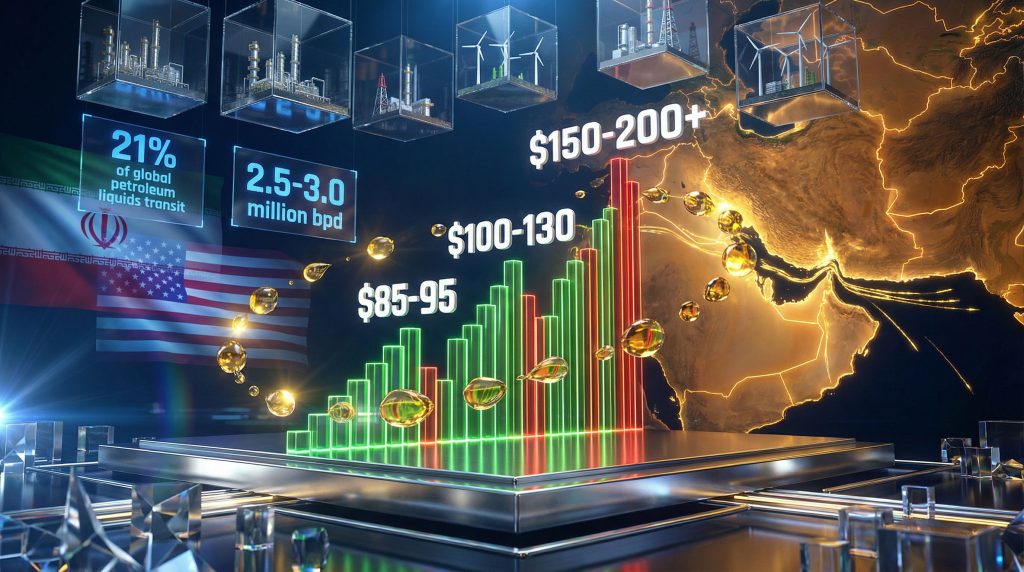
The Strait of Hormuz represents the world's most critical energy transit chokepoint. Approximately 21 percent of global petroleum liquids pass through this narrow waterway. When military conflicts directly threaten this passage, the ripple effects extend throughout global energy markets within hours.
Strategic Waterway Disruption Analysis
Tanker traffic through the Strait of Hormuz came to a near standstill following military strikes. This effectively closed the strategic waterway and halted most regional exports. This behavioural response from vessel owners reflects how operational risk aversion can create supply constraints.
Most vessel owners became unwilling to transit the strait as fighting continued. This forced some upstream production offline, demonstrating how infrastructure vulnerability creates cascading supply effects.
The impact extends beyond immediate supply concerns. Similarly, developments in Saudi exploration licenses affect long-term regional production capacity planning during crisis periods.
Port Operations and Recovery Timelines
Regional port infrastructure demonstrated varied responses to security threats. Some facilities implemented precautionary shutdowns while others maintained operations. The pattern of port responses provides insight into operational resilience:
| Port Location | Initial Response | Recovery Timeline | Operational Status |
|---|---|---|---|
| Abu Dhabi Ports | Normal operations continued | No shutdown | Fully operational |
| Jebel Ali | Brief suspension | Hours | Resumed after debris clearing |
| Kuwait Shuaiba | Precautionary shutdown | Gradual resumption | Phased restart |
| Oman Salalah | Temporary suspension | 24-48 hours | Full operations resumed |
| Iraqi Umm Qasr | Continued regional trade | Ongoing | Regional traffic only |
Approximately 16-17 cargo ships were waiting in designated areas at Iraq's Umm Qasr North and South ports. Authorities noted that port work continued with streamlined procedures. However, cargo operations between Iraqi ports and regional Gulf ports continued normally. Operations through or beyond the strait remained suspended for all tanker types.
Alternative Routing Constraints and Costs
When primary transit routes become unavailable, alternative shipping pathways face significant capacity limitations and cost escalations. Circumnavigation routes around the African continent via the Cape of Good Hope require substantially longer transit times.
The logistics of alternative routing create cascading effects throughout supply chains:
- Extended transit times: 2-3 weeks additional shipping duration
- Increased freight costs: Premium rates for longer routes
- Limited vessel availability: Reduced tanker capacity for alternative routing
- Insurance premium escalations: Higher coverage costs for conflict-adjacent shipping
Downstream Industry Impact Assessment
Refinery operations across the Asia-Pacific region face immediate feedstock availability challenges when Middle Eastern crude supplies face disruption. The concentration of medium sour crude imports creates particular vulnerability for refineries optimised to process these specific crude qualities.
Japanese and Indonesian refiners demonstrated rapid response patterns. Japanese facilities purchased alternative Mars crude supplies and Indonesia announced plans to shift toward other crude sources, including US supplies. Most of Indonesia's Middle Eastern crude imports typically consist of Saudi Arabian medium sours, requiring operational adjustments.
Strategic Response Scenarios and Market Implications
Different conflict escalation scenarios produce distinct market responses and policy interventions. Understanding these scenario pathways helps predict both short-term price movements and longer-term structural changes in global energy systems.
Limited Regional Conflict Response (3-6 months)
During shorter-duration conflicts, market responses typically focus on strategic reserve deployments and immediate supply reallocation. Current pricing patterns suggest markets are pricing scenarios within this timeframe. WTI futures maintain levels consistent with limited disruption expectations.
The International Energy Agency warned that while global oil markets had been in significant surplus throughout 2025, prolonged supply disruptions could flip the market into deficit conditions. This shift from surplus to deficit represents the critical threshold where emergency response mechanisms become necessary.
Strategic petroleum reserve deployment represents the primary policy tool for shorter-duration crises. The US Strategic Petroleum Reserve capacity exceeds 400 million barrels, providing substantial emergency resources. However, these reserves represent finite, one-time releases rather than sustainable supply alternatives.
Extended Regional War Implications (6-18 months)
Prolonged conflicts necessitate more fundamental supply chain restructuring and investment reallocation. Historical precedent suggests that conflicts extending beyond six months trigger permanent changes in supply diversification strategies. The US-Iran war impact on oil prices becomes more pronounced during extended scenarios.
OPEC production impact assessments indicate maximum sustainable increases of 2.5-3.0 million barrels per day. However, actual spare capacity deployment depends on member country political decisions rather than technical capabilities alone.
Investment capital begins flowing toward alternative production sources when conflict timelines extend beyond immediate crisis horizons. North American shale development historically responds to sustained price levels above $70-75 per barrel. This makes extended conflicts catalysts for domestic production expansion.
Broader Regional Destabilisation Effects (18+ months)
The most severe scenario involves expanded conflict affecting multiple regional producers simultaneously. Such scenarios historically produce permanent structural changes in global energy architecture and accelerated transitions toward alternative energy sources.
Multi-year conflicts trigger emergency renewable energy deployment programmes and wartime-level government investment in energy security infrastructure. Policy responses during extended crises often include:
- Accelerated renewable energy development timelines
- Emergency nuclear power construction programmes
- Strategic energy rationing and allocation systems
- Comprehensive supply chain diversification mandates
Global Supply Reallocation and Trade Flow Changes
When traditional supply sources become unavailable, global energy markets rapidly reorganise trade flows to minimise disruptions. This reallocation process reveals both the resilience and limitations of existing energy infrastructure.
Immediate Supply Diversification Responses
Market participants demonstrate remarkable speed in identifying and securing alternative supplies during crisis periods. Export interest for non-Middle Eastern crude grades increases immediately. Buyers willingly pay substantial premiums for supply security.
Recent patterns show Japanese refiners purchasing Mars crude and Indonesian facilities announcing shifts to other crude sources. These rapid purchasing decisions reflect strategic supply security prioritisation over cost optimisation during uncertainty periods. In addition, US‑China trade impacts influence alternative supply routing decisions.
Regional Production Capacity Utilisation
Alternative producing regions face immediate pressure to increase output when major suppliers experience disruptions. Canadian oil sands, US tight oil formations, and Norwegian offshore fields represent the primary sources capable of rapid production increases.
However, spare production capacity limitations constrain how quickly alternative sources can compensate for major supply disruptions. Most non-OPEC+ producers operate at or near maximum sustainable production levels during normal market conditions. This limits emergency response capabilities.
Asian Market Supply Security Responses
Chinese strategic behaviour during energy crises provides insight into how major importing nations prioritise supply security over market efficiency. China's top regulator instructed oil firms to halt exports of clean products to ensure domestic supply. This demonstrates how importing nations reverse normal trade patterns during supply uncertainty.
Chinese LNG importers adopted cautious approaches. They had no immediate plans to purchase spot cargoes while closely monitoring delivery schedules of contracted LNG supply. This behaviour reflects strategic assessment of import dependence, underground gas storage inventory levels, and near-term demand trends.
South Korean importers prepared to issue tenders for prompt LNG cargoes amid disrupted supplies from QatarEnergy. The world's second-largest LNG exporter's disruption indicated how quickly Asian markets seek alternative supply arrangements.
Long-Term Energy Security Transformation
Major energy crises often catalyse permanent changes in energy security policies and investment strategies. The US-Iran war impact on oil prices extends beyond immediate market disruptions to influence decade-long energy transition planning.
Accelerated Energy Transition Timelines
Crisis-driven policy responses frequently accelerate renewable energy development schedules that would otherwise require years of gradual implementation. Emergency energy programmes receive political support and funding levels that peacetime policies cannot achieve.
Wartime energy security concerns override normal cost-benefit calculations, enabling rapid deployment of alternative energy infrastructure. Historical examples include accelerated nuclear power programmes during previous oil crises and emergency renewable energy initiatives during supply disruptions.
Consequently, green transition strategies receive enhanced priority during energy security crises. Governments recognise the strategic value of domestic renewable energy capacity.
Investment Capital Reallocation Patterns
Extended energy crises redirect investment capital flows from traditional fossil fuel development toward alternative energy sources and energy security infrastructure. This capital reallocation often produces permanent changes in energy system architecture.
Venture capital flows toward clean technology startups increase during energy crises as investors recognise market opportunities in alternative energy solutions. Sovereign wealth funds adjust strategies to prioritise national energy security investments over pure financial return optimisation.
Geopolitical Energy Alliance Formation
Major energy crises often lead to new strategic alliances and energy cooperation agreements designed to reduce dependence on unstable regions. These alliance formations create lasting changes in global energy governance structures.
The International Energy Agency's role in emergency response coordination expands during crisis periods. This often results in enhanced permanent cooperation mechanisms among member countries. New energy partnerships emerge between alternative suppliers and major importing nations seeking supply diversification.
Technology Development Acceleration
Energy crises drive emergency research and development funding for energy technologies that enhance national security. Battery technology development, smart grid infrastructure, and energy efficiency systems receive accelerated investment during crisis periods.
Hydrogen economy development historically accelerates during energy security crises as governments recognise the strategic value of domestically produced energy carriers. Industrial-scale hydrogen infrastructure projects receive emergency funding and expedited permitting during major energy disruptions.
Market Structure Evolution
The fundamental structure of global energy markets often evolves permanently following major crises. New trading mechanisms, price discovery systems, and risk management tools emerge to address vulnerabilities revealed during disruptions.
Energy futures markets expand to include new contract specifications, delivery points, and risk hedging instruments designed to manage geopolitical supply risks. These market innovations typically persist long after immediate crisis conditions resolve. They create more resilient energy market architecture.
However, experts warn that the US-Iran war impact on oil prices could fundamentally reshape global energy trading patterns for years to come. This transformation affects everything from pricing mechanisms to strategic reserve policies.
Investment decisions during energy market crises involve substantial risks and should be evaluated carefully with professional financial guidance. This analysis is based on publicly available market information and does not constitute investment advice.
Looking to Capitalise on Energy Market Volatility?
Discovery Alert's proprietary Discovery IQ model delivers real-time alerts on significant ASX mineral discoveries, enabling subscribers to identify actionable opportunities during market turbulence when resource stocks often present exceptional value propositions. Begin your 14-day free trial today and position yourself to capture market-leading opportunities whilst others remain uncertain about volatile market conditions.