June 24, 2026
The Architecture of a Historic Oil Policy Reversal
Global oil sanctions regimes are rarely dismantled in a single stroke. They accumulate over years through layered legal instruments, secondary enforcement mechanisms, and deeply conditioned risk aversion across the banking, shipping, and insurance sectors that underpin commodity trade. When those structures are unwound, the speed of commercial response rarely matches the speed of the political decision.
That gap between legal permission and commercial reality sits at the centre of the most consequential energy policy development of 2026: the US 60-day Iranian oil sanctions waiver formally designated as General License X. Understanding why markets reacted with restraint, why buyers remain hesitant, and what the instrument's short duration means for global supply requires looking beyond the headline diplomatic narrative and into the mechanics of how oil sanctions actually function at a commercial level.
When big ASX news breaks, our subscribers know first
General License X: What the Instrument Actually Authorises
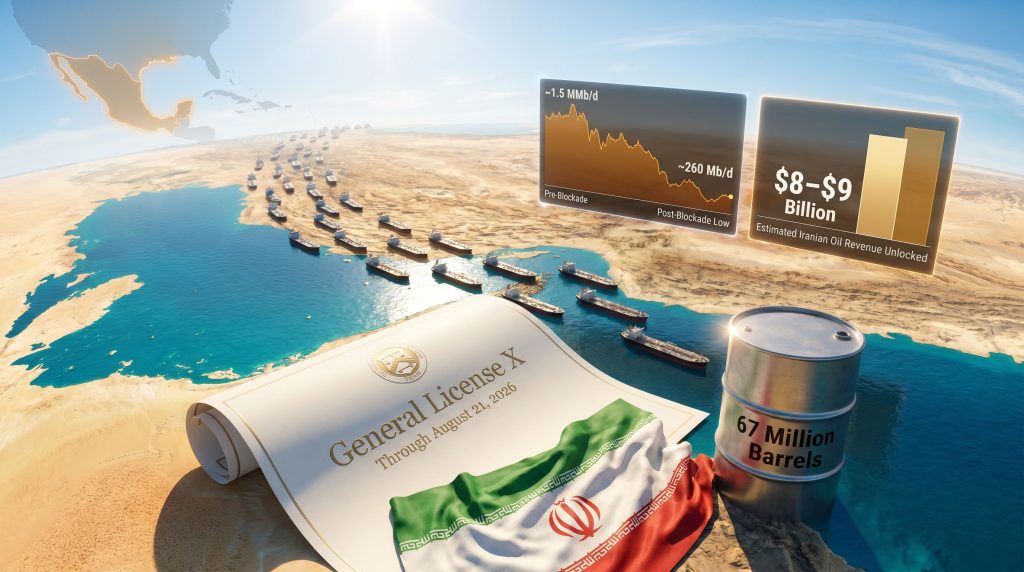
Issued by the U.S. Department of the Treasury on June 23, 2026, General License X is a temporary authorisation that runs through August 21, 2026. Its scope is broader than any comparable instrument issued in recent decades. Furthermore, it explicitly permits, for the first time since the 1979 Islamic Revolution, the importation of Iranian crude oil into the United States itself.
| Feature | Detail |
|---|---|
| Instrument Type | Temporary General License (General License X) |
| Issuing Authority | U.S. Department of the Treasury |
| Effective Period | Through August 21, 2026 |
| Legal Basis | June 17, 2026 Versailles MOU (14-point framework) |
| Scope | Crude oil, petrochemicals, petroleum products, previously sanctioned vessels |
| Historic First | Permits U.S. importation of Iranian crude for first time since 1979 |
| Dollar Transactions | Authorises Iranian oil trade in USD for first time in over 40 years |
| Exclusions | Crimea, Cuba, North Korea, sanctioned Ukrainian territories |
The license also authorises dollar-denominated transactions in Iranian oil trade, a provision that had been structurally blocked for more than four decades. Previously sanctioned vessels, blacklisted for their involvement in Iranian oil movements, are brought within the scope of permissible commerce under the instrument. The oil sanctions impacts from comparable regimes demonstrate just how deeply these structural barriers become embedded in commercial practice over time.
Treasury Secretary Scott Bessent publicly announced the action, confirming that Iran had committed to guaranteeing unimpeded maritime passage through the Strait of Hormuz and had agreed to allow International Atomic Energy Agency inspectors to return to Iranian territory.
What Iran Committed to in Exchange
The waiver fulfils Washington's obligations under the 14-point Versailles MOU signed June 17, 2026, by President Trump and Iranian President Masoud Pezeshkian. Iran's side of the ledger includes several distinct commitments:
- Guaranteed, unimpeded transit rights through the Strait of Hormuz for international commercial shipping
- Re-admission of IAEA nuclear inspectors onto Iranian territory
- Participation in active peace negotiations in Switzerland, with a final agreement targeted within the 60-day window
- Acceptance of structured sanctions relief architecture covering oil financing, shipping, and insurance services
The MOU also encompasses provisions for the unfreezing of Iranian sovereign assets and structured cash investment flows, though the precise operational timelines for those elements remain unspecified as of the waiver's issuance.
Four Decades of Sanctions: Why the Reversal Is Structurally Significant
Sanctions against Iranian oil did not arrive in a single legislative moment. They accumulated incrementally across administrations, each layer adding new enforcement mechanisms and widening the perimeter of secondary liability for third-party institutions. Consequently, reversing such deeply embedded structures presents challenges that extend far beyond the issuance of any single instrument.
The Trajectory That Led to April 2026
- Post-1979: All U.S. imports of Iranian crude ceased following the Islamic Revolution
- 1990s: Secondary sanctions progressively severed remaining commercial pathways for non-U.S. buyers
- April 2026: A U.S. naval blockade drove Iranian oil exports from approximately 1.5 million barrels per day (MMb/d) to roughly 260,000 barrels per day (Mb/d), a collapse exceeding 80% of pre-blockade volumes
- June 17, 2026: Versailles MOU signed between Washington and Tehran
- June 23, 2026: General License X announced by Secretary Bessent
- First post-blockade week: Maritime intelligence tracking by TankerTrackers recorded approximately 3.8 million barrels moving through the Strait of Hormuz, reflecting the release of vessels carrying accumulated cargo rather than a new production baseline
That initial export surge carries an important analytical caveat. The 3.8 million barrels represents stranded cargo clearing rather than evidence of restored production capacity. Analysts caution against extrapolating a sustainable throughput rate from what is essentially an inventory release event. Questions around oil trade and geopolitics are, however, rarely confined to the immediate supply picture alone.
The $8-9 Billion Revenue Estimate Explained
Analysts estimate the US 60-day Iranian oil sanctions waiver could unlock between $8 billion and $9 billion in oil revenue for Iran by enabling the commercial movement of approximately 67 million barrels of crude currently held in Gulf storage. This stockpile accumulated during the naval blockade period and represents trapped inventory, not forward production capacity.
This distinction matters significantly for market impact assessments. The near-term supply addition is finite and bounded by the size of the accumulated stockpile. Medium-term restoration toward pre-blockade levels of approximately 1.5 MMb/d is a separate question, dependent on production infrastructure, buyer re-engagement, and most critically, whether the license is renewed beyond August 21.
Why Commercial Re-Engagement Lags Legal Authorisation
The structural gap between formal permission and actual market behaviour is not a new phenomenon in sanctions relief episodes. It reflects the asymmetric risk calculus that financial institutions apply when engaging with jurisdictions that have a history of secondary sanctions enforcement.
Three Barriers Slowing Buyer Commitment
1. Institutional Risk Aversion Conditioned Over Decades
Banks that have operated under secondary sanctions regimes develop compliance frameworks that treat Iranian transactions as categorically high-risk, independent of any specific legal instrument. Reversing that institutional posture requires more than a 60-day license. It requires credible assurance that the authorisation will not be rescinded before transactions clear.
2. The Commercial Contract Horizon Problem
Standard oil trading contracts encompassing vessel chartering, cargo insurance, and trade finance routinely require lead times that approach or exceed the duration of the current license window. A buyer entering a contract under General License X must consider the probability that the contract's execution period extends beyond August 21, creating potential legal exposure if the license is not renewed.
3. Snap-Back Risk as a Structural Pricing Factor
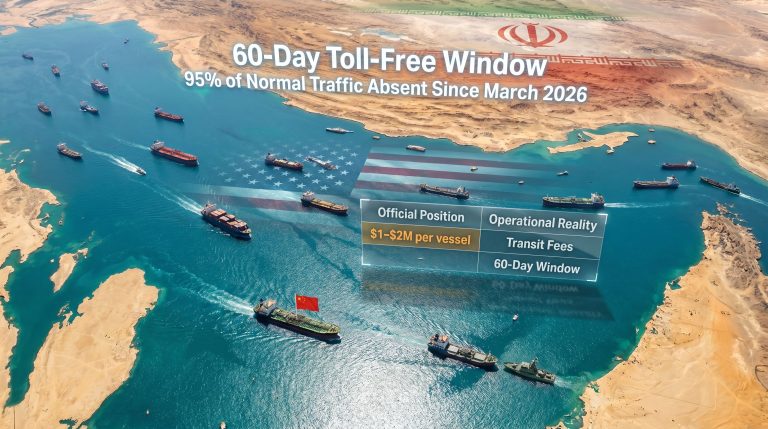
Oil market analyst Homayoun Falakshahi of Kpler has observed that if the US 60-day Iranian oil sanctions waiver is confined to the ceasefire extension period without a credible renewal pathway, international buyers may remain unwilling to commit to Iranian crude regardless of what the formal legal text permits. This oil market disruption risk is further reinforced by the episode on the weekend of June 21-22, when Iran announced a Strait of Hormuz closure that U.S. Central Command subsequently contradicted.
Brett Erickson, Managing Principal at Obsidian Risk Advisors, has characterised the waiver as functionally reversing the pressure campaign that Washington had spent months constructing. According to Erickson, the economic leverage accumulated through the naval blockade and sustained sanctions enforcement is being unwound through a single diplomatic instrument, raising questions about the strategic calculus behind the concession.
Market Reaction: What the Numbers Actually Showed
- Oil prices declined modestly on the announcement date, not sharply
- Global equity markets registered broadly unchanged readings
- The subdued response reflects competing signals: diplomatic progress offset by expectations of higher interest rates and unresolved uncertainty from the weekend's contradictory statements
The absence of a dramatic price correction on the announcement date reflects market participants pricing in both the genuine supply implication and the structural barriers to its realisation. OPEC's market influence adds a further layer of complexity to interpreting these subdued signals, as the cartel's own production decisions interact directly with the Iranian supply variable.
Geopolitical Fault Lines That Could Collapse the Framework
The Versailles MOU contains provisions that remain operationally undefined as of the waiver's issuance. That ambiguity creates identifiable fault lines that could accelerate or terminate the diplomatic process within the 60-day window.
| MOU Provision | Status as of Waiver Issuance |
|---|---|
| Iranian asset unfreezing | Committed, timeline unspecified |
| IAEA inspector re-admission | Pledged, implementation pending |
| Structured cash investment flows | Framework agreed, mechanics unclear |
| Strait of Hormuz passage guarantee | Operational, though disputed June 21-22 |
| Final peace agreement (Switzerland) | Negotiations ongoing, 60-day deadline |
Domestic Political Opposition in Washington
The concessions embedded in General License X have drawn criticism from within the Republican Party, with opponents arguing that providing Iran with access to oil revenues contradicts the stated strategic rationale of the original blockade and sanctions campaign. President Trump has publicly acknowledged the conditional nature of the arrangement, signalling that non-compliance by Tehran would trigger a proportional U.S. response.
That conditionality creates an important secondary risk for commercial participants. If the political environment in Washington shifts, or if Iran is perceived as underperforming on its MOU commitments, the license could be revoked before its August 21 expiration, exposing buyers to immediate legal liability. The US Treasury's recent waiver announcement provides additional context on the precise legal framing of these conditionality clauses.
Three Scenarios When the 60-Day Clock Expires
Scenario A: Full Renewal
Iran demonstrates MOU compliance across all key benchmarks. General License X is extended with potentially broader commercial terms. Iranian production ramps progressively toward pre-blockade levels near 1.5 MMb/d. Sustained downward pressure on global crude benchmarks becomes the operative market dynamic.
Scenario B: Partial Extension
Compliance disputes over IAEA access or Hormuz passage guarantees produce a narrower renewal with additional conditionality attached. Commercial uncertainty persists. Iranian exports stabilise at a fraction of pre-blockade capacity, and the market impact remains limited.
Scenario C: Snap-Back
Iran fails to meet key MOU benchmarks, or domestic political opposition in Washington forces non-renewal. The license expires without extension. Shipping, banking, and insurance sectors immediately retreat to pre-waiver compliance postures. Global oil prices spike sharply on supply shock expectations as the 67-million-barrel stockpile movement halts.
The OPEC+ Compounding Effect
A dimension of the waiver's market impact that receives insufficient attention is its timing relative to OPEC+ production normalisation cycles. The coincidence of Iranian supply restoration with scheduled OPEC+ output increases creates a compounding downward pressure scenario on global crude benchmarks. Furthermore, evolving OPEC demand forecasts complicate the supply picture considerably, particularly if demand projections are revised downward simultaneously.
| Supply Variable | Pre-Blockade Level | Post-Blockade Low | Potential Recovery Target |
|---|---|---|---|
| Iranian crude exports | ~1.5 MMb/d | ~260 Mb/d | 1.0-1.5 MMb/d (medium-term) |
| Stranded Gulf stockpile | Not applicable | ~67 million barrels | Clearing over 60-90 days |
| OPEC+ normalisation volumes | Varies by member | Constrained | Incremental monthly increases |
Sparta analysts have flagged a scenario in which simultaneous OPEC+ output increases and Iranian supply restoration produce a price correction toward the low-to-mid US$70s range. Whether that scenario materialises depends on the pace of Iranian commercial re-engagement and the degree to which OPEC+ members accelerate their normalisation timelines in response to changing market conditions.
The next major ASX story will hit our subscribers first
Mexico's Fiscal Exposure to the Price Correction Risk
For Mexico, the US 60-day Iranian oil sanctions waiver represents a concrete downside risk to the oil price environment that has provided fiscal relief throughout 2026. The Mezcla Mexicana de Exportación, Mexico's export crude blend, carries direct exposure to global price movements that translate into federal budget revenue volatility.
The Budget Assumption Gap
- Mexico's SHCP original 2026 budget oil price assumption: US$54.9 per barrel
- Revised Pre-Criterios 2027 reference price: US$77.3 per barrel
- Analyst-flagged risk scenario: a sustained correction toward the low-to-mid US$70s if OPEC+ normalisation and Iranian supply restoration coincide
How the IEPS Mechanism Functions as a Partial Buffer
Mexico's IEPS (Impuesto Especial sobre Producción y Servicios) fuel subsidy mechanism operates as an automatic fiscal stabiliser. When international crude prices decline, the cost of maintaining domestic fuel price stability at the pump falls proportionally, reducing subsidy expenditure. This creates a partial offset against lower per-barrel petroleum revenues, though the adequacy of that offset depends entirely on the speed and depth of any price correction that materialises.
The SHCP must now model Mexico's net fiscal exposure against the 60-day diplomatic timeline. Assessing whether the IEPS mechanism's automatic stabilising effect fully neutralises the revenue impact of a price correction driven by Iranian supply re-entry and concurrent OPEC+ normalisation is, however, no straightforward exercise. The uncertainty embedded in that calculation is considerable given the number of unresolved variables within the Versailles MOU framework.
In addition, the latest reporting on the 60-day sanctions waiver confirms that implementation details continue to evolve, meaning Mexico's fiscal modellers must account for scenarios in which the commercial picture shifts materially before the license expiry date.
Frequently Asked Questions: US 60-Day Iranian Oil Sanctions Waiver
What is the US 60-day Iranian oil sanctions waiver?
It is a temporary general license formally designated General License X, issued by the U.S. Treasury Department on June 23, 2026. It authorises the production, sale, delivery, and U.S. importation of Iranian crude oil, petrochemicals, and petroleum products through August 21, 2026.
Why did the U.S. issue the waiver?
The waiver fulfils Washington's obligations under the June 17, 2026 Versailles MOU, in which Iran agreed to guarantee unimpeded Strait of Hormuz transit and allow IAEA nuclear inspectors to return in exchange for comprehensive sanctions relief.
Can Iranian oil now enter the United States?
Yes. For the first time since the 1979 Islamic Revolution, the waiver explicitly permits the importation of Iranian crude into the United States and authorises dollar-denominated transactions for the first time in over 40 years.
What happens if the waiver expires without renewal?
A snap-back to full sanctions would immediately restrict Iranian oil transactions, likely triggering a sharp upward correction in global crude prices as the supply restoration pathway closes abruptly.
How much revenue could the waiver unlock for Iran?
Analysts estimate between $8 billion and $9 billion, reflecting the potential sale of approximately 67 million barrels of crude currently stranded in Gulf storage from the blockade period.
What transactions are excluded from General License X?
The license explicitly excludes transactions involving Crimea, Cuba, North Korea, and sanctioned regions of Ukraine.
Key Takeaways
- The US 60-day Iranian oil sanctions waiver is the most significant relaxation of U.S. oil restrictions against Iran since 1979, but its short duration creates structural limitations on the speed and scale of commercial re-engagement
- Iranian exports collapsed from approximately 1.5 MMb/d to roughly 260 Mb/d under the April 2026 naval blockade; full recovery to pre-blockade levels is a medium-term scenario contingent on license renewal
- Banking sector risk aversion, conditioned over decades of secondary sanctions enforcement, represents the primary commercial barrier to rapid supply restoration regardless of formal legal authorisation
- The snap-back risk embedded in a 60-day window creates a structural ceiling on buyer commitment that the legal text alone cannot overcome
- Mexico's fiscal position carries direct exposure through the Mezcla Mexicana de Exportación, with the IEPS mechanism providing only a partial buffer against a sustained price correction
- The operational reality behind the Versailles MOU remains unverified across several key provisions, including IAEA inspector re-admission and the durability of Strait of Hormuz passage guarantees
This article contains forward-looking analysis, scenario projections, and market commentary intended for informational purposes only. It does not constitute financial or investment advice. Readers should conduct independent research before making any financial decisions based on the information presented.
Want to Identify the Next Major ASX Mineral Discovery Before the Broader Market Does?
While geopolitical shifts in global oil markets reshape commodity supply chains, Discovery Alert's proprietary Discovery IQ model delivers real-time alerts on significant ASX mineral discoveries — instantly translating complex data across more than 30 commodities into clear, actionable insights for both traders and long-term investors. Explore how historic discoveries have generated substantial returns and begin your 14-day free trial today to position yourself ahead of the market.