
August 14, 2026
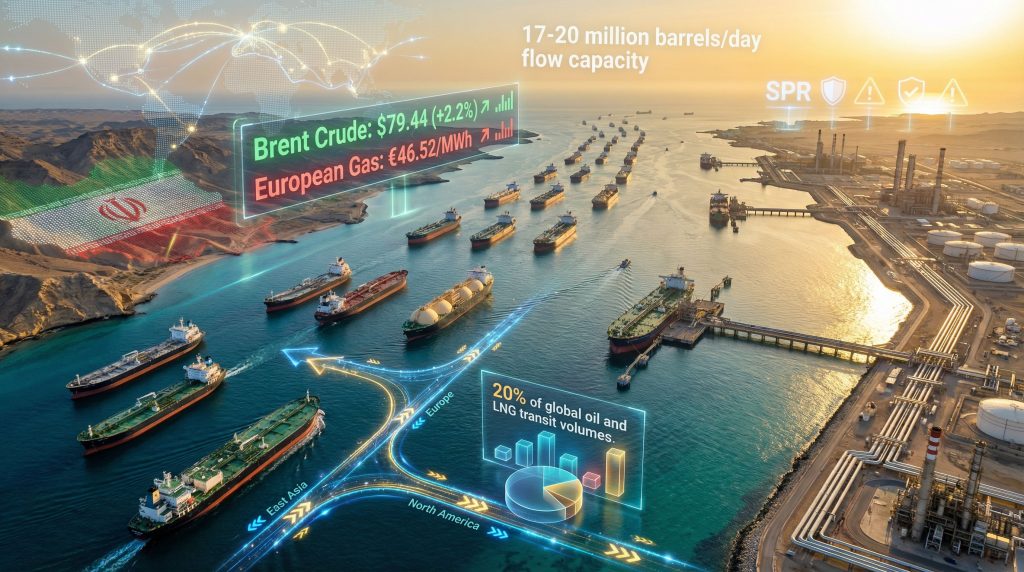
The growing complexity of global energy markets has made US-Israeli conflict with Iran supply risks a critical factor in worldwide price volatility and supply chain stability. Regional disruptions can cascade across continents within hours, affecting everything from industrial production costs to consumer energy prices. Furthermore, the modern energy infrastructure has evolved into a system where single chokepoints control disproportionate volumes of global trade, creating vulnerabilities that extend far beyond their geographic boundaries.
What Makes Middle Eastern Energy Conflicts Systemic Market Risks?
The architecture of global energy supply depends heavily on a few critical maritime passages and production hubs concentrated in politically volatile regions. This concentration creates what economists term "single point of failure" risks, where disruption to one location can trigger worldwide supply shortages and price volatility.
The Strait of Hormuz as Global Energy Chokepoint
The Strait of Hormuz represents one of the world's most critical energy transit routes, handling approximately 20% of global oil and gas volumes daily. This narrow waterway facilitates the movement of 17-20 million barrels per day of crude oil, making it indispensable to global energy security. When tensions escalate in this region, the ripple effects are immediate and far-reaching.
Recent events demonstrate the acute vulnerability of this chokepoint. In March 2026, Iranian Revolutionary Guards officials announced the closure of the Strait and threatened to fire on vessels attempting transit. This declaration, combined with insurance companies cancelling coverage for vessels transiting the waterway, effectively created an operational shutdown independent of physical blockade measures.
The historical context reveals a pattern of similar disruptions. During the 1980-1988 Tanker War, sustained attacks on shipping created prolonged uncertainty in global oil markets. Moreover, the 2019 attacks on tankers and Saudi facilities demonstrated how modern drone technology and precision strikes can create supply disruptions that immediately translate into price volatility across global markets.
Energy Infrastructure Interdependency Networks
Modern energy infrastructure operates through interconnected networks where production facilities, processing plants, and distribution systems create cascading dependencies. Qatar's position as the world's second-largest LNG exporter after the United States exemplifies this interconnectedness. When Qatar Energy announced production halts in March 2026, the immediate impact was felt across both Asian and European gas markets simultaneously.
The vulnerability extends beyond production to processing and refining capacity. Saudi Arabia's shutdown of its largest domestic oil refinery following a drone strike in March 2026 demonstrates how targeted infrastructure attacks can disrupt refined product supplies even when crude oil production continues. This creates multiple layers of supply risk:
- Primary production disruptions affecting crude oil and natural gas output
- Processing facility vulnerabilities impacting refined products like diesel and petrol
- Transportation infrastructure risks affecting pipelines, terminals, and shipping routes
- Storage facility exposure limiting buffer capacity during supply interruptions
Regional production clusters amplify these risks through geographic concentration. The Gulf Cooperation Council countries collectively represent a significant portion of global oil and gas exports, meaning regional conflicts can simultaneously impact multiple major suppliers. This clustering reduces redundancy and increases systemic vulnerability compared to more geographically dispersed production networks.
When big ASX news breaks, our subscribers know first
How Do Geopolitical Escalations Cascade Through Energy Pricing?
Energy markets exhibit unique sensitivity to geopolitical tensions due to their critical importance to economic functioning and limited short-term substitutability. Price transmission mechanisms during conflicts operate through multiple channels simultaneously, creating compound effects that can overwhelm traditional market stabilisation mechanisms.
Price Volatility Transmission Mechanisms
The March 2026 regional conflict provides a clear case study in how geopolitical tensions cascade through energy pricing systems. Brent crude jumped from $79.44 per barrel (+2.2%) to an intraday peak of $82.37 per barrel, representing the highest level since January 2025. The daily settlement showed a 6.7% increase, demonstrating the market's immediate reassessment of supply risk premiums.
West Texas Intermediate (WTI) crude exhibited similar volatility patterns, rising $1.17 (+1.6%) to $72.40 per barrel and reaching its highest level since June 2025. These parallel movements across different crude benchmarks indicate systematic rather than localised pricing pressures.
European natural gas markets showed even more dramatic responses to supply disruption announcements. The TTF hub benchmark price surged €14.56 to €46.52 per megawatt hour (approximately $15.92/mmBtu), representing nearly a 50% increase in a single trading session. This extreme volatility reflects the particular vulnerability of European gas markets to Middle Eastern LNG supply disruptions.
The Asian LNG market demonstrated similar sensitivity, with the S&P Global Energy Japan-Korea-Marker (JKM) jumping to $15.068/mmBtu, representing a 39% increase on March 2, 2026. This synchronised response across Asian and European gas markets illustrates how LNG supply disruptions create global competition for available cargoes.
Market Psychology and Risk Premium Calculations
Energy market pricing during geopolitical tensions reflects not just current supply disruptions but market participants' assessment of potential future scenarios. Consequently, oil price movements become increasingly volatile as traders price in escalation risks. Bernstein Research's revision of its 2026 Brent crude price assumption from $65 per barrel to $80 per barrel demonstrates this forward-looking risk assessment, with extreme case scenarios projecting $120-150 per barrel if prolonged conflict materialises.
The insurance market responses create additional layers of risk premium calculation. When marine insurers cancelled coverage for vessels transiting the Strait of Hormuz, they effectively created operational constraints independent of political or military developments. Global oil and gas shipping rates soared as a direct result, adding transportation cost premiums to commodity prices.
Futures market positioning reveals how traders price escalation risks across different time horizons. The steepening of futures curves during the March 2026 events indicated that markets expected near-term supply constraints while maintaining longer-term price normalisation expectations, though these assumptions remain subject to revision as conflicts evolve.
Refined product futures demonstrated significant responsiveness to infrastructure targeting risks:
- Ultra-low-sulfur diesel futures (ULSD): Up 4.2% at $3.0207/gallon after reaching two-year highs
- Petrol futures: Up 1.7% at $2.4113/gallon following a 3.7% increase in the previous session
- European gasoil futures: Up 4.3% to €925/metric tonne after an 18% climb during initial conflict escalation
These refined product price movements exceed crude oil volatility in many cases, reflecting the concentrated nature of regional refining capacity and the targeting of processing facilities during conflicts.
Which Energy Supply Routes Face Maximum Disruption Risk?
Global energy supply routes exhibit varying degrees of vulnerability based on their geographic characteristics, alternative routing options, and exposure to regional conflicts. Identifying these vulnerability patterns enables better understanding of potential disruption scenarios and their likely market impacts.
Critical Maritime Chokepoint Analysis
The Strait of Hormuz stands out as the most systemically important energy chokepoint globally, with its 17-20 million barrels per day flow capacity representing approximately 20% of world oil and gas volumes. The waterway's narrow geography provides limited routing alternatives, making disruptions particularly impactful.
Current operational status as of March 2026 illustrates the vulnerability in practice. Iranian media reports indicated that senior Revolutionary Guards officials declared the strait closed and warned of firing on vessels attempting passage. Most tanker owners, oil majors, and trading houses subsequently suspended crude oil, fuel, and LNG shipments through the waterway.
Alternative routing faces significant limitations and cost implications. While some Gulf production can reach markets via overland pipelines, the capacity constraints of these alternatives mean they cannot replace the full volume of maritime transit. The additional voyage time and costs associated with routing around Africa or through other channels create substantial economic penalties that translate directly into energy price premiums.
LNG transit vulnerability adds another layer of complexity, with approximately 20% of global LNG moving through the Strait of Hormuz. Unlike crude oil, which has some pipeline alternatives, LNG depends almost entirely on maritime transport, making supply chain disruptions more severe and longer-lasting.
Regional Production Hub Vulnerabilities
Gulf Cooperation Council countries collectively operate numerous export terminals and production facilities within range of potential targeting during regional conflicts. The concentration of infrastructure creates multiple vulnerability points that directly impact US-Israeli conflict with Iran supply risks.
Major export terminal exposure includes facilities at Ras Tanura, Ju'aymah, and other critical loading points that handle substantial portions of global oil exports. The March 2026 drone interceptions at Ras Tanura demonstrate the ongoing targeting risks these facilities face.
Processing facility vulnerabilities became evident when Saudi Arabia shut its largest domestic oil refinery following a drone strike. This incident highlighted how conflicts can disrupt refined product supplies even when crude production continues, creating shortages in specific product categories.
Infrastructure hardening and protection strategies have evolved in response to these threats, but the scale and geographic distribution of facilities makes comprehensive protection challenging. The demonstrated capability of precision strikes using drone technology means that even heavily defended facilities remain vulnerable to determined attacks.
Iranian proxy network capabilities extend the potential targeting range beyond Iran's immediate borders, creating risks for facilities throughout the Gulf region. This extended reach means that conflicts can simultaneously threaten multiple production and export locations, amplifying the potential scale of supply disruptions.
What Are the Cascading Economic Impacts Beyond Energy?
Energy supply disruptions create ripple effects throughout the global economy that extend far beyond immediate price increases in oil and gas markets. These cascading impacts affect industrial production, transportation costs, and supply chain operations across multiple sectors.
Industrial Sector Downstream Effects
European manufacturing faces particular exposure to natural gas price volatility due to the region's dependence on gas for industrial processes and power generation. The 50% surge in European gas prices during the March 2026 events immediately translated into higher production costs for energy-intensive industries including steel, chemicals, and aluminium production.
Refined product availability constraints create specific challenges for different industrial sectors. The 4.2% increase in ultra-low-sulfur diesel futures affects transportation and logistics costs directly, while petrol price increases impact consumer spending patterns that flow through to retail and service sectors.
Manufacturing sectors with limited fuel substitution options face the most severe impacts. Industries relying on specific refined products for production processes cannot easily switch to alternatives, making them price-takers during supply disruptions. This creates margin compression that can persist even after crude oil prices normalise if refining capacity remains constrained.
Power generation systems in regions dependent on gas-fired electricity face dual pressures from both higher fuel costs and potential supply interruptions. The €46.52/MWh European gas price levels translate directly into higher electricity costs for industrial users, affecting competitiveness across multiple sectors simultaneously.
Global Supply Chain Reconfiguration Pressures
Supply chain managers across industries must rapidly reassess sourcing strategies when energy costs spike and supply reliability declines. The 39% increase in Asian LNG pricing forces industrial users to evaluate alternative energy sources, production locations, or demand reduction strategies.
Strategic stockpiling behaviour emerges as companies attempt to buffer against further supply disruptions. This creates additional demand pressure on already constrained supplies, potentially amplifying price increases beyond levels justified by actual physical shortages. The psychology of stockpiling can become self-reinforcing as companies compete for available inventory.
Long-term contract renegotiation dynamics shift significantly during supply crises. Energy suppliers gain leverage to revise pricing terms, while industrial users face pressure to accept higher costs to secure supply reliability. These contract revisions can lock in higher energy costs for extended periods even after spot prices normalise.
Transportation and logistics sectors face compounding effects from both higher fuel costs and reduced service reliability on affected routes. The cancellation of insurance coverage for vessels transiting the Strait of Hormuz creates service gaps that force cargo routing through longer, more expensive alternatives.
How Do Energy Markets Price Extended Conflict Scenarios?
Energy market pricing during geopolitical conflicts reflects not only current supply disruptions but traders' and analysts' assessments of potential conflict duration and escalation scenarios. This forward-looking price discovery process creates distinct patterns based on expected conflict timelines.
Duration-Based Pricing Models
Short-term disruption scenarios (1-4 weeks) are currently reflected in the $79-82 per barrel range for Brent crude, representing immediate supply risk premiums without fundamental market structure changes. These price levels assume conflicts remain geographically contained and alternative supply sources can partially offset disrupted volumes.
Medium-term conflict projections (1-6 months) drive analyst forecasts toward $80-100 per barrel ranges as markets price in sustained supply interruptions and the time required to activate alternative sourcing arrangements. Furthermore, US natural gas forecasts must account for similar uncertainty patterns when assessing medium-term pricing scenarios.
Extended scenario modelling considers $120-150 per barrel extreme cases assuming prolonged conflict with expanded geographic scope affecting multiple Gulf producers simultaneously. These scenarios price in worst-case assumptions about supply losses, limited alternative capacity, and extended conflict duration.
The pricing differential between these scenarios reflects market assessment of escalation probabilities and the non-linear nature of supply disruption impacts. Small increases in conflict scope can trigger disproportionately large price responses due to the concentration of global energy infrastructure in conflict zones.
Market Adaptation and Substitution Mechanisms
Alternative energy source activation faces significant lead-time constraints that influence pricing models. Strategic petroleum reserve releases can provide short-term supply supplements, but coordinated releases between major consuming countries require diplomatic coordination that may not occur rapidly during fast-moving conflicts.
Demand destruction thresholds vary significantly across different price levels and economic regions. European industrial users may reduce energy consumption at €80-100/MWh gas prices, while Asian LNG consumers might continue purchasing at higher price levels due to limited alternatives.
Market adaptation mechanisms include both demand-side responses and supply-side adjustments. Higher prices incentivise increased production from non-affected regions, but the time required to bring additional capacity online means short-term price responses often overshoot equilibrium levels before normalising.
Substitution possibilities between different energy sources create complex pricing relationships during supply crises. Coal and nuclear power generation may increase to offset natural gas shortages, while industrial processes might shift toward alternative energy inputs where technically feasible.
What Historical Patterns Guide Current Market Behaviour?
Historical analysis of energy market responses to Middle Eastern conflicts provides frameworks for understanding current pricing patterns and potential market evolution scenarios. Each previous conflict created distinct market dynamics based on the specific nature of supply disruptions and available alternative sources.
Comparative Conflict Impact Analysis
The 1990-1991 Gulf War demonstrated how rapidly energy markets can price in worst-case scenarios before actual supply losses materialise. Oil prices spiked above $40 per barrel (equivalent to over $80 in 2026 dollars) based primarily on anticipated supply losses, with prices declining rapidly once conflict outcomes became clearer.
The 2003 Iraq invasion created different market dynamics due to pre-positioning of strategic reserves and coordinated international responses. According to analysis from Columbia University's energy policy research, the International Energy Agency's coordinated reserve release helped stabilise prices, though regional premium effects persisted for several months.
The 2019 Saudi Aramco facility attacks provided insights into modern energy infrastructure vulnerabilities and market recovery patterns. Despite significant facility damage, production restoration occurred more rapidly than initially expected, leading to quick price normalisation. However, the incidents demonstrated how precision strikes could create targeted disruptions.
These historical patterns suggest that initial market responses often overshoot actual supply impact severity, but recovery speed depends heavily on conflict resolution timelines and alternative supply activation capability.
Geopolitical Risk Premium Evolution
Long-term structural changes in energy security pricing reflect cumulative impacts of recurring Middle Eastern tensions. The persistence of risk premiums even during periods of relative calm indicates that markets incorporate expected volatility into baseline pricing structures.
Regional diversification strategies implemented after previous crises influence current market resilience. Increased North American production, African supply development, and renewable energy deployment have reduced relative dependence on Middle Eastern sources compared to historical levels, though absolute volumes remain substantial.
Technology adoption acceleration during supply crises often creates lasting market structure changes. The current conflict may accelerate renewable energy deployment timelines and energy efficiency investments as companies seek to reduce exposure to geopolitical supply risks.
Risk premium evolution also reflects changes in conflict capabilities and infrastructure vulnerabilities. Modern precision strike capabilities create different risk profiles compared to conventional military conflicts, requiring updated assessment methodologies for potential disruption scenarios.
The next major ASX story will hit our subscribers first
Which Investment Strategies Emerge During Energy Supply Crises?
Energy supply crises create distinct investment opportunity patterns as capital flows respond to both immediate supply constraints and longer-term structural changes in energy security priorities. Understanding these patterns enables better positioning for crisis-driven market dynamics.
Defensive Portfolio Positioning
Energy sector equity performance during supply disruptions typically outperforms broader market indices as investors rotate toward companies that benefit from higher commodity prices. However, the performance varies significantly between upstream producers, midstream infrastructure, and downstream refining operations based on their specific exposure to supply chain disruptions.
Currency impacts create additional complexity for international investors. Oil-exporting nations' currencies typically strengthen during supply crises, while oil-importing countries may experience currency weakness due to deteriorating trade balances. These currency movements can amplify or offset direct energy investment returns for international portfolios.
Safe-haven asset flows during energy crises often favour gold and government bonds from stable countries, though the inflationary implications of higher energy costs can reduce the attractiveness of fixed-income investments. Real assets and commodity-linked investments typically benefit from inflation expectations associated with sustained energy price increases.
The timing of defensive positioning matters significantly, as markets often price in worst-case scenarios rapidly before moderating as actual supply impacts become clearer. Investors who position defensively after initial price spikes may miss optimal entry points.
Strategic Infrastructure Investment Acceleration
Renewable energy project timelines often accelerate during supply crises as governments and corporations prioritise energy security alongside climate objectives. The current conflict may trigger additional renewable energy investments and policy support to reduce dependence on volatile regions.
Alternative supply route development becomes strategically important during sustained conflicts. Pipeline infrastructure, alternative port facilities, and transportation logistics investments can provide long-term value while reducing supply chain vulnerabilities.
Emergency reserve capacity expansion planning gains priority as the limitations of existing strategic reserves become apparent during actual supply disruptions. Both governmental and commercial reserve capacity investments may increase following current events.
Infrastructure investment acceleration requires careful assessment of conflict duration expectations, as projects initiated during crises may face different economic conditions upon completion. However, energy security considerations may justify investments that would not meet purely economic criteria under normal market conditions.
How Do Policy Responses Shape Market Recovery Trajectories?
Government and international organisation responses to energy supply crises significantly influence both immediate market stabilisation and longer-term recovery patterns. These policy interventions can either amplify or moderate market volatility depending on their coordination and effectiveness.
International Coordination Mechanisms
International Energy Agency emergency response protocols provide frameworks for coordinated strategic petroleum reserve releases among member countries. However, the effectiveness depends on political consensus and the willingness of member countries to deplete reserves during uncertain conflict timelines.
Strategic Petroleum Reserve release coordination requires careful timing and volume management to maximise market impact without depleting reserves needed for longer-duration supply interruptions. Previous coordinated releases have successfully moderated price spikes when properly synchronised with market conditions.
Diplomatic intervention effectiveness varies significantly based on conflict characteristics and the leverage available to international mediators. Economic sanctions and diplomatic pressure may resolve some conflicts more rapidly than military interventions, but success depends on the specific motivations and constraints of conflict participants.
The credibility of international coordination mechanisms influences their market impact even before actual implementation. Announcements of potential coordinated responses can moderate speculative price increases by signalling available policy tools.
Regulatory and Economic Policy Adaptations
Emergency energy rationing implementation frameworks become relevant when supply disruptions are severe enough to threaten essential services. These frameworks must balance industrial production needs, residential heating and transportation requirements, and export commitments during shortage periods.
Industrial priority allocation during severe shortages requires predetermined criteria for essential versus discretionary energy uses. Healthcare, food production, and critical infrastructure typically receive priority access, while energy-intensive industrial processes may face curtailment requirements.
Long-term energy security policy recalibration often follows supply crises as governments reassess import dependencies and supply chain vulnerabilities. These policy changes can create lasting shifts in energy investment patterns and market structures beyond immediate crisis resolution. For instance, energy transition challenges become more prominent as countries seek to balance security with sustainability objectives.
Regulatory responses must balance short-term crisis management with longer-term market efficiency considerations. Excessive intervention during crises can create market distortions that persist after supply conditions normalise.
What Are the Long-Term Structural Market Changes?
Energy supply crises often catalyse structural changes in market organisation, investment patterns, and policy frameworks that persist well beyond immediate crisis resolution. Understanding these potential long-term impacts enables better assessment of permanent versus temporary market adjustments.
Energy Security Architecture Transformation
Diversification away from single-source dependencies becomes a strategic priority for major energy importing countries following supply crisis experiences. This diversification includes both geographic supply sources and energy type diversification to reduce vulnerability to region-specific disruptions.
Regional energy hub development gains importance as countries seek to create redundant supply routes and storage capabilities. The development of alternative LNG receiving terminals, pipeline interconnections, and strategic storage facilities can provide long-term supply chain resilience.
Technology-driven supply chain resilience improvements include enhanced monitoring systems, predictive analytics for supply disruption early warning, and automated switching capabilities between alternative supply sources. These technological investments create lasting improvements in system reliability.
The transformation of energy security architecture requires substantial capital investments and multi-year development timelines, meaning decisions made during current crises will influence market structure for decades to come.
Investment Flow Redirection Patterns
Capital allocation shifts toward energy infrastructure hardening include both physical security improvements and cyber-security enhancements for critical facilities. These investments reduce vulnerability to targeted attacks but require ongoing maintenance and updating as threat capabilities evolve.
Accelerated transition investment during crisis periods often occurs as high fossil fuel prices improve the relative economics of renewable energy alternatives. However, supply chain constraints for renewable energy components can limit transition speed during periods of general economic disruption.
Risk assessment methodology evolution for energy investments incorporates lessons learned from current crisis experiences. Traditional economic analysis may give increased weight to supply security and geopolitical stability factors in project evaluation criteria.
The redirection of investment flows creates lasting changes in market structure as new capacity comes online and older, more vulnerable infrastructure is retired or hardened. Consequently, these changes influence long-term pricing patterns and market resilience characteristics.
OPEC+ Strategy Recalibration
The current crisis may prompt significant changes in OPEC production impact strategies as member nations reassess their role in global energy security. Moreover, as highlighted in recent analysis from ABC News, the war's implications for Asia's energy needs demonstrate the regional complexity of these supply considerations.
Traditional production quota systems may require modification to account for geopolitical supply risks that extend beyond economic considerations. Furthermore, the development of comprehensive energy security strategy frameworks becomes increasingly critical as markets adapt to new risk environments.
Conclusion
The current US-Israeli conflict with Iran supply risks demonstrates how regional tensions can rapidly transform global energy market dynamics through interconnected supply chains, pricing mechanisms, and risk assessment frameworks. While immediate price responses often overshoot actual supply impacts, the structural changes triggered by such events can reshape energy markets for years beyond crisis resolution. Understanding these complex relationships enables better navigation of both immediate market volatility and longer-term investment opportunities in an increasingly interconnected global energy system.
Disclaimer: This analysis contains forward-looking assessments based on current market conditions and historical patterns. Actual market developments may differ significantly from projections discussed herein. Energy market investments carry substantial risks including price volatility, regulatory changes, and geopolitical developments. Readers should conduct independent research and consult qualified financial advisors before making investment decisions based on this analysis.
Want to Capitalise on Energy Market Volatility?
Energy market disruptions create exceptional opportunities for informed investors who can identify emerging trends before they become mainstream. Discovery Alert's proprietary Discovery IQ model delivers real-time notifications about significant ASX mineral discoveries, including critical energy transition commodities that benefit from supply chain disruptions and geopolitical tensions. Start your 14-day free trial today to position yourself ahead of market-moving discoveries in the volatile energy and commodities sector.