
August 6, 2026
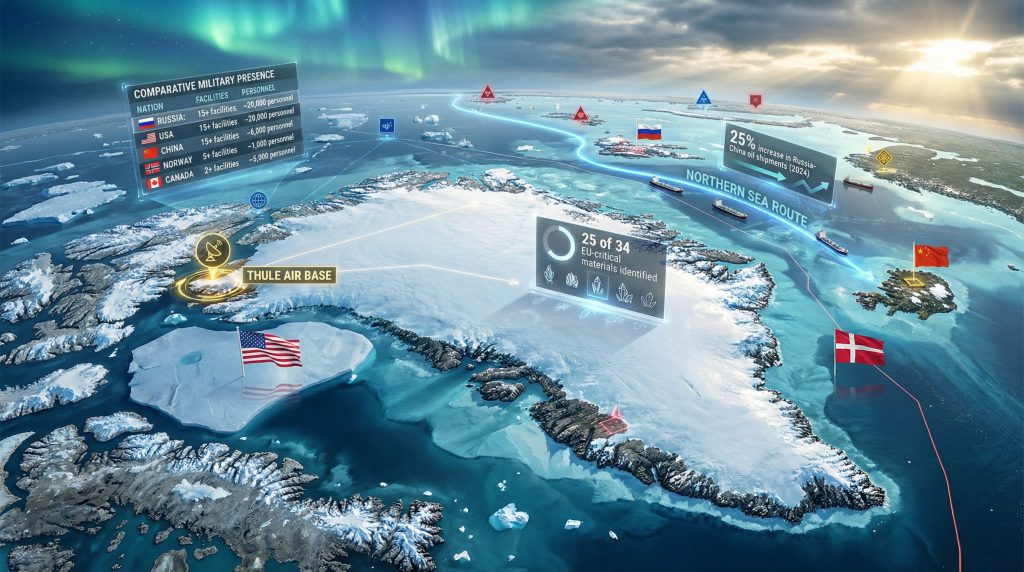
The Arctic's strategic importance has intensified as melting ice caps open new shipping routes and expose vast mineral deposits previously locked beneath frozen terrain. The US military option in Greenland represents one of several approaches modern military planners consider when securing interests across a region where traditional geographic barriers are rapidly disappearing, creating new vulnerabilities and opportunities for global powers.
This transformation occurs as technological advances in surveillance, missile defence, and naval capabilities reshape how nations project power in polar environments. The convergence of climate change, resource competition, and evolving military technologies creates a complex strategic landscape requiring fresh analytical frameworks for understanding territorial control dynamics.
Strategic Military Frameworks for Arctic Territorial Control
Forward Deployment Versus Cooperative Security Models
Military strategists examining Arctic territorial options typically evaluate two primary approaches: aggressive forward positioning and collaborative security arrangements. Forward deployment strategies emphasise rapid capability projection through minimal-footprint installations known as "lily pad" bases, which allow rapid response without requiring extensive permanent infrastructure investments.
The Thule Air Base model demonstrates how cooperative frameworks function effectively. Operating under the 1951 US-Denmark Defence Agreement, this installation provides critical ballistic missile early warning coverage across approximately 3 million square miles while maintaining alliance relationships. The base monitors missile launches from Eastern Russia and Central Asia, delivering 30-35 minute early warning times for intercontinental ballistic missiles targeting North American territory.
Current US Arctic military infrastructure encompasses three major installations with approximately 2,500 military personnel stationed across Thule Air Base, Fort Wainwright in Alaska, and Elmendorf-Richardson in Alaska. This distributed approach contrasts sharply with concentrated military occupation scenarios, which would require substantially larger personnel commitments and infrastructure investments.
Risk assessment matrices reveal significant differences in political, financial, and operational costs between expansion of existing cooperative agreements versus sovereignty acquisition. Cooperative security arrangements typically require 12-24 months for implementation with investment ranges of $2-5 billion for infrastructure development, while maintaining alliance stability.
NATO Alliance Implications for Arctic Military Action
Military action against NATO member Denmark would create unprecedented constitutional crises within alliance structures. Denmark's founding NATO membership since 1949 establishes clear Article 5 collective defence obligations covering all Danish territories, including Greenland.
Furthermore, the US-China trade war impacts demonstrate how aggressive economic policies can strain international relationships. As Atlantic Council Senior Fellow Melinda Haring observes, military acquisition scenarios raise fundamental questions about alliance purpose and functionality. Denmark is a NATO member alongside the United States, creating legal obligations that would require NATO members to respond to Danish defence requests under Article 5 provisions.
Historical analysis reveals no precedent for NATO members using military force against each other throughout the alliance's 75-year history. The closest parallel involves the Cyprus dispute between NATO member Greece and non-NATO member Turkey in 1974, which occurred outside NATO framework and remains unresolved decades later.
NATO Article 5 stipulates that armed attacks against member states shall be considered attacks against all members, creating mandatory response obligations. Military action would require:
- Invocation of Article 5 collective defence provisions
- NATO member military responses to support Danish sovereignty
- Potential dissolution of the alliance framework
- Constitutional crisis requiring treaty amendment or alliance restructuring
Denmark's position, articulated by Prime Minister Mette Frederiksen, establishes clear diplomatic boundaries: the United States lacks rights to annex Danish kingdom territories, and Denmark strongly opposes threats against historically close allies.
When big ASX news breaks, our subscribers know first
Arctic Military Infrastructure and Global Power Dynamics
Current US Military Capabilities in Greenland
Pituffik Space Base (formerly Thule Air Base) represents the northernmost US military installation, located approximately 1,270 kilometres north of the Arctic Circle in northwestern Greenland. The facility operates with 600-800 active duty and civilian personnel providing ballistic missile early warning and space surveillance capabilities.
The installation's Ballistic Missile Early Warning System (BMEWS) functions as part of a three-site global network including Clear Air Station in Alaska and RAF Fylingdales in the United Kingdom. This integrated system provides redundant coverage against ballistic missile threats while supporting NATO air defence coordination.
Strategic geographic positioning offers significant advantages for military operations. Nuuk, Greenland's capital, sits 2,900 kilometres from New York City compared to 3,500 kilometres from Copenhagen, reducing communication latency and response times for Arctic operations.
Proposed expansion plans include radar installations in waters connecting Greenland, Iceland, and the United Kingdom. These systems would create continuous surveillance coverage of Arctic maritime approaches, tracking vessel movements through strategic gateways between the Arctic Ocean and North Atlantic.
Comparative Arctic Military Presence Analysis
| Country | Active Bases | Personnel | Key Assets | Strategic Focus |
|---|---|---|---|---|
| Russia | 15+ facilities | ~20,000 | Nuclear icebreaker fleet, hypersonic missiles | Northern Sea Route control |
| United States | 3 major bases | ~2,500 | BMEWS, fighter squadrons | Early warning systems |
| Canada | 8 facilities | ~1,200 | Patrol aircraft, rangers | Sovereignty assertion |
| China | 0 permanent | Research teams | Icebreaker vessels | Scientific/commercial access |
Russia's Arctic militarisation programmes demonstrate the most comprehensive territorial control strategy. The 15+ military facilities across Arctic coastlines implement a "bastion defence" system with overlapping surveillance and weapons coverage. Russian nuclear-powered icebreaker capabilities include 7 operational vessels with expansion targets reaching 13 vessels by 2030.
In addition, Russian President Vladimir Putin's statements during the March 2025 International Arctic Forum in Murmansk emphasised defensive positioning: Russia has never threatened Arctic nations but will closely monitor developments and mount appropriate responses through military capability increases and infrastructure modernisation.
China's Arctic presence focuses on scientific research and commercial shipping route development rather than permanent military installations. Ten completed scientific expeditions since 2012 support dual-use research facilities with potential military applications, while purpose-built polar research vessels enable extended Arctic Ocean operations.
Critical assessment reveals significant discrepancies between stated security justifications and observable maritime activity. Vessel tracking data from MarineTraffic and similar maritime intelligence platforms show minimal Chinese or Russian naval presence near Greenland waters, contradicting claims about extensive ship deployments in the region.
Economic Drivers of Arctic Military Competition
Critical Mineral Resources and Supply Chain Vulnerabilities
Greenland's geological surveys reveal extraordinary mineral wealth potential. A comprehensive 2023 survey identified 25 of 34 minerals designated as "critical raw materials" by the European CRM facility, including lithium, cobalt, and rare earth elements essential for advanced defence systems and renewable energy infrastructure.
US supply chain vulnerability assessment reveals dangerous dependencies on Chinese processing capabilities. China controls approximately 60-70% of global rare earth element processing capacity despite producing only 38-40% of global rare earth ore production. This processing dominance creates strategic vulnerabilities for US military manufacturing.
Defence sector dependency on rare earth elements extends across multiple weapons systems:
- Advanced radar systems requiring high-performance permanent magnets
- Guided missile navigation and targeting components
- Fighter aircraft electronic warfare systems
- Communication and satellite technology infrastructure
Current US strategic reserves provide only 6-12 months of unrestricted military manufacturing capability in conflict scenarios, highlighting critical supply chain risks. The 2010-2011 Rare Earth Element Supply Crisis demonstrated these vulnerabilities when Chinese export restrictions caused 97% price increases and production delays for US defence contractors.
However, lithium industry innovations illustrate market dynamics affecting military procurement. Prices increased approximately 300% between 2020-2022 due to supply constraints and electric vehicle battery demand, demonstrating how civilian technology markets influence defence supply costs.
Arctic Shipping Route Economics and Military Control
The Northern Sea Route through Arctic Ocean waters offers substantial shipping cost savings compared to traditional routes through the Suez Canal or Panama Canal. Climate change-induced ice melting creates year-round navigation possibilities, reducing shipping distances between Asia and Europe by approximately 40%.
Russia-China trade cooperation demonstrates Arctic route strategic importance. Oil shipments from Russia to China via the Northern Sea Route increased 25% in 2024, supporting Russian energy exports while providing China alternative shipping pathways reducing Strait of Malacca dependency.
Military control implications extend beyond economic benefits to encompass global trade flow management. Nations controlling Arctic shipping routes could influence:
- Energy supply routing between major economies
- Manufacturing supply chain logistics for critical materials
- Emergency shipping alternatives during international conflicts
- Commercial vessel tracking and inspection capabilities
Consequently, Russian icebreaker fleet expansion supports both commercial and military objectives. Nuclear-powered icebreaker capabilities enable year-round Arctic Ocean operations while providing platforms for military surveillance and territorial assertion activities.
Military Acquisition Scenario Analysis
Negotiated Military Expansion Framework
Expanded defence cooperation represents the lowest-risk approach for enhanced US Arctic presence. This scenario involves:
Timeline Requirements:
- 12-24 months for expanded base agreements
- Parliamentary approval processes in Denmark
- NATO consultation and coordination periods
- Environmental impact assessments for new installations
Investment Projections:
- $2-5 billion for infrastructure development
- Annual operational costs of $200-400 million
- Technology upgrade costs for surveillance systems
- Personnel housing and logistical support facilities
Strategic Outcomes:
- Enhanced US surveillance and early warning capabilities
- Maintained alliance relationships with European partners
- Shared operational costs through NATO framework
- Limited sovereignty transfer requirements
Political risk assessment indicates medium-level challenges requiring Danish parliamentary approval and public consultation processes. Success depends on demonstrating mutual benefits and addressing Greenlandic self-governance concerns.
Economic Leverage Combined with Military Pressure
Aggressive acquisition scenarios involve substantially higher costs and risks:
Timeline Projections:
- 6-18 months for initial military positioning
- Extended negotiation periods under pressure conditions
- International legal proceedings and arbitration processes
- Alliance restructuring or dissolution timeframes
Investment Requirements:
- $10-20 billion for territorial acquisition payments
- $50-100 billion annually for sustained military occupation
- Infrastructure development and administrative costs
- Diplomatic relationship repair investments
Strategic Risks:
- NATO alliance fracture and potential dissolution
- European Union economic sanctions and trade restrictions
- International isolation and diplomatic costs
- Greenlandic population resistance and administrative challenges
Military occupation scenarios require substantial personnel commitments potentially exceeding 10,000 military personnel for comprehensive territorial control, creating logistical challenges in harsh Arctic environments.
Multilateral Arctic Security Framework
Collaborative security arrangements offer alternative pathways for addressing US Arctic interests:
Implementation Timeline:
- 2-5 years for comprehensive treaty negotiation
- International law compliance and ratification processes
- Multilateral funding arrangement development
- Joint military exercise and training programme establishment
Cost Distribution:
- $1-3 billion for cooperative programme development
- Shared operational expenses among participating nations
- Joint research and development investment programmes
- Combined surveillance and response capability costs
Political Advantages:
- Maintained alliance relationships and international law compliance
- Distributed financial and operational responsibilities
- Enhanced legitimacy through multilateral participation
- Reduced unilateral political and economic risks
This framework could include Canada, Denmark, Iceland, and other Arctic nations in comprehensive security cooperation agreements addressing shared concerns about Arctic militarisation while maintaining territorial sovereignty principles.
Intelligence Assessment of Arctic Security Threats
Russian Arctic Military Modernisation Programmes
Russian Arctic strategy emphasises territorial defence through comprehensive infrastructure development. Military installation construction across Arctic coastlines creates overlapping surveillance zones and defensive positions supporting the "bastion defence" strategic concept.
Nuclear Icebreaker Fleet Expansion:
- 7 operational nuclear-powered icebreakers currently in service
- 13 vessels projected by 2030 for comprehensive Arctic Ocean coverage
- Extended operational ranges enabling year-round navigation
- Dual-use capabilities for commercial and military operations
Hypersonic Missile Deployment:
Zircon hypersonic cruise missiles with ranges exceeding 500 kilometres provide rapid-response capabilities against naval and ground targets. Arctic deployment locations offer strategic positioning for targeting North American territory while complicating missile defence calculations.
Russian military modernisation includes power generation facilities, communication networks, and logistical support infrastructure enabling sustained Arctic operations. These investments demonstrate long-term commitment to Arctic territorial control and resource extraction capabilities.
Chinese Arctic Research and Commercial Activities
China's Arctic engagement emphasises scientific research with potential dual-use applications. Ten completed scientific expeditions since 2012 provide comprehensive data collection on Arctic Ocean conditions, mineral deposits, and navigation routes.
Polar Silk Road Initiative:
- Infrastructure investment partnerships with Arctic nations
- Port development and shipping route optimisation
- Research facility construction with advanced technological capabilities
- Commercial shipping agreements supporting trade expansion
Icebreaker Capabilities:
Snow Dragon class research vessels provide extended Arctic operation capabilities while supporting scientific missions. These platforms offer potential military applications including surveillance, communication relay, and emergency response functions.
Critical Intelligence Assessment: Current vessel tracking data shows minimal Chinese or Russian naval presence near Greenland waters, contradicting stated security justifications for immediate military action. This discrepancy suggests security threat assessments may reflect future concerns rather than current operational realities.
Chinese Arctic strategy focuses on economic access and scientific research rather than territorial acquisition or military base establishment. Commercial shipping route development through Arctic waters supports trade diversification and reduced dependency on traditional shipping chokepoints.
International Law and Arctic Territorial Claims
United Nations Convention on the Law of the Sea Framework
Continental Shelf Extension Claims:
UNCLOS provides mechanisms for extending territorial claims beyond 200 nautical mile Exclusive Economic Zones through continental shelf geological surveys. Arctic nations including Russia, Canada, and Denmark have submitted extensive documentation supporting expanded territorial claims.
Arbitration Processes:
International arbitration mechanisms offer dispute resolution alternatives to military action. The International Court of Justice and international arbitration tribunals provide legal frameworks for resolving territorial disputes while maintaining international law compliance.
Environmental Protection Obligations:
Arctic territorial control carries environmental stewardship responsibilities under international environmental treaties. Climate change mitigation, wildlife protection, and Indigenous rights preservation create legal obligations for territorial administrators.
Historical Precedents for Territorial Acquisition
Alaska Purchase (1867):
The $7.2 million transaction between the United States and Russia demonstrates diplomatic acquisition possibilities. Modern equivalent values exceed $150 million when adjusted for inflation, though strategic value calculations would substantially increase contemporary pricing.
Guantanamo Bay Model:
Perpetual lease arrangements provide territorial control without sovereignty transfer. The US-Cuba agreement demonstrates how military installations can operate under host nation sovereignty while maintaining operational independence.
Compact of Free Association:
Relationships with Marshall Islands, Micronesia, and Palau offer models for semi-autonomous territorial arrangements. These frameworks provide defence responsibilities and economic support while maintaining local governance structures.
International law prohibits territorial acquisition through force, establishing diplomatic negotiation as the only legally acceptable acquisition method. Military occupation would violate UN Charter principles and potentially trigger international sanctions and legal proceedings.
The next major ASX story will hit our subscribers first
Alternative Strategic Approaches for Arctic Objectives
Enhanced Defence Cooperation Models
Joint Training and Intelligence Sharing:
Expanded military exercises between US, Danish, and Greenlandic forces could enhance operational coordination while building trust and cooperation. Intelligence sharing agreements would improve threat assessment capabilities without requiring sovereignty changes.
Infrastructure Investment Programmes:
US investment in Greenlandic infrastructure development could strengthen bilateral relationships while advancing mutual interests. Transportation, communication, and energy infrastructure improvements would support both civilian and military objectives.
Technology Transfer Initiatives:
Advanced surveillance and communication technology sharing could enhance Arctic security capabilities while providing Greenland access to sophisticated defence systems. Joint research and development programmes would create shared technological advantages.
Economic Partnership and Resource Development
Joint Venture Mining Operations:
Cooperative mineral extraction programmes could provide US access to critical materials while supporting Greenlandic economic development. Revenue-sharing agreements would align economic incentives while respecting sovereignty principles.
Moreover, emerging polymetallic nodules benefits demonstrate how innovative mining approaches could transform Arctic resource development while minimising environmental impacts.
Green Energy Transition Support:
Arctic communities face unique energy challenges requiring innovative solutions. US investment in renewable energy infrastructure could demonstrate commitment to Greenlandic development while advancing climate objectives.
Scientific Research Collaboration:
Climate change research cooperation would provide valuable scientific data while building long-term relationships. Joint research facilities could serve dual purposes supporting both scientific advancement and security monitoring.
These alternative approaches offer pathways for achieving US Arctic security objectives while maintaining international law compliance and alliance relationships. Economic and technological cooperation models provide sustainable foundations for long-term strategic partnerships.
Strategic Recommendations and Risk Assessment
Graduated Response Framework
The development of a comprehensive critical minerals strategy suggests that phased approaches yield better long-term results than immediate aggressive action.
Phase 1: Enhanced Cooperation (0-2 years)
- Expanded defence agreements with Denmark
- Increased US investment in Greenlandic infrastructure
- Joint military exercises and training programmes
- Intelligence sharing and surveillance cooperation
Phase 2: Strategic Partnership Development (2-5 years)
- Comprehensive economic development agreements
- Joint mineral resource exploration programmes
- Advanced technology transfer initiatives
- Multilateral Arctic security framework establishment
Phase 3: Long-term Strategic Integration (5+ years)
- Permanent security cooperation structures
- Integrated Arctic defence systems
- Shared resource development management
- Climate adaptation and environmental protection programmes
Cost-Benefit Analysis Summary
| Approach | Initial Investment | Annual Costs | Political Risk | Strategic Value |
|---|---|---|---|---|
| Enhanced Cooperation | $5-15 billion | $1-3 billion | Low-Medium | High |
| Diplomatic Purchase | $200-500 billion | $5-10 billion | High | Very High |
| Military Acquisition | $50-100 billion | $10-20 billion | Extreme | High |
| Multilateral Framework | $10-25 billion | $2-5 billion | Medium | High |
Risk mitigation requires balancing security objectives with alliance preservation, international law compliance, and economic sustainability. Enhanced cooperation models offer optimal risk-reward ratios while maintaining strategic flexibility for future developments.
Long-term Positioning Recommendations:
- Investment in Arctic-capable military technologies and platforms
- Development of indigenous Arctic security partnerships
- Climate change adaptation strategies for evolving Arctic geography
- Comprehensive Arctic domain awareness and surveillance systems
Strategic Assessment: Current vessel tracking data contradicts stated security justifications for immediate military action, suggesting Arctic security concerns reflect long-term strategic planning rather than immediate operational threats. This timeline disparity supports graduated response approaches over aggressive acquisition scenarios.
The optimal US military option in Greenland balances legitimate security interests with alliance preservation and international law compliance. Enhanced cooperation models provide sustainable pathways for achieving Arctic security objectives while maintaining strategic partnerships essential for long-term regional stability.
According to recent analysis, various historical precedents exist for territorial negotiations, though contemporary scenarios require careful consideration of modern international law frameworks. The US military option in Greenland represents just one component of broader Arctic strategy that must account for alliance relationships and economic realities.
Disclaimer: This analysis presents various strategic scenarios for educational purposes. Military action involving NATO allies would create unprecedented legal and diplomatic challenges with unpredictable consequences for international security architecture.
Looking to Invest in Critical Mineral Discoveries?
Discovery Alert's proprietary Discovery IQ model delivers real-time notifications on significant ASX mineral discoveries, instantly empowering subscribers to identify actionable opportunities ahead of the broader market. Understand why major mineral discoveries can lead to substantial market returns by exploring Discovery Alert's dedicated discoveries page, showcasing historic examples of exceptional outcomes, then begin your 30-day free trial today to position yourself ahead of the market.