
July 19, 2026
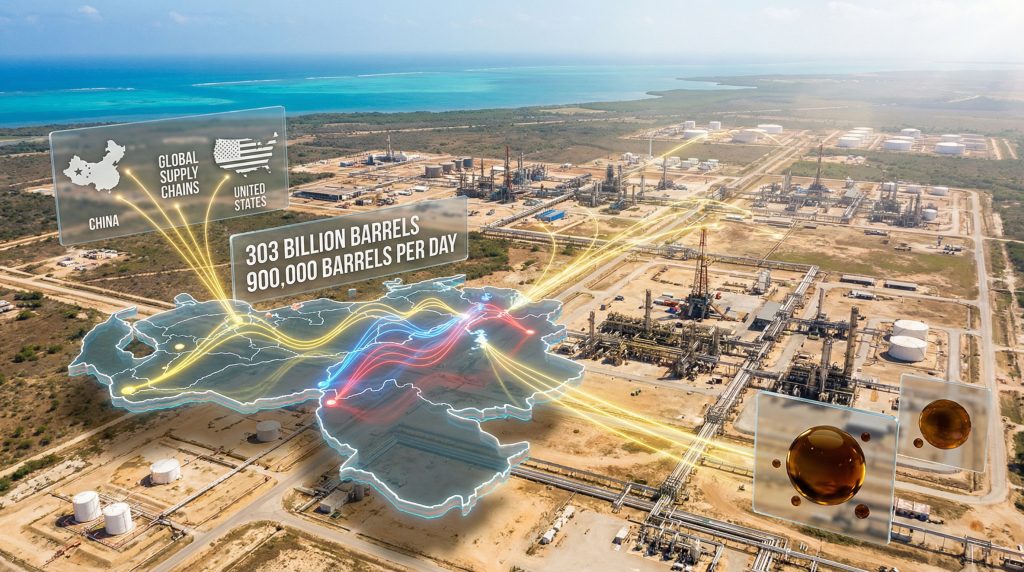
The global petroleum market faces unprecedented disruption as geopolitical forces reshape traditional energy flows and supply chain relationships. The intersection of strategic resource control with international diplomatic tensions creates complex scenarios that extend far beyond regional considerations, forcing energy consumers and producers to reassess fundamental assumptions about market access and pricing dynamics. Furthermore, recent developments surrounding the U.S. oil blockade on Venezuela have intensified these disruptions, creating ripple effects that influence everything from oil price movements to global energy security strategies.
Understanding Venezuelan Energy Infrastructure as a Strategic Asset
Venezuela's position in global energy markets stems from its extraordinary petroleum endowments rather than current production capacity. With approximately 303 billion barrels of proven crude oil reserves, representing nearly 20% of global resources according to the U.S. Energy Information Administration, the nation holds theoretical leverage that current operational constraints have yet to fully realise.
Current Venezuelan output remains constrained at roughly 900,000 barrels per day, representing a dramatic decline from historical production peaks exceeding 2.8 million barrels per day during the 1990s. This reduction reflects decades of infrastructure deterioration, operational mismanagement, and systematic underinvestment in critical petroleum systems.
The U.S. oil blockade on Venezuela has intensified these constraints, forcing state oil company PDVSA to implement further production cuts as enforcement actions disrupt export operations. Recent developments indicate tanker seizures and logistics complications have created additional pressure on an already constrained system. Moreover, the US oil production decline in other regions has amplified the global impact of Venezuelan supply disruptions.
Infrastructure Deterioration Specifics:
- Drilling and well maintenance systems operating at significantly reduced efficiency
- Pipeline networks experiencing degradation affecting throughput capacity
- Refinery operations constrained by maintenance deferrals and technical limitations
- Export terminal facilities functioning below historical capacity standards
The capture of Venezuelan President Nicolás Maduro in January 2026, followed by stated U.S. intentions to deploy American oil companies for infrastructure restoration, represents a fundamental shift in how energy resources may be controlled and distributed globally.
When big ASX news breaks, our subscribers know first
Technical Characteristics Defining Venezuelan Crude Value
Venezuelan petroleum possesses unique specifications that create distinct market positioning and processing requirements. Heavy crude grades from the Orinoco Belt exhibit API gravity ratings between 8-12 degrees, classifying them as extra-heavy crude requiring specialised refining infrastructure not universally available globally.
Critical Processing Requirements:
| Specification | Range | Processing Impact |
|---|---|---|
| API Gravity | 8-12 degrees | Requires thermal upgrading |
| Sulfur Content | 2-4% by weight | Necessitates hydrotreating units |
| Viscosity | High | Demands heated transport systems |
| Yield Ratio | 1.5-2.0 barrels products per crude barrel | Enhanced value for specific applications |
These specifications necessitate complex refining operations including hydrotreating units for sulphur removal, thermal cracking systems for heavy fraction conversion, and specialised hydrogen production facilities. Approximately 45-50 complex refineries worldwide are specifically configured for heavy crude processing, primarily concentrated in North America, the Caribbean, and select European locations.
Heavy crude processing generates essential products including asphalt for road construction, specialised lubricants for industrial applications, and petrochemical feedstocks for plastics and synthetic fibre production. These end-use applications cannot be easily substituted with products derived from light crude grades.
Geographic Processing Advantages:
- Proximity to major Caribbean and Gulf Coast refining centres
- Existing pipeline infrastructure despite current operational constraints
- Established shipping routes to configured processing facilities
- Specialised port facilities designed for heavy crude handling
The U.S. oil blockade on Venezuela has particularly affected refineries configured for these specific crude grades, forcing operators to seek alternative feedstock sources at substantially higher costs whilst potentially reducing processing efficiency.
Supply Chain Disruptions from Current Enforcement Actions
The implementation of comprehensive restrictions on Venezuelan petroleum transactions has created measurable disruptions across multiple market segments. Recent enforcement actions have intensified these impacts, with PDVSA forced to implement production cuts in response to blockade pressure. Additionally, the trade war oil impact has compounded these supply chain challenges.
Immediate Market Impacts Observable:
| Market Segment | Impact Severity | Primary Effect | Recovery Timeline |
|---|---|---|---|
| Heavy Crude Supply | High | Reduced availability, premium pricing | 6-12 months |
| Refinery Operations | Medium-High | Feedstock substitution challenges | 2-4 weeks operational, 3-6 months capital |
| Transportation Networks | Medium | Route redirection, cost increases | 1-3 months |
| Price Volatility | High | Uncertainty premiums in heavy crude markets | Ongoing |
Despite the severity of disruptions, oil prices have remained relatively subdued. Brent crude traded at approximately $61.53 per barrel (up 1.28%) and WTI crude at $58.11 per barrel (up 1.38%) as of January 5, 2026, suggesting market scepticism about rapid implementation of stated infrastructure restoration plans.
Enforcement Mechanisms Creating Disruption:
- Direct supply reduction through blockade operations limiting export capacity
- Tanker seizures increasing transportation costs and insurance premiums
- Operational complications forcing refineries to source alternative feedstocks
- Market uncertainty creating pricing volatility in specialised crude grades
Oil tankers continue operating Venezuela's ports "under cover of darkness" despite blockade enforcement, indicating partial rather than complete supply elimination. Chevron has been forced to reduce prices on Venezuelan crude inventory, suggesting pressure from enforcement-induced logistics complications.
Alternative Sourcing Challenges:
- Canadian heavy crude (Western Canadian Select) offers comparable specifications but at higher transportation costs
- Mexican Maya crude provides similar processing characteristics with different pricing structures
- Middle Eastern heavy crude options available but typically at 10-15% premium pricing versus Venezuelan baseline
The U.S. oil blockade on Venezuela has created ripple effects throughout Caribbean and Central American markets, where nations historically relied on Venezuelan petroleum products through preferential trade arrangements now face significant energy cost increases.
Geopolitical Implications for Major Energy Markets
China's position as Venezuela's largest petroleum customer places Beijing's energy security planning under significant pressure from current enforcement actions. Chinese refineries have invested substantial capital in infrastructure specifically configured for Venezuelan heavy crude processing, making sudden supply disruptions particularly costly. However, the broader oil price rally analysis suggests market dynamics are being influenced by multiple geopolitical factors beyond Venezuelan supply constraints.
Chinese Strategic Energy Challenges:
- Immediate need to secure alternative heavy crude suppliers at potentially higher costs
- Pressure to accelerate diversification away from Venezuelan supply sources
- Potential acceleration of domestic energy transition initiatives to reduce petroleum dependence
- Increased reliance on Middle Eastern and African petroleum suppliers
Beijing has responded to recent developments by urging the U.S. to "stop toppling" the Venezuelan government, with top Chinese diplomats accusing Washington of behaving like a "world judge" in Venezuelan operations, according to January 2026 reporting.
Market Analysis Insight:
Energy market expert Jordan Rochester from Mizuho Bank observed that controlling Venezuela allows the U.S. to shape global energy flows without requiring direct resource ownership, essentially providing leverage through supply access decisions rather than commodity possession.
UK Government Response (January 2026)
The Labour government under Prime Minister Keir Starmer adopted a cautious stance regarding U.S. operations in Venezuela. Starmer emphasised the UK was not involved in the operations whilst stating he would "shed no tears" over the end of Maduro's administration, but refused to characterise the actions as breaches of international law.
Parliamentary Opposition Positions:
- Labour MPs Emily Thornberry, Jon Trickett, and Richard Burgon called for stronger opposition to U.S. operations
- Liberal Democrats and Green Party expressed formal opposition to the actions
- Conservative Party committed to awaiting "full facts" before position determination
- Reform UK's Nigel Farage acknowledged potential international law breaches but suggested operations could deter Chinese and Russian challenges to global powers
Foreign Secretary Yvette Cooper was expected to address Parliament with formal government response by end of January 5, 2026.
Market Response to Geopolitical Tensions
The FTSE 100 experienced notable movement in response to Venezuelan developments, with defence and metals stocks leading gains. Babcock rose 4.4% to all-time highs, BAE Systems gained 4.5%, and Rolls-Royce increased 2.3% as markets interpreted events as potentially escalating broader geopolitical tensions.
Gold prices jumped 2.2% to $4,424 per ounce on safe haven demand, whilst mining stocks Endeavour Mining and Fresnillo gained over 4% each, reflecting investor positioning for continued geopolitical uncertainty.
Strategic Control Scenarios and Infrastructure Modernisation
The potential for direct U.S. involvement in Venezuelan petroleum infrastructure creates multiple pathway scenarios for global energy market evolution. Strategic analysis suggests several possible outcomes depending on implementation approaches and international responses. Consequently, understanding the oil price stagnation insights becomes crucial for predicting market behaviour under different scenarios.
Scenario 1: Comprehensive Infrastructure Modernisation
Under this scenario, substantial U.S. investment could potentially restore Venezuelan production capacity to historical levels exceeding 2 million barrels per day within 3-5 years. The Trump administration has stated intentions to deploy major U.S. oil companies to "spend billions of dollars" repairing "badly broken infrastructure" and restoring production capacity.
Investment Requirements for Full Restoration:
- Drilling equipment and well maintenance systems: $8-12 billion estimated investment
- Pipeline network rehabilitation and expansion: $4-6 billion infrastructure costs
- Refinery modernisation and capacity upgrades: $3-5 billion per major complex
- Port facilities and export terminal improvements: $2-3 billion logistics infrastructure
- Environmental remediation and safety systems: $1-2 billion compliance costs
Potential Market Impacts:
- Increased global heavy crude supply potentially reducing price premiums by 15-25%
- Enhanced energy security for Western Hemisphere consumers
- Reduced Chinese influence in Venezuelan energy sector
- Strengthened U.S. position in global energy diplomacy
Scenario 2: Selective Market Access Control
This pathway involves maintaining constrained production levels whilst directing Venezuelan petroleum exports toward markets aligned with U.S. strategic interests, essentially creating a politically-segmented energy market.
Strategic Implementation Mechanisms:
- Creation of preferred customer relationships for Venezuelan crude access
- Potential exclusion of certain nations from Venezuelan supply chains
- Enhanced U.S. leverage in international energy diplomacy
- Increased market segmentation based on geopolitical alignment
The U.S. oil blockade on Venezuela demonstrates how enforcement mechanisms can be selectively applied to control market access rather than eliminate production entirely.
Investment Opportunities and Market Restructuring
The potential restructuring of Venezuelan petroleum operations under modified control arrangements could create significant investment opportunities across multiple sectors whilst simultaneously generating substantial risks for existing market participants.
Priority Investment Categories:
| Sector | Investment Scale | Primary Opportunities | Risk Factors |
|---|---|---|---|
| Equipment Supply | $5-8 billion | Drilling, production, refining technology | Political stability, enforcement continuity |
| Service Contracts | $3-5 billion | Engineering, construction, maintenance | Operational security, technical complexity |
| Project Financing | $10-15 billion total | Infrastructure development loans | Sovereign risk, commodity price volatility |
| Transportation | $2-3 billion | Shipping, pipeline, logistics infrastructure | Regulatory changes, route security |
Equipment Supplier Positioning:
Companies providing drilling equipment, production technology, and refining systems could benefit from infrastructure modernisation requirements. Specialised heavy crude processing technology suppliers may experience particular demand given Venezuelan crude characteristics.
Service Company Opportunities:
Engineering, construction, and maintenance contractors with experience in challenging operational environments could secure substantial contracts for infrastructure restoration. However, political stability and operational security remain significant considerations for long-term commitments.
Financial Institution Involvement:
Project financing and risk management services will be essential for infrastructure development, though sovereign risk considerations and potential policy reversals create complex evaluation requirements for financial institutions.
The U.S. oil blockade on Venezuela has already affected existing investments and contracts, with foreign oil claims worth billions of dollars reportedly "rattled" by recent enforcement escalation.
The next major ASX story will hit our subscribers first
Competitive Responses from Alternative Suppliers
The Venezuelan situation has prompted strategic responses from other major petroleum-producing nations seeking to capture market share previously served by Venezuelan exports or protect their own positions from similar disruptions.
OPEC+ Strategic Considerations
OPEC+ members face complex decisions regarding production adjustments in response to Venezuelan supply disruptions. Some members view reduced Venezuelan output as an opportunity to increase market share, whilst others prefer maintaining production discipline to support price stability.
OPEC+ recently reaffirmed output pause decisions as eight producers cited market stability concerns, suggesting preference for controlled supply management over opportunistic production increases.
Alternative Heavy Crude Supplier Positioning
Canada: Western Canadian Select offers comparable specifications to Venezuelan heavy crude and has maintained availability despite transportation constraints. Canadian producers benefit from established pipeline infrastructure to U.S. Gulf Coast refineries.
Mexico: Maya crude provides similar processing characteristics and geographic advantages for Caribbean and Gulf Coast markets. Mexico has positioned itself as a reliable alternative supplier during Venezuelan disruptions.
Middle Eastern Producers: Several Gulf producers possess heavy crude capabilities but typically command premium pricing compared to Western Hemisphere suppliers due to transportation costs and different crude specifications.
Competitive Positioning Strategies:
- Enhanced marketing efforts targeting former Venezuelan customers with long-term supply guarantees
- Infrastructure investments to increase export capacity for heavy crude grades
- Pricing strategies designed to capture multi-year supply contracts from refineries seeking supply security
- Diplomatic initiatives to strengthen energy partnership relationships and prevent similar disruptions
The U.S. oil blockade on Venezuela has created opportunities for these alternative suppliers whilst simultaneously demonstrating the vulnerability of energy trade relationships to geopolitical tensions.
Global Energy Security and Market Evolution
The Venezuelan situation highlights fundamental vulnerabilities in global energy supply chains and demonstrates how quickly established trade patterns can be disrupted by geopolitical developments. This case may establish precedents for how energy resources are controlled and distributed in an increasingly multipolar world.
Supply Chain Resilience Assessment
The disruption of Venezuelan petroleum exports reveals how concentrated supplier relationships create strategic vulnerabilities for energy-consuming nations. Countries and companies that relied heavily on Venezuelan supplies now face immediate challenges securing alternative sources at comparable costs.
Risk Mitigation Strategies Emerging:
- Diversification of supplier relationships across multiple geographic regions to reduce concentration risk
- Strategic petroleum reserve accumulation in key consuming nations to buffer supply disruptions
- Investment in flexible refining infrastructure capable of processing various crude types and grades
- Development of alternative energy sources to reduce overall petroleum dependence
Market Structure Transformation
The Venezuelan case demonstrates how energy markets may become increasingly segmented along geopolitical lines, with resource access determined by political alignment rather than purely economic considerations.
This transformation could fundamentally alter traditional concepts of global commodity markets, where access to resources may depend on diplomatic relationships and strategic alignments rather than simply price competitiveness and commercial terms.
Long-term Implications for Energy Trade:
- Increased importance of political risk assessment in energy supply planning
- Greater emphasis on domestic energy production capabilities to reduce import dependence
- Enhanced focus on alternative energy technologies to diversify supply sources
- Evolution toward regional energy trading blocs based on geopolitical alignment
The U.S. oil blockade on Venezuela may represent the beginning of a new era in energy geopolitics where control over critical infrastructure translates directly into diplomatic leverage and market power.
Future Energy Security Considerations
Energy security planning must now incorporate scenarios where traditional supplier relationships can be rapidly disrupted by geopolitical developments. This reality necessitates more resilient supply chain design and greater investment in alternative energy infrastructure.
The ultimate resolution of Venezuelan energy infrastructure control will likely establish important precedents for how similar situations may be addressed globally, affecting everything from investment decisions to international energy cooperation agreements.
Navigating the New Energy Landscape
The enforcement actions against Venezuelan petroleum infrastructure represent more than regional supply disruption; they signal fundamental changes in how energy resources may be controlled and distributed globally. The intersection of geopolitical competition with energy infrastructure control creates new realities for market participants across the supply chain.
Success in this evolving environment requires energy companies, consuming nations, and investors to develop strategies accounting for both traditional market fundamentals and geopolitical considerations. The U.S. oil blockade on Venezuela demonstrates how quickly established commercial relationships can be altered by policy decisions and enforcement actions.
Market participants must now evaluate energy investments and supply relationships through multiple analytical frameworks, considering not only economic efficiency but also political stability, diplomatic alignment, and strategic infrastructure control. This evolution may fundamentally reshape global energy markets toward more politically-segmented structures.
The Venezuelan case will likely establish precedents for resource control and market access that extend far beyond current circumstances, making these developments essential consideration points for anyone seeking to understand the future direction of global energy security and market structure.
Looking to Position Yourself Ahead of Market-Moving Energy Developments?
Discovery Alert provides instant notifications on significant ASX mineral discoveries, powered by its proprietary Discovery IQ model, helping subscribers identify actionable trading opportunities amid global energy sector volatility. Explore how major mineral discoveries can lead to substantial market returns by visiting Discovery Alert's dedicated discoveries page, showcasing historic examples of exceptional outcomes, and begin your 30-day free trial today to secure your market-leading advantage.