August 1, 2026
The recent surge in federal investigations into commodity markets has drawn attention to sophisticated surveillance systems designed to detect manipulation and protect market integrity. US probes suspicious oil trades have become a focal point for regulatory enforcement, particularly when geopolitical tensions create opportunities for those with advance policy knowledge to profit from well-timed positions. Furthermore, these investigations highlight the complex intersection of national security decisions and energy trading that creates unique vulnerabilities requiring continuous monitoring by federal authorities.
Financial derivatives markets, particularly those tied to essential commodities like crude oil, present distinct challenges for regulatory enforcement. Unlike equity markets with their established transparency requirements, commodity futures trading often involves fewer disclosure obligations and concentrated market-making activities among institutional participants. Consequently, this structural characteristic, combined with the policy-sensitive nature of energy pricing, creates opportunities for those with advance knowledge of government decisions to profit substantially from well-timed positions.
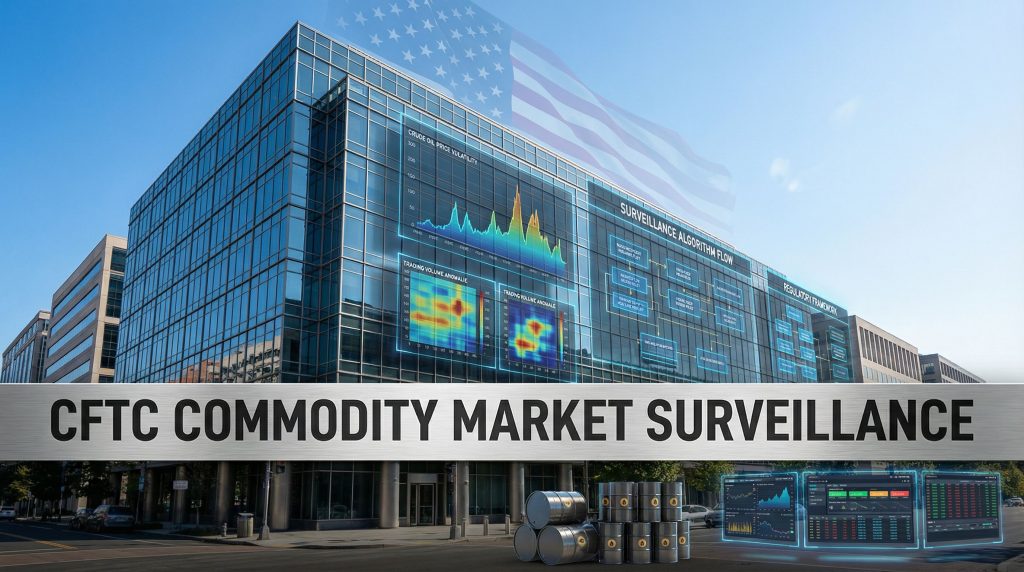
Understanding CFTC's Role in Commodity Market Surveillance
The Commodity Futures Trading Commission operates as the primary federal regulator overseeing futures contracts and derivatives markets in the United States. Under the Commodity Exchange Act, the CFTC maintains exclusive jurisdiction over trading activity in commodity futures markets, with authority extending across all designated contract markets and derivatives clearing organisations. In addition, understanding oil price rally dynamics becomes crucial when examining how policy shifts influence trading patterns.
Regulatory Framework for Derivatives Oversight
Current regulatory architecture stems largely from the Dodd-Frank Wall Street Reform and Consumer Protection Act of 2010, which expanded CFTC surveillance capabilities following the 2008 financial crisis. The agency's jurisdiction encompasses:
- Futures contracts and options traded on designated contract markets
- Swap execution facilities and derivatives clearing organisations
- Position limits and accountability levels designed to prevent excessive speculation
- Real-time surveillance of trading patterns across multiple venues
Recent investigative activity demonstrates this authority in practice. The CFTC is currently examining oil futures trades placed on March 23 and April 7, 2026, focusing on activity across CME Group and Intercontinental Exchange platforms. These investigations follow approximately $950 million in oil price positioning placed hours before the U.S. and Iran announced a ceasefire on April 15, 2026.
However, federal regulators are also examining broader patterns of oil price stagnation analysis to understand how policy uncertainty affects market behaviour. According to Reuters reporting on the investigation, these probes represent the most significant commodity trading investigation in recent years.
Detection Systems for Unusual Market Activity
Exchange-based surveillance systems employ sophisticated algorithms designed to identify potential manipulation in real-time. These systems monitor several key indicators:
Volume Anomaly Detection:
- Positions exceeding 150-200% of baseline activity levels
- Concentration of trading volume within narrow time windows
- Statistical deviations beyond 2-3 standard deviations from historical norms
Timing Pattern Analysis:
- Large position establishment within 24-48 hours of policy announcements
- Cross-venue coordination between related contracts (WTI vs. Brent crude)
- Correlation analysis between trading activity and subsequent market-moving events
The current investigation exemplifies these detection capabilities. Furthermore, CFTC enforcement personnel identified suspicious positioning patterns that preceded major geopolitical announcements, triggering formal inquiry procedures. The agency specifically requested Tag 50 identification data from exchanges, enabling investigators to trace ultimate beneficial ownership of the questionable trades.
When big ASX news breaks, our subscribers know first
What Constitutes Suspicious Trading Activity in Oil Markets?
Market manipulation in commodity futures requires demonstrating that prices became artificial through intentional conduct or reckless disregard for market integrity. Legal standards focus on timing, volume, and information asymmetries between market participants. For instance, the broader tariffs impact on markets also creates similar information asymmetries that regulators monitor closely.
Identifying Potentially Manipulative Behaviours
Federal investigators examine several factors when assessing potential manipulation:
Information-Based Trading Patterns:
- Positioning inconsistent with publicly available information
- Volume concentration before policy announcements
- Trading patterns suggesting advance knowledge of material developments
Statistical Deviation Metrics:
- Position sizes exceeding typical market participation levels
- Timing correlations with policy events or diplomatic developments
- Cross-market arbitrage suggesting coordinated strategy implementation
The April 15, 2026 case demonstrates these red flags in practice. Market participants established substantial bullish oil positions worth approximately $950 million within hours of the U.S.-Iran ceasefire announcement. Consequently, this timing, combined with the position size and subsequent market movements, generated millions of dollars in potential profits for those with advance positioning.
| Trade Date | Market Activity | Subsequent Event | Potential Impact |
|---|---|---|---|
| March 23, 2026 | Suspicious oil positioning | Policy discussions | Under investigation |
| April 7, 2026 | Additional positioning patterns | Diplomatic developments | Under investigation |
| April 15, 2026 | $950 million oil bets | U.S.-Iran ceasefire announced | Millions in profits |
Legal Thresholds for Investigation Triggers
CFTC enforcement authority operates under specific materiality standards established through statute and case law. Key thresholds include:
Materiality Requirements:
- Information must be material and nonpublic
- Trading activity must demonstrate intent or reckless disregard
- Economic impact sufficient to warrant federal enforcement action
Burden of Proof Standards:
- Civil enforcement requires preponderance of evidence
- Criminal referrals demand clear and convincing evidence
- Administrative sanctions follow agency procedural requirements
CFTC Chairman Michael Selig emphasised enforcement commitment in prepared Congressional testimony, stating that the agency will pursue the full force of law against anyone engaging in fraud, manipulation, or insider trading within CFTC-regulated markets.
How Do Geopolitical Events Create Market Vulnerabilities?
Geopolitical crises generate unique information asymmetries that create opportunities for market abuse. Policy-makers possess material nonpublic information during decision-making processes, while typical market participants must rely on public statements and speculation. However, the interconnected nature of global markets means that broader US-China trade impact also influences energy market dynamics.
Information Asymmetries in Crisis Situations
The current Iran conflict exemplifies how diplomatic negotiations create trading vulnerabilities:
Decision-Making Timeline Vulnerabilities:
- Policy Formation Phase: Government officials deliberate within restricted circles
- Information Leakage Window: Hours to days before public disclosure
- Announcement Phase: Official policy statements released
- Market Adjustment Period: Price discovery as participants process information
Regional economic impacts demonstrate the scale of these vulnerabilities. Qatar warned in April 2026 of major economic downturn if the Iran conflict continued unresolved, illustrating how prolonged uncertainty affects broader market stability.
Oil Market Sensitivity to Political Developments
Crude oil markets display particular sensitivity to geopolitical developments due to several structural factors:
Supply Chain Chokepoint Risks:
- Strait of Hormuz handles 21-30% of global petroleum transit
- Policy decisions affecting shipping lanes create immediate price volatility
- Regional tensions generate supply disruption expectations
Infrastructure Security Considerations:
- Production facilities vulnerable to military action
- Transportation networks subject to political interference
- Strategic reserve policies affecting market supply dynamics
The White House has implemented internal controls to address these vulnerabilities, warning staff against improperly leveraging their positions to place bets in futures markets during the ongoing Iran conflict. In addition, sophisticated investors are increasingly seeking market volatility hedging strategies during such periods.
What Enforcement Tools Does the CFTC Deploy?
Federal commodity regulators possess comprehensive enforcement authority designed to detect, investigate, and prosecute market manipulation. These tools range from administrative sanctions to criminal referrals.
Investigative Powers and Data Collection
Tag 50 Identification Requirements:
Tag 50 represents a Financial Information eXchange (FIX) protocol field that identifies ultimate beneficial owners of trading accounts. This standardised system enables investigators to:
- Trace orders from entry through execution
- Map trading relationships between entities
- Distinguish between direct traders, hedge funds, and investment advisers
- Coordinate surveillance across multiple venues
Subpoena Authority:
The CFTC maintains broad authority to compel production of records, documents, and testimony relevant to enforcement investigations. Current statutory powers include:
- Exchange trading records and communication logs
- Customer account information and position data
- Electronic communications between market participants
- Financial records supporting trading decisions
Penalty Structure for Market Manipulation
CFTC enforcement actions can result in substantial financial and operational consequences:
Civil Monetary Penalties:
- Disgorgement of ill-gotten gains
- Civil penalties up to the greater of $1 million or triple the monetary gain
- Injunctive relief preventing future violations
Administrative Sanctions:
- Trading prohibitions and registration suspensions
- Cease and desist orders
- Industry bar orders preventing future market participation
Criminal Referral Authority:
The CFTC regularly coordinates with the Department of Justice on criminal prosecutions involving market manipulation, adding potential imprisonment to financial penalties.
CME Group emphasised its cooperation with regulatory oversight, stating that the exchange vigorously surveils markets and works closely with the CFTC to oversee trading activity. However, the exchange noted that comprehensive market surveillance must include all venues, including prediction markets with limited regulatory visibility.
Why Are Energy Markets Particularly Vulnerable to Insider Trading?
Commodity futures markets possess structural characteristics that differentiate them from equity markets and create unique vulnerabilities to manipulation and insider trading.
Structural Characteristics of Commodity Trading
Market Concentration Factors:
- Limited number of major market-making participants
- High leverage ratios amplifying profit potential from small price movements
- Reduced transparency compared to equity market disclosure requirements
Institutional Participation Patterns:
- Hedge funds and commodity trading advisors dominate volume
- Pension funds and sovereign wealth funds maintain large positions
- Physical commodity producers and consumers provide natural liquidity
These characteristics become particularly problematic during geopolitical crises when policy decisions can generate immediate and substantial price movements. Furthermore, the leverage inherent in futures contracts means that advance knowledge of policy shifts can generate outsized returns relative to capital invested.
Policy-Sensitive Nature of Energy Pricing
Government Intervention Capabilities:
- Strategic petroleum reserve release policies
- Sanctions regimes affecting global supply chains
- Infrastructure security decisions impacting market access
Regulatory Framework Complexity:
- Multiple agencies involved in energy policy coordination
- International treaty obligations affecting domestic policy options
- National security considerations influencing economic decisions
Democratic Senator Elizabeth Warren of Massachusetts, a prominent CFTC overseer, stated that the agency's current probe represents a start but called for more comprehensive investigations into potential insider trading by administration officials. According to CNBC's coverage, the investigation has expanded beyond initial expectations.
How Do Exchanges Monitor and Report Suspicious Activity?
Designated contract markets maintain legal obligations to establish surveillance programmes capable of detecting manipulation and reporting suspicious activity to federal regulators.
Real-Time Surveillance Obligations
Exchange Monitoring Requirements:
- Automated alert systems for unusual volume patterns
- Position limit monitoring and accountability level enforcement
- Cross-market surveillance coordination between related contracts
- Daily reporting of large trader positions exceeding specified thresholds
Regulatory Reporting Protocols:
- Suspicious activity reports (SARs) for potential manipulation
- Large trader reports (Form 40) for positions exceeding size thresholds
- Special calls for information during market stress periods
- Coordination with CFTC Division of Market Oversight
Technology Infrastructure for Detection
Modern surveillance systems employ machine learning algorithms and pattern recognition technology to identify potentially manipulative trading:
Pattern Recognition Capabilities:
- Historical baseline establishment for normal trading patterns
- Real-time deviation analysis from established baselines
- Cross-venue correlation analysis for coordinated manipulation
- Communication surveillance integration for intent determination
Alert Generation Systems:
- Volume threshold breaches triggering automatic review
- Timing correlation alerts for policy-sensitive periods
- Price impact analysis for large position establishment
- Customer due diligence triggers for enhanced monitoring
The CFTC's enforcement director indicated in late March 2026 that the agency was actively monitoring speculation regarding insider trading in CFTC-regulated markets and was watching developments closely.
The next major ASX story will hit our subscribers first
What Are the Broader Implications for Market Integrity?
Federal investigations into commodity market manipulation carry significance beyond individual enforcement actions, affecting market confidence and regulatory framework evolution.
Systemic Risk Considerations
Market Confidence Effects:
- Price discovery mechanism reliability depends on market integrity
- Institutional investor participation requires regulatory certainty
- International competitiveness affected by enforcement reputation
Liquidity Provision Impacts:
- Market makers adjust risk pricing based on regulatory environment
- Compliance costs influence market structure and participation levels
- Cross-border regulatory coordination affects global market integration
Deterrence Effects of Enforcement Actions
High-visibility enforcement cases serve multiple deterrence functions:
Precedent-Setting Value:
- Establishing enforcement priorities for policy-sensitive trading
- Clarifying legal standards for information-based manipulation
- Demonstrating coordination between surveillance technology and enforcement capability
Compliance Programme Enhancement:
- Industry adoption of enhanced surveillance procedures
- Staff training protocols for information handling during policy-sensitive periods
- Documentation requirements for large position justification
Federal enforcement actions in commodity markets serve not only to punish wrongdoing but to establish clear boundaries for legitimate market participation during periods of policy uncertainty.
Frequently Asked Questions About Energy Market Investigations
How Long Do Investigations Typically Take?
Federal commodity investigations typically unfold over 12-24 months from initial detection through resolution. Key phases include:
- Detection and Initial Review (1-3 months)
- Formal Investigation Opening (3-6 months)
- Evidence Collection and Analysis (6-18 months)
- Enforcement Action Decision (18-24 months)
What Rights Do Participants Have During Investigations?
Rights During Investigation:
- Right to legal representation during testimony
- Privilege against self-incrimination in criminal matters
- Due process protections in administrative proceedings
- Appeal rights for adverse enforcement decisions
How Can Market Participants Ensure Compliance?
Best Practices for Trading Compliance:
- Enhanced surveillance technology implementation
- Staff training on material nonpublic information handling
- Documentation protocols for large position establishment
- Regular compliance auditing and testing procedures
Strengthening Market Surveillance in Volatile Times
Federal oversight of commodity markets continues evolving to address emerging challenges in policy-sensitive trading environments. Current enforcement actions demonstrate both regulatory capability and ongoing vulnerabilities in market surveillance systems. US probes suspicious oil trades reflect broader concerns about maintaining market integrity during geopolitical uncertainty.
Regulatory Evolution and Future Challenges
Technology Advancement Requirements:
- Machine learning integration for complex pattern recognition
- Real-time cross-venue surveillance coordination
- Enhanced communication monitoring capabilities
- International data sharing protocol development
International Coordination Needs:
- Cross-border enforcement cooperation agreements
- Regulatory arbitrage prevention measures
- Global market surveillance standard harmonisation
- Information sharing protocols for multinational investigations
Balancing Efficiency and Oversight:
- Market liquidity preservation during enforcement actions
- Compliance cost optimisation for market participants
- Innovation accommodation within regulatory frameworks
- Systemic risk monitoring during geopolitical stress periods
The current investigation into US probes suspicious oil trades before policy announcements illustrates both the sophistication of modern market surveillance and the persistent challenges of preventing abuse in policy-sensitive markets. As geopolitical tensions continue affecting commodity prices, federal regulators must balance market efficiency with integrity protection.
Successful enforcement requires coordination between exchange surveillance, federal investigation capabilities, and international regulatory cooperation. The outcome of current investigations will likely influence future compliance standards and surveillance technology development across commodity markets. US probes suspicious oil trades serve as a reminder that maintaining market integrity requires constant vigilance and adaptation to evolving threats.
Want to Stay Ahead of Major Market-Moving Discoveries?
Discovery Alert's proprietary Discovery IQ model delivers real-time notifications on significant ASX mineral discoveries, empowering subscribers to identify actionable opportunities before broader market awareness develops. Just as commodity market surveillance systems detect unusual trading patterns, our advanced AI technology instantly scans daily ASX announcements to uncover high-potential discovery opportunities that could generate substantial returns for informed investors.