
July 12, 2026
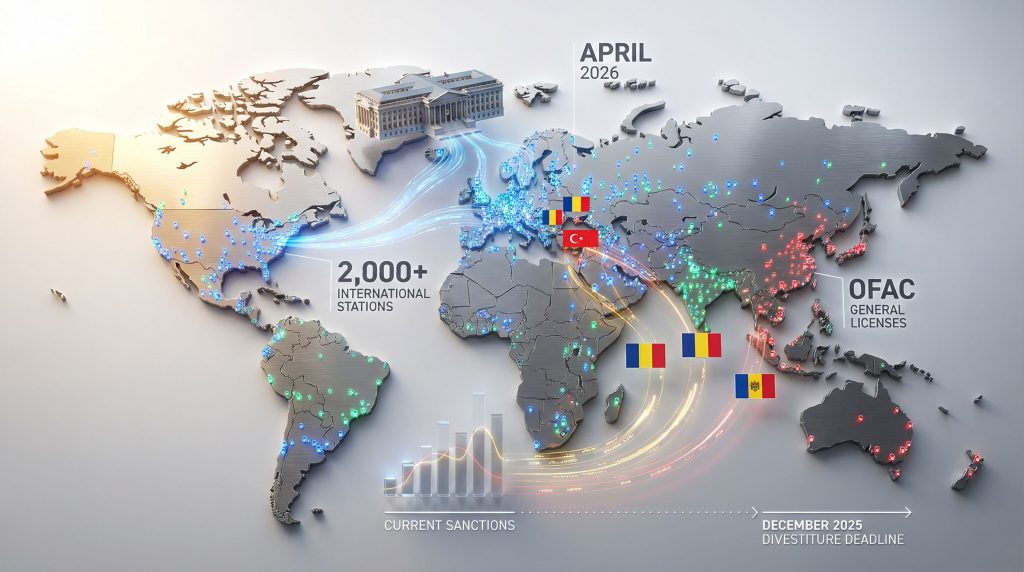
The United States has made a significant policy decision regarding US extends reprieve for Lukoil fuel stations outside Russia until April 2026. This extension allows the Russian oil giant's international retail network to continue operations while preventing revenue flows back to Russia, demonstrating sophisticated sanctions policy that balances strategic pressure with market stability concerns. The decision reflects evolving economic statecraft approaches that prioritise precision targeting over comprehensive economic warfare.
Understanding Treasury Department Energy Exemptions
Energy markets operate within complex regulatory frameworks where sanctions policy must balance strategic pressure with market stability. The Office of Foreign Assets Control (OFAC) administers targeted sanctions through sophisticated mechanisms that distinguish between comprehensive economic warfare and precision targeting of specific entities or sectors.
What Are OFAC General Licences in Energy Markets?
The Office of Foreign Assets Control operates under delegated authority from the President through the International Emergency Economic Powers Act (IEEPA), managing sanctions that affect global energy flows worth trillions of dollars annually. Unlike blanket prohibitions that can destabilise entire markets, General Licences function as pre-authorised exemptions that allow specific categories of transactions to proceed without individual approval.
General Licences represent a fundamental shift from Cold War-era comprehensive sanctions toward what policy experts term precision targeting. This approach recognises that modern energy markets are interconnected systems where disrupting one component can create cascading failures across multiple regions and allied territories.
The legal framework distinguishes between three primary sanctions categories:
- Comprehensive sanctions: Total prohibition of transactions with designated countries
- Sectoral sanctions: Restrictions targeting specific industries while permitting other commercial activity
- Entity-specific sanctions: Designations affecting particular companies or individuals through the Specially Designated Nationals (SDN) List
General Licences within sectoral sanctions create carefully defined operational windows. These authorisations maintain economic pressure on primary targets whilst protecting third-party stakeholders from unintended consequences that could undermine broader policy objectives.
How Do Energy Sanctions Waivers Protect Third-Party Nations?
Energy supply networks exhibit pronounced vulnerability to what economists call spillover disruption. When major suppliers face sudden operational cutoffs, dependent markets experience immediate price volatility, supply shortages, and infrastructure strain that can persist for months or years during transition periods.
The strategic logic behind targeted exemptions reflects lessons learned from previous energy sanctions implementations. The 2022 European energy crisis demonstrated how abrupt supply cutoffs generate 300% price volatility and create humanitarian risks during winter heating seasons. Contemporary sanctions policy incorporates these vulnerabilities into exemption design, particularly relevant when considering Russian Uranium Import Ban implications.
Third-party protection mechanisms operate through several channels:
- Economic spillover prevention: Maintaining fuel supply continuity in allied territories
- Consumer protection: Preventing sudden price shocks for residential and commercial users
- Infrastructure preservation: Allowing gradual transition rather than immediate operational shutdown
- Diplomatic coordination: Incorporating allied input into sanctions implementation timelines
The approach represents evolved sanctions philosophy where calibrated pressure replaces blunt economic warfare. Rather than maximising immediate economic damage, contemporary policy optimises long-term strategic effectiveness whilst minimising costs to partner nations.
When big ASX news breaks, our subscribers know first
Strategic Framework Behind Lukoil Station Extensions
The decision to extend operational waivers for Lukoil's international retail network until April 2026 reflects sophisticated analysis of market dependencies, geopolitical considerations, and transition logistics. Furthermore, this exemption affects thousands of fuel stations across multiple continents, representing billions of dollars in annual retail fuel transactions, similar to broader US-China Trade Impact considerations.
Why Did the US Grant Retail Operations Relief Until April 2026?
Lukoil's international presence extends far beyond typical energy company operations. As Russia's most internationally diversified oil firm, the company operates extensive retail networks that have become integrated into local fuel distribution systems across multiple regions.
Geographic Distribution of Lukoil International Operations:
| Region | Estimated Station Count | Strategic Significance |
|---|---|---|
| Europe | 1,800+ stations | Integrated EU fuel distribution |
| United States | Limited presence | Previous operations divested 2014 |
| Turkey | 400+ stations | NATO ally energy security |
| Central Asia | 700+ stations | Regional supply chain hub |
| Middle East | Varied holdings | Joint ventures and partnerships |
The April 2026 timeline provides critical adaptation windows for affected markets. Fuel distribution networks cannot be instantly reconfigured due to infrastructure constraints, regulatory requirements, and supply chain dependencies that require extensive lead times for modification.
Key factors influencing the exemption timeline include:
- Infrastructure compatibility requirements: Each nation's fuel specifications, octane ratings, and additive standards differ significantly
- Regulatory approval processes: New operators require environmental compliance certification and safety inspections
- Supply contract negotiations: Alternative suppliers need 3-6 month lead times for distribution agreements
- Employment protection: Local workforce preservation during ownership transition periods
The exemption specifically protects local employment and supplier ecosystems that developed around Lukoil operations over decades. Abrupt closure would eliminate thousands of jobs and disrupt regional supplier networks, creating economic hardship in allied territories that sanctions policy seeks to avoid.
What Revenue Controls Prevent Russian Benefit?
The General Licence structure incorporates sophisticated financial controls designed to maintain operational continuity whilst restricting capital flows to Russia-based entities. These mechanisms represent advanced sanctions engineering that separates retail operations from parent company benefits, reflecting broader concerns similar to Trump Tariff Implications.
Primary revenue restriction mechanisms include:
- Dividend payment prohibitions: Preventing profit repatriation to Russian shareholders
- Escrow account requirements: Segregating revenues in monitored financial institutions
- Cross-subsidiary transfer restrictions: Limiting fund movements between international operations
- Transaction threshold monitoring: Requiring pre-approval for large financial movements
This approach mirrors successful precedents from Venezuelan PDVSA sanctions, where the Treasury Department permitted continued operations whilst freezing parent company access to generated revenues. The model maintains market function whilst eliminating strategic benefit to the sanctioned entity.
Financial monitoring operates through designated compliance officers who must provide quarterly attestations to OFAC regarding transaction flows and fund segregation. Violations carry substantial civil penalties, with precedent cases involving hundreds of millions in fines for sanctions evasion.
Broader Sanctions Architecture and Energy Policy
Contemporary sanctions policy represents a fundamental evolution from previous approaches that emphasised comprehensive economic isolation. In addition, the integration of targeted exemptions within broader pressure campaigns reflects sophisticated understanding of how economic tools can achieve strategic objectives without creating counterproductive collateral damage.
How Do Targeted Exemptions Fit Within Maximum Pressure Strategy?
The concept of maximum pressure has evolved from blanket economic warfare toward precision targeting that maximises strategic impact whilst minimising allied burden-sharing costs. This approach recognises that sanctions effectiveness derives from surgical accuracy rather than comprehensive breadth.
Selective enforcement operates through multiple mechanisms:
- Temporal pressure creation: Asset divestiture deadlines create forced liquidation scenarios
- Revenue stream isolation: Preventing capital flows whilst maintaining operations
- Market transition management: Allowing orderly supplier substitution processes
- Diplomatic leverage preservation: Maintaining negotiating tools for future use
The Lukoil exemption exemplifies this evolved doctrine. By maintaining retail operations under revenue restrictions whilst requiring asset divestiture by specific deadlines, the policy creates controlled pressure that achieves strategic objectives without generating humanitarian crises in dependent markets, particularly when considering supply chain vulnerabilities addressed by initiatives like the European CRM Facility.
This approach contrasts sharply with comprehensive sanctions models used during previous conflicts. Cold War-era restrictions aimed for total economic isolation, often creating significant costs for allied nations and civilian populations. Contemporary policy seeks strategic precision that advances geopolitical objectives whilst preserving international cooperation frameworks.
What Does the December 2025 Asset Divestiture Deadline Mean?
Asset divestiture requirements represent the enforcement mechanism that distinguishes operational exemptions from permanent authorisation. These deadlines create temporal pressure that forces strategic decisions whilst providing transition periods for market adaptation.
Divestiture deadline implications include:
- Forced liquidation scenarios: Russian entities must sell international holdings within specified timeframes
- Market transition planning: Successor operators must be identified and approved
- Valuation pressure: Time constraints potentially reduce asset sale prices
- Successor screening requirements: New owners must meet OFAC compliance standards
The timeline structure serves dual purposes: maintaining economic pressure on Russian entities whilst providing sufficient adaptation periods for international markets. This approach prevents fire-sale liquidations that could destabilise fuel distribution systems whilst ensuring eventual Russian divestiture from international energy assets.
Regional Impact Assessment and Market Dynamics
European energy networks face complex adaptation challenges as sanctions policy reshapes supplier relationships and distribution systems. The continent's experience with energy supply disruptions in 2022 provides crucial context for understanding why targeted exemptions become strategically necessary, particularly when considering how US extends reprieve for Lukoil fuel stations outside Russia affects regional markets.
How Do European Energy Networks Adapt to Sanctions Pressure?
European fuel distribution systems developed over decades of integrated supply relationships that cannot be instantly reconfigured. Infrastructure compatibility, regulatory frameworks, and logistical networks create substantial barriers to rapid supplier substitution.
Baseline European energy dependency (pre-2022 historical data):
- European Union sourced approximately 40% of natural gas from Russian suppliers
- Retail fuel networks in southeastern Europe maintained significant dependency on Russian-linked distribution
- Romania, Bulgaria, and Hungary exhibited highest per-capita energy dependency ratios
- Lukoil operated extensive retail presence across Belgium, Romania, Austria, and Bulgaria
Adaptation challenges include:
- Supply chain reconfiguration: New operators must establish contracts with alternative refineries and suppliers
- Infrastructure modification: Tank storage, pipeline connections, and distribution logistics require physical alterations
- Regulatory compliance: Environmental permits, safety certifications, and competitive reviews create months-long approval processes
- Price volatility management: Transition periods typically generate temporary cost increases
The 6-18 month adaptation timeline reflects technical requirements rather than political considerations. European refineries optimised for Russian crude specifications require substantial modification to process alternative supplies. Port facilities, storage infrastructure, and distribution networks similarly need reconfiguration for new supplier relationships.
Regional variation in adaptation capacity:
- Western European markets: Higher alternative supplier access and infrastructure flexibility
- Central European markets: Greater dependency on existing Russian-linked networks
- Southeastern European markets: Limited alternative infrastructure and higher transition costs
- Baltic markets: Strategic vulnerability due to geographic constraints
What Lessons Apply to Future Energy Sanctions Design?
The Lukoil exemption structure provides valuable precedents for future energy sanctions implementation. Successful sanctions policy must balance strategic pressure with market stability requirements to maintain allied cooperation and prevent humanitarian consequences, particularly relevant when examining Critical Minerals Order implications.
Key design principles emerging from this approach:
- Graduated implementation timelines: Providing adaptation periods for infrastructure transition
- Revenue restriction mechanisms: Separating operational continuity from strategic benefit
- Allied consultation frameworks: Incorporating partner nation input into policy design
- Monitoring and adjustment capabilities: Maintaining flexibility for changing circumstances
Historical precedents from Iranian, Venezuelan, and North Korean sanctions demonstrate that abrupt comprehensive restrictions often generate counterproductive outcomes, including increased sanctions evasion, humanitarian crises, and allied opposition that undermines long-term policy effectiveness.
Contemporary best practices emphasise precision targeting that achieves strategic objectives whilst maintaining international cooperation. This approach recognises that modern energy markets are global systems where disruption in one region creates cascading effects across multiple allied territories.
Geopolitical Context and Diplomatic Considerations
Energy sanctions operate within broader diplomatic frameworks where timing, reversibility, and signal management become crucial components of negotiating strategy. However, the extended timeline for Lukoil operations reflects sophisticated analysis of how economic pressure tools interact with diplomatic engagement processes.
How Do Peace Negotiations Influence Sanctions Timing?
Sanctions serve dual functions as both economic pressure mechanisms and diplomatic negotiating tools. The temporal structure of exemptions creates flexibility for policymakers to adjust pressure levels based on diplomatic progress or strategic developments.
Historical precedents for sanctions adjustment during diplomatic engagement:
- Iran JCPOA (2015-2018): Sanctions suspension coordinated with nuclear agreement implementation
- North Korea engagement cycles: Temporary restriction modifications during summit negotiations
- Post-Soviet transitions (1990s): Gradual sanctions removal coordinated with democratic reforms
The April 2026 timeline for Lukoil exemptions maintains negotiating leverage whilst signalling flexibility. By avoiding permanent authorisation, the policy preserves ability to offer further exemptions as positive inducements or threaten stricter enforcement as pressure mechanisms.
Leverage maintenance strategies include:
- Conditional renewal possibilities: Future exemption extensions contingent on behavioural changes
- Graduated enforcement options: Ability to increase restrictions without completely eliminating exemptions
- Reversibility planning: Framework for rapid sanctions removal during successful negotiations
- Allied coordination mechanisms: Synchronised policy adjustments across partner nations
What Precedent Does This Set for Future Energy Conflicts?
The Lukoil exemption structure establishes important precedents for future energy sanctions design that balance strategic pressure with international system stability. This approach recognises that energy markets are critical infrastructure requiring careful management during geopolitical conflicts.
Precedent elements for future application:
- Humanitarian exemption criteria: Protecting civilian populations in allied territories
- Infrastructure transition management: Providing adequate timelines for market adaptation
- Revenue isolation mechanisms: Separating operational continuity from strategic benefit
- Allied burden-sharing consideration: Incorporating partner nation costs into policy design
This model could prove applicable to future conflicts involving energy-producing nations with significant international market integration. Countries with substantial global energy assets may face similar exemption structures that maintain strategic pressure whilst protecting third-party stakeholders.
The approach also establishes frameworks for international law compliance that distinguish between legitimate strategic pressure and actions that could constitute economic warfare against civilian populations or allied territories.
Implementation Challenges and Compliance Monitoring
Managing sanctions compliance across thousands of retail fuel locations spanning multiple continents requires sophisticated monitoring systems and enforcement mechanisms. For instance, the scale of the Lukoil network presents unique challenges for Treasury Department oversight capabilities.
How Will OFAC Track Compliance Across International Locations?
OFAC operates with finite resources to monitor compliance across global networks that may include thousands of individual retail locations. Real-time transaction monitoring is not feasible, requiring alternative compliance structures that rely on systematic auditing and reporting requirements.
Compliance monitoring mechanisms typically include:
- Quarterly attestation requirements: Parent company or designated subsidiaries must certify compliance with revenue restrictions
- Third-party monitor appointments: OFAC-designated compliance firms conduct regular audits
- Transaction threshold reporting: Large financial movements require pre-approval or immediate notification
- Banking channel restrictions: Limiting financial institutions authorised for exempted transactions
Historical OFAC enforcement statistics:
- Average annual civil penalty actions: 500-1,000 cases (2015-2022 data)
- Typical violation penalties: $100,000-$500,000 per incident
- Major institutional penalties: $500 million-$8.9 billion for systematic violations
Notable precedent cases include Standard Chartered Bank ($639 million penalty for Iran sanctions evasion) and BNP Paribas ($8.9 billion for Sudan and Iran violations), demonstrating substantial financial consequences for compliance failures.
Cross-border monitoring challenges:
- Jurisdictional coordination: Working with foreign regulatory authorities for local compliance oversight
- Real-time data limitations: Inability to monitor individual fuel transactions as they occur
- Cultural and language barriers: Effective communication across diverse international markets
- Resource allocation: Prioritising monitoring efforts across thousands of potential compliance points
What Risks Exist for Non-Compliance or Abuse?
Sanctions evasion through retail fuel networks presents multiple vectors for compliance violations that could undermine exemption effectiveness. Detection capabilities must address both intentional evasion and inadvertent violations resulting from complex international operations.
Primary risk categories include:
- Revenue flow manipulation: Attempting to circumvent fund segregation requirements through complex financial arrangements
- Ownership structure abuse: Using shell companies or nominee arrangements to maintain effective Russian control
- Transaction laundering: Disguising prohibited financial flows through legitimate retail operations
- Compliance system failures: Inadequate monitoring or reporting systems leading to inadvertent violations
Detection and response protocols:
- Pattern analysis: Statistical review of transaction flows for unusual patterns
- Cross-reference investigations: Comparing reported activities with independent data sources
- Whistleblower programmes: Incentivising internal reporting of compliance violations
- Penalty escalation: Graduated sanctions for different violation severity levels
Corporate liability frameworks extend responsibility to parent companies and senior executives for subsidiary compliance failures. This approach creates strong incentives for implementing robust compliance systems across international operations.
The next major ASX story will hit our subscribers first
Long-Term Strategic Implications
The Lukoil exemption structure reflects broader evolution in economic statecraft that prioritises precision targeting over comprehensive economic warfare. Consequently, this approach has significant implications for international energy markets, sanctions policy development, and strategic competition frameworks.
How Does This Decision Affect Future Russian Energy Strategy?
Russia's energy sector faces fundamental restructuring pressures as international sanctions force divestiture of global assets and market relationships developed over decades. The exemption timeline creates controlled liquidation pressure whilst preventing market chaos that could benefit Russian strategic interests.
Strategic implications for Russian energy companies:
- International diversification vulnerability: Global asset exposure becomes liability during geopolitical conflicts
- Market concentration risks: Forced focus on domestic and allied markets reduces revenue diversification
- Capital access limitations: Restricted ability to finance international expansion or maintenance
- Technological isolation: Reduced access to Western energy technologies and expertise
The asset divestiture requirements fundamentally alter Russian energy company business models that previously relied on international market integration. Companies must choose between maintaining global presence under increasingly restrictive conditions or accepting forced liquidation of international holdings.
Long-term adaptation strategies may include:
- Alternative market development: Increased focus on Asian and developing nation partnerships
- State-enterprise relationship evolution: Greater government control over energy company international operations
- Technology independence initiatives: Reduced reliance on Western energy sector technologies
- Financial system adaptation: Development of alternative payment and financing mechanisms
What Does This Reveal About US Sanctions Philosophy Evolution?
The targeted exemption approach represents sophisticated evolution in American economic statecraft that recognises limitations of comprehensive sanctions whilst maintaining strategic pressure capabilities. This philosophy emphasises precision targeting over broad economic warfare.
Key philosophical shifts include:
- Allied consideration integration: Incorporating partner nation costs into sanctions design from policy initiation
- Humanitarian impact assessment: Evaluating civilian consequences before implementation rather than as afterthought
- Market stability prioritisation: Recognising energy markets as critical infrastructure requiring careful management
- Diplomatic flexibility preservation: Maintaining tools for future negotiation and agreement implementation
This approach contrasts with previous sanctions models that emphasised maximum immediate economic damage regardless of collateral consequences. Contemporary policy seeks strategic effectiveness through sustainable pressure that maintains international cooperation whilst achieving long-term objectives.
Implications for future sanctions policy:
- Sector-specific exemption frameworks: Detailed protocols for critical infrastructure protection during economic conflicts
- Allied consultation requirements: Systematic partner nation input integration into policy development processes
- Graduated enforcement mechanisms: Flexible pressure adjustment capabilities based on strategic developments
- Reversibility planning: Comprehensive frameworks for sanctions suspension and removal coordination
The evolution reflects recognition that modern economic interdependence requires sophisticated tools that can achieve strategic objectives without undermining the international system stability that supports long-term American interests. This development where US extends reprieve for Lukoil fuel stations outside Russia demonstrates the nuanced approach contemporary sanctions policy requires.
Disclaimer: This analysis addresses complex sanctions policy mechanisms and international energy market dynamics that evolve rapidly based on geopolitical developments. Information regarding specific Treasury Department decisions, current negotiation status, and regulatory timelines should be verified through official government sources including the Department of Treasury OFAC website, Federal Register announcements, and authorised government spokesperson statements. Investment and business decisions should not be based solely on this analysis without independent verification of current regulatory requirements and compliance obligations.
Looking to Navigate Complex Global Energy Market Shifts?
Discovery Alert's proprietary Discovery IQ model delivers instant notifications on significant ASX mineral discoveries, helping investors capitalise on market-moving announcements as geopolitical developments reshape global energy dynamics. Start your 30-day free trial today and discover why major mineral breakthroughs can generate exceptional returns by exploring our dedicated discoveries page.