July 19, 2026
Global energy markets continue experiencing unprecedented volatility as geopolitical tensions reshape traditional supply chains and force policymakers into complex strategic calculations. The intersection of sanctions policy, maritime security, and energy diplomacy has created a landscape where yesterday's adversaries become today's temporary partners in the pursuit of market stability. This dynamic environment reveals how quickly energy security considerations can override other policy objectives when oil price rally analysis threatens global economic stability.
Understanding Sanctions Architecture and Maritime Enforcement
The framework governing US sanctions on Iranian oil tankers operates through a complex web of legal authorities and enforcement mechanisms that extend far beyond simple vessel designations. The Treasury Department's Office of Foreign Assets Control maintains jurisdiction over approximately 1,000 vessels currently operating under various sanctions programs connected to Iran and Russia, representing one of the largest maritime enforcement operations in modern history.
The Shadow Fleet's Operational Structure
Iran's clandestine maritime network functions as a sophisticated parallel shipping infrastructure designed to circumvent international restrictions. These vessels, often referred to as the "shadow fleet," employ various operational tactics including frequent flag changes, manipulated tracking systems, and coordinated ship-to-ship transfers in international waters. The scale of this operation extends beyond simple sanctions evasion, generating substantial revenue streams that intelligence assessments suggest contribute hundreds of millions of dollars annually to Iranian military programs and proxy operations.
The network's resilience stems from its decentralised structure and ability to rapidly adapt to enforcement actions. Vessels frequently change ownership documentation, modify their registration details, and utilise complex financial arrangements to obscure beneficial ownership. This operational flexibility has enabled the shadow fleet to maintain significant throughput despite escalating sanctions pressure.
Legal Framework and International Coordination
Maritime sanctions enforcement relies on multiple legal authorities including the International Emergency Economic Powers Act and various executive orders targeting specific Iranian entities. However, the effectiveness of these measures depends heavily on international cooperation, particularly from flag states and port authorities. The European Union's decision not to join recent temporary exemptions highlights ongoing challenges in maintaining unified sanctions approaches among Western allies.
The enforcement mechanisms face inherent limitations in international waters, where jurisdiction becomes complex and monitoring capabilities are stretched across vast ocean areas. These constraints have contributed to the development of increasingly sophisticated evasion techniques by sanctioned operators.
When big ASX news breaks, our subscribers know first
Vessel-Specific Sanctions and Network Analysis
Recent enforcement actions have targeted specific vessels and organisational networks with unprecedented precision. The Shamkhani shipping empire, described by Treasury officials as a vast commercial network, exemplifies how Iranian-linked operations have evolved to maintain market access despite comprehensive sanctions regimes.
Mohammad Hossein Shamkhani's organisational structure demonstrates the complexity of modern sanctions evasion networks. Connected to Iran's Revolutionary Guard through family relationships and financial arrangements, this network operated more than 50 vessels across multiple jurisdictions before facing coordinated enforcement action in July 2025. The Treasury Department characterised this designation as the largest sanctions action against Iran since the United States withdrew from the nuclear agreement in 2018.
Financial Impact and Asset Recovery
The Justice Department's civil forfeiture proceedings, seeking $15 million in assets connected to the Shamkhani network, illustrate the financial dimensions of sanctions enforcement. These funds allegedly supported ongoing violations and provided operational capital for maintaining the shipping infrastructure. Attorney General Pam Bondi's statement regarding consequences for sanctions violators reflects the administration's commitment to aggressive enforcement.
The asset recovery process faces significant challenges due to the international nature of shipping operations and the use of complex financial intermediaries. Many sanctioned entities employ sophisticated legal structures designed to insulate assets from enforcement actions, requiring sustained coordination between multiple agencies and international partners.
Quantifying Export Impacts and Market Dynamics
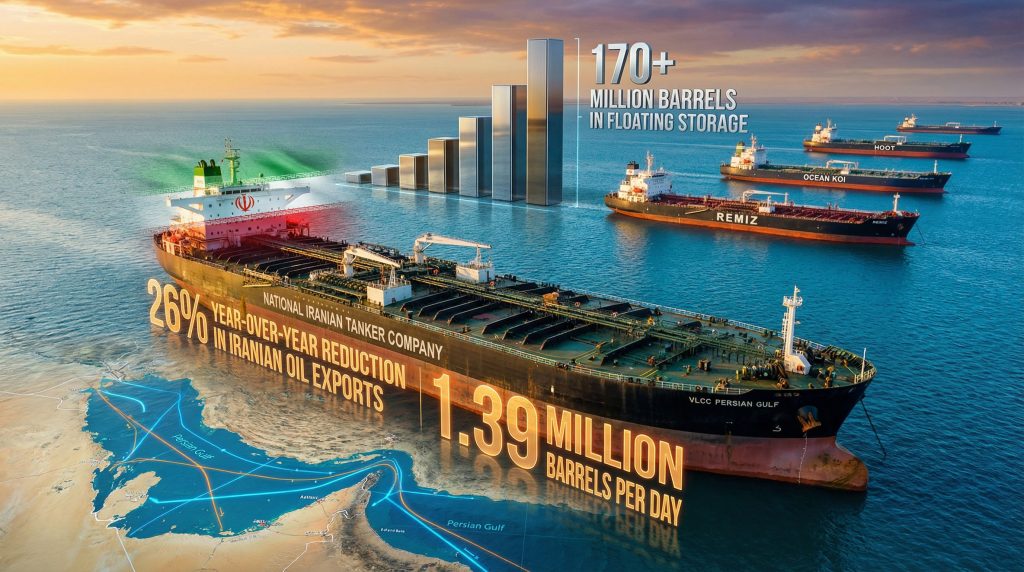
The effectiveness of US sanctions on Iranian oil tankers can be measured through various market indicators, though precise data remains challenging to obtain due to the clandestine nature of many operations. Furthermore, oil prices have experienced significant volatility, with increases of nearly 40 percent following escalated Middle East tensions, forcing policymakers to balance sanctions enforcement with energy market stability.
Temporary Relief Mechanisms and Policy Flexibility
The Treasury Department's decision to implement 30-day exemption windows for vessels carrying Russian crude demonstrates the complex trade-offs involved in sanctions policy. This temporary measure covers more than 370 tankers carrying approximately 215 million barrels of oil currently in transit or floating storage, representing billions of dollars in commodity value. However, the tariffs impact on markets adds additional complexity to these calculations.
These exemptions reflect acknowledgement that overly rigid enforcement can exacerbate energy market volatility during periods of geopolitical stress. Treasury Secretary Scott Bessent's statements regarding market stability objectives highlight how economic considerations can temporarily override sanctions enforcement priorities.
The waiver system operates under strict conditions, requiring vessels to have been carrying Russian oil at the time of announcement and limiting the duration of exemptions. This approach attempts to provide immediate market relief while maintaining longer-term sanctions pressure on targeted networks.
Evasion Techniques and Technological Adaptations
Iranian tanker operations have evolved sophisticated methods to circumvent detection and enforcement. Flag-hopping between jurisdictions such as Panama, Barbados, and Palau allows vessels to exploit regulatory gaps and avoid concentrated enforcement attention. Automatic Identification System manipulation enables ships to obscure their locations and cargo details from monitoring systems.
Ship-to-Ship Transfer Operations
The practice of transferring oil between vessels in international waters has become increasingly common as a method to obscure the origin of sanctioned crude. These operations typically occur in areas with limited monitoring capabilities, allowing sanctioned oil to be mixed with legitimate cargo before reaching final destinations.
Intelligence assessments suggest these transfers have become more frequent and sophisticated, involving purpose-built vessels and coordinated timing to minimise detection risks. The revenue implications of these operations extend beyond immediate oil sales to include service fees for facilitating transfers and providing storage capabilities.
Geopolitical Ramifications and Strategic Considerations
The continuation of Iranian oil exports despite comprehensive sanctions reveals the limitations of unilateral enforcement in global commodity markets. China's role as the primary destination for Iranian crude, importing over 1 million barrels daily, demonstrates how major economies can effectively limit sanctions impact through sustained commercial relationships. Consequently, Trump tariffs implications further complicate these dynamics.
Regional Security and Maritime Chokepoints
The Strait of Hormuz remains a critical pressure point where geopolitical tensions directly impact global energy flows. Recent disruptions to normal shipping patterns in this vital waterway have forced modifications to traditional transit arrangements and highlighted the vulnerability of global energy infrastructure to regional conflicts.
According to the US State Department, "coordinated action against shadow fleet operators represents a significant escalation in enforcement capabilities." US Navy escort operations for commercial shipping reflect the security dimensions of energy market protection.
Enforcement Effectiveness and Adaptation Cycles
Treasury Department analysis indicates that enforcement actions have designated 86 percent of Iranian oil tankers over the past year, yet the shadow fleet continues adapting with increasingly sophisticated operational methods. This statistic highlights both the scope of enforcement efforts and the resilience of targeted networks.
Market Impact Assessment
The relationship between sanctions enforcement and oil price volatility creates ongoing policy dilemmas for policymakers. In addition to traditional supply concerns, US–China trade war strategies influence market sentiment. Strategic petroleum reserve releases have proven insufficient to counter market pressures from Middle East supply disruptions, forcing consideration of alternative approaches including temporary sanctions relief.
The effectiveness of current measures in limiting Iranian revenue remains disputed among analysts. While sanctions have clearly increased operational costs and reduced efficiency for Iranian oil operations, the continuation of exports at substantial volumes suggests that revenue impacts may be less severe than initially projected.
The next major ASX story will hit our subscribers first
Future Scenarios and Policy Evolution
Potential escalation pathways include expansion of vessel designations and implementation of secondary sanctions on Iranian oil purchasers. The Trump administration's policy framework suggests continued emphasis on maximum pressure tactics, potentially including additional measures targeting international financial institutions facilitating Iranian oil transactions.
Furthermore, Reuters reports indicate that "fresh Iran-related sanctions represent the most comprehensive vessel-targeting program to date." This suggests increasingly aggressive enforcement approaches.
Technology and Monitoring Capabilities
Advances in satellite tracking and maritime surveillance technology continue improving detection capabilities for sanctions evasion activities. However, these technological improvements operate in parallel with evolving evasion techniques, creating an ongoing competition between enforcement and circumvention capabilities.
Blockchain-based compliance verification systems and international maritime database integration represent potential future enhancements to enforcement capabilities, though implementation would require substantial international coordination and technical standardisation.
Strategic Recommendations for Energy Market Participants
Energy companies operating in volatile regulatory environments should prioritise supply chain diversification to reduce exposure to sanctions-related disruptions. This includes developing relationships with multiple crude sources and maintaining flexibility in procurement strategies.
Investment and Risk Management Considerations
The tanker fleet's valuation faces ongoing uncertainty due to sanctions designations and enforcement actions. Insurance markets have responded with premium adjustments reflecting elevated risks for Middle East operations, requiring careful analysis of cost-benefit calculations for energy infrastructure investments. Additionally, oil futures analysis becomes crucial for strategic planning.
Long-term contracting strategies must account for regulatory uncertainty and potential policy changes that could affect supply chain arrangements. Companies should develop scenario planning frameworks incorporating various enforcement intensities and geopolitical developments.
Compliance Program Development
Organisations involved in international energy trading should implement robust sanctions compliance programs incorporating real-time monitoring of vessel designations and ownership changes. These systems require regular updates reflecting the dynamic nature of sanctions listings and enforcement actions.
Key indicators for monitoring sanctions policy changes include Treasury Department announcements, oil price movements, and diplomatic developments in relevant regions. Market participants benefit from establishing information networks providing early warning of potential policy modifications.
Disclaimer: This analysis is based on publicly available information and should not be considered as investment advice or legal guidance. US sanctions on Iranian oil tankers are subject to rapid changes, and readers should consult current official sources and qualified professionals for specific compliance and investment decisions. The complex nature of international sanctions and energy markets requires ongoing monitoring and expert assessment for practical applications.
Looking to Navigate Energy Market Volatility?
Discovery Alert's proprietary Discovery IQ model delivers real-time notifications on significant ASX mineral discoveries, providing subscribers with actionable insights during periods of global energy uncertainty and commodity market shifts. Start your 14-day free trial at Discovery Alert today to position yourself ahead of market movements and capitalise on emerging opportunities in the resources sector.