June 7, 2026
Understanding the Strategic Military Positioning Framework
The Persian Gulf represents one of the most strategically complex maritime theaters in global geopolitics, where military positioning directly influences energy security transition outcomes. Understanding how US troops in Persian Gulf before Iran truce talks affects regional stability requires examining the intricate balance between deterrent force projection and diplomatic flexibility.
Current Force Deployment Architecture in the Gulf Region
Military analysts recognize that sustained naval presence in the Persian Gulf operates through a multi-layered architecture designed to maintain freedom of navigation while supporting diplomatic initiatives. The Fifth Fleet's operational footprint encompasses approximately 2.5 million square miles of ocean, with primary command centres strategically positioned across Bahrain, Kuwait, and Qatar.
Recent assessments indicate that carrier strike groups maintain rotating deployments averaging 90-120 days per cycle, ensuring continuous maritime presence without triggering escalation protocols. This operational tempo differs significantly from crisis-response deployments, which typically involve accelerated rotation schedules and enhanced force protection measures.
Integration with regional partners follows established Gulf Cooperation Council frameworks, where interoperability protocols enable coordinated responses to maritime security threats. UAE naval facilities host advanced surveillance systems, while Saudi Arabian air bases provide strategic depth for reconnaissance operations extending across the broader Middle East theatre.
Operational Command Structure During Diplomatic Negotiations
The complexity of maintaining military readiness during diplomatic initiatives requires sophisticated command coordination between CENTCOM operational directives and State Department negotiation parameters. This dual-track approach ensures that force positioning supports rather than undermines ongoing peace processes.
Multi-theatre coordination protocols establish clear escalation thresholds, distinguishing between routine maritime patrol activities and conflict-response positioning. Intelligence sharing mechanisms operate through established channels that provide real-time threat assessment whilst maintaining operational security for sensitive diplomatic communications.
Decision-making hierarchies during ceasefire monitoring involve tiered authorisation structures, where tactical commanders retain authority for immediate threat response whilst strategic deployments require coordination with diplomatic teams. This framework prevents military actions from inadvertently compromising ongoing negotiations.
When big ASX news breaks, our subscribers know first
What Are the Core Elements of the Fragile Ceasefire Agreement?
Regional stability depends fundamentally on the ability to establish clear operational boundaries that all parties can verify and enforce. Historical analysis of Persian Gulf cease-fire arrangements reveals consistent challenges related to territorial definitions, verification mechanisms, and economic reintegration protocols.
Disputed Territorial and Operational Boundaries
The Strait of Hormuz navigation framework encompasses multiple overlapping jurisdictional claims, complicating efforts to establish unified security protocols. International maritime law provides foundational principles, but practical implementation requires negotiated agreements addressing specific vessel types, cargo classifications, and escort procedures.
Navigation rights enforcement involves coordinated patrols designed to maintain neutral shipping lanes whilst respecting territorial waters. These operations typically employ international observers to verify compliance with agreed-upon protocols, reducing the potential for misinterpretation of routine maritime activities.
Verification processes for nuclear enrichment activities rely on International Atomic Energy Agency inspection protocols, which establish baseline monitoring capabilities whilst accommodating legitimate civilian nuclear programmes. Enhanced verification measures often include real-time monitoring systems and expanded inspector access to sensitive facilities.
Economic Sanctions Relief Framework
Understanding sanctions architecture requires distinguishing between primary sanctions targeting direct economic relationships and secondary sanctions affecting third-party transactions. This differentiation becomes crucial during phased compliance implementation, where graduated relief mechanisms incentivise sustained cooperation.
Timeline coordination for sanctions relief typically follows verified compliance milestones rather than predetermined schedules, ensuring that economic benefits correlate directly with security improvements. Energy sector restoration receives priority focus due to its immediate impact on regional stability and global supply chain recovery.
Phased verification protocols establish measurable benchmarks for sanctions relief, including:
- Nuclear facility access expansion
- Maritime security cooperation implementation
- Regional military activity de-escalation
- Humanitarian corridor establishment
- Energy infrastructure protection agreements
Why Does the Strait of Hormuz Remain the Critical Chokepoint?
Global energy security hinges disproportionately on a single maritime passage that handles approximately 21% of global petroleum liquids transit and 18% of liquefied natural gas shipments. This concentration creates systemic vulnerability that extends far beyond regional conflict zones, particularly affecting oil price trade dynamics.
Global Energy Supply Chain Vulnerability Assessment
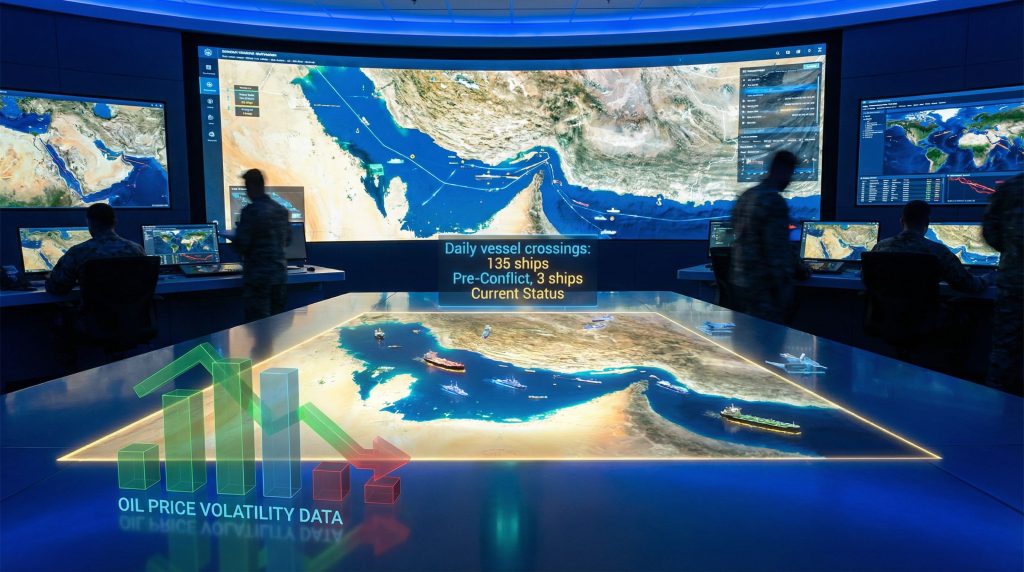
Pre-conflict shipping data reveals the extraordinary volume of energy transit through Hormuz chokepoint. Under normal operational conditions, maritime traffic includes approximately 135 vessels daily, ranging from ultra-large crude carriers to specialised LNG tankers.
| Transit Category | Daily Average | Monthly Volume | Global Percentage |
|---|---|---|---|
| Crude oil tankers | 45 vessels | 1,350 transits | 21% of global trade |
| LNG carriers | 12 vessels | 360 transits | 18% of global supply |
| Refined products | 28 vessels | 840 transits | 17% of global flow |
| Container ships | 35 vessels | 1,050 transits | Mixed cargo impact |
| Bulk carriers | 15 vessels | 450 transits | Petrochemical inputs |
Supply chain recovery timelines depend heavily on security verification protocols and insurance industry risk assessments. Lloyd's of London typically requires 30-45 days of verified safe passage before adjusting maritime risk premiums to pre-crisis levels.
Insurance and Maritime Risk Recalculation
War risk insurance premiums can increase shipping costs by 300-500% during periods of elevated threat assessment, effectively pricing smaller operators out of Persian Gulf routes. This market mechanism forces cargo consolidation onto larger vessels operated by companies with enhanced insurance capacity.
Alternative route analysis reveals limited options for Persian Gulf energy exports. The Suez Canal-Red Sea corridor adds approximately 2,000 nautical miles to European destinations, whilst Cape of Good Hope routing extends journey times by 14-21 days depending on final destination.
Maritime security cost calculation includes vessel hardening, escort services, and extended insurance coverage. These combined factors can increase delivered energy costs by 15-25%, with impacts varying significantly based on destination markets and contract structures.
How Do Regional Power Dynamics Influence Negotiation Outcomes?
Regional stability requires balancing competing strategic interests among Gulf states, each maintaining distinct economic priorities and security relationships. These dynamics create both constraints and opportunities for sustainable peace implementation.
Gulf State Strategic Positioning
UAE's economic diversification strategy emphasises maintaining commercial relationships across traditional alliance boundaries, positioning Dubai and Abu Dhabi as neutral financial hubs capable of facilitating regional economic integration. This approach provides diplomatic flexibility whilst protecting substantial infrastructure investments.
Saudi Arabia's energy security calculations focus on protecting critical export infrastructure, including the Ras Tanura terminal complex and East-West pipeline system. These facilities represent approximately 40% of Saudi export capacity, making their protection essential for kingdom economic stability.
Qatar's mediation potential stems from its unique position maintaining diplomatic relationships with competing regional powers whilst hosting significant US military assets. The Al Udeid Air Base provides strategic value for US operations whilst Qatar's LNG exports create economic incentives for regional stability.
Chinese Economic Leverage Through Energy Imports
Beijing's strategic petroleum reserve capacity has expanded significantly over recent years, providing buffer capability during supply disruptions. Current estimates suggest China maintains approximately 90-120 days of strategic reserves, enabling sustained economic activity during temporary supply interruptions.
Alternative supply route development through Central Asian pipelines offers China reduced dependence on Persian Gulf shipping, though these overland routes cannot fully replace maritime volumes. The Power of Siberia pipeline and Central Asia-China gas pipeline provide approximately 30% of Chinese energy imports.
Investment protection mechanisms for Chinese energy companies operating in the Persian Gulf include bilateral investment treaties and state-backed insurance programmes. These frameworks provide financial security for long-term energy infrastructure projects whilst creating stakeholder incentives for regional stability.
What Market Mechanisms Drive Oil Price Volatility During Geopolitical Standoffs?
Energy markets exhibit heightened sensitivity to Persian Gulf developments due to the concentration of global spare capacity in the region. Understanding these market dynamics requires analysing both physical supply factors and financial market psychology, particularly considering the trade war oil impact on global pricing.
Commodity Trading Pattern Analysis During Crisis Periods
Brent crude price volatility during geopolitical crises typically follows predictable patterns, with initial risk premium spikes followed by gradual normalisation as situation clarity improves. Historical analysis reveals average risk premiums of $8-15 per barrel during sustained Persian Gulf tensions.
Market Insight: Energy futures markets incorporate geopolitical risk through complex algorithms that weigh supply disruption probability against available strategic reserve releases and alternative supply activation timelines.
Speculative trading volumes increase dramatically during crisis periods, with hedge funds and commodity trading advisors contributing to price volatility through momentum-based strategies. These market participants can amplify price movements beyond levels justified by physical supply fundamentals.
Strategic Petroleum Reserve Utilisation Strategies
International Energy Agency coordination enables synchronised strategic reserve releases designed to stabilise global markets during supply disruptions. Member countries maintain combined reserves exceeding 4 billion barrels, providing substantial buffer capacity against temporary supply interruptions.
Emergency allocation protocols prioritise releases based on supply disruption severity and member country vulnerability assessments. The United States Strategic Petroleum Reserve contains approximately 650-700 million barrels, representing the world's largest government-controlled oil stockpile.
Market stabilisation intervention thresholds typically activate when sustained supply disruptions exceed 2-3 million barrels per day, though political considerations may trigger earlier releases during periods of elevated price volatility.
Which Diplomatic Frameworks Could Ensure Long-Term Regional Stability?
Sustainable peace implementation requires institutional mechanisms capable of managing ongoing disputes whilst providing predictable frameworks for economic cooperation. Historical precedents offer valuable insights into effective diplomatic architecture design.
Multi-Track Negotiation Architecture
Structured negotiation frameworks typically involve parallel tracks addressing different aspects of regional security, including nuclear non-proliferation, maritime security, economic cooperation, and humanitarian concerns. This compartmentalised approach prevents deadlock in one area from derailing progress across all negotiation topics.
Backchannel communication protocols provide essential flexibility for exploring compromise solutions without public political costs. These informal diplomatic channels often involve neutral intermediaries with established relationships across competing parties.
Regional security cooperation development builds on existing frameworks such as the Gulf Cooperation Council and Organisation of Islamic Cooperation whilst establishing new mechanisms specifically addressing Persian Gulf maritime security coordination.
Nuclear Non-Proliferation Enforcement Mechanisms
Enhanced IAEA inspection protocols require expanded access to sensitive facilities, real-time monitoring capabilities, and strengthened verification procedures. These measures must balance non-proliferation objectives with legitimate civilian nuclear programme requirements.
Uranium enrichment limitation frameworks typically establish maximum enrichment levels consistent with civilian reactor requirements whilst providing sufficient verification to prevent weapons programme development. Current proposals often specify enrichment limits below 5% U-235 concentration.
Technology transfer restriction implementation involves coordinating export control regimes among supplier countries whilst establishing clear parameters for legitimate civilian nuclear cooperation. These frameworks require ongoing updates to address technological developments and emerging proliferation risks.
The next major ASX story will hit our subscribers first
How Will Energy Infrastructure Security Reshape Global Supply Chains?
Long-term supply chain resilience requires fundamental reassessment of energy infrastructure vulnerability and the development of enhanced protection protocols. This transformation extends beyond immediate conflict zones to encompass global energy system architecture, considering OPEC production impact on market stability.
Critical Infrastructure Protection Protocols
Pipeline security enhancement across Gulf states involves coordinated monitoring systems, rapid response capabilities, and enhanced physical protection measures. The Trans-Arabian Pipeline system and Abu Dhabi Crude Oil Pipeline represent critical infrastructure requiring multilayered security protocols.
Floating storage and offloading vessel positioning provides strategic flexibility for maintaining energy exports during periods of port facility disruption. These offshore capabilities can maintain approximately 60-80% of normal export volumes whilst onshore infrastructure undergoes security upgrades or repairs.
Emergency supply route activation procedures establish predetermined alternative pathways for energy exports, including overland pipelines, strategic reserve utilisation, and alternative port facilities. These contingency plans require regular testing and updating to ensure operational readiness.
Long-Term Energy Security Diversification Strategies
Accelerated renewable energy transition implications include reduced global dependence on Persian Gulf energy exports over 10-15 year timeframes, though hydrocarbon transit will remain critical during transition periods. Current projections suggest Persian Gulf oil exports will remain essential through 2040-2045.
Strategic reserve capacity expansion requirements vary significantly among importing nations, with Asian consumers particularly vulnerable due to limited alternative supply options. China and India are expanding strategic reserve capacity to 150-180 day supply levels.
Alternative transportation route development focuses on enhancing pipeline capacity through Central Asia and Africa whilst improving maritime security across multiple chokepoints including the Suez Canal, Strait of Malacca, and Bab el-Mandeb.
What Economic Recovery Scenarios Could Emerge Post-Conflict?
Regional reconstruction requirements will demand unprecedented coordination between international financial institutions, private sector investors, and regional governments. Understanding potential recovery pathways helps inform current diplomatic and economic planning processes, particularly considering US economic tariffs affecting reconstruction financing.
Regional Reconstruction Investment Requirements
Comprehensive damage assessment indicates substantial infrastructure reconstruction needs across energy, transportation, and industrial sectors. These requirements will test international development finance capabilities whilst creating significant opportunities for regional economic integration.
| Infrastructure Sector | Estimated Impact | Recovery Investment | Timeline |
|---|---|---|---|
| Energy production facilities | $45-65 billion damage | $90-140 billion rebuild | 4-6 years |
| Transportation networks | $18-28 billion impact | $35-55 billion upgrade | 2-4 years |
| Industrial complexes | $25-40 billion damage | $60-95 billion reconstruction | 3-7 years |
| Port facilities | $8-15 billion damage | $20-35 billion modernisation | 2-3 years |
| Communications infrastructure | $5-10 billion impact | $15-25 billion enhancement | 18-30 months |
Reconstruction financing mechanisms will likely involve blended finance structures combining concessional lending from multilateral development banks with private sector risk capital. The World Bank and Asian Development Bank maintain specialised post-conflict reconstruction capabilities.
International Development Finance Mobilisation
Private sector investment protection requires establishing legal frameworks that provide security for long-term infrastructure investments whilst ensuring compliance with international sanctions regimes during transition periods.
Multilateral development bank coordination involves aligning reconstruction priorities with broader regional development strategies, including climate adaptation, economic diversification, and regional integration objectives. These institutions maintain combined lending capacity exceeding $200-300 billion annually.
Public-private partnership structures for reconstruction projects often involve government guarantee mechanisms, international arbitration frameworks, and phased risk transfer arrangements designed to attract private capital whilst maintaining public oversight of essential infrastructure.
Why Does Military Deterrence Remain Essential During Peace Implementation?
Historical analysis of regional peace agreements reveals that military deterrence capabilities often prove essential for successful transition from conflict to sustainable stability. Understanding these requirements helps optimise force positioning during diplomatic initiatives.
Graduated Response Escalation Protocols
Proportional force deployment triggers establish clear thresholds for military response whilst maintaining space for diplomatic resolution of emerging disputes. These protocols require ongoing coordination between military commanders and diplomatic personnel to ensure appropriate response calibration.
Alliance coordination mechanisms enable collective response capabilities whilst distributing deterrence responsibilities among regional partners. Gulf Cooperation Council military integration provides frameworks for coordinated defence planning and resource sharing.
Communication channel maintenance between opposing military forces reduces the risk of accidental escalation whilst providing mechanisms for rapid de-escalation when incidents occur. These protocols often involve neutral third-party facilitation and predetermined response procedures.
Regional Security Architecture Transformation
Joint maritime patrol coordination establishes shared responsibility for maritime security whilst building confidence between former adversaries. These arrangements typically begin with limited cooperation in areas of mutual interest such as anti-piracy operations or environmental protection.
Intelligence sharing protocol standardisation enables coordinated threat assessment whilst maintaining operational security for sensitive national security information. These frameworks require carefully negotiated agreements addressing information classification, distribution limitations, and verification procedures.
Defence technology cooperation often emerges as peace implementation progresses, providing economic incentives for sustained cooperation whilst building technical relationships between military organisations. Such cooperation typically begins with non-sensitive technologies before expanding to more sophisticated systems.
Strategic Implications for Global Energy Security
The resolution of Persian Gulf tensions will fundamentally reshape global energy security architecture, requiring adaptive strategies from consuming nations, producing countries, and international energy companies. These changes will influence global economic patterns for decades to come.
Policy Recommendations for Sustainable Regional Stability
Multilateral security guarantee frameworks should establish clear commitments from major powers to maintain Persian Gulf stability whilst providing mechanisms for addressing legitimate security concerns from all regional participants. These arrangements require balancing competing strategic interests whilst maintaining credible deterrent capabilities.
Economic interdependence strengthening through expanded energy partnership agreements creates stakeholder incentives for maintaining regional stability. Such arrangements might include joint infrastructure development projects, coordinated strategic reserve management, and integrated supply chain optimisation initiatives.
Diplomatic mechanism institutionalisation involves establishing permanent frameworks for managing ongoing disputes and coordinating regional policy responses to emerging challenges. These institutions should combine regional membership with international oversight to ensure balanced representation and effective conflict resolution capabilities.
Furthermore, recent developments have shown the importance of maintaining diplomatic dialogue between major powers and ensuring that military positioning supports rather than undermines peace processes. Additionally, international observers note that economic cooperation frameworks remain essential for long-term stability in the region.
Understanding these complex dynamics requires ongoing analysis as regional relationships evolve and global energy systems continue adapting to changing geopolitical realities. The intersection of military positioning, diplomatic initiatives, and energy security considerations will remain central to Persian Gulf stability for the foreseeable future.
Seeking Exposure to Energy Security Investments?
Discovery Alert's proprietary Discovery IQ model delivers real-time alerts on significant ASX mineral discoveries, including critical minerals essential for global energy transition and security infrastructure. With geopolitical tensions highlighting energy supply vulnerabilities, subscribers gain immediate insights into actionable investment opportunities across strategic commodities before broader market awareness develops.