
June 15, 2026
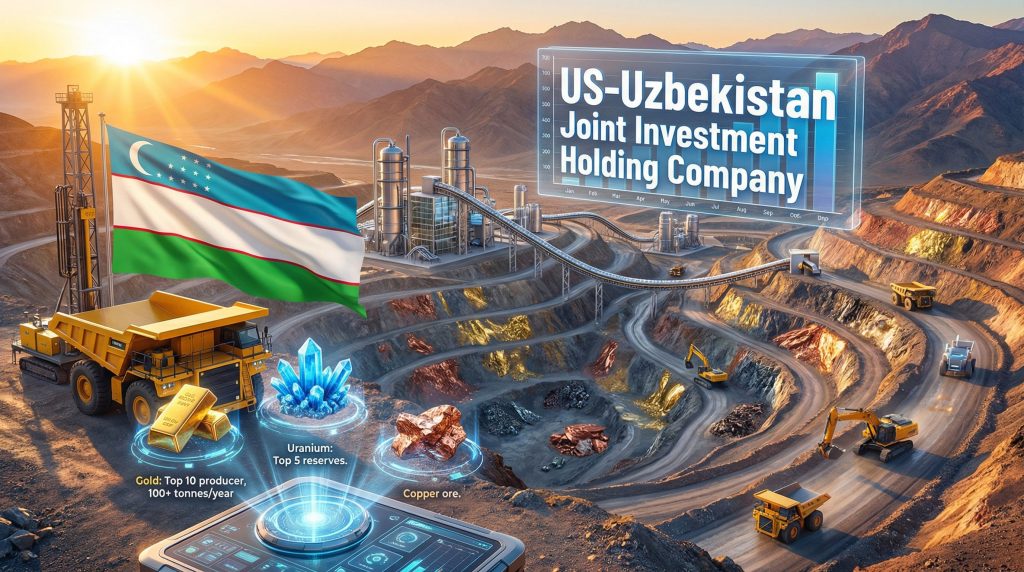
The global critical minerals reserve landscape faces unprecedented transformation as geopolitical tensions reshape traditional resource partnerships. While China maintains dominance across rare earth processing and battery material refinement, emerging frameworks between established economies and resource-rich nations signal potential disruption to existing market structures. The US and Uzbekistan critical minerals pact establishes innovative investment mechanisms that address both supply chain vulnerabilities and strategic partnership requirements. Furthermore, the mining sector's strategic importance has elevated beyond simple commodity trading into national security considerations, forcing governments to develop comprehensive approaches spanning exploration, extraction, processing, and infrastructure development.
Central Asia represents one of the most significant untapped regions for critical mineral development. The region possesses substantial geological endowments that remained underexplored during decades of Soviet-era centralised planning and subsequent economic transition. The region's landlocked geography and historical infrastructure patterns created dependency on Russian and Chinese processing facilities, limiting direct market access to Western buyers despite abundant mineral wealth beneath the surface.
Strategic Partnership Architecture: Beyond Traditional Trade Agreements
The US and Uzbekistan critical minerals pact establishes innovative investment mechanisms that transcend conventional bilateral trade arrangements. Through the U.S. International Development Finance Corporation, this framework creates equity participation structures rather than simple purchase commitments. Consequently, this suggests long-term strategic integration between American capital markets and Central Asian resource development.
The proposed Joint Investment Holding Company represents a departure from historical U.S. mineral diplomacy. Traditional approaches relied on private sector arrangements with minimal government involvement. This structure enables direct government-to-government coordination while maintaining market-based pricing mechanisms and private sector efficiency. The framework prioritises investments across the complete value chain: exploration activities, extraction operations, processing infrastructure, and supporting transportation networks.
Additionally, this partnership addresses broader energy transition risks that threaten global supply chain stability.
Investment Architecture and Risk Management
The Development Finance Corporation brings substantial institutional capacity to this partnership. This is complemented by Export-Import Bank financing tools specifically designed for emerging market infrastructure projects. These mechanisms include:
- Political risk insurance covering currency convertibility and government stability concerns
- Project finance structures tailored to long-duration mining operations requiring patient capital
- Currency hedging instruments addressing foreign exchange volatility in developing markets
- Equipment financing for modern extraction and processing technology transfer
The Export-Import Bank's recent expansion in Central Asian engagement provides operational precedent for this Uzbekistan initiative. Previous projects in the region have demonstrated successful risk-sharing mechanisms between public institutions and private operators. This creates templates for rapid capital deployment in resource development projects.
Multilateral Context and Strategic Timing
This bilateral agreement operates within a broader multilateral strategy encompassing eleven nations. These include Argentina, Cook Islands, Ecuador, Guinea, Morocco, Paraguay, Peru, Philippines, United Arab Emirates, United Kingdom, and Uzbekistan. This geographic diversification reflects systematic supply chain risk management rather than concentration on single-country partnerships.
The February 2026 timing coincides with the Trump administration's renewed Central Asian outreach. This includes the November 2025 White House summit with leaders from Kazakhstan, Kyrgyzstan, Tajikistan, Turkmenistan, and Uzbekistan. This coordinated diplomatic engagement suggests recognition of Central Asia's strategic value as a buffer region historically influenced by Russian and Chinese interests.
When big ASX news breaks, our subscribers know first
Uzbekistan's Resource Portfolio: Geological Endowment Meets Infrastructure Reality
Central Asia's second-largest economy possesses globally significant reserves across multiple critical mineral categories. However, development has remained constrained by infrastructure limitations and capital availability. The country's mineral wealth spans both established production sectors and emerging strategic materials essential for technology and defence applications.
Primary Resource Assets and Current Production
| Mineral Category | Global Position | Production Capacity | Strategic Applications |
|---|---|---|---|
| Gold | Top 10 global producer | 100+ tonnes annually | Electronics, currency reserves |
| Uranium | Top 5 global reserves | Established processing | Nuclear energy, defence |
| Copper | Regional significance | Growing extraction | Infrastructure, electric vehicles |
| Lithium | Undeveloped potential | Exploration phase | Battery technology, storage |
| Tungsten | Substantial deposits | Limited production | High-temperature alloys, defence |
The Muruntau Mine in the Ustyurt Plateau represents one of the world's largest open-pit gold operations. It produces approximately 2 million ounces annually through established heap leaching and carbon-in-pulp recovery systems. This operational infrastructure provides immediate investment opportunities for capacity expansion and processing optimisation without requiring greenfield development timelines.
Uranium resources concentrated in Navoi Province benefit from Soviet-era processing infrastructure. This was originally developed for weapons programmes and subsequently converted to commercial fuel production. This technical heritage creates advantages compared to emerging uranium producers lacking established processing capabilities and regulatory frameworks. Moreover, these developments align with evolving uranium market dynamics that influence global energy security.
Underdeveloped Strategic Resources
Lithium potential exists within salt lake formations in the Kyzylkum Desert. These contain lithium-rich brines recoverable through solar evaporation and chemical precipitation technologies proven successful in South American operations. However, no commercial lithium production currently occurs, requiring technology transfer and capital investment for development.
Rare earth elements remain largely unexplored within mountainous geological formations. Preliminary surveys suggest economically viable concentrations. However, the processing complexity of rare earth minerals requires sophisticated separation technologies and environmental management systems currently absent from Uzbekistan's industrial base.
Battery metals including cobalt and nickel exist in association with copper mining operations. These lack dedicated extraction and refining infrastructure. These materials command premium pricing in global markets due to electric vehicle demand growth and energy storage deployment acceleration.
Economic Transformation Through Resource Development
Uzbekistan's economic modernisation since 2016 under President Shavkat Mirziyoyev has systematically addressed institutional barriers. These previously deterred foreign investment in resource sectors. These reforms create conditions fundamentally different from the country's position during earlier post-Soviet transition periods.
Institutional Reform Framework
Currency convertibility improvements have eliminated historical foreign exchange restrictions that complicated international resource transactions. The gradual privatisation of state enterprises in select sectors has opened previously closed industries to private investment. This maintains government oversight of strategic resources.
Intellectual property protections now align with international standards. This encourages technology transfer essential for modern mining operations. Special economic zones offer tax incentives and streamlined regulatory processes for foreign investors. This reduces bureaucratic obstacles that historically delayed project development.
Regulatory harmonisation with international mining standards facilitates compliance with Western environmental and safety requirements. This enables direct resource sales to developed market buyers without intermediate processing through third-country facilities.
Strategic Geographic Positioning
Uzbekistan's location between Asian consumer markets and established resource corridors creates unique logistical advantages for mineral development. However, historical infrastructure patterns directed resource flows toward Russian refineries and Chinese processors. This reflects Cold War-era economic integration and subsequent trade relationships.
The US partnership framework potentially redirects these mineral flows toward American and allied processing facilities. However, this requires either infrastructure investment in alternative transportation routes or price incentive structures. These must offset the economic advantages of established Asian supply chains.
"Critical Infrastructure Challenge: Landlocked geography necessitates overland transportation through neighbouring countries, creating dependency on regional political relationships and cross-border infrastructure capacity."
Comparative Analysis: US Critical Minerals Strategy Evolution
This Uzbekistan partnership represents evolution in American critical minerals diplomacy. It shifts from reactive supply disruption management toward proactive relationship building with resource-rich nations. Previous U.S. approaches emphasised domestic mining revival and strategic stockpile accumulation without addressing global processing capacity concentration in Chinese facilities.
Partnership Model Innovation
Unlike African partnerships focused primarily on raw material extraction or South American agreements emphasising established production expansion, the Uzbekistan framework combines several strategic elements:
- Government-to-government investment structures reducing private sector political risk
- Processing capacity development within partner countries rather than resource export dependence
- Technology transfer mechanisms creating long-term technical cooperation
- Infrastructure integration connecting resources to global supply chains
Regional Competition Dynamics
Russian influence in Central Asia historically controlled resource development through Soviet-era infrastructure and subsequent economic agreements. Chinese engagement expanded significantly during the Belt and Road Initiative. This focused on transportation infrastructure and processing facility development.
The U.S. approach differs by emphasising equity partnerships rather than debt financing. This potentially creates more sustainable long-term relationships while providing Central Asian nations with strategic hedging opportunities between major power competition. Furthermore, these developments reflect broader geopolitical market impacts that shape international resource allocation strategies.
Technical Implementation Challenges and Success Factors
Resource development in Central Asia faces unique technical constraints requiring specialised solutions. These must be adapted to local geological, climatic, and infrastructure conditions. Success depends on addressing these challenges through appropriate technology selection, financing structures, and operational frameworks.
Processing Technology Requirements
Gold processing at Muruntau already employs modern extraction techniques. However, capacity expansion requires additional crushing equipment, leaching systems, and environmental management infrastructure. Investment opportunities focus on recovery rate optimisation and environmental impact reduction rather than fundamental technology replacement.
Uranium processing benefits from existing Soviet-era infrastructure. However, modernisation for international safety standards and capacity expansion requires significant capital investment. Compliance with International Atomic Energy Agency safeguards adds regulatory complexity but enables access to global nuclear fuel markets.
Lithium development requires pilot project implementation to demonstrate commercial viability of salt lake extraction in Central Asian climatic conditions. Technology adaptation from South American operations must address water scarcity constraints and extreme temperature variations characteristic of desert environments.
Infrastructure Development Priorities
Transportation networks represent the most critical constraint on mineral development. Overland routes require coordination with Kazakhstan, Russia, or alternative corridors through Afghanistan and Iran to reach global markets. Rail capacity expansion and road infrastructure improvement determine project economics for bulk mineral transportation.
Energy infrastructure must support energy-intensive processing operations, particularly for lithium extraction and rare earth separation. Current grid capacity may require expansion through renewable energy development, creating additional investment opportunities in solar and wind generation.
Water resources management becomes critical for processing operations in arid Central Asian environments. Sustainable water sourcing and recycling systems require environmental impact assessment and stakeholder consultation with agricultural and municipal users.
Financial Architecture and Investment Mechanisms
The Joint Investment Holding Company structure enables flexible capital deployment across multiple project phases. This manages political and commercial risks inherent in emerging market resource development. This approach balances public sector risk mitigation with private sector efficiency requirements.
Risk Management Framework
Currency risk management through Export-Import Bank hedging instruments protects against exchange rate volatility. This could undermine project economics. Long-term mineral supply contracts typically require dollar-denominated pricing to maintain profitability consistency.
Political risk insurance through the Development Finance Corporation covers government policy changes, expropriation risks, and civil disturbance impacts on operations. These protections enable private sector participation in projects requiring multi-decade capital commitment periods.
Operational risk mitigation involves technology transfer partnerships with established mining companies possessing Central Asian experience. Joint venture structures can combine American capital and technology with regional operational expertise and government relationships.
Capital Deployment Timeline
Short-term milestones (2026-2028) focus on Joint Investment Holding Company establishment and priority project identification through geological assessment. This phase includes initial capital commitments for pilot operations. This phase determines technical feasibility and commercial viability for larger investments.
Medium-term development (2028-2032) emphasises processing facility construction, infrastructure improvement, and production capacity scaling. Environmental compliance and regulatory approval processes occur during this phase, determining operational parameters for full-scale production.
Long-term integration (2032-2040) targets supply chain optimisation, regional partnership expansion, and strategic stockpile contribution to U.S. national reserves. Technology transfer success during earlier phases determines sustainable competitive advantages for ongoing operations.
The next major ASX story will hit our subscribers first
Market Impact Analysis and Competitive Positioning
The US and Uzbekistan critical minerals pact potentially affects global resource markets through supply diversification and processing capacity redistribution. These changes influence pricing dynamics, investment flows, and strategic planning across the mining sector. In addition, geopolitical relationship restructuring creates new opportunities for mining industry innovation.
Supply Chain Diversification Effects
Chinese processing dominance faces potential erosion through development of alternative refining capacity in Uzbekistan. This includes transportation routes bypassing Chinese facilities. However, the scale and cost advantages of established Chinese infrastructure create significant barriers to market share displacement.
Price stability improvements through diversified supply sources may reduce commodity volatility that historically discouraged long-term supply contracts. Predictable pricing enables downstream manufacturers to plan capacity expansion and technology development with greater confidence.
Strategic reserves building for U.S. national security creates demand floor for Uzbek production. This provides revenue stability during commodity price downturns. Government purchasing commitments reduce project financing risks and enable lower capital costs for development.
Innovation and Technology Transfer
Processing technology advancement through American-Uzbek cooperation may develop more efficient extraction methods applicable to similar geological formations globally. Research collaboration between American universities and Uzbek institutions could accelerate innovation in arid climate mining operations.
Environmental management improvements through modern technology deployment may establish new standards for Central Asian resource development. Sustainable mining practices demonstration effects could influence environmental regulations and operational standards across the region.
Investment Implications and Strategic Opportunities
Resource development partnerships create multiple investment avenues spanning direct project participation, supporting infrastructure, and technology provision. Different risk tolerance levels and return expectations determine appropriate investment strategies for various market participants.
Direct Investment Opportunities
Equity participation through the Joint Investment Holding Company provides exposure to mineral development returns while benefiting from government risk mitigation mechanisms. This structure suits institutional investors requiring stable, long-term returns with inflation protection characteristics.
Infrastructure investment in transportation, energy, and processing facilities offers utility-like return profiles with essential service characteristics. These investments typically feature lower volatility than direct mineral exposure while benefiting from regional economic development.
Technology partnerships enable equipment manufacturers and service providers to access Central Asian markets through established government relationships. Joint ventures with Uzbek entities may provide operational advantages and regulatory navigation support.
Risk Assessment and Mitigation
Geopolitical risks require careful monitoring of U.S.-Russia-China relationships and their impact on Central Asian politics. Diversified exposure across multiple countries and minerals reduces concentration risk from single-country political developments.
Currency and inflation considerations affect project returns denominated in local currency versus dollar-based international sales. Hedging strategies and contract structures must address these mismatches while maintaining operational flexibility.
Environmental and social governance requirements increasingly influence investment decisions and regulatory approval processes. Proactive ESG compliance creates competitive advantages and reduces operational disruption risks from stakeholder opposition.
Conclusion
The US and Uzbekistan critical minerals pact represents a significant evolution in international resource partnerships. It combines government risk mitigation with private sector efficiency to address global supply chain vulnerabilities. The framework's success depends on effective implementation of technical, financial, and diplomatic elements across multiple project phases. Moreover, this partnership may serve as a template for similar agreements with other resource-rich nations seeking diversified international partnerships.
The partnership's ultimate impact on global critical minerals markets will depend on successful navigation of infrastructure constraints, technology transfer effectiveness, and regional political stability. However, the framework establishes important precedents for government-to-government resource cooperation that may influence future international mining partnerships and strategic resource development initiatives.
This analysis provides educational information about critical minerals partnerships and should not be construed as investment advice. Readers should conduct independent research and consult financial professionals before making investment decisions. Commodity markets involve substantial risks, and mineral development projects face technical, political, and economic uncertainties that may result in significant losses.
Want to Capitalise on Critical Minerals Investment Opportunities?
Discovery Alert's proprietary Discovery IQ model delivers instant notifications on significant ASX mineral discoveries, empowering subscribers to identify actionable opportunities in the critical minerals sector ahead of the broader market. Begin your 14-day free trial at Discovery Alert today and secure your market-leading advantage in this rapidly evolving sector.