August 14, 2026
When a Ceasefire Becomes a Countdown: Oil Markets and the USA-Iran Diplomatic Crisis
Few mechanisms in global energy markets generate price dislocations as rapidly or as violently as a credible threat to the Strait of Hormuz. History offers a consistent pattern: when this narrow waterway between the Persian Gulf and the Gulf of Oman faces genuine disruption risk, the entire architecture of global crude pricing shifts within hours. Trump says USA-Iran ceasefire is on massive life support, and the geopolitical oil price analysis makes clear why this matters so profoundly to energy markets worldwide.
That pattern is playing out again in May 2026, but with an intensity that few analysts anticipated at the start of the year. The question now is not whether the geopolitical risk premium exists — it is how much further it can extend, and whether the diplomatic framework holding a fragile ceasefire together can survive long enough to prevent a full-scale energy market shock.
When big ASX news breaks, our subscribers know first
The Architecture of a Fragile Truce
The current U.S.-Iran ceasefire did not emerge from a structured peace process, a multilateral treaty framework, or formal international arbitration. It was brokered under acute diplomatic pressure in June 2025, following a brief but intense period of military hostilities between Iran and Israel. Mediated through a U.S.-Qatar diplomatic channel, the truce was framed publicly as a mutual achievement, but its foundations were structurally incomplete from the outset.
Three of the most consequential issues between Washington and Tehran — Iran's nuclear program, comprehensive sanctions relief, and proxy conflict dynamics across the region — were all deferred rather than resolved. What emerged was a pause in active hostilities, not a pathway toward lasting settlement.
Since the ceasefire's establishment, the diplomatic environment has continued to deteriorate. Key developments that have accumulated since mid-2025 include:
- Targeted attacks on maritime vessels in the Gulf have resumed at intermittent intervals
- Clashes between Hezbollah and Israeli forces along Lebanon's southern border have re-intensified
- Iran submitted a counterproposal to U.S. negotiators that was rejected without substantive engagement
- The Strait of Hormuz has experienced an extended disruption condition that shipping analysts are now characterising as a prolonged blockade scenario
- No formal negotiating deadlines or structured multilateral mechanisms have been established in the current round of talks
The absence of those structural supports means the ceasefire is sustained primarily by the absence of a triggering event, not by any genuine diplomatic momentum.
Trump Says USA-Iran Ceasefire Is on Massive Life Support
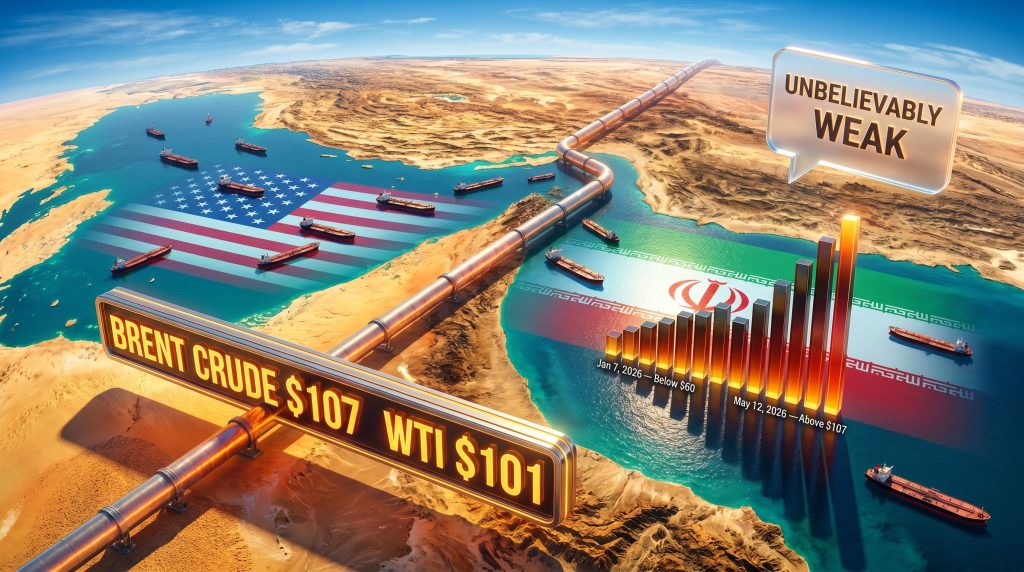
On May 12, 2026, U.S. President Donald Trump made the diplomatic situation explicit in unusually direct terms. According to CNN's live coverage, Trump characterised the ceasefire using a medical metaphor with stark probabilistic language, describing it as being in a condition where survival probability had been reduced to approximately one percent.
When asked by a reporter whether the ceasefire was technically still holding, Trump responded that it was, in his characterisation, the weakest it had been. The language used was not diplomatic hedging. It was a public signal that the administration had effectively lost confidence in the framework it helped broker less than twelve months earlier.
The core issue is a sequencing impasse that neither side appears willing to resolve:
- Washington's position: Hostilities must formally cease before any discussions of nuclear program parameters or sanctions relief can proceed
- Tehran's position: Concrete sanctions relief must be offered concurrently with any ceasefire formalisation, not as a downstream reward for compliance
These positions are not merely different points on a negotiating spectrum. They reflect fundamentally incompatible theories of leverage. The U.S. believes sustained economic pressure produces Iranian concessions. Iran believes that surrendering strategic assets before sanctions relief materialises simply reproduces the sequence that collapsed previous agreements.
Adding further weight to the diplomatic breakdown, UN Secretary-General António Guterres addressed the situation directly at a press conference at the United Nations Office in Nairobi, Kenya, on the same day. Guterres stated that finding a diplomatic solution was absolutely essential, calling explicitly for negotiations to continue, for the ceasefire to be maintained, and for the Strait of Hormuz to remain fully open to international shipping. He warned that any resumption of active fighting would carry terrible consequences. The fact that the UN Secretary-General felt compelled to make such a specific, public intervention is itself a signal of how close to collapse the diplomatic framework has moved.
The Strait of Hormuz: The Physical Chokepoint Behind the Price Spike
Understanding why the diplomatic deterioration has produced such an extreme oil market response requires understanding what the Strait of Hormuz actually represents in the physical energy supply chain. Furthermore, the broader context of geopolitical tensions and trade disruption helps explain how quickly a regional flashpoint can cascade into a global economic crisis.
| Metric | Data Point |
|---|---|
| Share of global seaborne oil trade transiting the Strait | Approximately 20% |
| Daily crude oil volume (estimated) | 17 to 21 million barrels |
| Key exporters dependent on Strait access | Saudi Arabia, UAE, Kuwait, Iraq, Iran |
| Functional alternative routing capacity | Limited; Saudi East-West Pipeline capacity approximately 5 million barrels per day |
A critical but frequently misunderstood point: the Saudi East-West Pipeline, often cited as the primary alternative to Strait routing, operates at a nameplate capacity of approximately 5 million barrels per day. This represents less than 25 percent of typical Strait traffic volume. The pipeline reduces dependency, but it does not eliminate it, and under prolonged Strait disruption conditions, its capacity becomes a bottleneck rather than a solution.
A sustained closure or partial disruption of the waterway does not merely raise headline crude prices. It restructures the entire physical oil market through a series of cascading effects:
- Freight rate escalation as tankers face rerouting requirements or operate under elevated risk conditions
- Marine insurance premium surges, with war risk insurance costs potentially reaching multi-decade highs for Gulf transit
- Physical market tightening in import-dependent refining centres across East Asia and Europe
- Demand diversification flows toward non-Gulf producers, particularly U.S. exporters, creating a structural pricing premium for Atlantic Basin crude grades
- Refinery margin compression in regions where crude procurement costs rise faster than product price pass-through can compensate
As Naeem Aslam, CIO at Zaye Capital Markets, noted in analysis provided to Rigzone, the Strait of Hormuz functions as the key pressure point for global energy markets, and any threat to shipping flows rapidly feeds through into freight costs, insurance costs, and fears of tighter available crude supply.
From Below $60 to Above $107: The Anatomy of an Oil Market Repricing
The scale of the crude price move since early January 2026 is extraordinary by any historical measure. Reviewing the current crude oil prices alongside the geopolitical timeline reveals just how dramatically sentiment has shifted. The following table captures the key price milestones and their geopolitical context:
| Date | Brent Crude | WTI Crude | Key Geopolitical Driver |
|---|---|---|---|
| January 7, 2026 | Below $60/bbl | Below $56/bbl | Pre-conflict baseline pricing |
| Initial conflict escalation | $110+ | $110+ | Peak risk premium during active hostilities |
| April 8, 2026 | Mid-$90s | Mid-$90s (-13 to 15% intraday) | Two-week Strait ceasefire announced |
| May 12, 2026 | Above $107/bbl | Above $101/bbl | Ceasefire described as near collapse |
The April 8 repricing event is particularly instructive for understanding how the market is currently positioned. When the initial two-week Strait of Hormuz ceasefire was announced, WTI and Brent both fell 13 to 15 percent intraday as traders rapidly unwound the geopolitical risk premium that had accumulated during the conflict spike. The speed and magnitude of that move demonstrated how much of the then-prevailing crude price consisted of pure geopolitical fear premium rather than fundamental supply tightness.
The reversal since April tells an equally important story. The market's reassessment that the ceasefire was structurally fragile from the beginning has driven prices back above $107 per barrel on Brent. Traders are not simply pricing in a supply disruption that has already occurred. They are pricing in the forward probability that the current disruption worsens before it improves.
Market Psychology Note: The risk premium mechanism in crude markets operates asymmetrically. Escalation risk accumulates gradually through multiple small upward price moves, but unwinds rapidly in concentrated sell-offs when credible diplomatic progress is announced. This asymmetry creates a distinctive pattern where oil prices appear to levitate at elevated levels for extended periods, then abruptly correct. Investors and energy buyers with long planning horizons must account for this non-linear behaviour rather than assuming prices will drift smoothly back toward fundamental levels.
Aslam's market analysis captures this dynamic precisely: when peace talks appear constructive, crude typically surrenders its risk premium as traders expect supply route normalisation. When talks deteriorate, prices climb because buyers anticipate disrupted barrels, tanker delays, and higher costs propagating through fuel, shipping, airline, and manufacturing sectors.
Scenario Modelling: Three Pathways From Here
Scenario 1: Ceasefire Holds but Negotiations Stall
This represents the base case given current diplomatic conditions. Under this scenario:
- The Strait of Hormuz remains in a partial disruption state rather than experiencing outright closure
- Brent crude sustains above $100 per barrel through the second half of 2026
- Oil importers, particularly Asian refiners, continue accelerating procurement diversification toward U.S. and non-Gulf supply sources
- Market normalisation is delayed until 2027 as the physical infrastructure disruption compounds
- Diplomatic engagement continues in form, but without the substantive concession from either side required for a breakthrough
- Volatility remains elevated around every diplomatic headline, creating episodic price spikes and partial retracements
Scenario 2: Controlled Escalation Resumes
Under an elevated risk scenario where targeted military exchanges resume at low intensity:
- Brent crude would likely spike toward the $115 to $120 per barrel range as the risk premium component expands further
- Global shipping insurance costs could reach multi-decade highs, with war risk premiums applying to a broader geographic zone
- Emergency strategic reserve releases by the International Energy Agency member states would become a realistic policy response
- U.S. domestic producers would face a powerful incentive to accelerate output to capture the pricing window
- The cascading cost effects through aviation fuel, freight, and manufacturing inputs would intensify pressure on importing economies
Scenario 3: Credible Diplomatic Resolution
This remains the lowest probability outcome in the near term, but it is the only scenario that sustainably removes the geopolitical risk premium currently embedded in crude prices:
- A sequencing agreement would need to be reached, with the ceasefire formalised before nuclear and sanctions negotiations advance
- Brent crude would likely reprice sharply lower, with analysts suggesting a potential target range of $75 to $85 per barrel
- The risk premium component would unwind over a period of approximately four to eight weeks following a credible agreement
- Physical market normalisation — involving insurance resets, tanker repositioning, and routing normalisation — would take an additional three to six months
- Returning Iranian export volumes would partially offset structural supply deficits, adding further downside pressure to prices
The next major ASX story will hit our subscribers first
The Regional Multiplier: Why This Is Not a Simple Bilateral Dispute
One of the most common analytical errors in coverage of the current crisis is treating it as a bilateral U.S.-Iran negotiation problem. In practice, the ceasefire exists within a broader regional conflict architecture that adds multiple escalation vectors operating simultaneously. Moreover, the oil prices and trade war dynamics already weighing on global markets mean this conflict is landing on an already fragile macroeconomic foundation.
Active Hezbollah-Israel clashes along Lebanon's southern border represent a parallel pressure point that complicates the U.S. diplomatic position with regional allies, introduces secondary pressure into Iranian decision-making calculus, and adds uncertainty into Gulf shipping risk assessments that no bilateral ceasefire can fully address.
The nuclear program dimension compounds this further. The current sequencing impasse between Washington and Tehran mirrors the structural tensions that have defined U.S.-Iran relations since the collapse of the 2015 Joint Comprehensive Plan of Action. Iran's domestic political constraints limit the flexibility its negotiators can demonstrate, while the U.S. position of maintaining maximum economic pressure while demanding behavioural changes has historically produced tactical manoeuvring rather than strategic resolution.
Structural Reality: The ceasefire that Trump described as being on massive life support was never designed to resolve these underlying tensions. It was designed to pause kinetic hostilities long enough for diplomacy to create an opening. That opening has not materialised, and the pause itself is now fragmenting.
What This Means for Energy Market Participants
For energy buyers, producers, and investors navigating the current environment, several practical implications flow from the current diplomatic deterioration. In addition, the OPEC market influence remains a secondary but important variable, as production decisions intersect with the geopolitical risk premium in ways that amplify price volatility rather than dampen it.
- Supply chain hedging has become more urgent for industrial consumers exposed to jet fuel, diesel, and heavy fuel oil price volatility
- Non-Gulf crude procurement is accelerating as Asian refiners prioritise supply route security over marginal cost optimisation
- U.S. export infrastructure is attracting increased attention from buyers seeking to reduce Strait of Hormuz exposure
- Volatility positioning in crude options markets reflects the asymmetric scenario distribution: the upside tail from escalation is fatter than the downside tail from a diplomatic breakthrough
- Normalisation timelines matter: even a political resolution would not immediately translate into price normalisation, as physical market infrastructure, insurance frameworks, and tanker positioning would require months to reset
Konstantinos Chrysikos, Head of Customer Relationship Management at Kudotrade, noted in market analysis provided to Rigzone that the extended shutdown of the waterway is continuing to disrupt global crude flows, and that a prolonged blockade could make normalisation more difficult, pushing recovery toward 2027. The outlook, in his assessment, remains skewed to the upside while escalation risks persist, with supply deficits likely to keep prices elevated and volatility high around every diplomatic development.
A credible diplomatic resolution, Chrysikos noted, could put downside pressure on prices, though structural hurdles to rapid normalisation are likely to remain even after any political agreement is reached.
Disclaimer: This article contains forward-looking analysis, scenario projections, and market commentary for informational purposes only. It does not constitute financial or investment advice. Oil price projections and geopolitical scenarios involve significant uncertainty. Readers should conduct independent research and consult qualified financial advisers before making investment or procurement decisions based on geopolitical developments.
Want Real-Time Alerts When Geopolitical Events Create ASX Investment Opportunities?
Discovery Alert's proprietary Discovery IQ model instantly notifies subscribers of significant ASX mineral discoveries as they happen, turning complex market data into actionable investment insights — explore historic discovery returns to understand the scale of opportunity, or start your 14-day free trial today to position yourself ahead of the broader market.