August 9, 2026
Central Asia's vast mineral reserves have positioned the region as a critical supplier for global energy transitions, with advanced extraction technologies revolutionising traditional mining approaches. The emergence of sophisticated in-situ uranium recovery in Uzbekistan represents a paradigm shift from conventional underground and open-pit operations, offering enhanced economic efficiency while minimising environmental disruption across uranium-rich geological formations.
Understanding Uzbekistan's Strategic Position in Global Uranium Markets
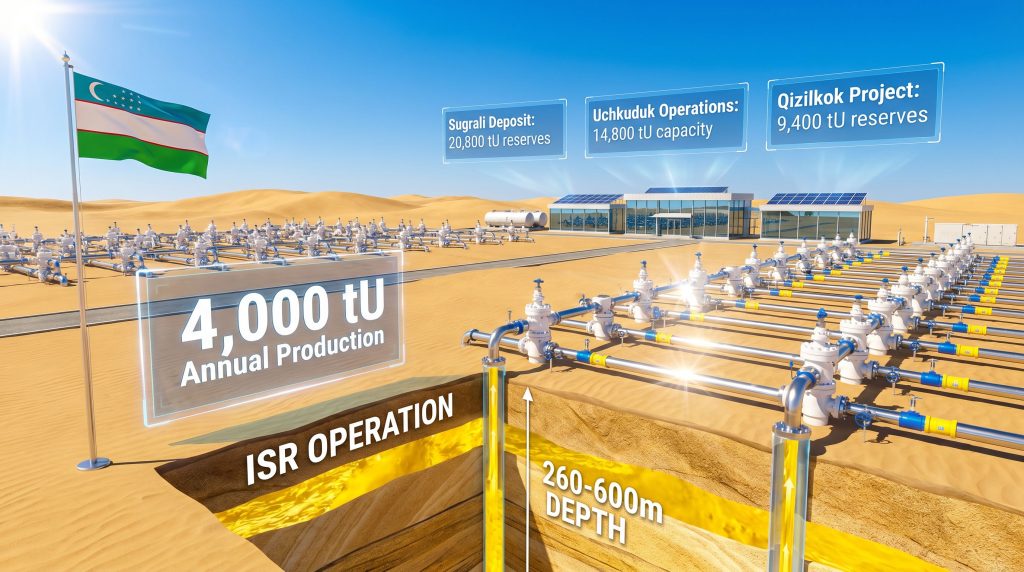
Uzbekistan has emerged as a formidable force in global uranium production, maintaining its position as the world's fifth-largest uranium producer with an estimated output of 4,000 tonnes of uranium (tU) in 2024, according to World Nuclear Association data. This production level places the Central Asian nation behind Kazakhstan, Canada, Namibia, and Australia in the global hierarchy of uranium suppliers.
The country's uranium sector is dominated by Navoiyuran, which operates as the sixth-largest uranium producer globally, managing an extensive portfolio of 43 uranium deposits across the region. The company's comprehensive mineral resource base encompasses 151,100 tU in total resources, including 96,600 tonnes of JORC-compliant ore reserves, establishing a substantial foundation for long-term production planning.
Navoiyuran's operational scale became particularly evident in 2025 when the company achieved 7,000 tonnes of natural uranium production, demonstrating significant growth trajectory within Uzbekistan's expanding mining industry evolution. This production increase aligns with the country's strategic objectives outlined in its state programme targeting expanded uranium mining and processing capacity through 2030.
The Central Kyzylkum Desert region serves as the primary hub for uranium extraction activities, hosting geological formations that have proven highly amenable to advanced recovery techniques. These deposits benefit from specific hydrogeological conditions that enable efficient in-situ recovery operations, contributing to Uzbekistan's competitive positioning in global uranium markets.
When big ASX news breaks, our subscribers know first
What Makes In-Situ Recovery the Preferred Method in Uzbekistan?
In-situ recovery (ISR), also known as in-situ leaching, has become the predominant extraction methodology for Uzbekistan's uranium deposits due to its technical compatibility with local geological conditions. The process operates through a systematic approach where ground water fortified with complexing agents and oxidants is introduced into uranium-bearing formations via strategically positioned wells.
The technical foundation of ISR relies on chemical dissolution mechanisms within sandstone host rocks. Gaseous oxygen serves as the primary oxidant, facilitating uranium dissolution from sandstone formations without requiring traditional mining infrastructure. This uranium-bearing solution is subsequently pumped to surface facilities where uranium recovery and yellowcake processing occur.
Navoiyuran's operational timeline at the Qizilkok deposit demonstrates the systematic development approach characteristic of ISR projects. Pilot industrial operations commenced in December 2024, followed by two years of active development work before achieving commercial production status in April 2026. This development timeline reflects the methodical nature of ISR implementation, requiring extensive well-field design and hydrogeological optimisation.
The geological advantages of Central Kyzylkum Desert formations include:
• Sandstone roll-front deposit characteristics that concentrate uranium in accessible formations
• Hydrogeological conditions supporting controlled fluid circulation
• Permeability profiles enabling efficient solution movement through target formations
• Depth parameters suitable for cost-effective well drilling and maintenance
ISR methodology offers distinct operational advantages over conventional mining approaches, including reduced surface disturbance, lower infrastructure requirements, and enhanced flexibility in production scaling. These factors have contributed to ISR becoming the preferred extraction method for Uzbekistan's uranium resources.
How Does Uzbekistan's Low-Reagent Oxygen Technology Work?
Navoiyuran has developed proprietary low-reagent in-situ recovery oxygen technology that achieves significant economic and operational advantages compared to traditional extraction methods. This technological approach delivers production cost reductions of 2-3 times while simultaneously improving uranium recovery efficiency from sandstone formations.
The oxygen-based leaching system utilises gaseous oxygen as the primary oxidant, minimising the requirement for additional chemical reagents typically employed in conventional ISR operations. This approach contrasts with traditional acid-based methods that rely on sulfuric acid or other chemical compounds for uranium dissolution.
Key operational parameters of the low-reagent oxygen technology include:
• Enhanced uranium recovery rates through optimised oxidation processes
• Reduced chemical consumption compared to traditional acid leaching methods
• Lower environmental impact from minimised reagent usage
• Improved cost efficiency across operational expenditure categories
The Qizilkok deposit serves as the primary implementation site for this technology, with mineral resources of 10,900 tU and ore reserves of 9,400 tU supporting a projected mine life of 15 years. Furthermore, the operation maintains an annual production capacity of 1,200 tonnes of uranium, representing approximately 17% of Navoiyuran's 2025 total production.
Quality control mechanisms ensure consistent uranium extraction while maintaining operational safety standards. The integrated processing approach combines multiple licence blocks into a unified operation, optimising resource utilisation and production efficiency across the prospective area.
Which Deposits Drive Uzbekistan's Production Capacity?
Navoiyuran's production portfolio is anchored by three major deposits that collectively define the company's operational capacity and strategic development trajectory. The Sugrali deposit represents the largest asset with 20,800 tU in reserves, followed by Uchkuduk containing 14,800 tU in reserves.
| Deposit | Reserve Size | Portfolio Ranking | Annual Capacity | Mine Life |
|---|---|---|---|---|
| Sugrali | 20,800 tU | First-largest | Not disclosed | Not specified |
| Uchkuduk | 14,800 tU | Second-largest | Not disclosed | Not specified |
| Qizilkok | 9,400 tU (reserves) | Third-largest | 1,200 tU/year | 15 years |
The Qizilkok deposit, positioned as the third-largest in Navoiyuran's portfolio, encompasses four integrated licence blocks situated in the eastern Central Kyzylkum Desert:
• Amantau block (northwestern segment)
• Myutenbay block (northeastern segment)
• Qizilkok block (southeastern segment)
• Yuzhny block (southern segment)
This integrated approach consolidates 10,900 tU in mineral resources and 9,400 tU in ore reserves into a single prospective area, enabling coordinated extraction operations and infrastructure optimisation. The deposit's strategic location within the Navoi region provides logistical advantages for processing and transportation activities.
Resource expansion opportunities exist within the Qizilkok area, with further potential for expansion to the north beyond the current 15-year projection. This expansion capability positions the deposit as a long-term contributor to Uzbekistan's uranium production objectives.
The comprehensive resource base of 151,100 tU across 43 deposits provides Navoiyuran with substantial operational flexibility and production scaling opportunities. The 96,600 tonnes of JORC-compliant ore reserves ensure adherence to international resource classification standards, supporting investor confidence and operational planning.
What Are the Economic Implications of ISR Expansion?
The economic impact of in-situ uranium recovery in Uzbekistan extends beyond immediate production metrics to encompass broader regional development objectives and cost structure optimisation. Additionally, Navoiyuran's 2025 production achievement of 7,000 tonnes of natural uranium establishes a baseline for evaluating expansion contributions.
The Qizilkok deposit's 1,200 tU annual capacity represents approximately 17% incremental production increase relative to 2025 output levels, demonstrating substantial growth potential from individual asset development. This production increment supports Uzbekistan's strategic objectives for uranium sector expansion through 2030.
Cost Structure Advantages:
• Production cost reduction: 2-3 times lower than conventional methods
• Capital efficiency: Reduced infrastructure requirements compared to traditional mining
• Operational flexibility: Scalable production based on market conditions
• Technology leverage: Proprietary low-reagent oxygen technology providing competitive advantages
The 15-year mine life projection for Qizilkok provides long-term economic stability for regional development initiatives. The deposit's integration of four licence blocks creates operational synergies that enhance overall project economics through shared infrastructure and coordinated processing activities.
Regional economic development benefits include employment generation, local procurement opportunities, and infrastructure development within the Navoi region. The contribution to Uzbekistan's export capacity strengthens the country's position within global uranium supply chains, supporting foreign exchange earnings and economic diversification objectives.
Investment implications reflect the economic viability of ISR technology deployment across Uzbekistan's extensive uranium resource base, with potential for replication across additional deposits within the 151,100 tU resource portfolio.
How Do International Partnerships Enhance Technical Capabilities?
Strategic collaboration models have become instrumental in advancing Uzbekistan's uranium sector capabilities, particularly in technology transfer and operational expertise development. International partnerships provide access to specialised ISR technologies and best practices from established uranium-producing regions globally.
The development of low-reagent oxygen technology reflects the integration of international expertise with local geological conditions, creating customised solutions for Central Kyzylkum Desert formations. This technology adaptation demonstrates how international collaboration can yield proprietary advantages tailored to specific operational environments.
Technology Transfer Mechanisms:
• Joint venture structures facilitating knowledge sharing
• Equipment and technology licensing agreements
• Technical expertise exchange programmes
• Operational best practices implementation
Foreign direct investment patterns in Central Asian uranium mining have contributed to infrastructure development and operational capacity building. These partnerships often include training programmes for local technical personnel and establishment of quality assurance protocols aligned with international standards.
The JORC-compliant classification of 96,600 tonnes of ore reserves demonstrates adherence to international resource reporting standards, facilitating investor confidence and potential partnership opportunities. This compliance framework supports Uzbekistan's integration into global uranium markets and supply chain networks.
Centralised processing facility optimisation benefits from international experience in ISR operations, particularly in areas such as solution chemistry management, environmental monitoring systems, and production optimisation techniques.
The next major ASX story will hit our subscribers first
What Environmental Considerations Define Modern ISR Operations?
Environmental stewardship represents a critical component of in-situ uranium recovery in Uzbekistan, requiring comprehensive monitoring systems and containment protocols to protect groundwater resources and surrounding ecosystems. Modern ISR operations implement multiple safeguards to minimise environmental impact while maintaining production efficiency.
Groundwater Protection Protocols:
• Chemical containment systems preventing solution migration beyond target formations
• Continuous monitoring networks tracking groundwater chemistry parameters
• Well integrity programmes ensuring proper casing and cementing procedures
• Restoration planning for post-mining site rehabilitation
The low-reagent oxygen technology employed at Qizilkok offers environmental advantages through reduced chemical usage compared to traditional acid-based leaching methods. This approach minimises potential groundwater contamination risks and reduces waste generation during processing operations.
Regulatory framework compliance requires adherence to Uzbekistan's environmental standards and international best practices for uranium mining operations. Environmental impact assessments evaluate potential effects on local water resources, soil chemistry, and ecological systems within operational areas.
Long-term Environmental Management:
• Site restoration requirements following operational completion
• Monitoring obligations extending beyond active mining phases
• Water quality standards maintenance throughout operational lifecycle
• Waste management protocols for processing byproducts and contaminated materials
The arid environment of the Central Kyzylkum Desert presents both opportunities and challenges for environmental management. Limited surface water resources reduce potential impact pathways while requiring careful management of groundwater aquifers used in ISR operations.
How Will Future Technology Developments Shape Uzbek Uranium Mining?
Technological advancement trajectories within the mining sector focus on enhanced recovery techniques, process automation, and environmental optimisation. The state programme targeting expansion through 2030 emphasises technology development as a key component of sector growth alongside data-driven mining operations.
Innovation Pathways:
• Enhanced recovery techniques for low-permeability formations
• Automation systems reducing operational complexity and labour requirements
• Data analytics integration optimising well-field performance and solution chemistry
• Environmental monitoring technologies providing real-time impact assessment
The success of low-reagent oxygen technology at Qizilkok establishes a foundation for further technological refinement and potential application across additional deposits within Navoiyuran's portfolio. Process optimisation through operational experience may yield additional cost reductions and efficiency improvements.
Digital transformation opportunities include remote monitoring capabilities, predictive maintenance systems, and integrated production management platforms. These technologies can enhance operational efficiency while reducing environmental risks through improved process control.
Research and development initiatives may focus on:
• Alternative leaching chemistry for challenging geological conditions
• Recovery rate optimisation in varying sandstone formations
• Water management systems reducing consumption and improving recycling
• Processing technology advancement for yellowcake production efficiency
The 15-year operational timeline for Qizilkok provides opportunity for continuous technology improvement and operational refinement, potentially extending mine life and enhancing resource recovery across the 10,900 tU mineral resource base.
What Challenges and Opportunities Exist in Uzbekistan's Uranium Sector?
Technical and Operational Challenges:
Complex geological variability across Central Kyzylkum deposits requires customised ISR approaches for different formations. Hydrogeological conditions may vary significantly between licence blocks, necessitating adapted well-field designs and solution chemistry optimisation for each operational area.
Water resource management in the arid Central Kyzylkum environment presents ongoing challenges for sustainable ISR operations. Balancing production requirements with environmental protection demands sophisticated monitoring and management systems throughout operational lifecycles.
Equipment maintenance and technical expertise requirements increase with operational scale expansion. The specialised nature of ISR technology demands continuous training programmes and knowledge retention strategies to maintain operational efficiency and safety standards.
Market Development Opportunities:
Growing global demand for nuclear energy drives uranium market volatility and market expansion, creating favourable conditions for production growth. Uzbekistan's strategic position within Central Asian supply chains provides competitive advantages for market access and customer development.
Strategic positioning opportunities include:
• Supply chain diversification for global utilities seeking non-traditional uranium sources
• Long-term contract potential based on reliable production capacity and resource base
• Value-added processing capabilities development for enhanced product offerings
• Regional hub establishment for Central Asian uranium processing and distribution
The 151,100 tU total resource base provides substantial expansion potential beyond current production levels, supporting long-term growth strategies and market position strengthening. Integration of advanced technologies may unlock additional resources currently considered sub-economic under existing extraction methods.
Key Takeaways for Industry Stakeholders
Investment Considerations:
Uzbekistan's uranium sector presents compelling investment opportunities through proven ISR technology, substantial resource bases, and government policy support for sector expansion. The combination of low-reagent oxygen technology achieving 2-3 times cost reduction and extensive mineral resources creates attractive risk-return profiles.
Regulatory stability provided by the state programme through 2030 offers investment security and predictable policy frameworks. The JORC-compliant resource classification ensures transparency and adherence to international standards, supporting investor confidence and due diligence processes.
Technology Transfer Lessons:
The successful implementation of customised ISR technology demonstrates the value of adapting international best practices to local geological conditions. The development of low-reagent oxygen technology illustrates how innovation can create competitive advantages while addressing environmental concerns.
Scaling considerations for emerging uranium markets include:
• Geological assessment protocols for ISR suitability determination
• Technology adaptation strategies for varying formation characteristics
• Infrastructure development planning supporting operational scalability
• Environmental management systems ensuring sustainable operations
The Qizilkok operational model provides a blueprint for systematic ISR development, from pilot operations through commercial production. The integration of four licence blocks demonstrates effective project consolidation strategies for resource optimisation and operational efficiency.
Consequently, the integration of mine reclamation innovations with modern ISR operations highlights how the industry is addressing energy transition dynamics through sustainable practices. Long-term supply security implications position Uzbekistan as a reliable uranium supplier within global nuclear fuel cycles, supporting energy security objectives for nuclear-powered nations while contributing to clean energy transition goals.
This analysis is based on publicly available information and should not be considered as investment advice. Uranium mining investments carry inherent geological, operational, and market risks that should be carefully evaluated by qualified professionals.
Looking to Invest in Uranium and Critical Minerals?
Discovery Alert's proprietary Discovery IQ model delivers real-time alerts on significant uranium and critical minerals discoveries, instantly empowering subscribers to identify actionable opportunities ahead of the broader market. Begin your 14-day free trial today and secure your market-leading advantage.