July 21, 2026
Understanding Vale's Strategic Copper Expansion Framework
Global copper markets are experiencing unprecedented structural shifts as mining companies navigate increasing electrification demands, supply chain vulnerabilities, and evolving geopolitical landscapes. Within this environment, strategic positioning through organic asset development rather than acquisition-based growth represents a fundamental departure from traditional industry expansion models. The Brazilian mining sector, with its established infrastructure and underutilized mineral resources, presents unique opportunities for companies capable of unlocking dormant geological potential through operational excellence and technological innovation. Vale's ambitious vale copper production target reflects this strategic approach to sustainable mining growth.
When big ASX news breaks, our subscribers know first
Decoding the Base Metals Unit's Production Trajectory
Vale's base metals division currently operates copper production facilities across multiple jurisdictions, including Brazil, Canada, and Indonesia, with Brazilian operations forming the cornerstone of the expansion strategy. The company's existing copper output serves as the foundation for ambitious scaling plans that leverage established mining infrastructure, skilled workforce capabilities, and proven geological reserves.
The strategic focus on Brazilian copper deposits reflects recognition that previously underdeveloped assets contain significant value-creation opportunities. According to industry analysis, these mineral resources have remained largely unexploited despite decades of operational presence in the region. This situation creates potential for substantial production increases through targeted investment in processing capacity, extraction optimization, and infrastructure enhancement.
Current production capabilities represent only a fraction of the geological potential embedded within Vale's Brazilian asset portfolio. The company's base metals unit has identified pathways to substantially increase throughput rates whilst maintaining operational cost competitiveness compared to global peer companies. Furthermore, this approach contrasts sharply with acquisition-focused strategies pursued by competitors such as Anglo American and Rio Tinto Group, who are pursuing copper investment strategies through external asset purchases.
The Economics Behind Organic Growth Strategy
Brownfield expansion projects typically demonstrate superior risk-adjusted returns compared to greenfield developments or acquisition-based growth models. Vale's organic development approach eliminates acquisition premiums, integration complexities, and cultural alignment challenges commonly associated with major mining deals. Instead, the company can leverage existing operational expertise, established supply chains, and proven geological understanding to optimise capital allocation efficiency.
The economic rationale for organic expansion extends beyond simple cost considerations. Existing infrastructure investments in power generation, transportation networks, water management systems, and processing facilities provide significant leverage for incremental production increases. Rather than duplicating these capital-intensive systems at new locations, Vale can optimise utilisation rates and expand capacity at established operational sites.
Risk mitigation represents another crucial economic advantage of the organic growth model. Brownfield projects operate within known regulatory frameworks, established community relationships, and proven geological environments. This reduces execution risk compared to greenfield developments, which face uncertainties regarding permitting timelines, community acceptance, infrastructure development costs, and resource grade variability.
What Drives Vale's Confidence in Reaching 1 Million Tonnes Annually?
Vale Base Metals leadership has expressed increasing confidence in the company's ability to achieve substantial production increases through systematic development of existing Brazilian copper assets. CEO Shaun Usmar indicated during industry discussions that the company possesses an organic project pipeline capable of supporting production levels well beyond previously announced targets. This confidence aligns with broader expectations for the global copper supply forecast through the next decade.
Asset Portfolio Deep Dive Analysis
The geological foundation for Vale's vale copper production target rests on extensive mineral resource holdings concentrated in established Brazilian mining regions. These deposits have undergone preliminary exploration and resource definition work but have not received full development investment required to maximise production potential. Technical assessments indicate significant opportunities for resource upgrading through additional drilling, metallurgical testing, and processing optimisation studies.
Brazil's copper-bearing geological formations demonstrate characteristics favourable for large-scale mining operations, including:
- Deposit continuity: Extensive mineralised zones supporting long-term production planning
- Infrastructure proximity: Established transportation, power, and water access reducing capital requirements
- Regulatory familiarity: Proven permitting processes and community engagement protocols
- Operational synergies: Integration opportunities with existing nickel operations
Resource development priorities focus on deposits offering highest-grade mineralisation, optimal processing characteristics, and minimal environmental impact profiles. Vale's technical teams have identified specific targets for capacity expansion based on detailed geological modelling, metallurgical testing results, and economic optimisation studies.
Operational Excellence and Production Optimisation
Vale's confidence in achieving ambitious production targets stems from systematic operational improvements across multiple dimensions of the mining value chain. Technology integration initiatives focus on automation systems, digital monitoring platforms, and process optimisation tools designed to maximise recovery rates and minimise operational costs. Additionally, advances in underground copper mining technology support these expansion efforts.
Processing facility enhancements represent critical components of the expansion strategy. Existing copper concentration plants can accommodate throughput increases through equipment upgrades, circuit modifications, and process flow optimisation. These improvements typically require shorter implementation timelines compared to constructing entirely new processing facilities.
Workforce development programmes ensure adequate skilled labour availability to support expanded operations. Vale has established training partnerships with local educational institutions and technical colleges to develop specialised expertise in copper extraction, processing, and maintenance disciplines. This proactive approach addresses potential labour constraints that could limit production scaling capabilities.
Environmental compliance frameworks support sustainable expansion whilst maintaining regulatory approval requirements. Vale has implemented comprehensive environmental management systems addressing water usage, waste management, air quality, and biodiversity protection measures. These systems provide operational licences necessary for increased production activities whilst minimising environmental impact.
How Does Vale's Timeline Compare to Industry Benchmarks?
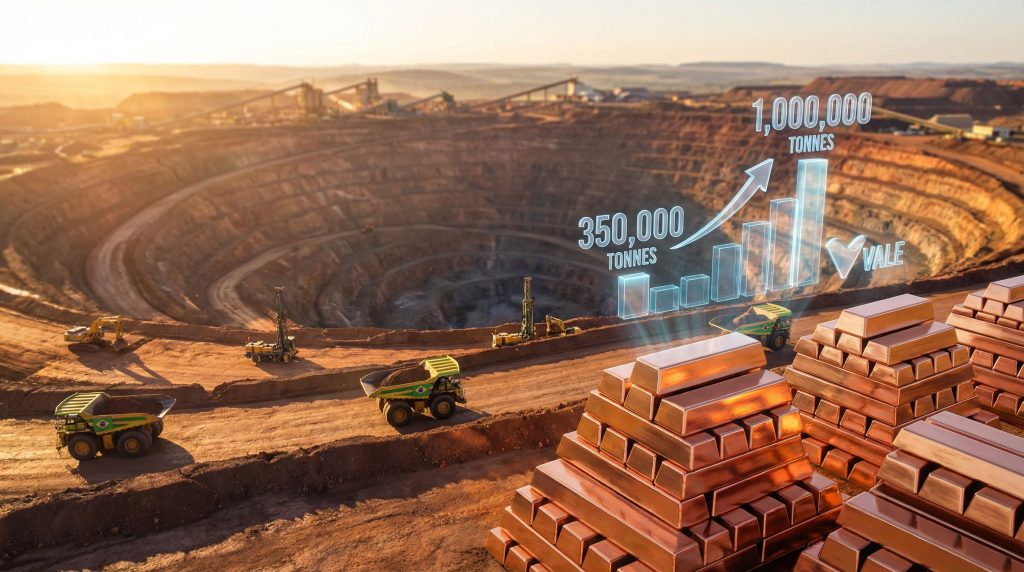
Vale's phased approach to copper production scaling reflects industry best practices for managing complex brownfield expansion projects. The timeline extends from current baseline production through systematic capacity increases culminating in the target of 1 million tonnes annually post-2035.
2026-2035 Production Scaling Methodology
The production scaling methodology incorporates multiple development phases, each with distinct strategic objectives and operational milestones:
| Production Phase | Target Volume | Timeline | Annual Growth | Primary Focus |
|---|---|---|---|---|
| Baseline Optimisation | 350,000-380,000t | 2026 | 0% | Process efficiency |
| Infrastructure Build | 420,000-500,000t | 2030 | 11-13% CAGR | Capacity expansion |
| Major Project Delivery | 700,000t | 2035 | 7-8% CAGR | New production |
| Market Leadership | 1,000,000t | Post-2035 | 4-5% CAGR | Portfolio optimisation |
This graduated approach allows for systematic risk management whilst maintaining financial flexibility across economic cycles. Early phases focus on operational optimisation and infrastructure development, while later phases incorporate major capital projects requiring substantial investment commitments.
Critical Milestone Dependencies and Potential Bottlenecks
Successful execution of Vale's expansion timeline depends on achieving critical milestones within projected timeframes. Key dependencies include environmental permitting approvals, infrastructure construction completion, equipment procurement and installation, and workforce recruitment and training programmes.
Potential bottlenecks that could impact timeline achievement include:
- Regulatory approval delays: Environmental impact assessments and mining permit modifications
- Infrastructure capacity constraints: Power generation, water supply, and transportation upgrades
- Equipment availability: Specialised mining and processing equipment procurement lead times
- Skilled labour shortages: Technical expertise requirements for expanded operations
- Capital market access: Funding availability for major capital expenditure phases
Risk mitigation strategies address each potential constraint through advance planning, alternative supplier arrangements, workforce development initiatives, and financial contingency planning. Vale's project management approach incorporates buffer periods and alternative execution pathways to maintain timeline flexibility.
Which Global Copper Producers Will Face Competitive Pressure?
Vale's progression toward 1 million tonnes annual copper production would position the company among an exclusive group of global mega-producers. Currently, only four mining companies achieve copper output exceeding this threshold: Freeport-McMoRan Inc, BHP Group, Codelco, and Zijin Mining Group Co.
Market Share Redistribution Analysis
Entry into the million-tonne production club would represent approximately 4-5% of current global copper production, assuming total annual output remains around 20-22 million tonnes. This incremental supply could influence copper price dynamics during periods of supply-demand imbalance, particularly if global demand growth fails to keep pace with production increases.
Regional market dynamics would experience notable shifts as Brazilian copper production increases. South American copper supply traditionally concentrates around Chilean operations led by Codelco, with limited production from other regional sources. Vale's expanded output would diversify supply sources and potentially reduce geographic concentration risks for copper consumers.
Competitive pressure would manifest differently across various peer companies:
- Freeport-McMoRan: Potential margin pressure from increased global supply, particularly in periods of demand weakness
- BHP Group: Competition for long-term supply contracts with major industrial consumers
- Codelco: Reduced regional market dominance in South American copper supply chains
- Zijin Mining: Increased competition for Asian market share through South American exports
Strategic Partnership Implications
Vale's joint venture considerations with Glencore Plc in Canada's Sudbury Basin demonstrate strategic diversification beyond Brazilian operations. The potential $2 billion investment in neighbouring Sudbury properties could generate approximately 42,000 tonnes annual copper capacity, providing North American market exposure and supply chain advantages. This partnership model offers several strategic benefits:
- Geographic diversification: Reduced concentration risk in Brazilian operations
- Infrastructure sharing: Cost-effective development through shared facility utilisation
- Market access: Direct supply capability to North American consumers
- Technology exchange: Operational best practices sharing between partners
The Sudbury project represents a smaller-scale complement to Vale's primary Brazilian expansion strategy, providing additional growth options whilst maintaining focus on core asset development priorities. Moreover, such copper-uranium investment opportunities demonstrate the company's strategic diversification approach.
What Are the Macroeconomic Implications of Vale's Expansion?
Electrification Demand Correlation
Global electrification trends continue driving copper consumption growth across multiple sectors including renewable energy infrastructure, electric vehicle manufacturing, and grid modernisation projects. Industry analysts project copper demand increases of 3-5% annually through 2040, driven primarily by energy transition investments and economic development in emerging markets.
Vale's expanded production capacity aligns with this demand trajectory, potentially providing supply stability during periods of tight market conditions. The company's Brazilian production base offers strategic advantages for serving both Atlantic and Pacific Basin markets through established shipping infrastructure and competitive logistics costs.
Electric vehicle supply chains represent particularly significant demand drivers, with each electric vehicle containing approximately 80-100 kg of copper compared to 20-25 kg in traditional internal combustion vehicles. As EV adoption accelerates globally, copper supply security becomes increasingly critical for automotive manufacturers and battery producers.
Price Volatility and Supply Security Considerations
Increased global copper production capacity tends to moderate price volatility by providing additional supply flexibility during demand surges. Vale's organic expansion strategy could contribute to market stabilisation by adding reliable, long-term production capacity backed by established operational capabilities and proven geological resources.
Supply chain resilience benefits extend beyond simple volume considerations. Vale's Brazilian operations provide geographic diversification for consumers seeking reduced dependence on politically volatile supply regions. This advantage becomes particularly valuable during periods of geopolitical tension or trade restrictions affecting other major copper-producing nations.
Long-term contract negotiation leverage would shift as Vale's production capacity increases. Major industrial consumers typically prefer diversified supplier relationships to mitigate supply disruption risks. Consequently, Vale's expanded capacity positions the company as an attractive long-term partner for utilities, manufacturers, and infrastructure developers requiring secure copper supply arrangements. Furthermore, tracking New York copper prices provides insight into these market dynamics.
The next major ASX story will hit our subscribers first
How Will Technological Innovation Enable Production Targets?
Mining Technology Integration Roadmap
Advanced mining technologies play crucial roles in enabling Vale's ambitious production scaling objectives. Automation systems, digital monitoring platforms, and artificial intelligence applications optimise extraction processes whilst reducing operational costs and safety risks.
Key technological enablers include:
- Automated haulage systems: Reduced labour requirements and improved operational consistency
- Predictive maintenance platforms: Equipment reliability optimisation and downtime minimisation
- Ore grade optimisation: Real-time blending systems maximising recovery rates
- Remote operations centres: Centralised monitoring and control capabilities
- Environmental monitoring: Continuous compliance tracking and impact minimisation
Processing technology innovations focus on improving copper recovery rates from existing ore sources. Advanced flotation circuits, hydrometallurgical processes, and concentrate handling systems can extract additional value from mineral resources whilst reducing environmental impacts.
Infrastructure Development Requirements
Successful achievement of Vale's vale copper production target requires substantial infrastructure investments across multiple systems supporting expanded mining operations. Power generation capacity must accommodate increased energy consumption from processing facilities, mining equipment, and support systems.
Transportation infrastructure upgrades include:
- Rail capacity expansion: Increased concentrate transport capability to ports
- Road network improvements: Enhanced access to mining sites and processing facilities
- Port facility upgrades: Loading and storage capacity for increased export volumes
- Pipeline systems: Tailings transport and water management infrastructure
Water management represents a critical infrastructure requirement, particularly in Brazilian mining regions with seasonal precipitation variations. Advanced water recycling systems, tailings management facilities, and environmental monitoring networks support sustainable production increases whilst maintaining regulatory compliance.
What Investment Risks Should Stakeholders Monitor?
Execution Risk Assessment Framework
Vale's organic expansion strategy faces multiple execution risks that could impact timeline achievement or cost projections. Project delivery complexities increase substantially as production targets scale beyond current operational levels, requiring careful risk management and contingency planning.
Primary execution risks include:
- Capital cost inflation: Mining equipment and construction costs have increased 15-25% globally since 2022
- Regulatory approval delays: Environmental permitting processes can extend 6-18 months beyond initial projections
- Technical challenges: Metallurgical processing optimisation may require iterative testing and adjustment
- Workforce availability: Skilled mining professionals remain in short supply across major mining regions
Risk mitigation strategies incorporate multiple approaches including advance procurement contracts, regulatory engagement programmes, technical pilot testing, and workforce development partnerships. Vale's project management capabilities benefit from extensive experience managing large-scale mining developments across multiple jurisdictions.
Market Risk Mitigation Strategies
Copper price volatility represents ongoing risk for major expansion projects given the substantial capital investments required and extended payback periods typical in mining developments. Vale's risk management approach incorporates hedging strategies, contract pricing mechanisms, and operational flexibility to manage commodity price exposure.
Currency risk considerations affect Brazilian operations through real-denominated cost structures and dollar-denominated revenue streams. Exchange rate fluctuations can significantly impact project economics, particularly during multi-year development phases requiring substantial local currency expenditures.
According to copper production growth strategies, successful execution requires comprehensive risk management frameworks addressing both operational and market variables.
Investment Consideration: Vale's organic growth strategy may offer superior risk-adjusted returns compared to acquisition-based expansion, but success depends critically on execution excellence and favourable commodity price environments throughout the development timeline.
Frequently Asked Questions
Why is Vale focusing on organic growth rather than acquisitions?
Vale's organic development approach offers several strategic advantages over acquisition-based expansion strategies. Cost efficiency represents a primary consideration, as brownfield developments typically avoid acquisition premiums whilst leveraging existing infrastructure investments and operational expertise. Integration risks associated with combining different operational cultures, systems, and asset portfolios are substantially reduced through organic growth models.
The company can maintain operational control throughout the development process, ensuring consistency with Vale's safety standards, environmental practices, and operational procedures. This control extends to timeline management, capital allocation decisions, and production optimisation strategies that might be constrained in joint venture or acquisition scenarios.
How does Vale's copper strategy align with nickel operations?
Vale Base Metals operates integrated copper and nickel production facilities, creating operational synergies and cost optimisation opportunities across commodity portfolios. Shared infrastructure utilisation includes processing facilities, transportation networks, power generation systems, and administrative functions that reduce per-unit operational costs.
Technical expertise transfer between copper and nickel operations enhances operational effectiveness across both commodity segments. Metallurgical processing knowledge, equipment maintenance capabilities, and safety management systems provide cross-commodity benefits that improve overall base metals unit performance.
Market diversification benefits extend beyond operational considerations. Vale's dual-commodity approach provides revenue stability during periods when individual commodity prices experience volatility, reducing overall business risk and improving financial predictability for long-term planning purposes.
What makes Vale's Brazilian copper assets attractive for development?
Brazilian copper deposits offer multiple advantages supporting large-scale development projects. Geological characteristics include extensive mineralised zones with proven continuity supporting multi-decade production planning. Resource grades and metallurgical properties have been extensively tested, providing high confidence in processing parameters and recovery rate projections.
Infrastructure advantages include established transportation networks connecting mining sites to export facilities, reliable power generation capacity, and proven water supply systems. These infrastructure investments represent substantial sunk costs that provide leverage for incremental production increases without proportional capital requirements.
Regulatory environment stability in Brazil supports long-term investment planning with established permitting processes, clear environmental compliance requirements, and proven community engagement protocols. Furthermore, Vale's operational history in the region provides institutional knowledge and stakeholder relationships that facilitate project development and implementation. The vale copper production target reflects this comprehensive understanding of Brazilian mining advantages.
Disclaimer: This analysis contains forward-looking projections and assumptions regarding Vale's copper production capabilities, market conditions, and industry trends. Actual results may differ materially due to operational challenges, market volatility, regulatory changes, or other factors beyond management control. Investment decisions should consider comprehensive due diligence and professional financial advice.
Looking for Exposure to Major Mining Discoveries?
Discovery Alert's proprietary Discovery IQ model instantly identifies significant ASX mineral discoveries, transforming complex geological announcements into actionable trading opportunities for both short-term traders and long-term investors. With the global copper market experiencing unprecedented demand growth, positioning yourself ahead of the next major discovery through Discovery Alert's proven track record could provide the market advantage you need.