August 24, 2026
Vale Indonesia's Strategic Capital Expansion
The evolution of mining finance in Southeast Asia reflects broader shifts toward environmental accountability and sustainable resource extraction. Traditional project financing models, built around commodity price hedging and operational cash flows, face increasing pressure from institutional investors demanding measurable sustainability outcomes. This transformation creates new paradigms where financial institutions must balance extraction economics with environmental stewardship, fundamentally altering how mining projects secure capital across the region. The Vale Indonesia $750 million loan deal exemplifies this revolutionary approach to mining finance.
When big ASX news breaks, our subscribers know first
Understanding Vale Indonesia's Strategic Capital Structure
Vale Indonesia's recent financing achievement demonstrates how sustainability-linked credit facilities are reshaping extractive industry funding mechanisms. The company secured a $750 million base facility with an additional $250 million green-shoe option, creating potential access to $1 billion in total capital for operational expansion across Indonesian nickel operations.
The financing consortium includes United Overseas Bank (Singapore), DBS Bank (Singapore), and Mizuho Bank (Japan), along with additional international lenders. This multi-regional banking partnership spreads risk across different financial markets whilst providing Vale Indonesia with diverse funding sources and expertise from institutions experienced in both mining finance and sustainability-linked lending structures.
Key Transaction Metrics:
| Component | Amount | Purpose |
|---|---|---|
| Base Facility | $750 million USD | Primary expansion funding |
| Green-shoe Option | $250 million USD | Additional flexibility |
| Total Potential | $1 billion USD | Maximum facility access |
According to Hendra Gunawan, UOB Indonesia's Chief Executive, this represents among the first sustainability-linked credit facilities for a mining company operating in Asia. This precedent-setting structure embeds environmental and social performance metrics directly into loan pricing mechanisms, moving beyond traditional ESG reporting toward performance-linked financial incentives.
Furthermore, the sustainability-linked framework operates through predetermined key performance indicators (KPIs) that adjust borrowing costs based on achievement of environmental, social, and governance targets. Unlike conventional mining credit facilities that focus primarily on commodity price hedging and operational cash flows, this structure creates financial incentives for measurable improvements in environmental stewardship and community engagement.
Critical Financing Advantages
Critical financing advantages include:
• Performance-based pricing that rewards sustainability achievements through reduced borrowing costs
• Operational flexibility through the green-shoe option for accelerated expansion scenarios
• Multi-regional lender diversification reducing concentration risk across banking partners
• Precedent establishment for similar sustainability-focused mining financing in Southeast Asia
The green-shoe mechanism provides particular strategic value by allowing Vale Indonesia to access additional capital without renegotiating loan terms if expansion opportunities accelerate beyond initial projections. This pre-committed capacity reduces refinancing risk and enables rapid deployment of capital for time-sensitive operational improvements.
Operational Expansion Framework Analysis
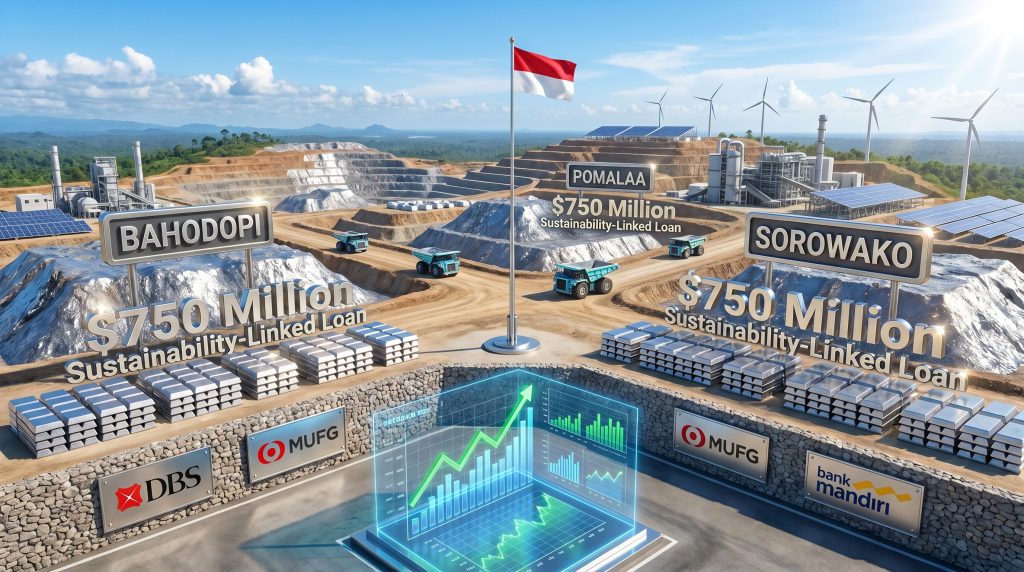
Vale Indonesia's $750 million capital injection targets three geographically distributed operations representing different phases of the mining lifecycle: development, expansion, and modernisation. This multi-site approach diversifies operational risk whilst positioning the company for increased nickel production capacity across multiple Indonesian regions.
Project Portfolio Overview:
The Bahodopi project remains in development phase, requiring substantial infrastructure investment to achieve production readiness. Development-stage projects typically demand the highest capital intensity per unit of future production capacity, but offer the greatest potential for incorporating modern sustainability technologies and community engagement frameworks from project inception.
Pomalaa operations represent an expansion scenario where existing mining infrastructure provides a foundation for capacity increases. Brownfield expansions often deliver more predictable returns on investment compared to greenfield developments, as operational risks are better understood and community relationships are established.
The Sorowako facility focuses on modernisation initiatives designed to improve operational efficiency and environmental performance. Modernisation projects typically target specific bottlenecks in processing capacity, environmental compliance systems, or worker safety infrastructure, delivering measurable improvements in unit economics and sustainability metrics.
Capital Deployment Strategy
Capital Deployment Strategy:
• Infrastructure Development: Processing facilities, ore handling systems, and transportation networks
• Environmental Systems: Tailings management, water treatment, and emission control technologies
• Community Integration: Local workforce development and community benefit programmes
• Technology Upgrading: Mining equipment, processing efficiency improvements, and monitoring systems
The geographic distribution across multiple sites provides operational resilience against localised disruptions whilst creating opportunities for shared infrastructure and technical expertise transfer between operations. This portfolio approach also enables Vale Indonesia to optimise production schedules based on market conditions and operational readiness at each facility.
Production Scale Implications:
Indonesia's position as a major global nickel producer creates strategic importance for capacity expansions within the country's mining sector. The three-project expansion represents a significant capital commitment toward increasing domestic nickel processing capability, aligning with Indonesian government priorities for downstream mineral processing and value addition.
In addition, each project faces distinct operational challenges requiring tailored capital allocation strategies. Development projects like Bahodopi demand comprehensive infrastructure construction, whilst expansion projects like Pomalaa focus on capacity bottleneck resolution. Modernisation projects like Sorowako target efficiency improvements and environmental compliance upgrades.
ESG-Linked Finance: A New Paradigm for Mining Capital
The integration of sustainability metrics into mining finance represents a fundamental shift from traditional commodity-focused lending toward performance-based environmental and social accountability. Vale Indonesia's sustainability-linked credit facility establishes measurable connections between borrowing costs and ESG achievements, creating financial incentives for operational improvements beyond pure profitability metrics.
Sustainability-Linked Lending Mechanics
Sustainability-linked loans operate through predetermined KPIs that trigger margin adjustments based on borrower performance against environmental, social, and governance targets. This structure moves beyond traditional ESG disclosure requirements toward measurable outcomes that directly impact financial performance.
Critical Innovation: The facility creates direct financial incentives for sustainability performance through margin step-ups or step-downs tied to KPI achievement, fundamentally altering the economics of environmental and social investment decisions.
Typical ESG Framework Components:
• Environmental Metrics: Greenhouse gas emissions intensity, water usage efficiency, waste management performance, biodiversity protection measures
• Social Indicators: Community engagement quality, local employment rates, Indigenous rights compliance, worker safety performance
• Governance Standards: Board composition requirements, anti-corruption measures, contractor oversight protocols, stakeholder engagement processes
The mining sector presents unique challenges for ESG integration due to the inherent environmental impact of extractive operations and the complex community relationships surrounding mining projects. Sustainability-linked facilities must balance ambitious environmental targets with operational feasibility and economic viability.
Financial Impact Mechanisms
Performance against sustainability targets creates direct financial consequences through interest rate adjustments, typically ranging from 5 to 25 basis points depending on target achievement levels. These adjustments accumulate over the facility's lifetime, creating meaningful financial incentives for sustained ESG performance improvements.
The verification process requires third-party assessment of KPI achievement, adding transparency and credibility to sustainability claims whilst ensuring objective measurement of environmental and social outcomes. This independent verification process helps prevent "greenwashing" concerns whilst providing lenders with reliable performance data.
Regional Market Implications
The establishment of sustainability-linked mining credit facilities in Southeast Asia signals broader institutional investor appetite for ESG-compliant extractive sector investments. This trend reflects growing recognition that environmental and social risks represent material financial risks requiring active management and measurement, aligning with broader mining decarbonisation benefits across the industry.
Financial institutions increasingly view sustainability performance as a credit quality indicator, recognising that poor environmental stewardship and community relations create operational risks that impact loan performance. This perspective drives integration of ESG factors into credit assessment and ongoing portfolio management processes, supporting the mining industry evolution toward sustainable practices.
Market Positioning and Competitive Landscape
Indonesia's strategic position in global nickel supply chains creates significant advantages for domestically-based mining operations targeting Asian manufacturing markets. The country's substantial nickel reserves and processing infrastructure provide a foundation for expanded production capacity serving growing demand from electric vehicle battery manufacturers and stainless steel producers.
Geographic and Strategic Advantages
Vale Indonesia's operations benefit from proximity to major Asian manufacturing centres, reducing transportation costs and delivery times compared to other global nickel producers. This locational advantage becomes increasingly valuable as supply chain resilience gains importance in strategic metal procurement decisions.
The Indonesian government's emphasis on downstream mineral processing creates policy support for domestic value-added production rather than raw ore exports. This regulatory environment encourages investment in processing capacity and refined product production, aligning with Vale Indonesia's expansion strategy.
Supply Chain Integration
• EV Battery Supply: Direct relationships with cathode material manufacturers in China, Japan, and South Korea
• Stainless Steel Production: Proximity to major Asian stainless steel producers requiring consistent nickel supply
• Processing Capabilities: Domestic refining capacity reducing dependence on external processing
• Logistics Infrastructure: Established shipping routes and port facilities serving Asian markets
Competitive Positioning Factors
The nickel market faces supply concentration risks as a relatively small number of major producers control significant portions of global output. Vale Indonesia's expansion contributes to supply diversification whilst leveraging cost advantages associated with Indonesian mining operations.
Technology adoption and operational efficiency improvements drive competitive positioning in commodity markets where cost leadership often determines profitability across price cycles. The modernisation component of Vale Indonesia's capital deployment strategy targets these competitive factors through equipment upgrades and process optimisation.
Consequently, renewable energy transformations play a crucial role in maintaining competitive advantages whilst addressing environmental concerns.
Market Dynamics
Global nickel demand growth driven by electric vehicle adoption creates long-term supply requirements that justify substantial capacity expansion investments. The transition toward battery metals represents a structural shift in nickel demand patterns, moving beyond traditional stainless steel applications toward higher-growth EV-related consumption.
Price volatility remains a characteristic feature of nickel markets, requiring operational flexibility and financial management strategies that maintain profitability across different price environments. The green-shoe option in Vale Indonesia's financing provides capital deployment flexibility to respond to favourable market conditions.
Financial Structure and Risk Assessment
The $1 billion total facility capacity represents a substantial capital commitment requiring careful financial structure design to balance growth objectives with prudent risk management. The combination of base facility and green-shoe option creates operational flexibility whilst maintaining disciplined capital deployment aligned with project development timelines.
Capital Allocation Framework
The three-project portfolio requires different capital deployment patterns reflecting varying development stages and operational requirements. Development projects typically require front-loaded capital investment with delayed cash flow generation, whilst expansion and modernisation projects often deliver more immediate operational improvements.
| Project Type | Capital Profile | Risk Characteristics | Return Timeline |
|---|---|---|---|
| Development (Bahodopi) | High upfront, delayed returns | Construction, permitting, market | 3-5 years |
| Expansion (Pomalaa) | Moderate capital, predictable returns | Operational, technical | 1-3 years |
| Modernisation (Sorowako) | Lower capital, immediate benefits | Technical, efficiency | 1-2 years |
Green-Shoe Option Strategic Value
The $250 million accordion feature provides pre-committed capital access without requiring complete facility renegotiation, reducing execution risk for accelerated expansion scenarios. This structure acknowledges uncertainty in project development timelines whilst ensuring capital availability when opportunities arise.
Key benefits of the green-shoe structure include:
• Reduced refinancing risk through pre-negotiated terms and conditions
• Faster capital deployment without lengthy documentation processes
• Operational flexibility for market opportunity response
• Cost efficiency through avoided transaction costs on additional facilities
Risk Management Considerations
Commodity price volatility creates fundamental risk for mining investments, requiring financial structures that maintain viability across different nickel price environments. Whilst specific hedging arrangements are not detailed in available information, typical mining credit facilities incorporate commodity price protection mechanisms.
Operational risk factors include:
• Regulatory changes affecting mining permits, environmental requirements, or export restrictions
• Technical challenges in development, expansion, and modernisation execution
• Community relations impacting social licence to operate
• Infrastructure dependencies for power, transportation, and processing capacity
The sustainability-linked structure adds performance risk related to ESG target achievement, though this also creates opportunities for reduced borrowing costs through superior environmental and social performance. This risk-reward balance aligns financial incentives with operational excellence in sustainability metrics, supporting broader green iron project sustainability initiatives.
The next major ASX story will hit our subscribers first
How Will Regulatory Changes Affect Mining Operations?
Indonesian mining policy creates the regulatory framework within which Vale Indonesia's expansion projects operate, influencing everything from environmental permitting requirements to export regulations and foreign investment terms. The country's strategic approach to mineral resource development emphasises domestic value addition and downstream processing capabilities.
Policy Environment Characteristics
Indonesia's mineral export restrictions encourage domestic processing investment by limiting raw ore exports whilst promoting refined product production. This regulatory approach aligns with Vale Indonesia's expansion strategy focused on processing capacity and operational integration rather than purely extractive operations.
The Indonesian government's classification of nickel as a strategic mineral creates policy support for infrastructure development and operational expansion within established regulatory frameworks. However, this classification also brings additional oversight and compliance requirements for mining operations.
Environmental Regulatory Framework
• Environmental impact assessments required for development and expansion projects
• Community consultation requirements for social licence compliance
• Tailings and waste management standards governing operational practices
• Water usage and discharge regulations affecting operational design
Foreign Investment Considerations
As a subsidiary of Brazilian-based Vale S.A., Vale Indonesia operates within Indonesia's foreign investment regulations governing mining sector participation. These regulations balance foreign capital access with domestic control requirements and technology transfer objectives.
The sustainability-linked financing structure aligns with Indonesian policy trends toward environmental accountability and sustainable development practices. This alignment may provide regulatory advantages as government policies increasingly emphasise ESG performance in mineral sector oversight.
Furthermore, mining operations must navigate complex interactions between national regulations, regional government requirements, and local community expectations. Successful project execution requires alignment across these multiple stakeholder groups whilst maintaining operational efficiency and financial performance.
Export and Trade Considerations
Indonesian nickel export policies favour processed products over raw materials, creating incentives for domestic refining and value-added production. Vale Indonesia's expansion strategy benefits from these policy preferences through focus on processing capacity rather than purely extractive operations, as detailed in Vale Indonesia's sustainability-linked loan announcement.
The regional trade environment, including relationships with major nickel-consuming countries in Asia, influences market access and pricing opportunities for Indonesian nickel producers. Policy stability in trade relationships supports long-term investment planning and project development timelines.
Strategic Outlook and Industry Transformation
The Vale Indonesia $750 million loan deal represents broader transformation patterns affecting the global mining industry as sustainability considerations become integral to capital allocation decisions. This shift reflects institutional investor recognition that environmental and social factors represent material business risks requiring active management and measurement.
Industry Evolution Drivers
Climate change concerns drive demand for mining operations that demonstrate measurable environmental performance improvements through reduced emissions, improved water management, and enhanced biodiversity protection. These requirements influence technology adoption, operational practices, and capital allocation priorities across the mining sector.
Technology Integration Trends
• Automation and digitalisation improving operational efficiency and worker safety
• Environmental monitoring systems providing real-time performance data for sustainability metrics
• Community engagement platforms enhancing stakeholder communication and relationship management
• Energy efficiency technologies reducing operational costs and environmental impact
Capital Market Evolution
Institutional investors increasingly integrate ESG factors into investment decision-making processes, creating demand for mining companies that demonstrate superior sustainability performance. This trend drives adoption of sustainability-linked financing structures and performance-based investment strategy components, as evidenced by recent industry developments.
The development of standardised ESG measurement frameworks enables more consistent evaluation and comparison of mining company sustainability performance. These standards support capital allocation toward companies demonstrating genuine environmental and social improvements rather than superficial compliance.
Regional Development Implications
Southeast Asian mining operations benefit from growing regional demand for strategic metals whilst facing increasing expectations for environmental stewardship and community engagement. This combination creates opportunities for mining companies that successfully integrate sustainability performance with operational excellence.
Future Industry Characteristics
The mining sector's evolution toward sustainability integration suggests future financing structures will increasingly incorporate ESG performance metrics as standard features rather than innovative additions. This mainstream adoption will require mining companies to develop sophisticated sustainability management capabilities alongside traditional operational expertise.
Companies that successfully implement sustainability-linked financing and operational practices establish competitive advantages through lower capital costs, operational efficiency improvements, regulatory relationships based on environmental compliance leadership, and community partnerships supporting long-term operational stability.
Could the Next Major Discovery Transform Your Portfolio?
Discovery Alert instantly identifies significant ASX mineral discoveries using its proprietary Discovery IQ model, delivering real-time alerts that transform complex exploration data into actionable investment insights. Understand why major mineral discoveries can generate substantial returns by exploring historic examples, then begin your 14-day free trial to position yourself ahead of the market with immediate access to critical discovery intelligence.