August 14, 2026
The Hidden Vulnerability Running Through Every PGM Mine
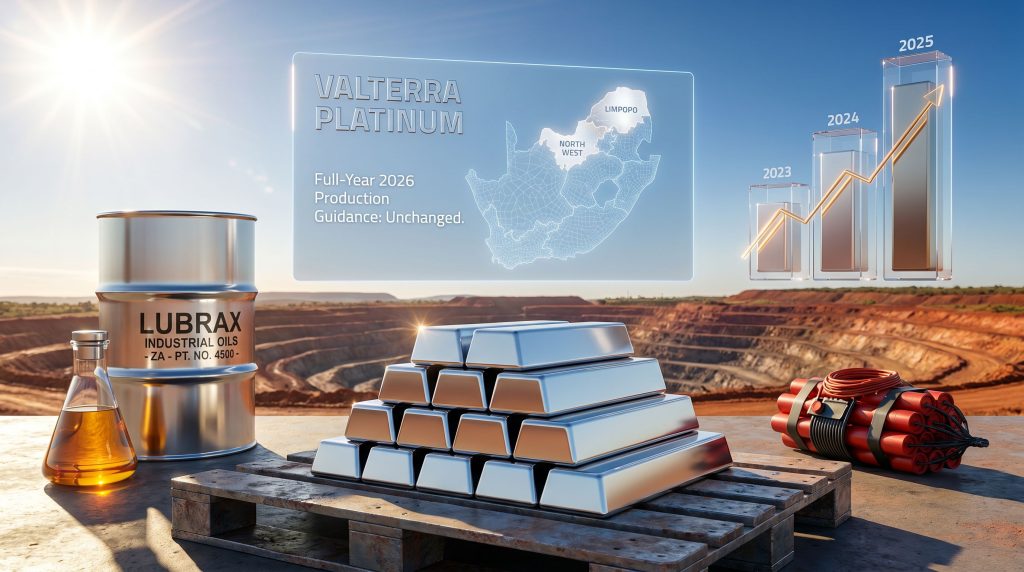
Long before a single ounce of platinum reaches a refinery or a trading hub, it depends on something far less glamorous: a reliable flow of diesel, lubricants, and explosives. These unglamorous inputs are the circulatory system of underground and open-pit mining operations. Without them, haul trucks stop, drilling ceases, and ore extraction grinds to a halt. Valterra Platinum input inventories Middle East conflict has become one of the most closely watched operational risk factors in the sector, as energy supply disruptions ripple through South Africa's platinum group metals industry.
This reality has come into sharp focus during 2025 and into 2026, as military conflict between the United States, Israel, and Iran has reintroduced the kind of crude oil price volatility that commodity producers dread. For South Africa's platinum group metals industry, a sector that accounts for roughly 70 to 75 percent of global annual platinum supply, the exposure to this disruption is structural rather than incidental.
When big ASX news breaks, our subscribers know first
Why South Africa's PGM Sector Faces Amplified Input Risk
South Africa is not an oil-producing nation. It relies heavily on imported refined petroleum products, including diesel and jet fuel, to sustain its vast industrial and mining economy. This structural dependency means that any sustained disruption to Middle East energy flows does not merely raise global fuel prices in an abstract sense. It directly tightens the supply of products that platinum miners in Limpopo and the North West provinces need every day.
The mechanics of this transmission are worth understanding clearly:
- Middle East conflict disrupts global petroleum refining and shipping routes.
- Refined product availability tightens in import-dependent markets like South Africa.
- Local fuel prices rise and, in more severe scenarios, physical supply becomes constrained.
- Mining operators face higher unit costs and potential throughput disruptions.
- In a structurally tight platinum market, even modest output reductions amplify price sensitivity.
The compounding effect is significant. South Africa's mining-heavy northern provinces are particularly reliant on road-transported diesel, making them sensitive to any tightening of national fuel inventory levels. Furthermore, when global supply shocks coincide with already-thin domestic fuel buffers, the operational risk profile of PGM producers rises quickly.
| Input Category | Risk Vector | Potential Operational Impact |
|---|---|---|
| Diesel | Refined petroleum import disruption | Fleet downtime, haulage delays |
| Lubricants | Petrochemical feedstock shortages | Equipment wear, maintenance cost escalation |
| Explosives | Precursor chemical supply chains | Blasting delays, reduced ore access |
| Jet Fuel | Import dependency for metal logistics | Delays in refined metal delivery to customers |
Valterra Platinum: From Anglo American Spin-Off to Standalone PGM Force
Understanding Valterra Platinum's position in this conversation requires some corporate context. The company completed its separation from Anglo American and began trading as an independent entity on the Johannesburg Stock Exchange in May 2025, marking one of the most consequential restructurings in South African mining history.
Anglo American's decision to divest its platinum assets reflected a broader strategic pivot away from capital-intensive bulk commodities, creating in Valterra a standalone, large-scale PGM producer with its own balance sheet, management team, and risk profile. The scale of Valterra's operations means its supply chain decisions carry genuine market significance. Consequently, when its CEO speaks publicly about input security, the platinum trading community pays close attention.
As one of South Africa's largest PGM producers, Valterra's operational continuity is not merely a company-level concern. It is a factor that platinum traders and investors actively monitor as a real-time indicator of sector-wide supply health.
How Valterra Platinum Is Managing the Middle East Supply Threat
Speaking at London Platinum Week in May 2026, Valterra CEO Craig Miller outlined the company's approach to the supply risk created by the ongoing US-Israeli conflict with Iran. His remarks conveyed a posture of active management rather than reactive crisis response.
According to Miller, Valterra has maintained extensive engagement with its domestic suppliers to secure forward delivery commitments for diesel, lubricants, and explosives. The outcome of these efforts, as of May 2026, is that inventory levels across these critical inputs are described as operationally healthy, with no material disruption to production having occurred.
The company has also taken the precautionary step of pre-identifying a network of alternative suppliers capable of stepping in without operational lag if primary supply channels encounter difficulty. Importantly, these secondary sources have not yet been activated, a detail that signals the current environment remains manageable rather than stressed.
Valterra's Three-Layer Supply Risk Mitigation Framework
- Proactive supplier engagement – direct communication with existing local suppliers to secure delivery commitments ahead of potential shortages.
- Alternative supplier pre-qualification – identification and vetting of secondary sources capable of substituting without disrupting operational continuity.
- Customer-level contingency planning – bilateral dialogue with metal buyers to co-develop response protocols for potential jet fuel disruption affecting refined metal shipment logistics.
This layered approach reflects a supply chain philosophy increasingly common among major miners operating in geopolitically exposed markets: build redundancy before it is needed, communicate proactively, and preserve optionality without prematurely signalling distress. Indeed, the geopolitical risks in mining are now considered a permanent structural feature rather than an episodic concern.
The Jet Fuel Dimension: Indirect but Strategically Important
One of the less-discussed dimensions of PGM supply chain vulnerability involves jet fuel. South Africa's platinum group metal producers typically rely on air freight to move refined metal to international trading and refining hubs. This creates an indirect but meaningful exposure to jet fuel availability that is distinct from their direct diesel and lubricant procurement.
Valterra does not directly purchase jet fuel as an operational input. However, the company has been actively engaging with its customers to develop contingency frameworks in the event that jet fuel supply disruptions affect the logistics infrastructure required to deliver refined metal internationally.
| Input Type | Valterra's Exposure | Risk Management Approach |
|---|---|---|
| Diesel | Direct – operational fleet | Inventory build, supplier diversification |
| Lubricants | Direct – equipment maintenance | Forward procurement, alternative sourcing |
| Explosives | Direct – ore extraction | Supplier engagement, inventory monitoring |
| Jet Fuel | Indirect – metal logistics | Customer dialogue, contingency co-planning |
The distinction matters to investors: direct input shortages affect production; indirect logistics disruptions affect revenue recognition timing. Both can move quarterly results, but through different operational pathways.
The jet fuel question has been a specific focus for platinum traders since the escalation of the Iran conflict in 2025. This reflects a broader market awareness that the PGM supply chain does not end at the mine gate. The full value chain, from ore extraction through to metal delivery, carries geopolitical exposure at multiple nodes.
A Market Already Running on Thin Supply Margins
Valterra's supply chain management decisions are unfolding against a platinum and palladium market dynamics backdrop that offers little room for error. The platinum market recorded a third consecutive annual supply deficit in 2025, driven by a combination of South African production constraints, rising industrial demand from autocatalyst and hydrogen fuel cell applications, and sustained interest from investors seeking alternative hard assets.
| Year | Supply Deficit Trend | Key Contributing Factors |
|---|---|---|
| 2023 | Moderate deficit | South African load-shedding, reduced output |
| 2024 | Widening deficit | Producer cost pressures, demand recovery |
| 2025 | Third consecutive deficit | Geopolitical risk, import fuel disruption concerns |
A multi-year structural deficit does two things simultaneously. It creates a supportive price environment for producers, and it amplifies the consequences of any supply disruption. When the market is already running below equilibrium, even a short-term input shortage at a major producer can generate disproportionate price and sentiment effects.
Demand-side dynamics add further complexity. Platinum's role in catalytic converters for internal combustion engines remains substantial, while the longer-term demand narrative around hydrogen fuel cell technology continues to attract both industrial and speculative interest. Jewellery demand, particularly from Asian markets, provides an additional consumption floor. In addition, market volatility and safe havens have driven a fresh wave of investor interest in precious metals more broadly.
The next major ASX story will hit our subscribers first
What Unchanged Guidance Actually Communicates
Valterra's decision to maintain its full-year 2026 production guidance unchanged in the context of active geopolitical monitoring is a deliberate and meaningful signal to market participants. In corporate communications, unchanged guidance functions as a credibility instrument. It tells investors that management has stress-tested its operational assumptions against known risk scenarios and found them adequate.
The framing employed by management, emphasising active monitoring of input cost impacts from the Middle East conflict rather than flagging material risk, reflects a watch-and-manage posture. This distinction matters because it separates precautionary monitoring from operational distress. For further context on how this affects the broader sector, commodity prices and miner performance remain closely linked.
Scenario Analysis: Supply Chain Stress Thresholds to Monitor
| Scenario | Trigger Condition | Likely Management Response |
|---|---|---|
| Base Case (Current) | Inventories healthy, no supply interruption | Maintain guidance, monitor costs |
| Moderate Stress | Primary supplier delivery delays begin | Activate alternative supplier network |
| Elevated Stress | Fuel import restrictions tighten in South Africa | Emergency procurement, potential cost guidance revision |
| Severe Disruption | Sustained jet fuel shortage impacts metal logistics | Customer contract renegotiation, production schedule adjustment |
For investors, the key escalation thresholds to monitor are not in Valterra's immediate supply chain, which appears adequately buffered for now. They lie further upstream: in South African national fuel import volumes, in the duration and intensity of Middle East conflict, and in any indication that Valterra's pre-qualified alternative suppliers are being activated.
FAQ: Valterra Platinum Input Inventories and Middle East Conflict
What inputs are most critical to Valterra Platinum's mining operations?
Diesel for mobile equipment and haulage, lubricants for machinery maintenance, and explosives for ore extraction are the three primary operational inputs requiring uninterrupted supply to sustain normal production rates.
Has the Middle East conflict caused any production disruption at Valterra Platinum?
As of May 2026, no material production disruption has occurred. Valterra Platinum input inventories Middle East conflict monitoring has confirmed that inventory levels across critical inputs remain at operationally healthy levels and full-year production guidance is unchanged.
Does Valterra Platinum directly purchase jet fuel?
No. Valterra does not procure jet fuel as a direct operational input. However, the company maintains active dialogue with metal buyers regarding contingency planning for potential disruptions to jet fuel availability that could affect refined metal delivery logistics.
Why does South Africa's PGM sector carry elevated exposure to Middle East energy disruptions?
South Africa's structural reliance on imported refined petroleum products means any sustained disruption to Middle East oil flows can tighten national fuel markets, elevate input costs, and in more severe scenarios constrain the air freight infrastructure that PGM producers depend on for metal delivery.
What is the current state of global platinum supply?
The platinum market overview from Mining.com confirms that the market recorded a third consecutive annual supply deficit in 2025, reflecting South African production constraints, rising industrial and investment demand, and growing sensitivity to geopolitical risk overlays. This structural tightness increases the market's sensitivity to any operational disruption at major producers.
Key Takeaways for Investors Tracking Valterra Platinum
- Valterra Platinum has confirmed healthy Valterra Platinum input inventories Middle East conflict mitigation across all critical operational inputs as of May 2026, with no material production disruption reported.
- The company's three-layer mitigation framework, covering proactive supplier engagement, alternative supplier pre-qualification, and customer-level jet fuel contingency planning, represents a defensively sound supply posture for current conditions.
- Full-year 2026 production guidance remains unchanged, communicating management confidence in near-term operational continuity.
- The platinum market's third consecutive supply deficit in 2025 elevates the strategic importance of supply chain resilience across all major PGM producers, not only Valterra.
- The primary escalation signals worth monitoring are South African national fuel import tightness, confirmation of alternative supplier activation, and any change in management's language around cost guidance.
This article contains forward-looking statements and scenario analysis based on publicly available information as of May 2026. It does not constitute financial advice. Investors should conduct their own due diligence before making investment decisions based on the information contained herein.
Want to Stay Ahead of the Next Major Mineral Discovery on the ASX?
Discovery Alert's proprietary Discovery IQ model delivers real-time alerts on significant ASX mineral discoveries, instantly translating complex mineral data into actionable insights for traders and investors at every experience level — explore the historic returns major discoveries have generated and begin your 14-day free trial at Discovery Alert to secure your market-leading edge.